
Best Practices for High Efficiency Power PCB Manufacturing

Achieving high efficiency in a power PCB takes more than picking “efficient” components. Trace geometry, switching loop size, parasitics, copper and stackup choices, and thermal path design all compound to raise or waste valuable watts. Whether you are chasing 99% efficiency in a data center supply or squeezing more battery life from a portable device, a disciplined layout and early EMI/thermal validation help reclaim every fraction of a percent. Our end‑to‑end service delivers low‑loss routing, loop and parasitic control, robust thermal path design, and EMI pre‑simulation—accelerating compliance with fewer board spins.
How to Reduce PCB Trace Losses in High Current Design
Conduction losses in PCB traces are often ignored but can account for 2-3% efficiency loss in high-current designs. The solution isn’t always thicker copper—smart routing strategies provide better results with standard materials.
Advanced routing techniques for high efficiency power PCB designs:
- Use parallel paths on multiple layers for current sharing
- Implement polygon pours instead of traces for high-current paths
- Minimize via resistance with larger diameters and filled barrels
- Route return currents directly under forward paths for inductance cancellation
For a 48V-to-1V converter delivering 100A, optimized routing reduced trace losses from 3W to 0.8W—seemingly small but significant when chasing 95%+ efficiency. These techniques apply to all Power Electronics PCB designs handling significant current.
GaN FET PCB Layout Guidelines for 99% Efficiency
GaN and SiC devices switch faster with lower losses, but PCB parasitics can negate these advantages. Traditional layouts optimized for silicon MOSFETs need complete redesign for wide bandgap devices.
Critical adaptations for GaN/SiC:
- Loop inductance must be below 2nH for stable operation
- Gate drive loops need sub-centimeter dimensions
- Kelvin source connections eliminate ground bounce
- Thermal vias require closer spacing due to higher power density
Our designs for GaN-based Power Converter PCB achieve 99.2% peak efficiency through systematic parasitic minimization. The same topology with traditional layout peaked at 97.8%.
Optimizing Dead Time in Synchronous Buck Converter
Synchronous rectification is mandatory for high efficiency power PCB applications below 5V output. But poor dead-time control creates body diode conduction, eliminating efficiency gains. Adaptive dead-time control responds to load and temperature variations.
Implementation best practices:
- Current sensing in each phase for optimal timing
- Temperature compensation for threshold variations
- Hardware lockout prevents shoot-through during faults
- Separate gate drive paths for precise edge control
For DC-DC Converter PCB designs, we’ve improved efficiency by 3% through dead-time optimization alone—without changing power components. These optimization techniques extend to Switch Mode Power Supply PCB synchronous rectification as well.
Planar Transformer PCB Design for High Efficiency
Magnetics often dominate power converter losses. PCB-integrated magnetics eliminate wire termination losses while enabling optimized geometries impossible with discrete components.
Integrated magnetic advantages:
- Planar transformers reduce AC resistance through conductor geometry
- Matrix transformers distribute flux for lower core losses
- Coupled inductors improve transient response with reduced size
- PCB windings enable precise turns ratios and coupling control
Recent advances in PCB laminate materials include embedded magnetic materials, enabling complete integration of small inductors within PCB stackups.
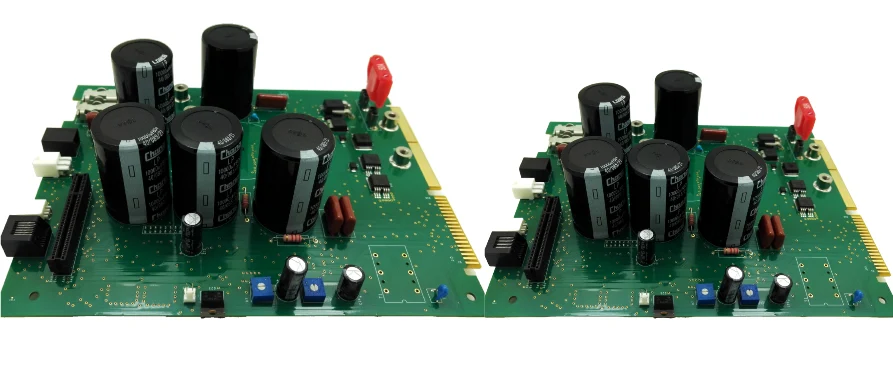
Multi-Phase VRM Design for 95% Efficiency Across Load
Single-phase converters optimize efficiency at one operating point. Multi-phase designs with phase shedding maintain high efficiency across wide load ranges—critical for systems with varying power demands.
Phase management strategies:
- Add phases at efficiency crossover points, not arbitrary thresholds
- Implement current balancing to prevent single-phase overload
- Use coupled inductors for improved transient response
- Consider switching frequency variation with phase count
For server applications, six-phase designs with intelligent phase control achieve >94% efficiency from 10% to 100% load—impossible with fixed-phase-count designs. These techniques benefit Power Regulation PCB implementations requiring wide load range operation.
Fanless Power Supply PCB Thermal Design Guide
Fans reduce reliability and increase power consumption. High-efficiency designs must dissipate less heat while relying on passive cooling. This demands innovative thermal management from the PCB up.
Passive cooling enhancements:
- Embedded heat pipes in PCB substrates for heat spreading
- Strategic component placement for natural convection optimization
- Thermal interface materials matched to surface roughness
- Phase-change materials for transient thermal management
A fanless 500W design achieved full-power operation at 50°C ambient through advanced thermal design—previous versions required forced air above 300W. These cooling strategies also apply to Power Amplifier PCB thermal management.
Digital Power Controller PCB Layout Best Practices
Digital control enables efficiency optimization impossible with analog controllers. Advanced algorithms adapt switching frequency, phase count, and operating modes based on real-time conditions.
Digital optimization capabilities:
- Valley switching reduces switching losses in quasi-resonant topologies
- Predictive dead-time control minimizes body diode conduction
- Adaptive voltage positioning reduces output capacitance requirements
- Machine learning algorithms optimize for specific load profiles
Our PCB assembly process includes programming and calibration of digital controllers for maximum efficiency in your specific application.
How to Measure 99% Power Supply Efficiency Accurately
Measuring 99%+ efficiency requires exceptional instrumentation and technique. Calibration uncertainties in power analyzers can exceed the efficiency improvements you’re trying to verify.
Accurate efficiency measurement requires:
- Kelvin connections for voltage sensing
- High-accuracy current transducers
- Temperature-stable load resistors
- Calibrated instruments with uncertainties below 0.1%
Partner with Highleap Electronics for electronic manufacturing service that understands high-efficiency power design. Our PCB fabrication capabilities support the advanced materials and processes required for next-generation efficient power systems.
FAQs — High Efficiency Power PCB
What copper thickness is ideal for high efficiency power PCBs?
2 oz copper is common for moderate current, but 3–4 oz is preferred for >50A applications to reduce conduction loss without excessive PCB size.
Do buried vias improve thermal performance in high efficiency power PCB design?
Yes, buried or blind vias can improve heat spreading and reduce thermal resistance, especially when combined with filled and plated thermal vias under hot components.
What surface finish is best for high efficiency power PCBs?
ENIG or ENEPIG provides flat surfaces and corrosion resistance, suitable for fine-pitch GaN FETs and ensuring low contact resistance over time.
How does controlled impedance affect power efficiency?
Properly designed controlled impedance traces reduce ringing and switching losses, critical for high-frequency converters and GaN-based designs.
Are aluminum-based PCBs suitable for high efficiency power circuits?
Yes, aluminum substrate PCBs offer excellent thermal conductivity and are ideal for LED drivers, motor controllers, and compact fanless power supplies.

Related Articles
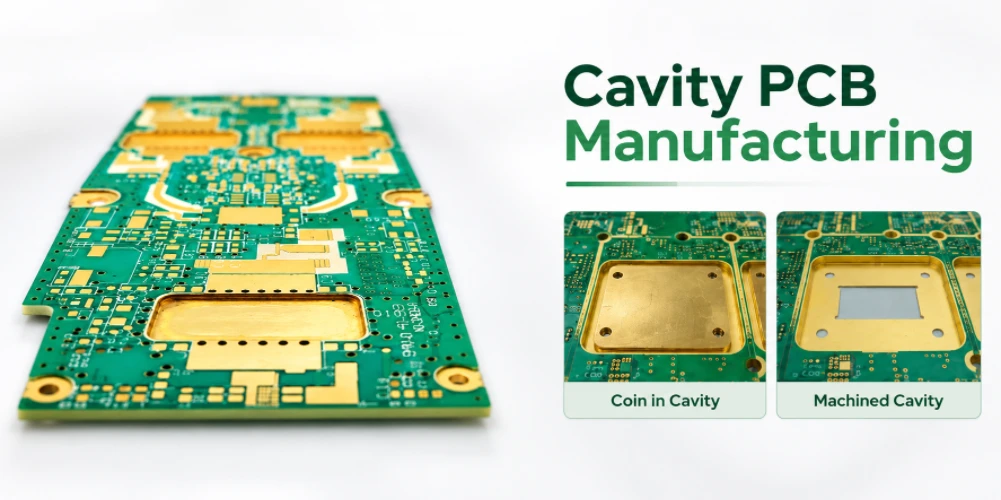
Cavity PCB Manufacturing for Precision Board Designs
A cavity PCB is a purpose-built board with a recessed or...
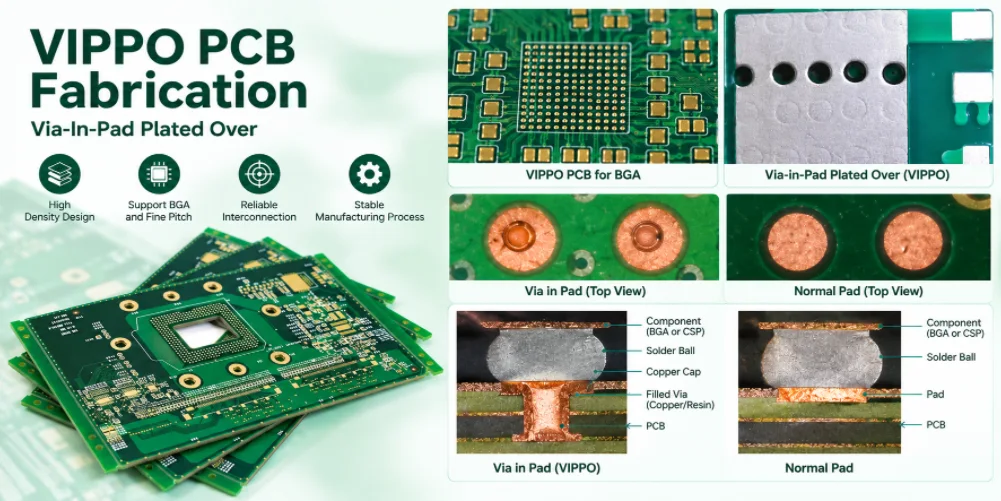
VIPPO PCB Fabrication for BGA and Thermal Pad Designs
Highleap Electronics provides VIPPO PCB fabrication for...
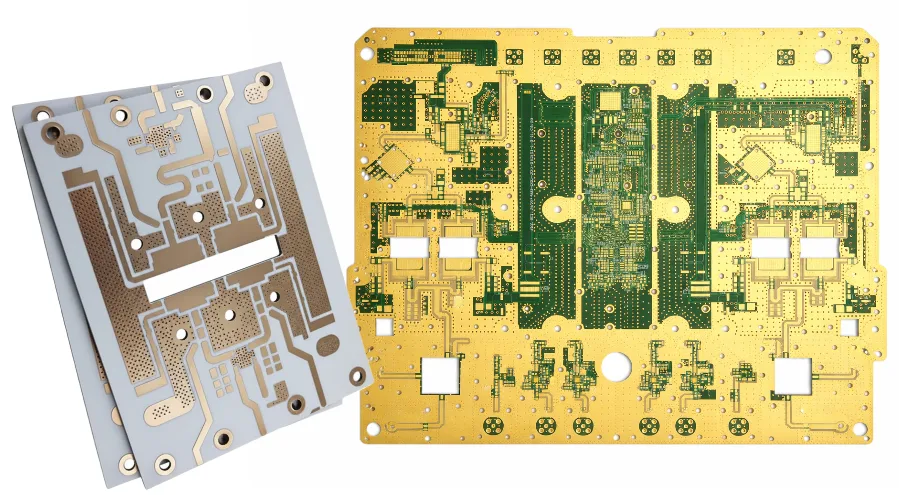
PCB Materials Database: Laminate Grades & Properties
How to get a quote for PCBs Let‘s run DFM/DFA analysis for...
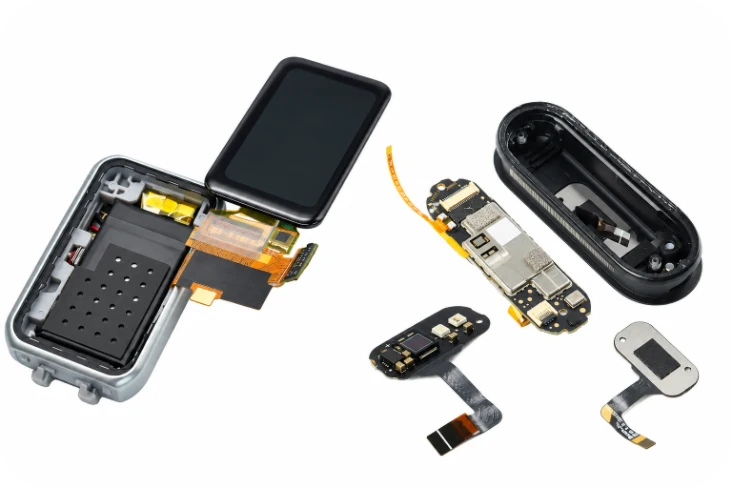
Smart Bracelet PCB Manufacturing and Assembly
A smart bracelet PCB can support very different products:...
How to get a quote for PCBs
Let us run DFM/DFA analysis for you and get back to you with a report.
You can upload your files securely through our website.
We require the following information in order to give you a quote:
-
- Gerber, ODB++, or .pcb, spec.
- BOM list if you require assembly
- Quantity
- Turn time
In addition to PCB manufacturing, we offer a comprehensive range of electronic services, including PCB design, PCBA (Printed Circuit Board Assembly), and turnkey solutions. Whether you need help with prototyping, design verification, component sourcing, or mass production, we provide end-to-end support to ensure your project’s success. For PCBA services, please provide your BOM (Bill of Materials) and any specific assembly instructions. We also offer DFM/DFA analysis to optimize your designs for manufacturability and assembly, ensuring a smooth production process.