
Choosing a Qualified I-Tera MT40 PCB Manufacturer

Finding a genuine Isola I-Tera MT40 prepreg manufacturer requires looking past the material certificate. Any factory can purchase I-Tera MT40 from an authorized distributor and apply their standard FR4 process. The result is a board with a genuine Isola certificate and none of the Dk stability or insertion loss performance I-Tera was specified to provide. This guide gives you six audit criteria that separate qualified I-Tera manufacturers from material-listing factories — and explains the qualification questions that reveal which category you’re dealing with.
| ⚠ Press Cycle Risk
A factory applying its FR4 press cycle to I-Tera MT40 will undercure the resin. The board passes visual and electrical test — the performance gap appears in the field as Dk drift and insertion loss above specification. |
⚠ Copper Foil Substitution
Standard ED copper is commonly substituted for RTF without customer notification. At 10 GHz+, this substitution increases insertion loss by 15–25% compared to the simulation — degrading margin that was not there to spare. |
⚠ Impedance Documentation Gap
A pass/fail impedance certificate confirms the board passed the test — not what the measurement was. Without actual TDR data values, you cannot track lot-to-lot Dk consistency or diagnose prototype-to-production impedance shifts. |
Six Audit Criteria·
Press Cycle Deep-Dive·
Copper Foil Qualification·
Questions That Reveal Capability·
Documentation Checklist·
Highleap Electronics
Six Technical Audit Criteria for I-Tera MT40 Manufacturers
| # | Criterion | Qualified Response | Red Flag |
|---|---|---|---|
| 1 | Press cycle characterization | Specific ramp rate, dwell time, and pressure validated in-house against I-Tera resin chemistry. DSC Tg confirmation on pressed samples. | Parameters identical to Isola datasheet minimum. No factory validation data. |
| 2 | Copper foil specification | RTF or HVLP copper stocked and used by default on I-Tera RF layers. Foil grade documented in the production traveler. | Standard ED copper used on all builds regardless of frequency. Foil substitution not disclosed. |
| 3 | TDR data reporting | 100% per-panel TDR coupon measurement. Actual measured impedance values in report. Data archived and traceable by production order. | Pass/fail certificate only. TDR data available “on request.” No per-panel tracking. |
| 4 | First-article cross-section | Cross-section with IPC-A-600 plating measurements (average, minimum) as standard deliverable on new programs. Photos include scale measurement markers. | Cross-section priced as an add-on or omitted entirely. Photos without plating measurements. |
| 5 | Material traceability | Isola lot certificates traceable to the specific production order. Available as standard deliverable, not on special request. | Lot certificates only on special request or for premium orders. Generic CoC without lot identity. |
| 6 | Prepreg style engineering | Specific prepreg style (1080, 2116, 7628) recommendation in DFM review. Prepreg locked to prototype specification for production. Customer notified before any style change. | All builds default to 7628 regardless of design. Prepreg style changed between prototype and production without notification. |
Press Cycle Validation — What Questions Reveal Factory Capability
The press cycle validation test is the single most discriminating qualification exercise for an I-Tera MT40 manufacturer. A qualified factory characterizes their press environment specifically for I-Tera’s resin system — because press chamber thermal uniformity, platen temperature calibration, and platens-to-book heat transfer vary by equipment. The Isola datasheet provides minimum guidance; a qualified factory develops actual parameters for their specific presses.
Ask these questions and evaluate the response:
- “What is your validated peak press temperature and dwell time for I-Tera MT40 2116 prepreg in a 10-layer build?” — A qualified factory answers immediately with specific numbers different from the datasheet. A factory without in-house characterization provides the datasheet minimum or cannot answer with specificity.
- “What is your in-house measured Tg on your current I-Tera MT40 lamination program?” — Tests whether the factory measures cure quality. Tg below the Isola datasheet target indicates undercure from an unvalidated press cycle.
- “For a hybrid stackup with I-Tera MT40 on outer layers and FR4 on inner layers, how do you modify your press cycle versus a pure I-Tera build?” — Tests hybrid lamination knowledge. The correct answer involves adjusted pressure sequence and ramp rate to manage differential thermal expansion between the two material systems.
- “Send me your cross-section void analysis from a recent I-Tera MT40 production build.” — Evaluates whether cross-section void analysis is routine documentation (Tier 1) or something assembled specially for the inquiry (Tier 2).
For reference, our PCB manufacturing process documentation details how Highleap Electronics applies I-Tera-specific controls at each production stage.
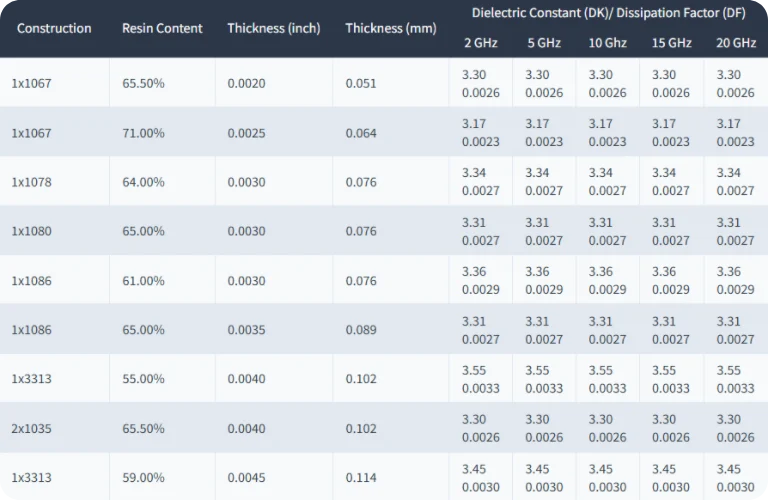
Copper Foil Qualification for I-Tera MT40 Programs
For high frequency PCB applications above 5 GHz, copper surface roughness is a primary insertion loss driver — and a common undisclosed substitution point at unqualified factories. The qualification standard:
| Standard ED copper (Rz 5–7 µm)
Default at most factories. Acceptable below 5 GHz. At 10 GHz, produces 15–25% higher insertion loss than RTF. If a factory proposes I-Tera MT40 with ED copper for a 10 GHz application, it indicates the RF engineering team was not involved in the quote. |
RTF copper (Rz 2–4 µm) ✓ Recommended
Standard baseline for I-Tera MT40 programs. Widely stocked at qualified factories. Highleap uses RTF as the default copper specification for I-Tera builds — it is included at the base price and documented in the production traveler. |
HVLP copper (Rz <1.5 µm)
For designs above 20 GHz. Must be explicitly stocked — not a default item. Ask for confirmation of stock status and lead time before specifying on a fast-turnaround program. |
Questions That Reveal Factory Capability
Five questions that distinguish qualified I-Tera MT40 manufacturers from material-listing factories. Ask all five before committing a program:
- “What copper foil grade do you use by default on I-Tera MT40 signal layers?” → Correct: RTF. Red flag: “standard copper” or “ED” without acknowledgment of frequency implications.
- “If I-Tera MT40 2116 prepreg is out of stock, what is your substitution policy?” → Correct: Customer notification required; no substitution without written approval. Red flag: “We substitute equivalent material as needed.”
- “What IPC class do you fabricate I-Tera MT40 builds to by default?” → Correct: Explicit statement of IPC Class 2 or Class 3 with reference to acceptance criteria. Red flag: “We meet all standard requirements” without class specification.
- “Can you provide the TDR data from a recent I-Tera production shipment?” → Evaluate the format: actual measured values across coupon types, or a one-line pass/fail statement.
- “What is your typical lot-to-lot Dk variation on your I-Tera MT40 production program?” → A qualified factory has data. A material-listing factory has no answer because they don’t track it.
For reference on high frequency material specifications and Dk tracking standards, see our materials documentation.
Documentation Checklist for I-Tera MT40 Programs
A qualified I-Tera manufacturer provides this documentation suite as standard deliverables — not premium add-ons:
- Validated press cycle parameter sheet — factory-specific, not the Isola minimum recommendation
- First-article cross-section report with IPC-A-600 measurements on every new program
- TDR impedance data report — actual measured values by coupon type, every production panel
- Isola I-Tera MT40 material lot certificate traceable to the production order
- Copper foil specification record documenting the actual foil grade used in production
- Certificate of Conformance with explicit IPC class reference
For HDI designs using laser via structures in I-Tera MT40, add: laser via cross-section confirming clean wall geometry and correct depth control.
Highleap Electronics: Qualified Isola I-Tera MT40 Manufacturer
Highleap Electronics qualifies I-Tera MT40 through every criterion in this guide. Our manufacturing capability for I-Tera MT40 programs includes:
- In-house validated press cycle — DSC Tg confirmation, cross-section void analysis on characterization builds
- RTF copper default on I-Tera signal layers; HVLP copper stocked for 20 GHz+ applications
- 100% TDR data reports standard with every controlled-impedance shipment
- First-article cross-section with IPC-A-600 plating measurements on all new programs
- Isola material lot certificates traceable to every production order
- IATF 16949 for automotive programs; IPC Class 3 with full documentation available
- Integrated SMT assembly and turnkey PCB assembly with I-Tera-specific reflow validation
Qualify Highleap Electronics as your I-Tera MT40 PCB manufacturer. Submit your Gerbers and stackup — we’ll return a DFM review, press cycle summary, and quote within one business day.
Frequently Asked Questions
How quickly can I verify a factory’s I-Tera MT40 qualification before committing a program?
The fastest verification is a document request: ask for a sample TDR data report and cross-section photos from a recent I-Tera production build. Response time, document completeness, and photo quality reveal factory qualification status within hours — without an on-site audit. Highleap Electronics provides these documents to prospective customers before any commercial commitment.
Is IATF 16949 certification required to supply I-Tera MT40 PCBs for automotive programs?
IATF 16949 certification applies to the quality management system, not the PCB material. For automotive programs that require IATF-certified supply, the factory must hold the certification — Isola 370HR is more common for automotive high-reliability applications, but I-Tera MT40 is used for radar front-end boards. Highleap holds IATF 16949 and can supply I-Tera MT40 automotive builds with PPAP documentation.
What is the lead time impact of specifying HVLP copper vs. RTF on an I-Tera MT40 prototype?
For factories that stock HVLP copper (Rz <1.5 µm), there is no lead time impact versus RTF — both are in-house inventory. For factories that do not stock HVLP, procurement adds 2–3 weeks. Highleap maintains HVLP copper in stock for I-Tera programs above 20 GHz. Confirm stock status at quote submission for time-critical prototypes.

Recommended Posts
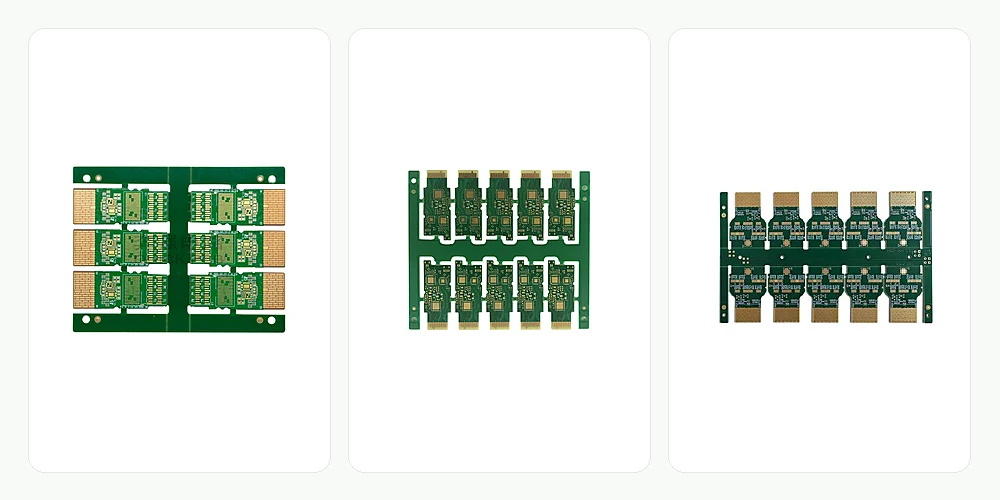
Optical Module PCB Manufacturer for 400G, 800G and 1.6T Programs
Highleap Electronics provides optical module PCB...
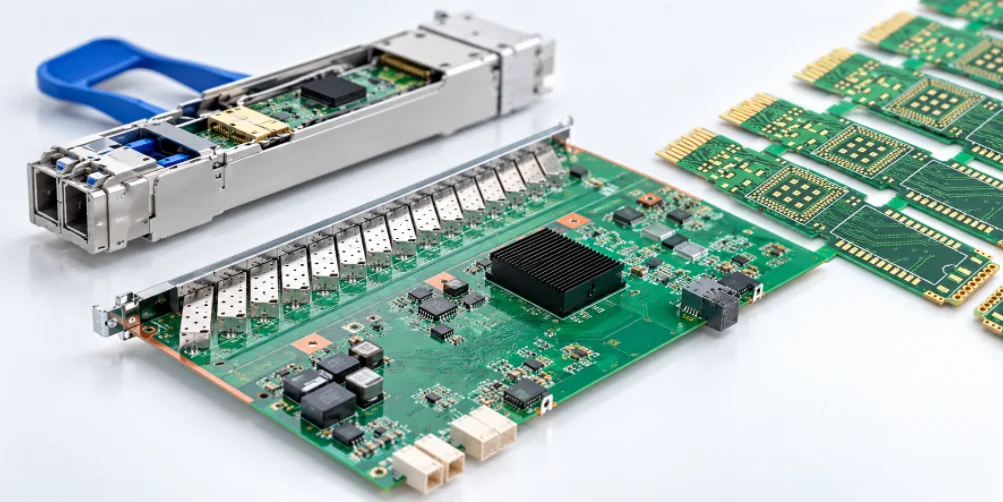
Optical Communication PCB Manufacturer for Fiber Network Equipment
Highleap Electronics manufactures and assembles optical...
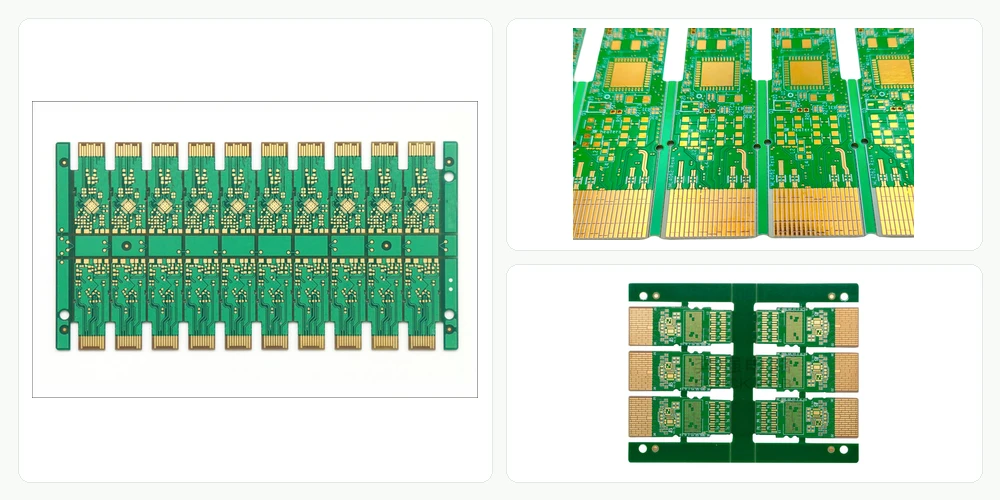
Optical Transceiver PCB Manufacturing in China
Highleap Electronics provides optical transceiver PCB...
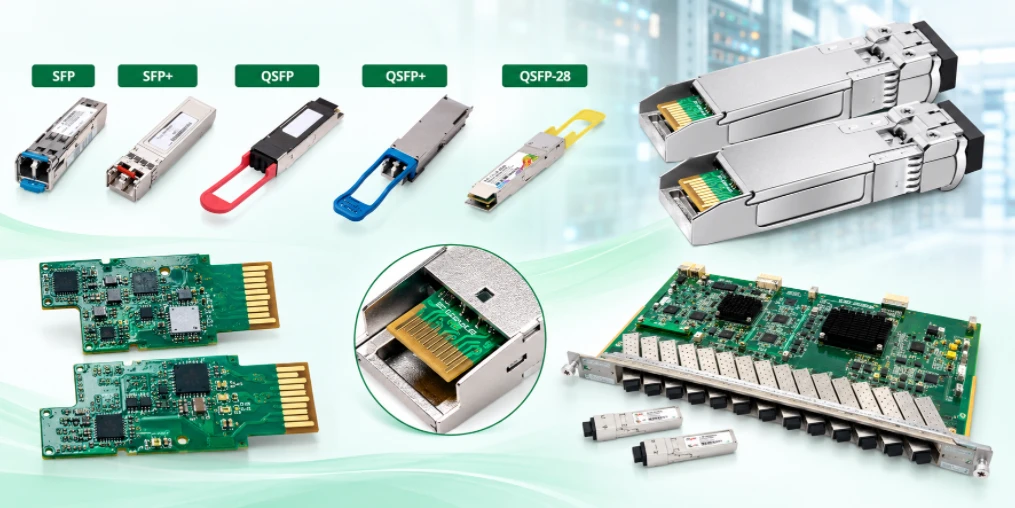
Optical Transceiver PCB Assembly Services in China
Highleap Electronics provides optical transceiver PCB...
How to get a quote for PCBs
Let us run DFM/DFA analysis for you and get back to you with a report.
You can upload your files securely through our website.
We require the following information in order to give you a quote:
-
- Gerber, ODB++, or .pcb, spec.
- BOM list if you require assembly
- Quantity
- Turn time