
Rigid-Flex PCB in Medical Devices Applications

Medical device manufacturers face increasing pressure to design electronics that are compact, lightweight, and highly reliable. Rigid-Flex PCB in medical devices provides an ideal solution, combining rigid board strength with flexible circuit adaptability. Unlike traditional rigid PCBs requiring connectors and cables, rigid-flex circuit boards simplify interconnections and support miniaturized PCB for medical devices, improving durability in critical healthcare applications.
This technology is widely applied in wearable medical devices, surgical equipment, and portable diagnostic tools, enabling flexible PCB in healthcare to meet stringent performance and space constraints.
Why Rigid-Flex PCBs are Ideal for Medical Devices
Rigid-Flex PCB in medical devices offers unmatched advantages for high-reliability applications, making it the preferred choice for medical electronics:
Space and Weight Savings
Rigid-flex PCB in medical devices integrates rigid and flexible regions, enabling high-density interconnections in compact form factors. This is essential for wearable medical devices and portable diagnostic tools, reducing overall system volume and eliminating bulky connectors.
High Reliability
Rigid-flex circuit boards minimize interconnection points, enhancing durability and consistent electrical performance under thermal cycling, vibration, and mechanical stress typical in healthcare environments.
Flexibility for Dynamic Movements
The flexible sections allow bending and folding without electrical failure, supporting patient monitoring devices and surgical equipment that undergo repetitive motions.
Miniaturization Support
Rigid-flex PCB in medical devices supports miniaturized PCB for medical devices, enabling high component density and optimized three-dimensional routing while maintaining mechanical strength.
Enhanced Durability
Polyimide-based flexible sections resist temperature changes, humidity, and chemical exposure, ensuring long-term performance in demanding medical environments.

Rigid-Flex PCB Applications in Medical Devices
Wearable Medical Devices
Rigid-Flex PCB in medical devices is widely used in wearable health monitoring systems, providing compact, high-reliability interconnections that conform to body contours. Continuous glucose monitors and cardiac monitoring devices benefit from rigid sections that house sensitive analog components and flexible sections that allow comfortable, ergonomic designs.
These applications of rigid-flex PCB in wearable medical devices combine sensor modules, signal processing circuits, and wireless connectivity within miniaturized PCB for medical devices, delivering clinical-grade measurement accuracy.
Imaging Equipment
Medical imaging systems such as ultrasound probes, X-ray detectors, and MRI-compatible electronics rely on rigid-flex circuit boards for high electrical performance and mechanical stability. Rigid sections support sensitive analog front-end circuits, while flexible interconnections accommodate motion and positioning requirements.
This approach enables handheld ultrasound probes and large-format digital radiography systems to maintain signal integrity and thermal stability, making flexible and rigid PCB for portable diagnostic tools essential in imaging applications.
Surgical Instruments
Minimally invasive surgical tools, robotic platforms, and image-guided navigation systems require compact, reliable electronics. Rigid-Flex PCB in medical devices allows integration of high-resolution image sensors, control circuits, and fiber-optic illumination within constrained packages.
Flexible sections enable complex routing and mechanical compliance, while rigid regions ensure stable mounting and electrical isolation. These advantages make advantages of rigid-flex PCB in surgical equipment critical for safe and precise operation.
Portable Diagnostic Tools
Point-of-care testing devices, including handheld blood analyzers and portable ultrasound units, depend on rigid-flex PCB in medical devices to integrate optical detection, fluidics control, and wireless modules in compact packages. Rigid sections house precision components, while flexible interconnections support three-dimensional routing, enabling flexible PCB in healthcare and high-performance miniaturized PCB for medical devices within portable diagnostic tools.
Conclusion
Rigid-Flex PCB in medical devices offers key advantages for modern medical electronics, including:
-
Space and Weight Savings – compact form factors enable miniaturized designs for wearable and portable devices.
-
High Reliability – reduced interconnection points and robust construction ensure consistent performance in critical applications.
-
Lightweight and Flexible – flexible sections accommodate bending and ergonomic requirements without compromising electrical integrity.
-
High-Density Interconnections – integrate complex circuits within a single board assembly for optimized functionality.
At Highleap Electronics, we provide comprehensive support for medical-grade rigid-flex PCB projects:
-
Expertise in medical device PCB design and manufacturing
-
Compliance with industry standards and regulations (ISO 13485, IPC Class III)
-
Advanced fabrication for miniaturized PCB for medical devices
-
Rigorous quality control and testing for high-reliability applications
-
Fast-turn prototyping and scalable production for rapid development
Discover how rigid-flex PCB technology can enhance your medical device designs. Contact our engineering team today to discuss your requirements and explore our advanced manufacturing capabilities.

Recommended Posts
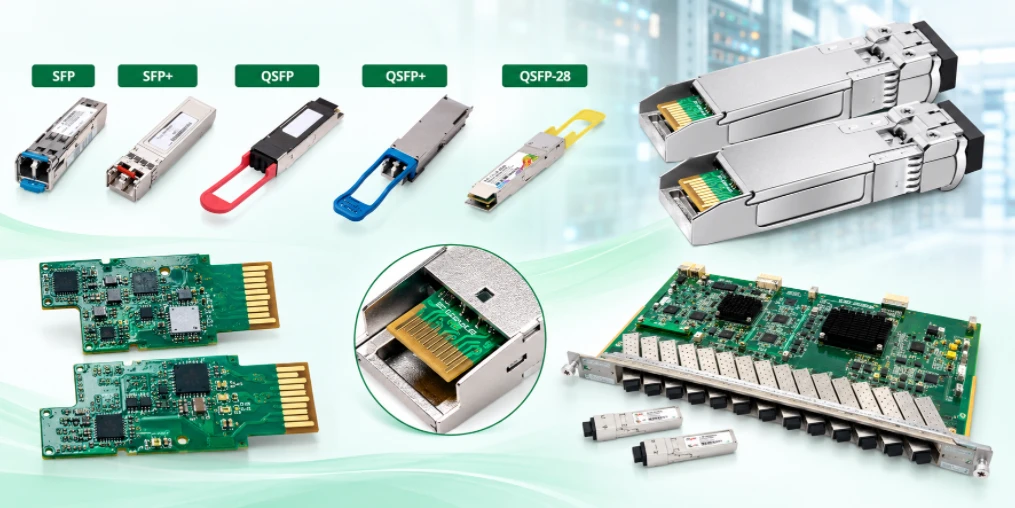
Optical Transceiver PCB Assembly Services in China
Highleap Electronics provides optical transceiver PCB...
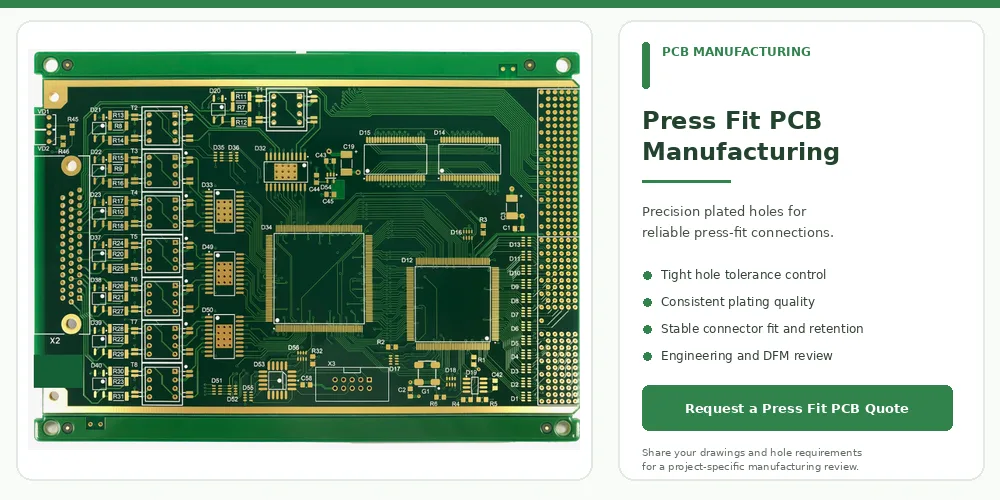
Precision Press Fit PCB Manufacturing with Tight Tolerances
Press-fit PCB manufacturing requires close coordination...
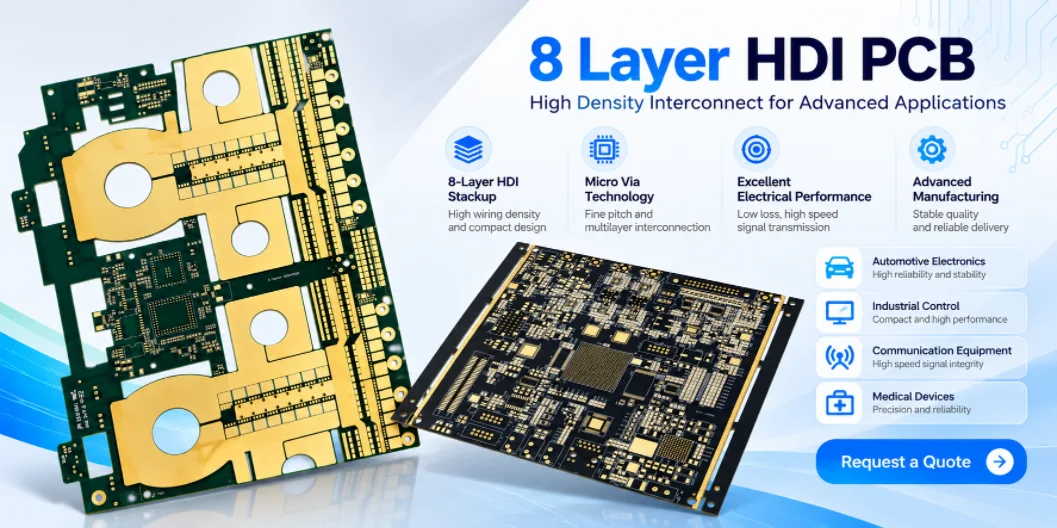
8 Layer HDI PCB Manufacturer in China
Highleap Electronics provides 8 layer HDI PCB...
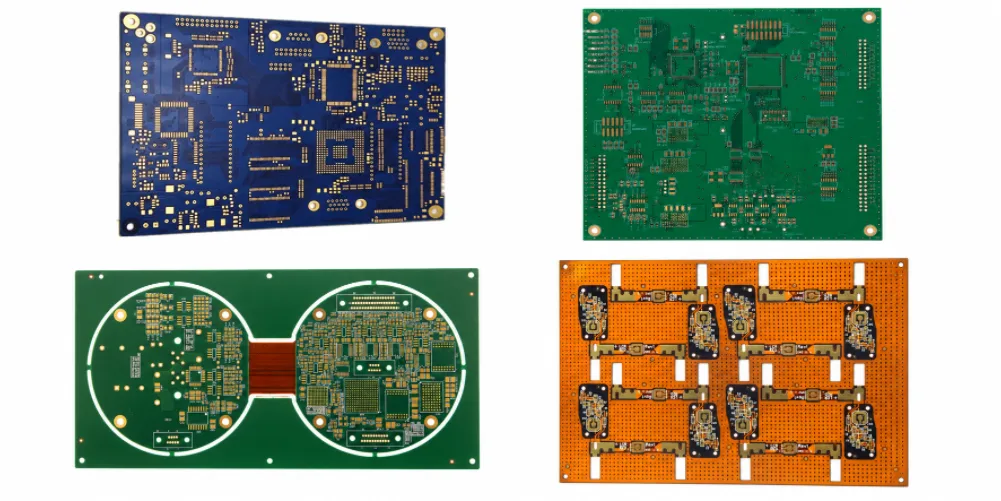
8 Layer Rigid-Flex PCB Manufacturing and Cost Guide
An 8 layer rigid-flex PCB combines multilayer rigid...
How to get a quote for PCBs
Let‘s run DFM/DFA analysis for you and get back to you with a report. You can upload your files securely through our website. We require the following information in order to give you a quote:
-
- Gerber, ODB++, or .pcb, spec.
- BOM list if you require assembly
- Quantity
- Turn time
In addition to PCB manufacturing, we offer a comprehensive range of electronic services, including PCB design, PCBA, and turnkey solutions. Whether you need help with prototyping, design verification, component sourcing, or mass production, we provide end-to-end support to ensure your project’s success.
For PCBA services, please provide your BOM (Bill of Materials) and any specific assembly instructions. We also offer DFM/DFA analysis to optimize your designs for manufacturability and assembly, ensuring a smooth production process.