
Aluminum PCB for Audio Amplifiers | Balancing Thermal Stability and Signal Purity

Introduction: The Role of Audio Amplifier PCB in Performance
The audio amplifier PCB serves as the foundation for reliable power delivery and signal integrity in professional audio systems. High-power amplifiers face two critical design challenges: thermal management to prevent heat-induced distortion, and signal purity to maintain low noise floors and high fidelity. Aluminum-based PCB technology addresses both requirements by integrating a metal heat spreader directly into the circuit board structure, providing superior thermal conductivity while maintaining electrical isolation necessary for clean audio signals.
Why Thermal Management Matters in Audio Amplifier PCBs
Heat Generation in Power Stages
Power transistors, MOSFETs, and high-wattage resistors in amplifier circuits generate substantial heat during operation. Without adequate thermal dissipation, junction temperatures rise quickly, leading to measurable performance degradation. Thermal drift causes bias point shifts in output stages, manifesting as increased harmonic distortion and reduced linearity across the frequency spectrum.
Impact on Component Reliability
Component aging accelerates exponentially with temperature. For every 10°C increase in operating temperature, semiconductor device lifespan typically decreases by half. Aluminum substrates address this through direct heat extraction, with thermal conductivity values of 1.0 to 2.0 W/m·K for the complete assembly, representing significant improvement over standard FR4 laminates at 0.3 W/m·K. The result is a flatter temperature profile across the audio amplifier PCB, reducing thermal stress on critical components.
Aluminum PCB Structure for Audio Applications
Layer Configuration
The aluminum audio amplifier PCB consists of four functional layers. The copper circuit layer carries signal traces and power distribution, typically ranging from 1 to 4 ounces per square foot. Below this sits the dielectric insulation layer providing electrical isolation while allowing thermal conduction. The aluminum substrate layer forms the structural foundation and primary thermal pathway, connecting mechanically to external heatsinks or chassis surfaces.
Key Design Parameters
Three parameters dominate aluminum PCB performance in audio applications:
- Dielectric thickness – Balances thermal resistance and breakdown voltage based on operating conditions.
- Copper weight – Determines current capacity and minimizes resistive losses in power stages.
- Surface finish – ENIG or OSP treatments provide low contact resistance for sensitive signal paths.

Balancing Thermal Stability and Signal Purity in Audio Amplifier PCB Design
Thermal Stability Benefits
Aluminum substrates maintain uniform temperature distribution across the circuit board, preventing localized hot spots that cause thermal distortion. This temperature uniformity ensures matched transistor pairs in differential stages maintain consistent characteristics, preserving common-mode rejection and minimizing harmonics. The metal base provides mechanical stability that reduces stress on solder joints during thermal cycling.
Signal Purity Considerations
The continuous metal plane in an aluminum audio amplifier PCB creates effective electromagnetic shielding when properly grounded. This reduces coupling between high-current power traces and sensitive input stages, lowering the noise floor. However, ground plane distribution must avoid current loops that could induce hum into signal paths. Dielectric thickness influences parasitic capacitance between circuit traces and metal base, requiring attention during wideband amplifier design.
Impedance Control
Trace impedance becomes more predictable with uniform dielectric properties of aluminum PCB construction. The metal substrate acts as a stable reference plane, reducing impedance variations that could cause signal reflections in high-speed switching amplifiers. This controlled impedance environment contributes to cleaner pulse edges and reduced electromagnetic interference.
Design Recommendations for Audio Amplifier PCBs
Construction Selection
Single-layer aluminum PCB designs suit straightforward amplifier modules where component density allows simple layout. These work well for Class D output stages where switching devices mount directly to the aluminum substrate for optimal heat extraction. Multi-layer constructions with additional insulation layers enable complex routing while maintaining thermal performance, accommodating dense component placement in high-channel-count systems.
Thermal Pathway Optimization
Effective thermal management requires attention to the complete heat flow path:
- Shortest thermal path – Direct heat flow from components to metal base minimizes junction temperatures.
- Interface materials – TIM fills microscopic air gaps, reducing contact resistance to heatsinks.
- Mechanical attachment – Proper fastener torque ensures reliable thermal transfer to chassis.
- Thermal simulation – Computational analysis validates design before manufacturing commitment.
Manufacturing Considerations
Circuit board fabrication for aluminum substrates requires specialized processes. Drilling parameters must account for the metal base layer to prevent tool breakage. CNC routing requires appropriate feeds and speeds for aluminum machining. Component assembly needs thermal profiling adjusted for the substrate’s high thermal mass, ensuring adequate heat transfer to solder joints while avoiding thermal shock.
Conclusion: Reliable Performance Through Thermal Engineering
Aluminum-based audio amplifier PCB technology delivers measurable improvements in thermal management and signal stability for high-power applications. The integrated heat spreading capability reduces thermal distortion while extending component operational life through lower junction temperatures. Professional audio system designers increasingly specify aluminum substrates for applications where reliability and performance cannot be compromised.
Highleap Electronics Capabilities
At Highleap Electronics, we deliver comprehensive aluminum PCB solutions for audio amplifier applications:
- Custom thermal design – Optimized metal thickness and dielectric selection for specific power profiles.
- Multi-layer construction – Complex routing with maintained thermal performance for dense assemblies.
- Precision manufacturing – Specialized drilling and machining processes for aluminum substrates.
- Assembly services – Thermal profiling and process control for reliable solder joint formation.
- Engineering support – Thermal simulation and design validation for professional-grade performance.
Our team works closely with clients to develop thermal management solutions that meet application requirements while maintaining the signal integrity standards that professional audio demands. Contact us to discuss your audio amplifier PCB project requirements.

Recommended Posts
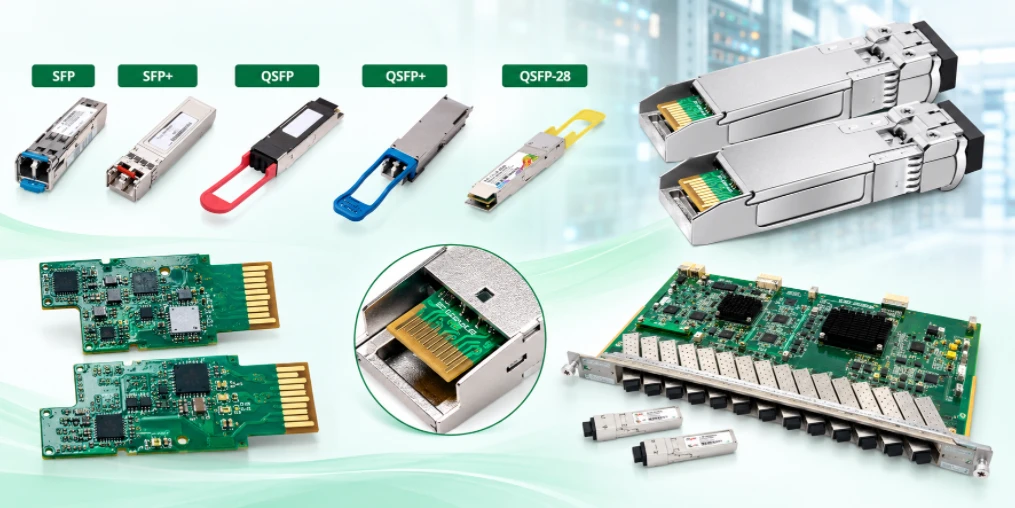
Optical Transceiver PCB Assembly Services in China
Highleap Electronics provides optical transceiver PCB...
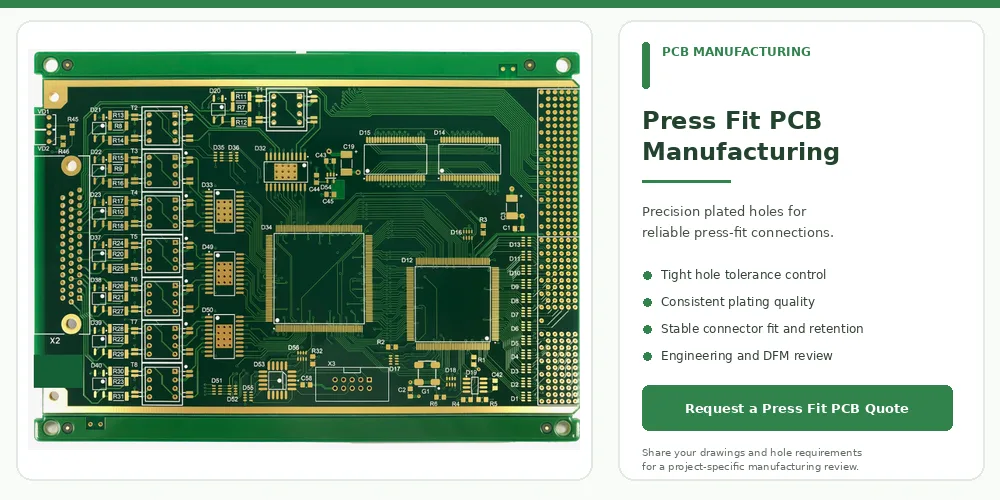
Precision Press Fit PCB Manufacturing with Tight Tolerances
Press-fit PCB manufacturing requires close coordination...
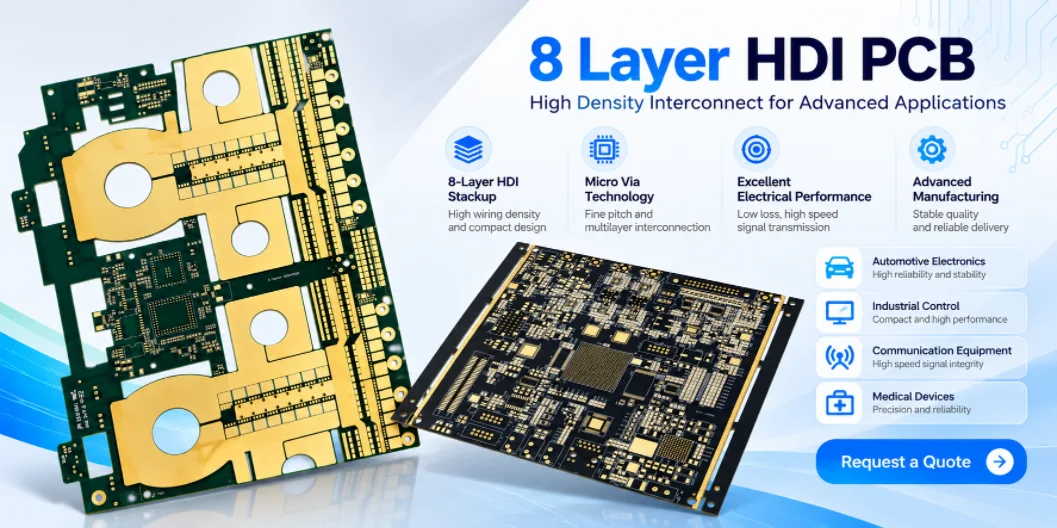
8 Layer HDI PCB Manufacturer in China
Highleap Electronics provides 8 layer HDI PCB...
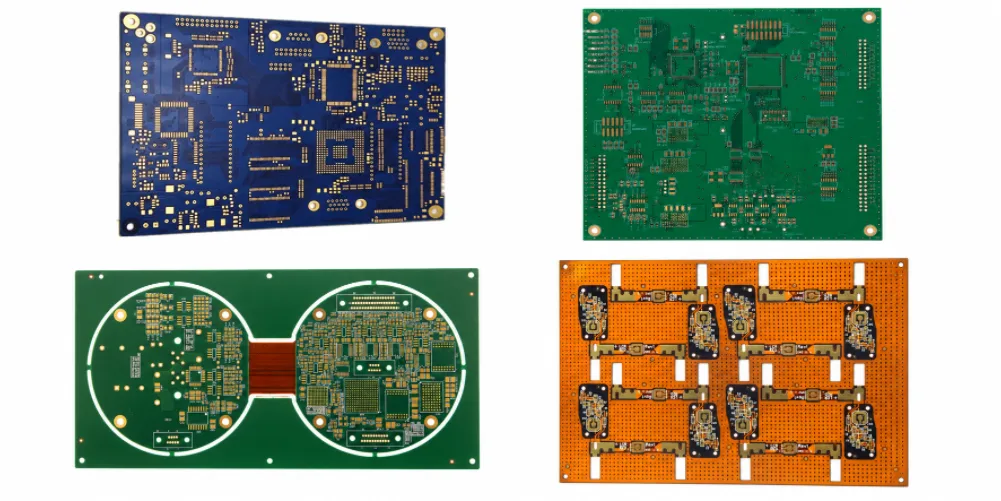
8 Layer Rigid-Flex PCB Manufacturing and Cost Guide
An 8 layer rigid-flex PCB combines multilayer rigid...
How to get a quote for PCBs
Let‘s run DFM/DFA analysis for you and get back to you with a report. You can upload your files securely through our website. We require the following information in order to give you a quote:
-
- Gerber, ODB++, or .pcb, spec.
- BOM list if you require assembly
- Quantity
- Turn time
In addition to PCB manufacturing, we offer a comprehensive range of electronic services, including PCB design, PCBA, and turnkey solutions. Whether you need help with prototyping, design verification, component sourcing, or mass production, we provide end-to-end support to ensure your project’s success.
For PCBA services, please provide your BOM (Bill of Materials) and any specific assembly instructions. We also offer DFM/DFA analysis to optimize your designs for manufacturability and assembly, ensuring a smooth production process.