
Prepreg Material for Multilayer PCB Manufacturing
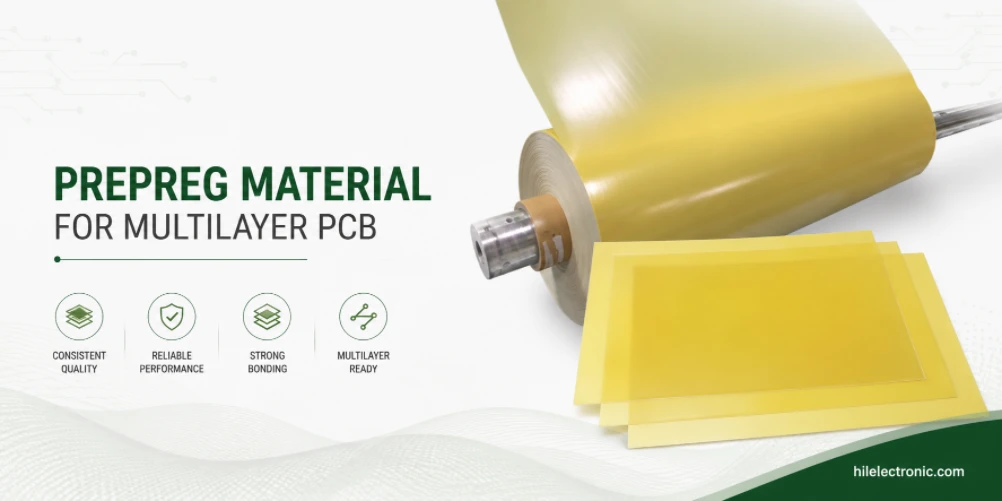
Prepreg is the bonding material that turns a stack of individual copper layers into a single multilayer PCB, and selecting it correctly is one of the most consequential and most overlooked decisions in multilayer manufacturing. The right prepreg fills the spaces between etched copper, sets the dielectric spacing that controls impedance, and bonds the whole stack into a void-free laminate under heat and pressure. The wrong prepreg — or the wrong resin content for a given layer pattern — produces voids, delamination, or impedance errors that may not appear until the board is in service. This guide explains how core and prepreg work together, why resin content matters, what high-layer-count designs demand, and how to review material choices before production.
Understanding Core and Prepreg Materials
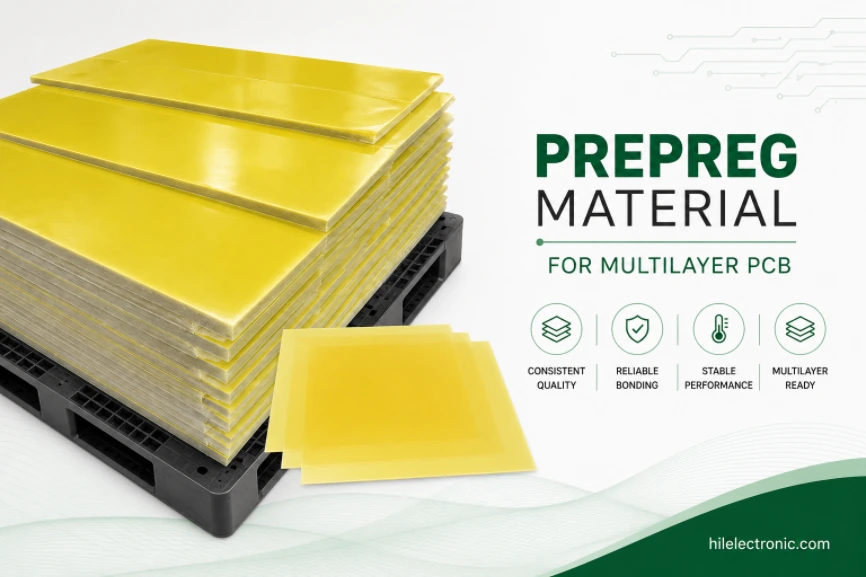
A multilayer PCB alternates two material types. The core is a fully cured copper-clad laminate: a hardened sheet of resin and glass cloth with copper bonded to one or both faces, which carries the etched circuitry of the inner layers. Prepreg — short for pre-impregnated — is glass cloth impregnated with resin that is only partially cured, left in a B-stage condition so that it can still flow and bond when heated.
During lamination, the prepreg sheets are placed between the etched cores, and the entire stack is pressed under heat and pressure. The prepreg resin softens, flows to fill the spaces around the copper traces, and then fully cures, fusing the cores into a single rigid board. Cores provide the stable, dimensionally fixed circuit layers; prepreg provides the bonding and the controlled dielectric spacing between them. Both must come from a compatible material system so that their resin chemistry, glass grade, and thermal behavior match. The role both materials play in advanced designs is covered in our high layer count PCB materials guide, and the supply pressure on the underlying laminate in our PCB material shortage overview.
Resin Content and Lamination Performance
The defining property of a prepreg is its resin content — the proportion of resin to glass cloth, expressed as a percentage. Resin content determines how much resin is available to flow into the spaces around the copper during lamination, and it must be matched to the copper pattern it bonds over. A layer with heavy copper or wide planes needs a prepreg with enough resin to fill the deep voids left between features; too little resin leaves unfilled gaps that become voids, and too much can cause excessive flow, thickness variation, and resin starvation elsewhere.
Resin content also sets the cured dielectric thickness between layers, which directly controls impedance. Two prepregs of the same nominal description but different resin content will press to different thicknesses and yield different impedance, so the prepreg selection is part of the impedance calculation, not a detail left to the shop floor. A correct stack-up specifies the prepreg construction — glass style and resin content — for each dielectric layer so that fill, thickness, and impedance are all satisfied together. This is why prepreg choice is inseparable from the impedance and material-selection work described in our high speed PCB material selection guide.
High Layer Count PCB Requirements
High-layer-count boards intensify every prepreg consideration because there are simply more bonding interfaces, each of which must press correctly for the board to pass. As AI and networking hardware has pushed layer counts upward — AI server boards have moved from around 18 layers in 2023 toward 32 layers in 2025 — the cumulative tolerance demands on prepreg fill, thickness, and registration have grown sharply. A small per-layer thickness variation that is harmless on an 8-layer board accumulates across 32 layers into significant total-thickness and impedance error.
These designs also tend to specify low-loss material systems, where the prepreg must be the low-loss grade matched to the low-loss cores, often using smooth HVLP copper and specialty low-Dk glass. The prepreg cannot be a generic FR-4 grade paired with a low-loss core; the resin systems must be compatible to bond reliably and to deliver the intended electrical performance. High-layer-count stack-ups therefore carry both the electrical demands of low-loss material and the mechanical demands of many interfaces at once, which is why they are reviewed so carefully before fabrication. They also inherit the supply exposure of those inputs — the same CCL shortage and copper foil shortage that constrain the cores constrain the matching prepreg. The broader material requirements for these boards are detailed in our AI server PCB materials guide.
Common Lamination Risks
Most multilayer failures trace back to one of a few lamination problems, and prepreg selection sits at the center of each. Voids occur when there is insufficient resin flow to fill the spaces around copper, leaving trapped air that weakens the bond and can fail in thermal cycling. Delamination — separation between layers — results from poor resin-to-core bonding, often from incompatible material systems or contaminated surfaces. Resin starvation, where too little resin remains over features, leaves weak, brittle regions.
Two further risks scale with layer count. Layer-to-layer registration error — misalignment between the etched layers — grows with the number of layers and the dimensional movement of the materials during pressing, and it can cause drilled vias to miss their pads. Warpage, the bowing of the finished board, arises from mismatched thermal expansion across the stack and from asymmetric construction, and it complicates assembly. Each of these is preventable at the design stage through correct prepreg resin-content selection, compatible core-and-prepreg pairing, balanced symmetric construction, and a verified stack-up — which is why the material review matters far more than any recovery attempt after pressing. These mechanical considerations parallel those in our high layer count PCB materials guide.
Material Availability and Lead Time
Prepreg availability is now a scheduling constraint in its own right, because prepreg draws on the same resin, glass cloth, and broader laminate supply that tightened across 2025 and 2026. The same specialty resins and low-Dk glasses that constrain core laminate also constrain the matching prepreg, and the two must be ordered as a compatible set. Lead times in 2026 reflect this: standard FR-4 material has moved from a historical 2–3 weeks to roughly 6–8 weeks, mid-loss and low-loss grades to 14–18 weeks, and the most advanced specialty grades to allocation-only at 20 or more weeks, with epoxy resin supply itself stretching from around 3 weeks to as long as 15 weeks.
The practical consequence is that prepreg and core must be planned together and well ahead of the production need. Ordering a low-loss core without securing the matching low-loss prepreg — or vice versa — leaves a stack that cannot be pressed. Material commitments for low-loss systems are increasingly placed 16–20 weeks in advance, and high-layer-count programs that depend on specialty grades should treat the material lead time, not the fabrication queue, as the binding schedule item. The full lead-time picture is set out in our PCB laminate lead time guide.
Review Process Before Production
A reliable multilayer board is decided in the stack-up review, before any material is ordered. The review confirms that each dielectric layer has a prepreg construction with the correct resin content for the copper pattern it bonds over; that the core and prepreg come from a compatible material system; that the total finished thickness and the per-layer dielectric thicknesses produce the target impedance; and that the construction is symmetric to control warpage. It also confirms material availability — that the specified core and matching prepreg can actually be allocated within the program’s timeline, and that a qualified equivalent exists where a grade is constrained.
This review is where over-specification is caught and corrected, which matters because a large share of a board’s cost and risk is locked at the design stage — by some estimates up to 80% of board cost is determined before fabrication begins. Defaulting to a low-loss prepreg system where a high-Tg FR-4 would serve, or specifying a tighter resin-content tolerance than the design needs, adds both cost and allocation exposure. Highleap Electronics performs a confirmed stack-up calculation and material-availability review for every multilayer program, so the prepreg and core are verified together against both electrical targets and real supply before the order is placed.
Best Practices for Reliable Manufacturing
A few practices consistently separate reliable multilayer programs from troubled ones. Pair core and prepreg as a single material system rather than mixing grades, so resin chemistry and thermal behavior match. Select resin content per layer to match the copper pattern, rather than applying one prepreg uniformly across a stack with mixed copper weights. Keep the construction symmetric to control warpage, especially on high-layer-count boards. Specify low-loss and specialty grades only where the signal rate requires them, and use a hybrid stack-up to confine premium material — and its allocation risk — to the critical layers.
On the supply side, plan core and prepreg together, place material commitments well ahead of the production need, qualify a second compatible material system for any constrained grade, and share a rolling forecast so a fabricator can reserve allocation against real demand. Treating prepreg as an engineered, supply-constrained material — rather than a generic bonding sheet — is what keeps a multilayer program on schedule and reliable in the 2026 market.
Get a Stack-Up Review for Your Multilayer PCB
Highleap Electronics is a PCB fabrication and assembly factory. Across our PCB manufacturing and multilayer PCB programs we verify core-and-prepreg pairing, resin content, impedance, and material availability together, so a multilayer board is engineered to laminate reliably the first time.
Prepreg Material FAQs
What is the difference between core and prepreg->
The core is a fully cured copper-clad laminate carrying etched inner-layer circuitry. Prepreg is glass cloth impregnated with partially cured (B-stage) resin that flows and bonds when heated, fusing the cores into a single board during lamination. Cores provide stable circuit layers; prepreg provides the bonding and the dielectric spacing between them.
Why does prepreg resin content matter->
Resin content sets how much resin is available to flow around the copper during lamination and determines the cured dielectric thickness between layers. It must match the copper pattern — too little resin leaves voids, too much causes thickness variation — and because it controls dielectric thickness, it directly affects impedance.
Can I pair any prepreg with any core->
No. Core and prepreg should come from a compatible material system so their resin chemistry, glass grade, and thermal behavior match. Pairing a low-loss core with a generic FR-4 prepreg risks poor bonding, delamination, and incorrect electrical performance.
What are the most common lamination failures->
Voids from insufficient resin flow, delamination from poor resin-to-core bonding, resin starvation from too little resin over features, layer-to-layer registration error that grows with layer count, and warpage from mismatched thermal expansion or asymmetric construction. Most are prevented by correct prepreg selection and a verified stack-up.
How does prepreg affect lead time in 2026->
Prepreg draws on the same constrained resin and glass-cloth supply as core laminate and must be ordered as a matching set. Standard FR-4 material has moved to roughly 6–8 weeks, mid- and low-loss grades to 14–18 weeks, and advanced specialty grades to 20-plus weeks on allocation, so core and prepreg should be planned together and committed well ahead of production.

Recommended Posts
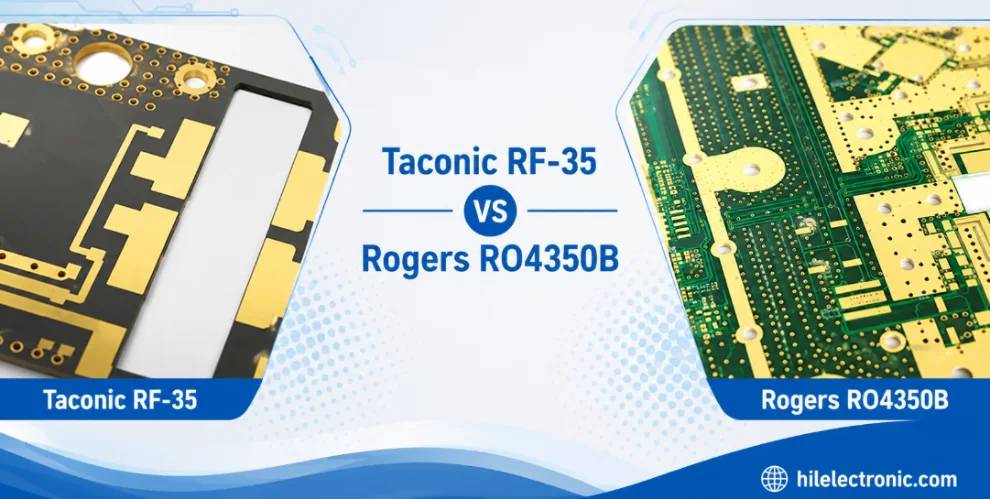
Taconic RF 35 vs RO4350B PCB
Table of contentsRF-35 vs RO4350B Procurement and...
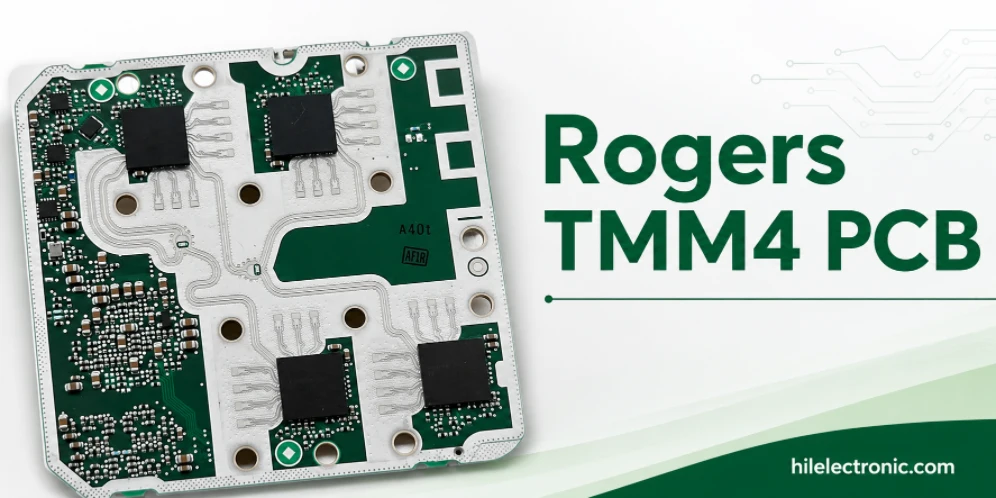
TMM4 Filter PCB Manufacturing
TMM4 filter PCB manufacturing is controlled by the...
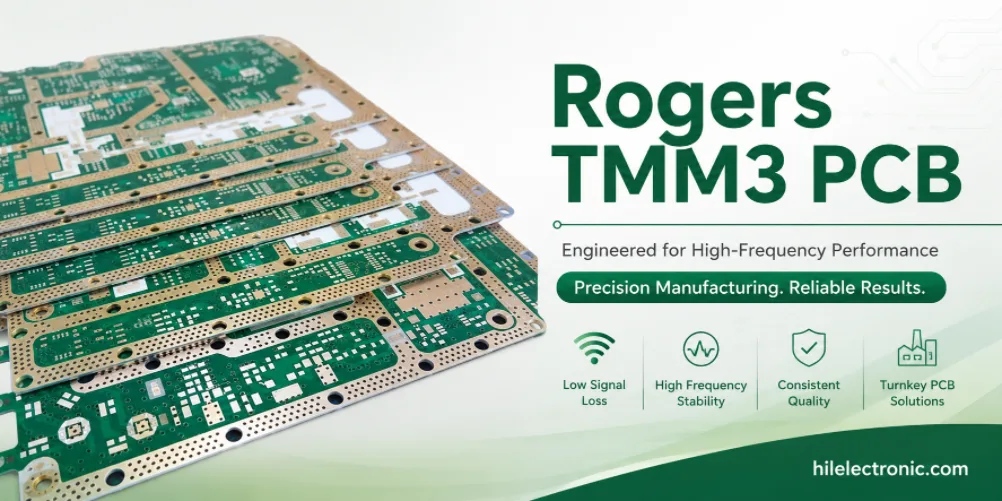
TMM3 PCB Manufacturing for RF Modules
TMM3 PCB manufacturing is most useful where the RF module...
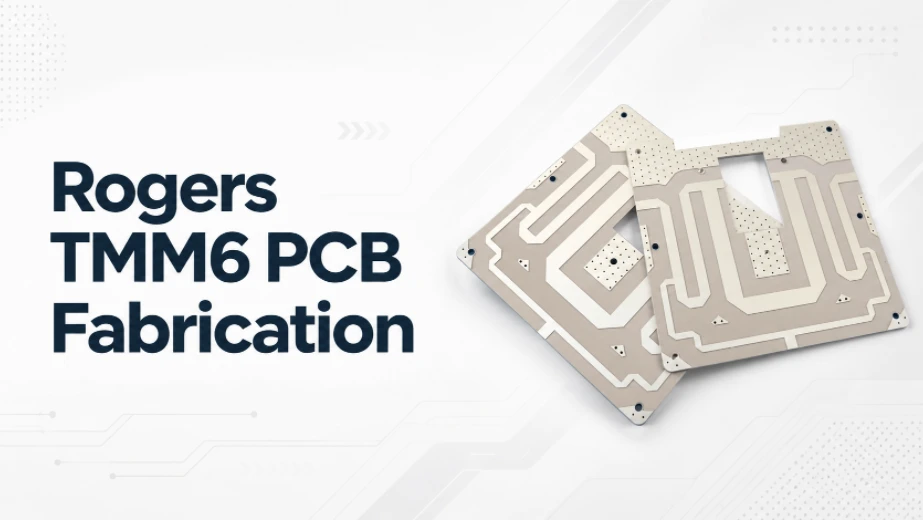
TMM6 PCB Fabrication
TMM6 fabrication is the process-control page for a mid-Dk...
How to get a quote for PCBs
Let’s run DFM/DFA analysis for you and get back to you with a report. You can upload your files securely through our website. We require the following information in order to give you a quote:
-
- Gerber, ODB++, or .pcb, spec.
- BOM list if you require assembly
- Quantity
- Turn time
For PCBA services, please provide your BOM (Bill of Materials) and any specific assembly instructions. We also offer DFM/DFA analysis to optimize your designs for manufacturability and assembly, ensuring a smooth production process.