
Semiconductor PCB Materials: A Technical Selection Guide

Introduction
Semiconductor PCB materials face extraordinary demands in RF transmission, high-speed signal routing, power management, and elevated temperature environments. The substrate material directly determines signal integrity, thermal performance, and assembly reliability.
This guide examines semiconductor PCB materials through three critical lenses: material categories and their physical properties, key performance indicators that drive material selection, and practical decision frameworks for matching materials to specific applications.
Why Semiconductor PCB Materials Matter
Electrical Performance Parameters
The dielectric constant (Dk) and dissipation factor (Df) fundamentally govern signal transmission quality in semiconductor PCB materials. Lower Dk values reduce signal propagation delay and minimize impedance variation, while low Df directly correlates with reduced insertion loss at high frequencies. Loss tangent becomes critical above 10 GHz, where even minor material variations cause measurable phase errors.
Thermal Management Requirements
Thermal conductivity determines heat dissipation efficiency from active components to external heatsinks or ambient air. The coefficient of thermal expansion (CTE) mismatch between semiconductor PCB materials and silicon dies generates mechanical stress during temperature cycling. This stress concentrates at solder joints and wire bonds, accelerating fatigue failures. Materials with CTE values closer to silicon (approximately 2.6 ppm/°C) demonstrate superior long-term reliability.
Packaging Substrate Demands
Semiconductor packaging substrates impose stricter requirements than conventional PCBs. Line widths below 25 micrometers, layer-to-layer registration tolerances under 15 micrometers, and multiple high-temperature reflow cycles demand materials with exceptional dimensional stability. Glass transition temperatures exceeding 170°C prevent warpage and delamination during lead-free assembly processes reaching 260°C.

Semiconductor PCB
Types of Semiconductor PCB Materials
High-Tg FR-4 and Modified Epoxy Laminates
High-Tg FR-4 variants offer glass transition temperatures between 170°C and 180°C compared to standard FR-4’s 130-140°C range. These semiconductor PCB materials maintain dimensional stability through lead-free reflow profiles. Dielectric constants typically range from 4.2 to 4.6 at 1 MHz, with dissipation factors around 0.020.
Cost-effective for digital circuits operating below 1 GHz, high-Tg FR-4 suits power supply boards and moderate-speed interfaces. However, Dk variation with frequency and temperature limits precision RF applications. Thermal conductivity remains modest at 0.3-0.4 W/m·K, requiring careful copper plane design for adequate heat spreading.
Polyimide and High-Temperature Laminates
Polyimide-based semiconductor PCB materials withstand continuous operation at 200°C with glass transition temperatures exceeding 250°C. This thermal stability enables multiple reflow cycles without delamination or dimensional distortion. CTE values around 12-16 ppm/°C provide better matching to ceramic packages than standard epoxy resins.
These materials excel in automotive underhood electronics, aerospace applications, and advanced flip-chip packaging where thermal cycling exceeds 1000 cycles. The trade-off involves higher moisture absorption than PTFE materials and moderately higher dissipation factors of 0.008-0.012 at 10 GHz.
PTFE and PTFE-Composite Materials
Pure PTFE delivers exceptional electrical performance with Dk values of 2.1 and dissipation factors below 0.0002 across microwave frequencies. PTFE-ceramic composites increase Dk to 2.2-10.2 for controlled impedance designs while maintaining Df below 0.002. These semiconductor PCB materials exhibit minimal dielectric dispersion up to 77 GHz.
Millimeter-wave antenna arrays, low-noise amplifiers, and precision phase-matched RF paths demand PTFE’s stability. Challenges include weak copper adhesion requiring specialized surface treatments and high thermal expansion (CTE 70-100 ppm/°C for pure PTFE). Ceramic-filled PTFE composites reduce CTE to 24-30 ppm/°C while improving mechanical strength.
Ceramic Substrates
Alumina (Al₂O₃) substrates provide thermal conductivity of 24-28 W/m·K with CTE of 6.5-7 ppm/°C. Aluminum nitride (AlN) achieves thermal conductivity exceeding 170 W/m·K while maintaining electrical insulation above 10¹⁴ Ω·cm. These semiconductor PCB materials enable direct die attachment without polymer thermal interface materials.
High-power RF amplifiers, IGBT modules, and LED packages leverage ceramic’s thermal performance. Alumina costs less but requires thicker substrates for adequate heat spreading. AlN’s superior conductivity allows thinner designs with lower thermal resistance. Brittle fracture mechanics necessitate careful handling during assembly.
Specialized RF Laminates
a specialty low-loss laminate series and similar hydrocarbon-ceramic materials balance performance and manufacturability. Typical specifications include Dk of 3.38-3.48 with temperature coefficients under 50 ppm/°C, and Df below 0.004 at 10 GHz. These semiconductor PCB materials process using standard PCB equipment while delivering RF-grade stability.
Filter networks, power amplifier matching circuits, and radar front-ends benefit from tight Dk tolerance (±0.05) and low moisture absorption below 0.06%. Unlike pure PTFE, these laminates permit through-hole plating and multilayer construction with conventional prepreg. Cost positions between high-Tg FR-4 and PTFE composites makes them optimal for volume RF production.
Metal-Core and Insulated Metal Substrates
Aluminum or copper base plates conduct heat directly from component mounting surfaces to heatsinks or chassis. Dielectric layers ranging from 50 to 200 micrometers separate circuit traces from the metal core. Thermal resistance values reach 0.5-2 °C·cm²/W depending on dielectric thickness and thermal conductivity.
Power LED arrays, motor drives, and single-sided high-current circuits utilize metal-core semiconductor PCB materials for thermal management. These substrates typically support only single or double-sided circuits, limiting routing complexity compared to multilayer ceramic or organic substrates.
Material Selection Decision Framework
Frequency-Based Selection
Operating frequency establishes initial material boundaries for semiconductor PCB materials:
- Below 1 GHz – High-Tg FR-4 provides adequate dielectric stability for most digital and moderate-speed analog circuits with cost advantages.
- 1-10 GHz range – Low-Df materials with stable Dk position specialty low-loss laminate-type laminates and PTFE composites as primary candidates for signal integrity.
- Above 20 GHz – PTFE-based semiconductor PCB materials minimize insertion loss and phase distortion in millimeter-wave applications.
- Broadband applications – Materials with minimal Dk dispersion across frequency prevent group delay variation in wideband systems.
Power Density Considerations
Heat flux requirements drive thermal material selection. Dissipation below 5 W/cm² allows conventional organic substrates with thermal vias and copper planes. Heat flux from 5-15 W/cm² necessitates metal-core designs or thick-copper constructions with enhanced thermal via arrays. Applications exceeding 15 W/cm² demand ceramic substrates or hybrid constructions combining local ceramic islands with organic routing layers.
Temperature Range Requirements
Environmental temperature ranges inform material qualification for semiconductor PCB materials. Standard industrial ratings (-40 to 85°C) suit high-Tg epoxy materials. Automotive underhood and aerospace applications requiring -55 to 150°C continuous operation mandate polyimide-based systems. Peak reflow temperatures above 260°C or multiple thermal cycles favor polyimide or high-performance epoxy systems with proven resistance to delamination.
Manufacturing Process Compatibility
Assembly process capability closes the selection loop. Standard SMT lines process FR-4 and specialty low-loss laminate laminates without equipment modification. PTFE materials require modified drilling parameters, plasma treatment for adhesion, and controlled press cycles. Ceramic substrates demand specialized metallization equipment and high-temperature brazing or soldering processes incompatible with organic components.

Semiconductor PCB
Manufacturing Considerations for Semiconductor PCB Materials
Copper Foil and Surface Finish
Copper foil selection impacts both electrical and thermal performance in semiconductor PCB materials. Standard electrodeposited copper (0.5-2 oz) suffices for signal routing, while heavy copper (3-10 oz) reduces resistive losses in power distribution. Very low-profile copper foils minimize surface roughness effects on insertion loss above 10 GHz, critical for maintaining low Df benefits.
Surface finish chemistry affects solderability and long-term reliability. Electroless nickel immersion gold (ENIG) provides excellent shelf life and wire bonding compatibility but introduces signal loss at high frequencies. Immersion silver or organic solderability preservative coatings reduce insertion loss but require careful storage and lead-free solder compatibility validation.
Material Processing Challenges
PTFE bonding challenges require plasma or sodium etching to promote adhesion before lamination. Drilling generates stringy debris requiring specialized tool geometries and higher spindle speeds than standard FR-4. Ceramic machining utilizes laser ablation or ultrasonic drilling rather than conventional mechanical processes, limiting via placement flexibility.
Design Verification Testing
Design for manufacturability reviews should occur early in semiconductor PCB materials selection. Prototype builds validate thermal cycling performance, layer-to-layer registration capability, and via reliability through temperature-humidity-bias testing. S-parameter measurements confirm electrical performance matches simulation models based on material datasheets, revealing any discrepancies between specified and actual Dk or Df values.
Application Examples
RF Front-End Module Design
An X-band radar front-end module required phase-matched signal paths with insertion loss below 0.5 dB across 8-12 GHz. The engineering team selected a specialty low-loss laminate (Dk 3.48, Df 0.004) for the RF sections, implementing controlled-impedance microstrip lines with ±5 ohm tolerance. Thermal analysis revealed 8 W dissipation from the power amplifier, addressed through an array of 0.3 mm thermal vias connecting to an internal copper plane.
Power Module Thermal Management
A silicon carbide power module design centered on an aluminum nitride substrate achieved junction-to-case thermal resistance of 0.15 °C/W while handling 15 kW peak power. The AlN substrate (0.63 mm thick, 170 W/m·K thermal conductivity) featured direct bonded copper circuitry supporting 200 A current density. CTE matching to the SiC die (4.5 ppm/°C) eliminated bond wire fatigue observed in earlier alumina-based designs.
Conclusion
Semiconductor PCB materials selection prioritizes frequency response and thermal management while respecting manufacturability constraints and cost targets. Match dielectric properties to signal integrity requirements first, then validate thermal design adequacy through simulation and prototype testing. Material specifications should include complete Dk and Df data across operating frequencies, thermal conductivity measurements, CTE characterization, and qualification test results.
Highleap Electronics Technical Capabilities
- Material expertise – Engineering support for selecting semiconductor PCB materials based on electrical, thermal, and reliability requirements across FR-4, polyimide, PTFE, ceramic, and specialty RF laminates.
- Advanced PCB fabrication – Precision drilling and laser processing for PTFE and ceramic substrates with line widths down to 75 micrometers and registration accuracy within 25 micrometers.
- Thermal management design – Copper thickness up to 10 oz, thermal via arrays, and metal-core integration for power electronics and high-brightness LED applications.
- RF capability – Controlled impedance routing with ±5 ohm tolerance, low-loss materials processing, and S-parameter validation for frequencies up to 40 GHz.
- Assembly services – Lead-free and high-temperature reflow, wire bonding, die attach, and underfill dispensing for advanced packaging substrates.
Contact our engineering team to discuss material recommendations and design optimization for your next semiconductor PCB project. We provide material selection guidance, stack-up design review, and prototype development support to accelerate your product development cycle.
Frequently Asked Questions
1. When must ceramic substrates replace metal-core materials?
Ceramic becomes mandatory above 15-20 W/cm² heat flux or when CTE matching to bare die is critical for flip-chip assemblies. Metal-core semiconductor PCB materials cannot achieve thermal conductivity exceeding 5 W/m·K through the dielectric layer. Additionally, ceramic withstands operating temperatures above 200°C where organic dielectrics degrade.
2. How does loss tangent impact system performance?
Each 0.001 increase in Df contributes approximately 0.05 dB/inch insertion loss at 10 GHz for 50-ohm microstrip lines. For a 4-inch RF path, choosing semiconductor PCB materials with Df of 0.004 versus 0.001 adds 1.2 dB loss, directly reducing receiver sensitivity. Phase-sensitive systems like phased arrays experience beam pointing errors proportional to loss tangent variation between channels.
3. Can materials achieve both high Tg and low Df?
Standard epoxy chemistry creates a trade-off between thermal stability and electrical performance, as brominated flame retardants increase Df. Advanced semiconductor PCB materials like polyimide and PTFE-ceramic composites overcome this limitation, delivering Tg above 250°C with Df below 0.003. specialty low-loss laminate CLTE-XT laminates exemplify this balance through hydrocarbon resin systems.
4. What Dk tolerance is necessary for controlled impedance?
Impedance accuracy within ±10% requires Dk tolerance of ±0.2 for typical stripline and microstrip geometries. High-frequency applications below ±5 ohm tolerance demand semiconductor PCB materials specifying Dk tolerance ±0.05 or tighter. Material datasheets should include Dk variation with frequency, temperature, and across the panel to enable accurate impedance modeling.
5. How should I evaluate unfamiliar material suppliers?
Request third-party test data from independent labs showing Dk and Df measured via split-post dielectric resonator methods per IPC-TM-650. Validate CTE through thermomechanical analysis and verify Tg via differential scanning calorimetry. Fabricate test coupons including fine-pitch vias, controlled impedance traces, and thermal cycling test vehicles before production commitment.

Recommended Posts
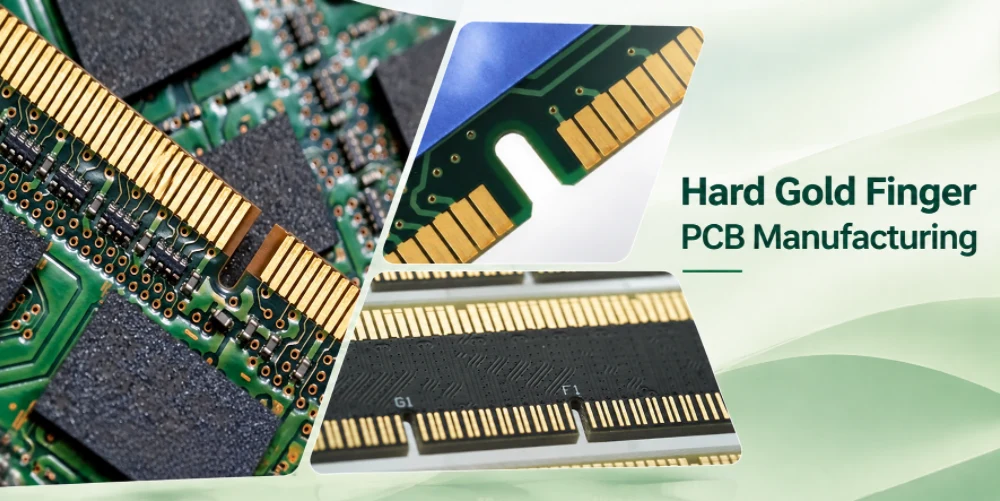
Hard Gold Finger PCB Manufacturing: Plating and Beveling
Hard gold finger PCB manufacturing is used when a circuit...
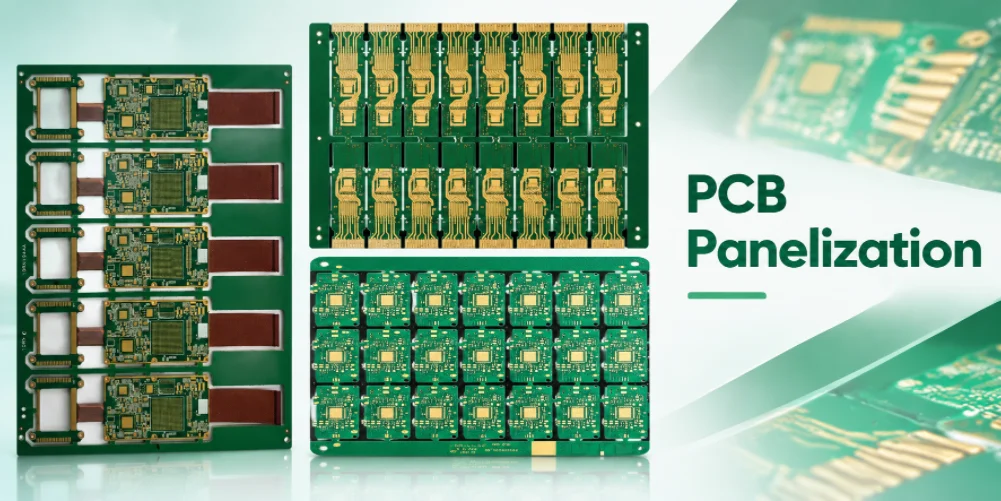
Small PCB Panelization: Array Design and Depaneling
Imagine a 26 × 18 mm circuit that must pass through...
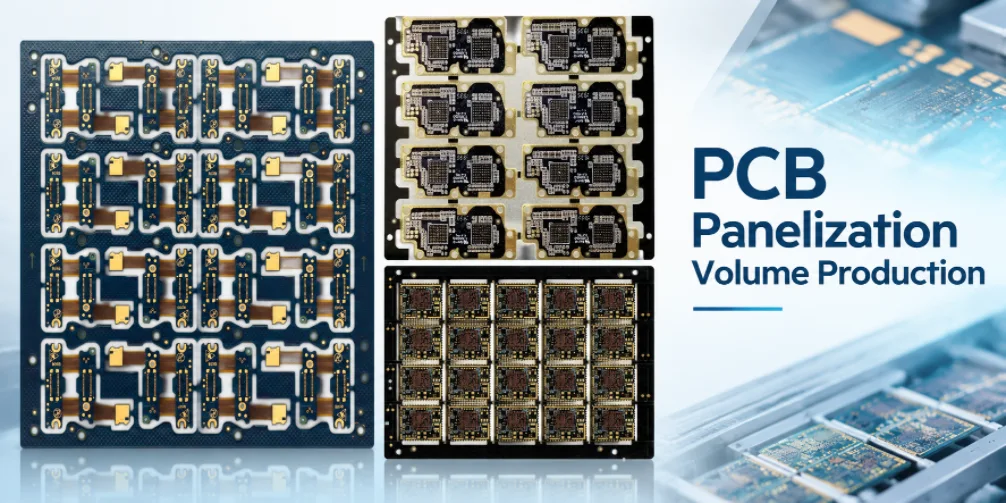
PCB Panelization for Volume Production: Cost and Yield
A fabrication panel that holds more boards is not...
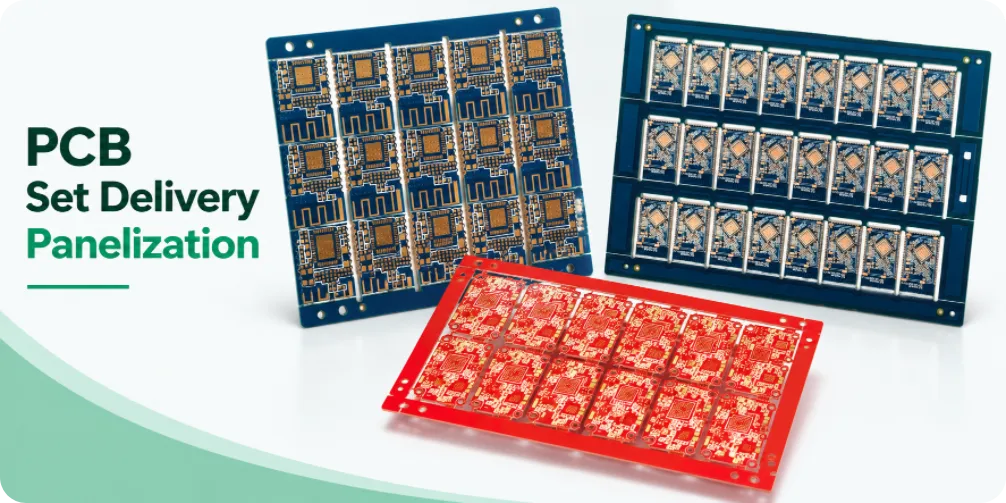
PCB SET Delivery and Panelization: Quantities and Acceptance
A purchase order for “500 SET” looks straightforward until...
How to get a quote for PCBs
Let‘s run DFM/DFA analysis for you and get back to you with a report. You can upload your files securely through our website. We require the following information in order to give you a quote:
-
- Gerber, ODB++, or .pcb, spec.
- BOM list if you require assembly
- Quantity
- Turn time
In addition to PCB manufacturing, we offer a comprehensive range of electronic services, including PCB design, PCBA, and turnkey solutions. Whether you need help with prototyping, design verification, component sourcing, or mass production, we provide end-to-end support to ensure your project’s success.
For PCBA services, please provide your BOM (Bill of Materials) and any specific assembly instructions. We also offer DFM/DFA analysis to optimize your designs for manufacturability and assembly, ensuring a smooth production process.