
IC Package: A Comprehensive Technical Guide

1. Introduction
The IC package serves as the critical interface between semiconductor dies and electronic systems. It provides essential functions including electrical interconnection, mechanical protection, thermal dissipation, and environmental shielding. As electronic devices demand higher performance, greater I/O density, and improved thermal management, the importance of IC package technology continues to grow.
Current industry trends—driven by 5G communications, artificial intelligence workloads, and increasingly compact consumer electronics—are pushing IC package designs toward higher integration levels and more sophisticated architectures. This guide examines IC package fundamentals, classification systems, materials, design considerations, and manufacturing processes.
2. What Is an IC Package?
2.1 Basic Definition of IC Package
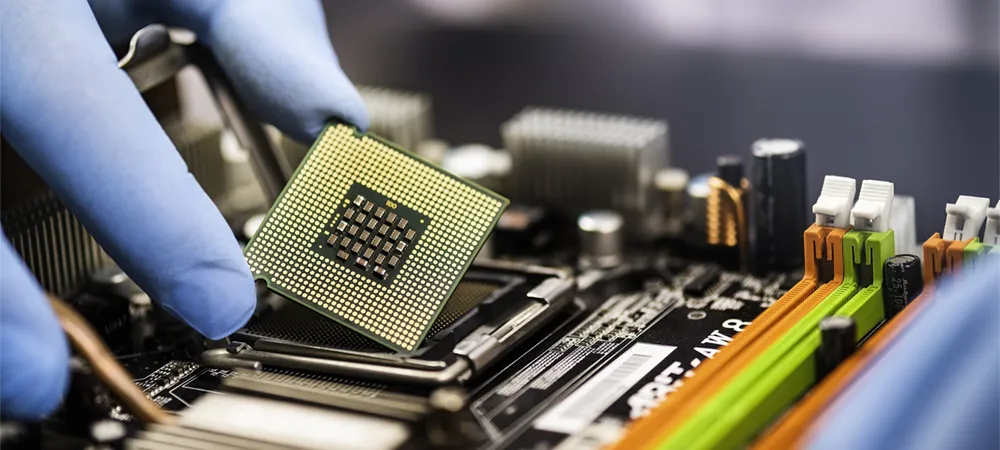
An IC package is the housing structure that encapsulates a semiconductor die, enabling its integration into larger electronic systems. The package comprises several key components: the die (containing the active circuitry), a lead frame or substrate for electrical routing, bonding structures (wire bonds or bumps) for die-to-package interconnection, and a mold compound or encapsulant for protection.
The die itself is the functional silicon component, while the IC package transforms this fragile chip into a robust, solderable unit suitable for PCB assembly. This distinction is fundamental—the package determines how the die interfaces with the external world.
2.2 Core Functions of IC Package
Electrical Interconnection
The IC package establishes reliable electrical pathways between the die’s bond pads and external system connections. This includes power delivery, ground connections, and signal routing. Interconnection quality directly impacts signal integrity, particularly in high-speed applications where parasitic inductance and capacitance become critical factors.
Mechanical Protection
Semiconductor dies are inherently fragile and susceptible to mechanical damage. The IC package provides structural support, protecting the die from physical stress during assembly, handling, and operational life. This protection extends to vibration resistance and impact absorption in demanding applications.
Thermal Dissipation
Heat generated by active circuitry must be efficiently conducted away from the die to maintain performance and reliability. IC package designs incorporate thermal pathways—heat slugs, thermal vias, and exposed pads—to facilitate heat transfer to the PCB or external heat sinks.
Signal Integrity Support
High-frequency and high-speed applications require careful management of signal paths within the IC package. Package parasitics (inductance, capacitance, resistance) must be minimized and controlled to maintain signal quality, reduce crosstalk, and support target data rates.
System-Level Integration
Modern IC package architectures increasingly support multi-die integration through System-in-Package (SiP), Package-on-Package (PoP), and 3D stacking approaches. These configurations enable heterogeneous integration of different process nodes and device types within a single package footprint.
2.3 IC Package Classification Methods
By Lead Configuration
IC packages are classified by their external lead arrangements: through-hole (DIP), gull-wing (QFP, SOP), J-lead (PLCC), and area array (BGA, LGA). Each configuration offers different trade-offs in terms of I/O density, PCB routing complexity, and manufacturing requirements.
By Interconnection Method
Die-to-package connections define another classification axis: wire bonding (gold, copper, or silver wires), flip-chip (solder bumps or copper pillars), and redistribution layer-based approaches (fan-in and fan-out wafer-level packaging). These methods differ in electrical performance, thermal characteristics, and cost structure.
By Structural Dimension
Dimensional classification distinguishes 2D (single-die, planar), 2.5D (silicon interposer-based), and 3D (vertically stacked) IC package architectures. Higher-dimensional approaches enable greater integration density but introduce additional manufacturing complexity and design challenges.
3. Main Types of IC Package
3.1 Traditional IC Package Types
DIP (Dual Inline Package)
The Dual Inline Package features two parallel rows of through-hole leads extending from a rectangular plastic or ceramic body. DIP packages remain prevalent in prototyping, educational applications, and systems requiring manual component insertion. Limitations include low I/O density and large footprint, restricting use in modern high-density designs.

SOP / SOIC / TSOP
Small Outline Packages (SOP, SOIC, TSOP) represent surface-mount evolutions of the DIP concept. These IC package variants feature gull-wing leads suitable for automated SMT assembly, enabling higher board-level density than through-hole alternatives. TSOP variants with thin profiles are common in memory applications where height constraints are critical.

QFP (Quad Flat Package)
Quad Flat Packages extend leads on all four sides, substantially increasing available I/O count. QFP packages support lead counts from 32 to over 300 pins with pitches as fine as 0.4mm. However, fine-pitch QFP assembly demands precise placement equipment and controlled reflow processes to prevent bridging and tombstoning defects.

3.2 High-Density IC Package Variants
BGA (Ball Grid Array)
Ball Grid Array packages utilize an array of solder balls on the package underside for electrical connection. This IC package configuration offers superior I/O density, improved thermal dissipation through the ball array, and shorter electrical paths compared to peripheral-leaded packages. Common variants include FBGA (fine-pitch), LBGA (low-profile), and numerous application-specific configurations.

CSP (Chip Scale Package)
Chip Scale Packages maintain a package footprint no larger than 120% of the die area, minimizing PCB real estate consumption. CSP technology bridges traditional packaging and wafer-level approaches, offering excellent electrical performance with reduced parasitic elements. Design constraints include limited redistribution capabilities and thermal management considerations for high-power applications.

3.3 Advanced IC Package Technologies
Flip-Chip Packaging
Flip-chip IC packages orient the die face-down, connecting directly to the substrate through solder bumps or copper pillars. This approach eliminates wire bond inductance, reduces signal path length, and enables uniform power distribution. Flip-chip’s superior electrical and thermal performance makes it the preferred choice for high-performance processors, GPUs, and RF devices.

Fan-In vs Fan-Out Packaging
Fan-In Wafer Level Packages (WLP) confine redistribution layers within the die footprint, suitable for low I/O count devices. Fan-Out WLP (FOWLP) technologies such as eWLB and InFO extend the redistribution area beyond the die perimeter, accommodating higher I/O density without an organic substrate. These IC package approaches excel in mobile and high-frequency applications requiring minimal form factor.

2.5D and 3D IC Package Architectures
Advanced 2.5D IC packages utilize silicon interposers with Through-Silicon Vias (TSV) to interconnect multiple dies horizontally. 3D packages stack dies vertically with TSV connections between layers. These architectures enable High Bandwidth Memory (HBM) integration and heterogeneous chiplet assemblies critical for AI accelerators and high-performance computing applications.

IC Package Evolution Summary
The progression from DIP through QFP, BGA, flip-chip, fan-out, to 3D architectures reflects continuous industry efforts to increase integration density, improve electrical performance, and address thermal challenges. Each generation of IC package technology builds upon previous innovations while introducing new capabilities for emerging application requirements.
4. IC Package Materials and Process Structures
4.1 Substrate Materials for IC Package
BT Resin Substrates
Bismaleimide-Triazine (BT) resin substrates offer excellent dimensional stability, low moisture absorption, and reliable electrical properties. BT-based IC package substrates are widely used in mobile devices, consumer electronics, and standard BGA applications where cost-performance balance is essential.
ABF (Ajinomoto Build-up Film)
ABF technology enables fine-line/fine-space routing essential for advanced IC package substrates. ABF’s superior planarity and electrical characteristics support high-density interconnects required by high-performance processors. Continued refinement of ABF materials addresses increasing demands for sub-10μm line widths.
High-Density Interconnect Structures
HDI-like substrate architectures incorporate microvias, blind vias, and buried vias to achieve multi-layer routing within constrained substrate thicknesses. These structures enable the wiring density necessary for advanced IC package designs supporting thousands of signal connections.
4.2 Interconnect Processes in IC Package
Wire Bonding
Wire bonding remains the dominant IC package interconnection method due to its flexibility and cost-effectiveness. Gold wire bonding provides reliable performance but at higher material cost. Copper wire bonding offers significant cost savings and improved electrical conductivity, though requiring tighter process control to prevent bond pad damage.
Flip-Chip Bumping
Flip-chip bumping deposits solder alloys (typically SnAgCu) or copper pillar structures onto die bond pads. Bump pitch has progressively scaled from 200μm to below 50μm in advanced IC package applications. Underfill materials protect bump connections from thermomechanical stress during operation.
Redistribution Layer (RDL)
RDL technology redistributes die pad locations to accommodate package-level interconnection requirements. Multiple RDL layers in advanced IC package designs enable complex routing between high-density die pads and lower-density board-level connections. RDL is fundamental to fan-out packaging approaches.
4.3 Encapsulation Materials
Mold Compound and EMC
Epoxy Molding Compound (EMC) provides mechanical protection and environmental sealing for IC packages. Modern EMC formulations balance flow characteristics for complete cavity fill, low moisture absorption, and matched thermal expansion coefficients to minimize package stress.
Underfill Materials
Underfill epoxies fill the gap between flip-chip dies and substrates, distributing thermomechanical stress across the entire die-substrate interface rather than concentrating it at individual bump connections. Proper underfill selection is critical for IC package reliability in thermal cycling environments.
4.4 Thermal Management Structures
Heat Slugs and Thermal Pads
Heat slugs are thermally conductive metal elements integrated into IC packages to conduct heat from the die to the package surface. Exposed thermal pads on the package underside provide a direct thermal path to the PCB ground plane. These features are essential for power IC packages requiring efficient heat extraction.
Advanced Thermal Solutions
High-performance IC packages may incorporate integrated heat spreaders (IHS) or direct die-to-heatsink interfaces. Package-on-heat-spreader configurations optimize thermal resistance from junction to ambient, critical for maintaining operating temperatures in high-power applications.

5. IC Package Design Considerations
5.1 Electrical Performance
Signal Integrity (SI)
Signal integrity analysis evaluates how IC package parasitics affect signal quality. Key concerns include impedance discontinuities, crosstalk between adjacent signal paths, and reflection-induced noise. High-speed IC package designs require careful trace routing, controlled impedance structures, and appropriate termination strategies.
Power Integrity (PI)
Power delivery network design ensures stable voltage supply to the die under dynamic load conditions. IC package-level decoupling capacitor placement, power/ground plane design, and via distribution all impact voltage regulation and noise margin. Simultaneous switching noise (SSN) must be managed through proper power distribution architecture.
High-Frequency Optimization
RF and millimeter-wave IC packages demand minimized parasitic inductance and capacitance. Controlled impedance transmission lines, ground shielding structures, and careful via placement are essential design elements. Package substrate material selection (low-loss dielectrics) significantly impacts high-frequency performance.
5.2 Thermal Design for IC Package
Thermal Resistance Metrics
Thermal resistance parameters θJA (junction-to-ambient) and θJC (junction-to-case) quantify IC package thermal performance. Lower values indicate more efficient heat transfer paths. Package selection must ensure junction temperatures remain within device specifications under worst-case operating conditions.
Miniaturization Challenges
Compact IC packages concentrate heat within smaller volumes, increasing thermal density. Thermal Interface Materials (TIM) between packages and heat sinks must be carefully selected to minimize interface resistance. System-level thermal solutions become increasingly important as package-level options are constrained by form factor.
5.3 Mechanical Stress and Reliability
CTE Mismatch Effects
Coefficient of Thermal Expansion differences between silicon die, IC package substrate, and PCB create stress during temperature excursions. This CTE mismatch drives solder joint fatigue, die cracking, and delamination failures. Package design must accommodate these stresses through material selection and geometric optimization.
Common Failure Modes
Typical IC package failures include die-attach delamination, wire bond lift-off, solder joint cracking, and encapsulant cracking. Understanding failure mechanisms guides material selection, design rules, and reliability qualification testing. Accelerated life testing validates IC package performance under stress conditions representing field use environments.
5.4 Design for Manufacturability
SMT Compatibility
IC package designs must accommodate SMT assembly processes including solder paste printing, component placement, and reflow soldering. Land pattern geometry, pad pitch, and package coplanarity specifications ensure reliable solder joint formation during volume manufacturing.
Reflow Process Considerations
Different IC package types have varying tolerance to reflow temperatures and thermal gradients. Moisture sensitivity levels (MSL) dictate handling and baking requirements before assembly. Package body materials, die attach adhesives, and mold compounds must survive multiple reflow exposures without degradation.
6. IC Package Manufacturing Process
6.1 Die Preparation
Wafer Thinning
Back-grinding reduces wafer thickness from 700-800μm to as thin as 50μm for advanced IC packages. Thinner dies improve thermal performance and enable stacked die configurations. Process control is critical to prevent die cracking and maintain uniform thickness across the wafer.
Wafer Dicing
Dicing separates individual dies from the processed wafer using blade sawing, laser cutting, or plasma etching. Dicing quality impacts die edge integrity and subsequent assembly yield. Die attach film (DAF) may be applied before dicing for certain IC package configurations.
6.2 Die Attach and Interconnection
Die Attach Process
Die attach bonds the silicon die to the IC package substrate or lead frame using epoxy adhesives, solder, or eutectic alloys. Die attach material selection balances thermal conductivity, adhesion strength, and stress absorption requirements. Void-free attachment is essential for reliable thermal and mechanical performance.
Wire Bonding and Flip-Chip Attach
Wire bonding creates interconnections through ultrasonic/thermosonic welding of fine wires between die pads and package leads. Flip-chip attach involves mass reflow of pre-formed bumps to create simultaneous connections. Both processes require precise alignment and controlled bonding parameters for reliable IC package assembly.
6.3 Encapsulation Process
Transfer and Compression Molding
Transfer molding forces heated EMC into mold cavities containing assembled IC package units. Compression molding applies pressure to pre-placed molding compound, suitable for thin packages and large panel formats. Mold design and process parameters control void formation, wire sweep, and package warpage.
Panel-Level Packaging
Fan-out IC package production increasingly utilizes panel-level processing on large-format substrates (e.g., 600mm × 600mm). This approach improves manufacturing efficiency and cost structure compared to wafer-level processing. Panel warpage control and die placement accuracy are key process challenges.
6.4 Substrate Manufacturing
Layer Stack-up Design
IC package substrate layer count ranges from two to over twenty layers depending on routing requirements. Stack-up design defines signal, power, and ground layer arrangements optimizing electrical performance and mechanical stability. Core and build-up layer materials are selected based on electrical and thermal requirements.
Microvia Formation and Surface Finish
Laser drilling creates microvias enabling layer-to-layer connections in high-density IC package substrates. Via diameters below 75μm support advanced routing density. Surface finishes—ENIG (Electroless Nickel Immersion Gold), OSP (Organic Solderability Preservative), and others—protect pads and ensure solderability.
6.5 Testing and Quality Assurance
Electrical and Visual Inspection
Automated Test Equipment (ATE) performs electrical verification of IC package functionality. X-ray inspection reveals internal defects such as solder voids and wire bond anomalies. Confocal Scanning Acoustic Microscopy (CSAM) detects delamination and internal cracks non-destructively.
Reliability Testing
Qualification testing validates IC package reliability through accelerated stress conditions. Temperature cycling (T/C), High Temperature Operating Life (HTOL), humidity testing, and mechanical shock evaluate long-term performance. Test results establish reliability metrics and identify potential failure mechanisms.
7. Future Trends in IC Package Technology
7.1 Chiplet Architecture and Advanced IC Package
Modular Chiplet Integration
Chiplet architectures disaggregate monolithic SoCs into smaller functional blocks interconnected through advanced IC package technologies. Universal Chiplet Interconnect Express (UCIe) standardization enables multi-vendor chiplet ecosystems. This approach improves yield, enables heterogeneous process node mixing, and accelerates time-to-market.
Heterogeneous Integration
Advanced IC packages increasingly integrate diverse technologies—logic, memory, analog, RF, sensors—within unified assemblies. This heterogeneous integration delivers system-level performance impossible with discrete component approaches while maintaining flexibility in technology selection for each functional block.
7.2 Emerging Materials for IC Package
ABF Evolution
Next-generation ABF materials target line/space dimensions below 5μm, supporting increasing IC package interconnect density. Low-loss dielectric variants address high-frequency application requirements. Material suppliers continue development to meet advancing semiconductor technology node requirements.
Glass Substrate Development
Glass substrates offer superior dimensional stability, flatness, and high-frequency electrical properties compared to organic alternatives. Active industry development addresses glass processing challenges for IC package applications. Glass-based interposers and substrates may enable next-generation high-performance packaging solutions.
7.3 Panel-Level IC Package Manufacturing
Large-Format Processing
Panel-level packaging extends fan-out concepts to large rectangular panels, dramatically improving throughput and cost efficiency. Equipment and process adaptations address panel-specific challenges including warpage management and die-to-panel alignment. This manufacturing evolution supports IC package cost reduction for high-volume applications.
7.4 High-Performance IC Package Requirements
AI and HPC Demands
Artificial intelligence accelerators and high-performance computing systems drive IC package requirements toward extreme bandwidth, thermal dissipation, and power delivery capabilities. Advanced cooling integration, power delivery network optimization, and ultra-high-density interconnects characterize next-generation IC package solutions for these demanding workloads.
8. Summary
IC packaging defines how a silicon die is electrically connected, mechanically protected, and thermally managed. From QFP and BGA to flip-chip, fan-out, and 3D structures, packaging choices directly affect signal integrity, power delivery, heat dissipation, and long-term reliability. As performance and density rise, material systems such as ABF substrates, advanced interconnects, and robust encapsulants become critical to overall system behavior.
Practical guidance for engineers:
-
Select packages based on electrical and thermal requirements, not form factor alone.
-
Coordinate package and PCB stack-up design early to avoid SI/PI and routing bottlenecks.
-
Review reliability data and consider mechanical stress, especially for small-pitch or high-power devices.
A clear understanding of IC package fundamentals helps ensure stable performance and reduces downstream design risks.

Recommended Posts
TMM4 Filter PCB Manufacturing
TMM4 filter PCB manufacturing is controlled by the...
TMM3 PCB Manufacturing for RF Modules
TMM3 PCB manufacturing is most useful where the RF module...
TMM6 PCB Fabrication
TMM6 fabrication is the process-control page for a mid-Dk...
TMM13i PCB Manufacturing
TMM13i PCB manufacturing is aimed at ultra-compact RF...
How to get a quote for PCBs
Let‘s run DFM/DFA analysis for you and get back to you with a report. You can upload your files securely through our website. We require the following information in order to give you a quote:
-
- Gerber, ODB++, or .pcb, spec.
- BOM list if you require assembly
- Quantity
- Turn time
In addition to PCB manufacturing, we offer a comprehensive range of electronic services, including PCB design, PCBA, and turnkey solutions. Whether you need help with prototyping, design verification, component sourcing, or mass production, we provide end-to-end support to ensure your project’s success.
For PCBA services, please provide your BOM (Bill of Materials) and any specific assembly instructions. We also offer DFM/DFA analysis to optimize your designs for manufacturability and assembly, ensuring a smooth production process.