
Clean Flux vs No-Clean Flux: Residue, Cleaning, and PCB Reliability
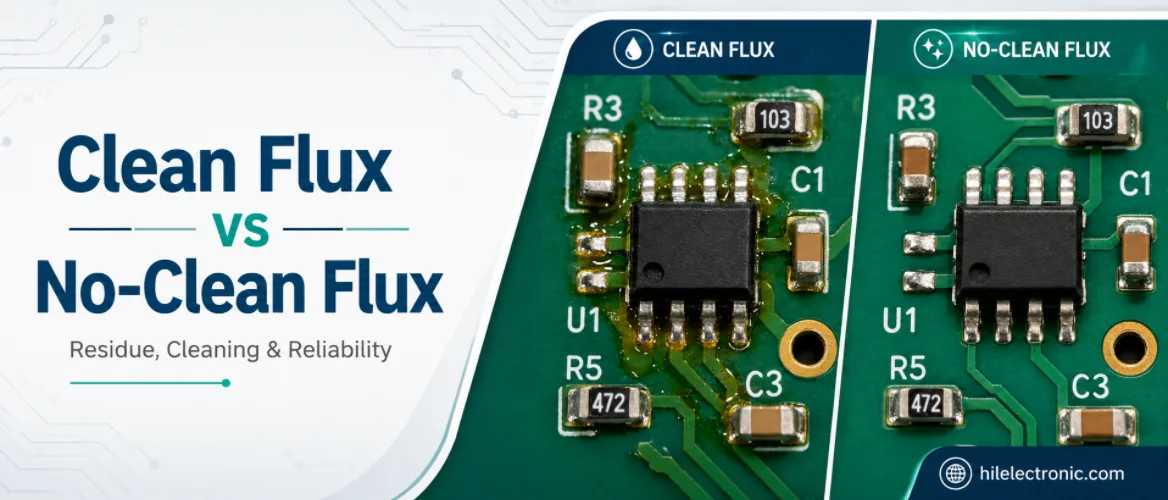
Figure 1. clean flux vs no-clean flux image for Highleap Electronics PCB manufacturing and assembly review.
Flux is the chemistry that makes solder flow and wet a joint, and the big practical question is whether its residue has to be washed off afterward. “No-clean” flux is designed to leave a safe residue you can leave in place; cleanable fluxes leave residue you must remove. Get this wrong and you risk either wasted cleaning steps or, worse, corrosion and leakage under fine-pitch parts. This guide explains what flux does, the clean-versus-no-clean decision, how to remove flux residue properly, and how Highleap Electronics controls flux and cleanliness in production.
1. What does soldering flux actually do?
Soldering flux does three jobs: it chemically removes the oxide layer from metal surfaces, it prevents new oxide from forming during the heat of soldering, and it lowers the surface tension so molten solder flows and wets the joint properly. Without flux, oxide on the copper and component leads blocks the solder from bonding, and you get dull, balled-up, or non-wetting joints no matter how hot the iron or oven gets.
Flux is present in several forms across electronics work: as the core inside solder wire, as the binder in solder paste versus standalone flux, and as a separate liquid or gel for rework. The important point for the rest of this guide is that flux is chemically active by design — that activity is what cleans the metal, but it is also what can leave a residue that may need removing once its job is done.
2. Clean flux vs no-clean flux: what’s the difference?
The difference is what their residue requires after soldering: no-clean flux leaves a small, benign, high-resistance residue you can normally leave on the board, while cleanable fluxes (water-soluble and many rosin/RMA types) leave residue you must remove. The flux family determines both how aggressively it cleans and how its leftovers behave:
| Flux type | Cleaning needed? | Notes |
|---|---|---|
| No-clean | Normally no | Low-residue, low-activity; residue is benign if process is correct |
| Water-soluble | Yes — mandatory | Aggressive, excellent wetting; residue is corrosive and must be washed |
| Rosin / RMA | Usually yes | Classic chemistry; residue often cleaned for appearance and reliability |
No-clean is the default for much modern production because skipping the wash saves a process step and avoids introducing water near sensitive assemblies. Water-soluble flux is chosen when you want very strong wetting and will definitely wash the board. The choice is not only about chemistry but about the whole process — it interacts with the solder flux activity level, the components, and whether a coating follows.
3. Do you have to clean no-clean flux off a PCB?
You usually do not have to clean no-clean flux, but there are important exceptions: clean it when the board will be conformally coated, when it must pass cleanliness or high-impedance testing, when fine-pitch or high-voltage spacing makes any residue risky, or simply when the customer requires a residue-free finish. No-clean residue is safe to leave only when the process is correct and the residue is fully cured — under-heated no-clean flux can leave active, partially-reacted residue that is not benign.
The single most common reason to clean a no-clean board is a downstream coating: conformal coating often adheres poorly over flux residue, so the board is cleaned first even though the flux was “no-clean.” High-reliability products, anything with tight high-impedance nodes, and boards facing humidity are other cases where removing even benign residue is the safer call. When in doubt, the deciding factors are the reliability class, whether a coating follows, and the customer’s own cleanliness specification.
4. How to clean flux residue off a circuit board
Clean flux residue with the solvent matched to the flux type — deionized water (often with a saponifier) for water-soluble flux, and an electronics-grade flux remover or isopropyl alcohol (IPA) for rosin and no-clean residues — applied with a brush and then fully dried. Using the wrong cleaner is a common mistake: IPA does not fully remove water-soluble residue, and water alone does not remove rosin. The general method:
- Match the cleaner to the flux. Water-soluble residue needs aqueous cleaning; rosin and no-clean residues respond to a dedicated flux remover or high-purity IPA.
- Agitate gently. A soft anti-static brush lifts residue from under and around component bodies; avoid forcing fluid under parts you cannot dry.
- Dry completely. Trapped cleaning fluid is itself a reliability risk, so the board must be fully dried, especially under low-standoff parts.
- Verify if it matters. For high-reliability work, cleanliness can be confirmed by test rather than assumed.
In a factory this is done with controlled aqueous or solvent cleaning systems rather than by hand, which is why production PCB cleaning gives more consistent, verifiable results than bench cleaning — important when the board’s reliability depends on it.
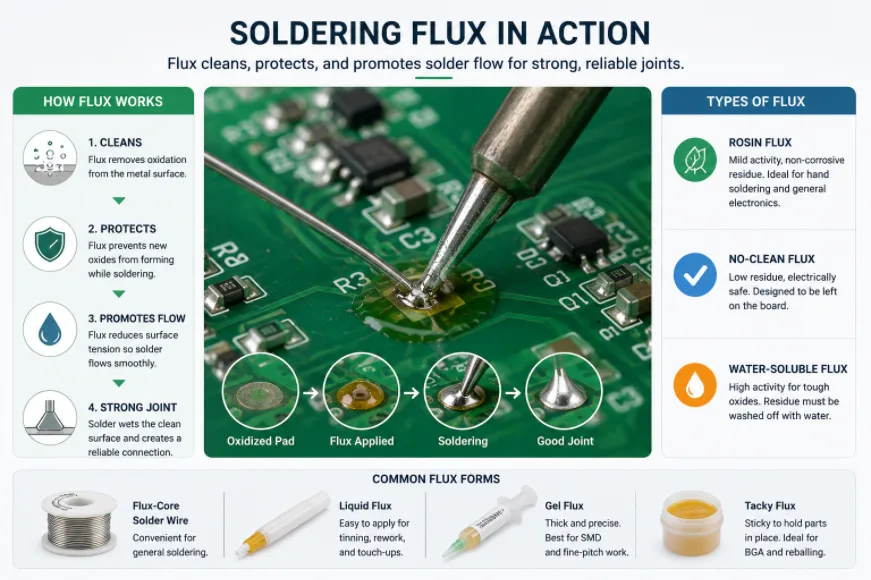
Figure 2. Manufacturing details for clean flux vs no-clean flux should be checked before quotation and production.
5. What happens if you leave the wrong flux residue
Leaving active flux residue on a board can cause electrochemical migration, dendrite growth, and corrosion that lead to leakage currents, intermittent faults, or shorts months after the board ships. This is the failure mode that makes flux cleanliness a reliability issue rather than a cosmetic one — and it is exactly why “no-clean” only stays safe when the residue is fully cured and benign.
The mechanism is straightforward chemistry. Active flux residue is mildly conductive and ionic; under humidity and an applied voltage, metal ions migrate across the gap between conductors and grow tiny conductive filaments called dendrites, which can eventually bridge fine-pitch pads and cause a short. Even short of a hard short, the residue lowers surface insulation resistance, producing leakage that corrupts high-impedance nodes and sensor readings. The risk rises sharply with tighter spacing, higher voltages, and humid or condensing environments — precisely the conditions where a board is least forgiving. Two practical consequences follow: residue must be removed before a board is sealed under a conformal coating, which would otherwise trap it against the circuit, and for high-reliability products cleanliness is confirmed by test rather than assumed. The same care extends to general board cleaning after any rework, where flux from hand-soldering is a common hidden contaminant.
6. How Highleap controls flux and cleanliness in production
Highleap controls flux and cleanliness as part of the assembly process, selecting the flux chemistry and cleaning regime to match your reliability class and whether a coating follows. On a no-clean line the process is tuned so residue is fully cured and benign; where the product needs it, controlled cleaning removes residue and the board is properly dried.
This matters most when assembly feeds into a protective finish. Highleap pairs SMT PCB assembly with downstream conformal coating when boards face moisture, dust, or chemical exposure, cleaning beforehand so the coating adheres. Because residue problems often trace back to footprint and spacing choices, a pre-build manufacturability review helps too. When you request a quote, tell us the flux/cleanliness requirement, whether you need a coating, and the reliability class so the process is set correctly from the start.
7. Flux cleaning FAQ
Can you solder without flux?
In practice, no — bare metal oxidizes and the solder will not wet it properly. You rarely add flux separately for basic work only because solder wire already has flux in its core; for surface-mount and rework, extra flux is usually still needed.
Is flux residue conductive?
Cured no-clean residue is essentially non-conductive and high-resistance, which is why it can be left in place. Active or partially-cured residue, and water-soluble residue, is mildly conductive and can cause leakage or corrosion if not removed.
Can I clean flux off a PCB with isopropyl alcohol?
Yes for rosin and no-clean residues — high-purity isopropyl alcohol (90%+) with a brush works well. It does not fully remove water-soluble flux, which needs deionized water, so match the cleaner to the flux type.
Why is there white residue on my board after soldering?
White or crusty residue usually means flux was overheated, the wrong cleaner was used, or water-soluble residue was left and reacted. It should be cleaned off, since it can indicate active residue rather than harmless cured flux.
Does soldering flux expire?
Yes — flux and flux-cored solder degrade over time as the activator chemistry ages, and solder paste in particular has a limited refrigerated shelf life. Old flux wets poorly and can leave harder-to-clean residue, so it should be replaced.
Is no-clean flux safe to leave on long-term?
When the process is correct and the residue is fully cured, yes — it is designed to stay on indefinitely. The risk appears with under-heated or excess residue, or in high-voltage, fine-pitch, or humid conditions, where cleaning becomes the safer choice.

Recommended Posts

Isola Astra MT77 PCB Manufacturing
Figure 1. Isola Astra MT77 PCB ManufacturingIsola Astra...

Nelco N4000-13 PCB Material and Manufacturing Guide | Highleap Electronics
Figure 1. Nelco N4000-13 PCBNelco N4000-13 PCB is a...

Copper Clad Laminate: Complete Material Selection Guide for PCB Engineers
Every electrical property that matters in a printed...

Inside a China Ceramic PCB Factory: Process Control Across Power/LED/RF/Medical
Table of Contents Inside a China Ceramic PCB Factory: How...
How to get a quote for PCBs
Let’s run DFM/DFA analysis for you and get back to you with a report. You can upload your files securely through our website. We require the following information in order to give you a quote:
-
- Gerber, ODB++, or .pcb, spec.
- BOM list if you require assembly
- Quantity
- Turn time
For PCBA services, please provide your BOM (Bill of Materials) and any specific assembly instructions. We also offer DFM/DFA analysis to optimize your designs for manufacturability and assembly, ensuring a smooth production process.