
PCB Test Fixture Design: Bed-of-Nails, Flying Probe, and DFT
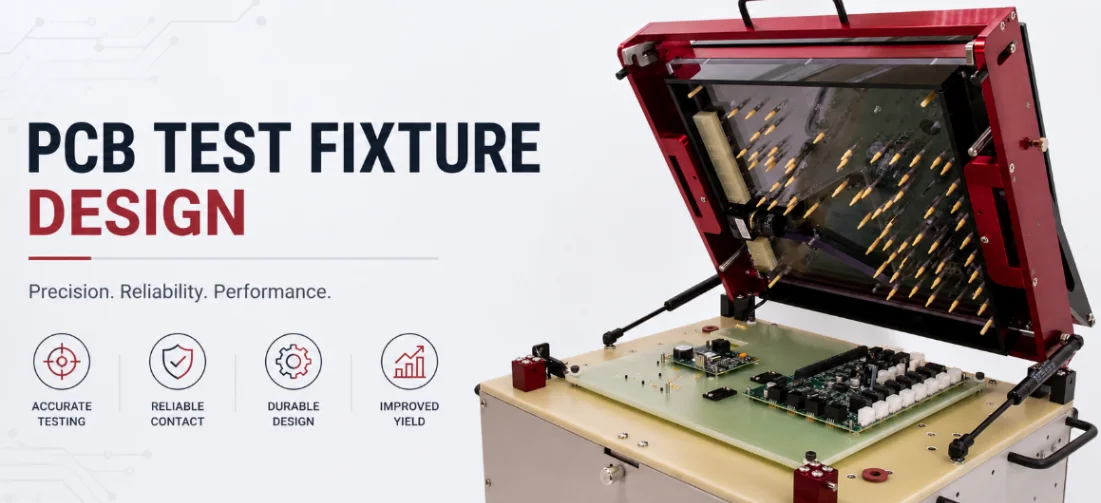
Figure 1. PCB test fixture design image for Highleap Electronics PCB manufacturing and assembly review.
A PCB test fixture is the custom jig that holds an assembled board and presses spring-loaded probes onto its test points so a tester can check the board automatically. It is what makes fast, repeatable production testing possible — but a fixture only works if the board was designed with test access in mind. This guide explains what a test fixture is, how bed-of-nails and flying-probe approaches differ, how to design a board for testability, and how Highleap Electronics builds and tests boards with the right fixture strategy.
1. What is a PCB test fixture?
A PCB test fixture is a custom-built jig that holds an assembled board in precise alignment and presses an array of spring-loaded “pogo” pins onto its test pads, connecting the board to test equipment for an automated check. It is the mechanical interface between your specific board and a tester, and it is what lets a line verify hundreds of identical boards quickly and consistently.
The most common form is the bed-of-nails fixture, where dozens or hundreds of pogo pins line up with test points so an in-circuit tester can measure individual components, or a functional tester can exercise the board as a whole. Because every fixture is machined and wired for one board layout, it carries an upfront cost — which is why the choice between a dedicated fixture and a fixtureless method (covered next) is largely an economic one driven by volume.
2. Bed-of-nails vs flying probe: which test fits your volume?
Use a bed-of-nails fixture for production volumes where its speed amortizes the fixture cost, and flying-probe test for prototypes and low volumes where avoiding fixture cost matters more than speed. The two approaches trade upfront cost against per-board test time:
| Bed-of-nails (ICT) | Flying probe | |
|---|---|---|
| Upfront cost | High — custom fixture per board | None — no fixture needed |
| Per-board speed | Very fast (seconds) | Slow (minutes) |
| Best for | Medium-to-high volume | Prototypes and low volume |
| Access needed | Test pads for every probed net | Probes reach pads and component leads |
A bed-of-nails fixture is unbeatable for throughput once you are building enough boards to amortize it, while a flying-probe test needs no fixture and is ideal early, when the design may still change and quantities are small. Many products start on flying probe for prototypes and graduate to a fixture for production. Beyond in-circuit checks, both can be paired with functional testing that exercises the board the way the end product will.
3. How to design a board for test access (DFT)
Design for testability by placing accessible test pads on every net you want to probe, keeping them on one side, sizing and spacing them for pogo pins, and avoiding pads under tall components. A fixture can only probe what the layout exposes, so test access is a design decision made before the board is frozen — adding it afterward is expensive or impossible. The essentials:
- Provide test pads. Every net the test must reach needs a dedicated, accessible pad with adequate size and a clear ground reference.
- Keep probe access on one side. A single-sided probe field makes a simpler, cheaper, more reliable fixture than double-sided access.
- Respect spacing and keep-outs. Pogo pins need minimum pad spacing and clearance, and tall parts must not block the probe field.
- Plan for functional test hooks. Connectors, headers, or pads that let a functional tester drive and observe the board are part of the same access plan.
This discipline is the heart of design for testability, and it is exactly the kind of thing a pre-production review catches — a board with no probe access is a problem far cheaper to fix in CAD than after a fixture has been quoted.
4. Test fixture cost: when does a fixture pay off?
A dedicated test fixture pays off when your production volume is high enough that the fixture’s fast per-board test time saves more than its upfront build cost — typically at medium-to-high volumes, while low volumes are cheaper to test fixtureless. The economics come down to a simple trade: a fixture has a real upfront cost but tests each board in seconds, whereas flying probe has no fixture cost but takes minutes per board.
For a 10-board prototype, building a fixture rarely makes sense; flying probe avoids the investment entirely. For thousands of boards, the fixture’s seconds-per-board speed quickly outweighs its build cost and becomes the cheaper option overall. The crossover depends on your specific board and quantities, which is why test strategy is best decided together with your manufacturer as part of planning — the same way low-volume manufacturing and high-volume production call for different test approaches. Choosing the wrong strategy either wastes money on an unneeded fixture or bottlenecks a high-volume line on slow testing.
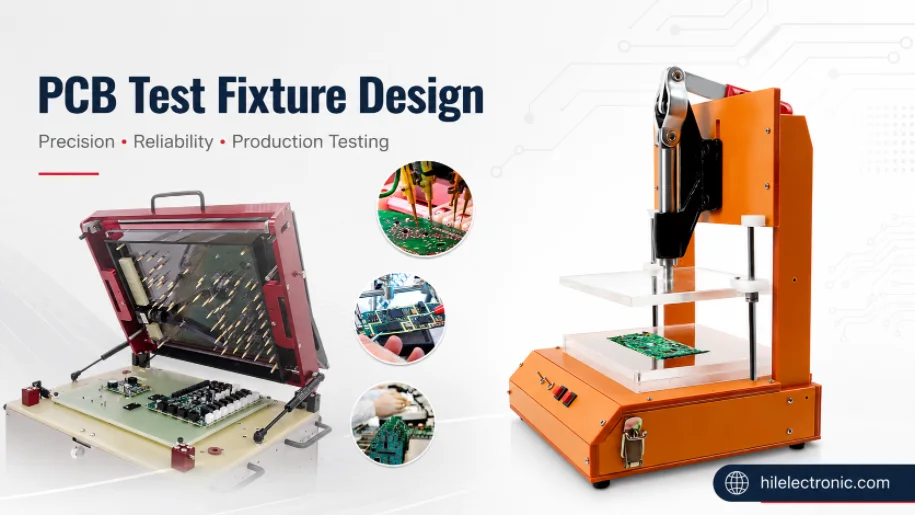
Figure 2. Manufacturing details for PCB test fixture design should be checked before quotation and production.
5. Inside a bed-of-nails fixture: pogo pins, plates, and probes
A bed-of-nails fixture is built from three core elements: an array of spring-loaded pogo pins that contact the test pads, a drilled probe plate that holds each pin in exact alignment with its target, and a mechanism that presses the board down onto the pins. Understanding these explains both why a fixture is precise and why it costs what it does — every pin is placed for one specific board layout.
The pogo pins themselves are the heart of it. Each is a tiny spring-loaded probe that compresses slightly when the board is pressed down, ensuring firm, consistent contact without damaging the pad, and they come with different tip styles — sharp crowns to pierce through any oxide or flux residue, flat tips for gold pads — chosen to suit the board’s finish. The pins seat in a precision-drilled plate so each lands within a fraction of a millimeter of its target, which is why test pads need adequate size and spacing; pads too small or too close make a fragile, unreliable fixture. The board is held by vacuum or a mechanical press so all pins make contact simultaneously, and the fixture wires those contacts back to the in-circuit tester. Because the entire pin field is custom to one layout, the fixture is a one-board tool — the reason its cost is amortized over volume and why low volumes favor a fixtureless flying-probe approach instead.
6. How Highleap fixtures and tests your boards
Highleap matches the test strategy to your volume and board — flying probe for prototypes and low runs, bed-of-nails fixtures and functional test for production — and reviews your design for test access before the fixture is built. Through functional testing and in-circuit test, boards are verified to the coverage you define, whether that is opens and shorts, component values, or full functional behavior.
Because a fixture is only as good as the access designed into the board, this starts with a manufacturability and testability review during turnkey assembly, so missing test pads or blocked probe areas are caught before they become a fixture problem. When you request a quote, tell us your target volume, the defects the test must catch, and whether you need in-circuit, functional, or both, so the right fixture and test plan are scoped from the start.
7. PCB test fixture FAQ
What is a pogo pin?
A pogo pin is a spring-loaded test probe with a plunger that compresses when pressed against a pad, giving firm, repeatable contact without damaging the board. An array of them in a drilled plate forms the “nails” of a bed-of-nails fixture.
What is the difference between an ICT fixture and a functional test fixture?
An ICT fixture probes individual nets to measure components and connectivity, while a functional test fixture connects to the board’s real interfaces — power, connectors, signals — to run it like the end product. Many production lines use both in sequence.
How big do test pads need to be for a fixture?
Test pads should be large enough and spaced far enough apart for a pogo pin to land reliably — generally round, open pads on one side with clearance from tall parts. Pads that are too small or too tightly packed make a fragile, failure-prone fixture.
Can you test a PCB without a fixture?
Yes — flying-probe test uses moving probes that need no custom fixture, and non-contact AOI and X-ray inspect without touching the board. These suit prototypes and low volume; fixtures earn their cost mainly at higher production volumes.
Can I build my own bed-of-nails test fixture?
It is possible for simple boards using a drilled plate and pogo-pin receptacles, but precise pin alignment, reliable board registration, and durable wiring are hard to achieve by hand. For production, a professionally built fixture is far more dependable.
How long does a test fixture last?
A well-built fixture lasts for many thousands of test cycles, with pogo pins being the main wear item that is periodically replaced. Because it is tied to one board layout, its useful life ends when that product revision changes.

Recommended Posts
TMM4 Filter PCB Manufacturing
TMM4 filter PCB manufacturing is controlled by the...
TMM3 PCB Manufacturing for RF Modules
TMM3 PCB manufacturing is most useful where the RF module...
TMM6 PCB Fabrication
TMM6 fabrication is the process-control page for a mid-Dk...

TMM10 PCB Manufacturing for Compact RF Designs
Table of contentsHow TMM10 Shrinks RF StructuresTMM10 vs...
How to get a quote for PCBs
Let’s run DFM/DFA analysis for you and get back to you with a report. You can upload your files securely through our website. We require the following information in order to give you a quote:
-
- Gerber, ODB++, or .pcb, spec.
- BOM list if you require assembly
- Quantity
- Turn time
For PCBA services, please provide your BOM (Bill of Materials) and any specific assembly instructions. We also offer DFM/DFA analysis to optimize your designs for manufacturability and assembly, ensuring a smooth production process.