
PCB Soldering Machine Types: Reflow, Wave, and Selective Equipment
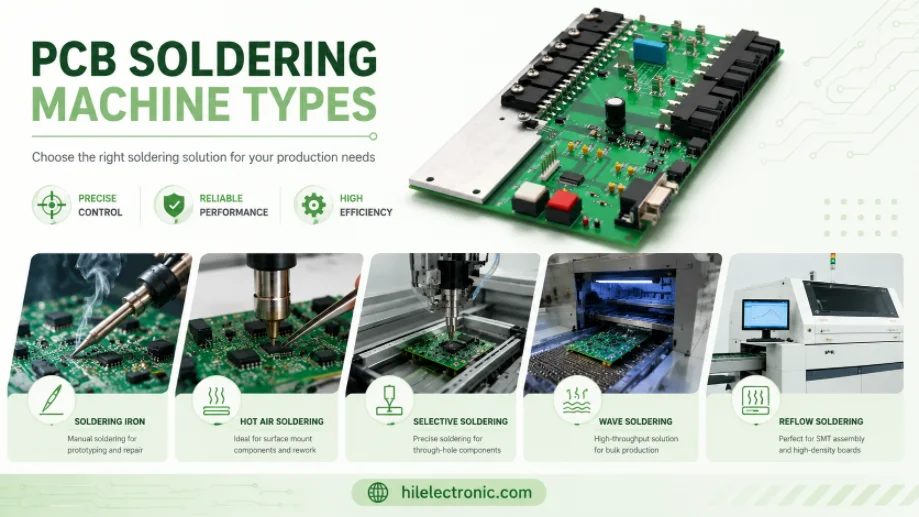
Figure 1. PCB soldering machine types image for Highleap Electronics PCB manufacturing and assembly review.
A PCB soldering machine is the production equipment used to join components to an assembly at scale, most often a reflow oven for SMT, a wave soldering system for through-hole, or a selective soldering machine for mixed-technology boards. Each machine solves a different manufacturing problem, so the right choice depends on board mix, throughput, thermal sensitivity, and defect risk. This guide compares the main PCB soldering machine types, explains when each process fits, and shows how Highleap Electronics applies them across SMT and through-hole assembly.
1. What are the main types of soldering machines?
The three main production soldering machines are reflow ovens (for surface-mount components), wave soldering machines (for through-hole components), and selective soldering machines (for through-hole parts on boards that also carry surface-mount components). Each delivers molten solder a different way, which is why the type of components on your board, more than anything else, decides which machine is used.
| Machine | Solders | How it works |
|---|---|---|
| Reflow oven | Surface-mount (SMT) | Melts pre-applied solder paste with a hot-air profile |
| Wave soldering | Through-hole (THT) | Passes the board over a wave of molten solder |
| Selective soldering | Through-hole on mixed boards | Solders specific joints with a targeted nozzle |
Modern boards are mostly surface-mount, so reflow is the workhorse, with wave or selective soldering added when through-hole connectors, large capacitors, or mechanical parts are present. The trade-offs between the through-hole methods are explored further in this comparison of reflow versus wave soldering.
2. Reflow soldering: how SMT boards are soldered
Reflow soldering solders surface-mount boards by printing solder paste onto the pads, placing the components, and passing the board through a reflow oven whose controlled temperature profile melts the paste so every joint forms at once. It is the dominant process in modern electronics because almost all current components are surface-mount, and it solders an entire board in a single, repeatable pass.
The quality of reflow comes from the temperature profile — preheat, soak, a peak above the alloy’s melting point, then controlled cooling — which the reflow oven holds across multiple heated zones so that large and small parts all reach the right temperature without overheating. This profiled, both-sides-even heating is exactly what a benchtop hot plate cannot match, and it is why production reflow soldering produces consistent joints across thousands of boards. After reflow, AOI and X-ray confirm the joints, including the hidden ones under BGAs.
3. Wave vs selective soldering for through-hole
Use wave soldering when a board has many through-hole joints to solder at once, and selective soldering when only a few through-hole parts sit among surface-mount components that must not be disturbed. Both solder through-hole leads, but they apply the solder very differently, and that difference decides which fits your board.
Wave soldering passes the whole underside of the board across a standing wave of molten solder, soldering every exposed through-hole joint in one pass — fast and efficient when there are many through-hole connections. Selective soldering instead directs a small, precise solder nozzle to individual joints, which is the right approach when a board is mostly surface-mount with just a few through-hole parts that wave soldering would expose to excess heat or bridge. In practice, a board with dense SMT and a handful of connectors is a classic selective-soldering case, while a board with rows of through-hole pins favors wave.
4. Machine soldering vs hand soldering: when to use which
Use machine soldering for repeatable quality and any real volume, and hand soldering only for prototypes, rework, repairs, and a handful of awkward joints. The difference is consistency and scale: a machine applies a controlled, documented process to every joint identically, while hand soldering depends on operator skill and cannot match that repeatability across many boards.
Hand soldering keeps a legitimate role — building one prototype, reworking a faulty joint, attaching a part that does not suit automated processes, and the kind of basic PCB soldering every engineer should know. But for production, machine soldering wins on yield, speed, and traceability, and it is the only practical way to handle fine-pitch and BGA parts reliably. Relying on hand soldering past the prototype stage is where quality and throughput both suffer, which is the same lesson that shows up across manufacturability generally — bench methods do not scale.

Figure 2. Manufacturing details for PCB soldering machine types should be checked before quotation and production.
5. Soldering defects by process and how to prevent them
Each soldering machine has its own characteristic defects: reflow tends to produce tombstoning, bridging, and voids; wave soldering produces bridges, icicles, and incomplete hole fill; and selective soldering can leave insufficient fill or dwell-related issues. Knowing which defect belongs to which process is what lets a manufacturer tune the machine rather than chase symptoms, and it explains why process selection and parameter control matter so much:
| Process | Typical defect | Prevention |
|---|---|---|
| Reflow | Tombstoning, bridging, voids | Balanced pad design, correct paste volume, tuned profile |
| Wave | Bridges, icicles, poor hole fill | Correct preheat, conveyor speed, and solder-mask dams |
| Selective | Insufficient fill, dwell issues | Nozzle selection, dwell time, and approach angle |
| Any process | Cold/dull joints | Adequate temperature, clean surfaces, fresh flux |
The common thread is that most defects are preventable through pad and footprint design plus correct machine parameters, not bad luck. Tombstoning in reflow, for example, comes from uneven heating or unbalanced pads pulling a small chip upright, while wave bridges often trace to layout that ignores the direction the board travels over the wave. This is why a layout reviewed for the intended soldering process yields far better than one thrown over the wall — the same logic behind any pre-build look at common manufacturability issues. After soldering, the joints that decide reliability are confirmed by AOI and, for hidden joints, X-ray, rather than assumed good, which is the foundation of dependable PCB quality inspection.
6. How Highleap solders your boards at scale
Highleap solders boards with the right machine for the job — profiled reflow for surface-mount, and wave or selective soldering for through-hole — within one assembly flow, backed by AOI and X-ray inspection. Through SMT PCB assembly, surface-mount parts are placed and reflowed to a controlled profile, while through-hole content is handled by wave or selective soldering depending on the board’s mix.
Because the soldering machine is only part of the picture, Highleap delivers it within turnkey assembly that also covers component sourcing, inspection, and test — so a board arrives soldered, verified, and ready. A pre-build manufacturability review confirms the layout suits the intended soldering processes before the run. When you request a quote, note whether the board is all-SMT or mixed-technology, the through-hole content, and your volume so the right soldering process is applied.
7. Soldering machine FAQ
What temperature should a soldering iron be set to?
For most electronics work a soldering iron is set around 315–370°C (600–700°F), higher for lead-free than leaded solder and for larger thermal-mass joints. Too low gives cold joints; too high damages pads and components.
What is a robotic or automatic soldering machine?
It is a programmable system that moves a soldering tip or laser to each joint and feeds solder wire automatically, automating point-to-point soldering of through-hole and connector joints. It bridges the gap between hand soldering and full wave or selective machines.
Do soldering machines work with lead-free solder?
Yes — reflow ovens, wave, and selective machines all run lead-free processes, using higher temperatures and profiles suited to lead-free alloys. RoHS-compliant production runs lead-free as standard on the same equipment, correctly set up.
What is the difference between hand soldering and machine soldering for production?
Machine soldering applies a controlled, documented process to every joint identically, giving consistent yield at volume and handling fine-pitch and BGA parts; hand soldering depends on operator skill and suits prototypes, rework, and odd parts.
How are circuit boards soldered in mass production?
Surface-mount parts are reflow-soldered after paste printing and placement, then any through-hole parts are added by wave or selective soldering. Automated inspection (AOI and X-ray) verifies the joints, so the whole flow is fast and repeatable.
Can one machine do both SMT and through-hole soldering?
No single machine does both — reflow handles surface-mount and wave or selective handles through-hole — but a production line combines them in sequence so a mixed-technology board is fully soldered in one flow.

Recommended Posts

Isola Astra MT77 PCB Manufacturing
Figure 1. Isola Astra MT77 PCB ManufacturingIsola Astra...

Nelco N4000-13 PCB Material and Manufacturing Guide | Highleap Electronics
Figure 1. Nelco N4000-13 PCBNelco N4000-13 PCB is a...

Copper Clad Laminate: Complete Material Selection Guide for PCB Engineers
Every electrical property that matters in a printed...

Inside a China Ceramic PCB Factory: Process Control Across Power/LED/RF/Medical
Table of Contents Inside a China Ceramic PCB Factory: How...
How to get a quote for PCBs
Let’s run DFM/DFA analysis for you and get back to you with a report. You can upload your files securely through our website. We require the following information in order to give you a quote:
-
- Gerber, ODB++, or .pcb, spec.
- BOM list if you require assembly
- Quantity
- Turn time
For PCBA services, please provide your BOM (Bill of Materials) and any specific assembly instructions. We also offer DFM/DFA analysis to optimize your designs for manufacturability and assembly, ensuring a smooth production process.