
SMD LED Package Sizes: 2835 vs 5050 vs 3528 and PCB Selection
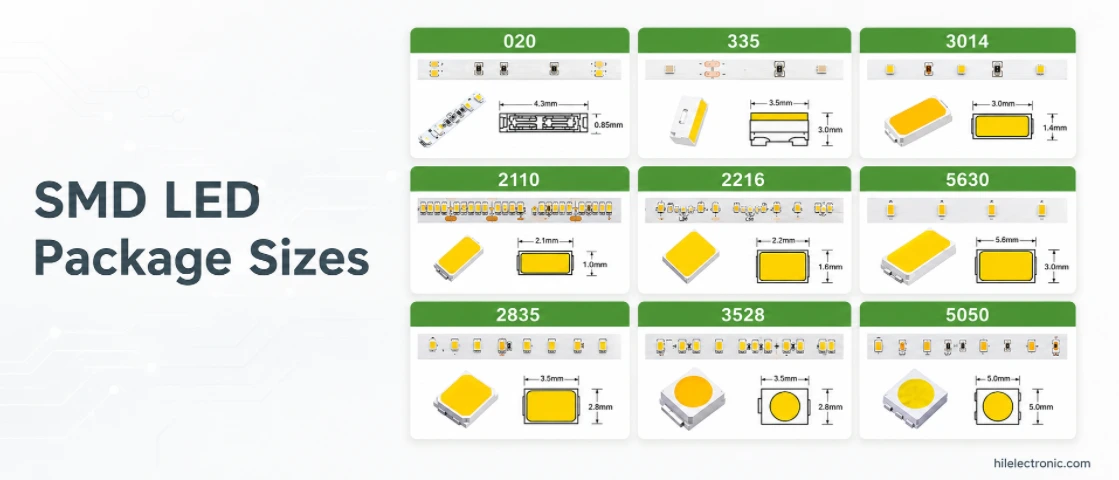
Figure 1. SMD LED package sizes image for PCB manufacturing review.
SMD LED package sizes such as 2835, 5050, and 3528 tell you more than footprint alone: they hint at lumen output, thermal path, assembly density, and what kind of PCB the product needs underneath. Choosing the right package means balancing optical performance, driver design, and heat removal rather than chasing a single part size. This guide compares the most common SMD LED package sizes, explains COB vs SMD tradeoffs, and shows how Highleap Electronics builds LED boards that stay cool and reliable.
1. What is an SMD LED chip?
An SMD LED is a surface-mount-device light-emitting diode — an LED built in a small, flat package that is soldered directly onto the surface of a PCB rather than through holes with wire leads. This packaging makes them compact, suitable for automated assembly, and easy to pack densely, which is why they dominate modern lighting, displays, and indicators.
Each SMD LED contains one or more semiconductor dies that emit light, mounted in a package with solderable terminals and often a small thermal pad underneath to carry heat into the board. That thermal pad is the key detail: an LED converts only part of its power into light and the rest into heat, and where that heat goes determines the LED’s brightness stability and lifetime. Because the LEDs are placed by the same processes as other surface-mount parts, building an LED product is fundamentally a surface-mount assembly task — with thermal design as the twist that sets it apart.
2. SMD LED sizes explained: 2835 vs 5050 vs 3528
SMD LED size codes are simply the package’s length and width in millimeters: a 2835 is 2.8 × 3.5 mm, a 5050 is 5.0 × 5.0 mm, and a 3528 is 3.5 × 2.8 mm. The number tells you the footprint, and the footprint correlates with how much power and how many dies the package can handle. The common types:
| Code | Size (mm) | Typical use |
|---|---|---|
| 3528 | 3.5 × 2.8 | Single die, lower-power strips and indicators |
| 2835 | 2.8 × 3.5 | Efficient single die, modern lighting strips |
| 5050 | 5.0 × 5.0 | Often three dies, RGB and higher-output |
A 5050 frequently houses three dies (enabling RGB color mixing), while 2835 and 3528 typically carry a single die, with the 2835 designed for good efficiency in a compact body. Larger packages with more power dissipate more heat, which raises the demand on the board’s thermal path — directly motivating the substrate choice discussed below. Choose the size for your brightness, color, and density needs, then design the board to remove the heat it produces.
3. COB vs SMD LED: which is better?
SMD LEDs are individual packaged diodes placed across a board, while COB (chip-on-board) packs many bare LED dies together under a single phosphor coating to form one dense, uniform light source — COB suits high-intensity, glare-free lighting, SMD suits flexible layouts, color mixing, and cost-sensitive designs. Neither is universally better; they solve different problems:
- SMD spreads discrete LEDs across the board, which is flexible for strips, displays, RGB color, and a wide range of products, and is generally lower cost.
- COB clusters many dies into one emitter, giving very high light density from a small area with a smooth, uniform glow — ideal for spotlights, downlights, and high-output fixtures.
Because COB concentrates many dies in a tiny area, its heat density is very high, making the thermal substrate even more critical than for SMD. The trade-offs between the two are laid out in this comparison of COB LED versus SMD LED boards, and both ultimately depend on a board that can carry their heat away.
4. Why LED PCBs use aluminum (thermal management)
LED PCBs commonly use an aluminum metal-core substrate because aluminum conducts heat far better than standard FR-4, pulling heat away from the LEDs to keep them cool, bright, and long-lived. LEDs degrade and shift color when they run hot, so moving heat out of the package is the single most important reliability factor in an LED product — and FR-4 is a poor thermal conductor.
A metal-core board places a thin dielectric over an aluminum base, so heat from each LED’s thermal pad passes quickly into the metal and out to a heatsink or enclosure. This is why an aluminum LED PCB is the default for lighting, and why outdoor and automotive lighting in particular rely on it — fixtures that must survive heat and weather use boards like the automotive LED PCB. The hotter and denser the LEDs, the more the substrate decides the product’s lifespan, which makes thermal-aware aluminum PCB manufacturing central to LED work.
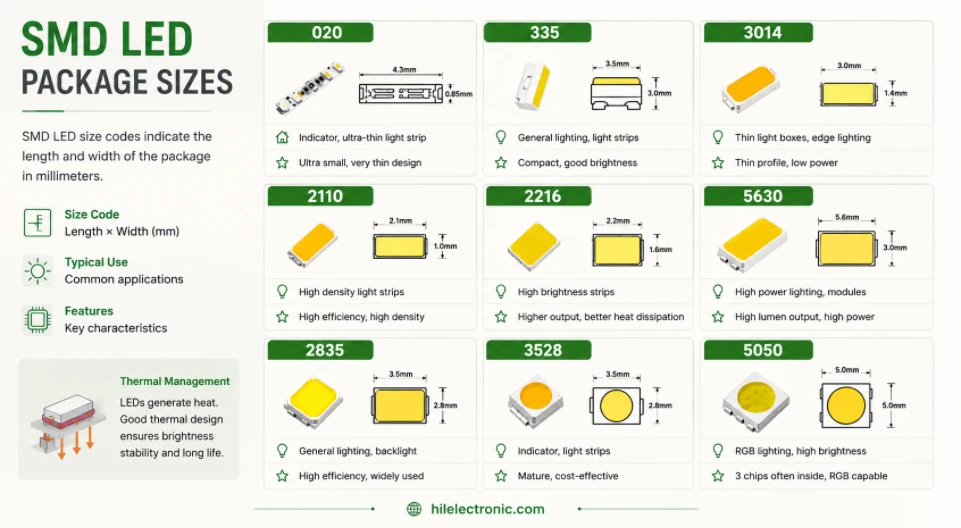
Figure 2. Manufacturing details for SMD LED package sizes should be checked before quotation and production.
5. How to solder SMD LEDs without damaging them
Solder SMD LEDs with a controlled reflow profile and the correct paste volume, because LEDs are heat- and moisture-sensitive and are easily damaged by excessive temperature or a bad thermal-pad joint. Overheating during soldering degrades the LED before it ever lights, and a poor joint on the thermal pad cripples heat removal in service. The essentials:
- Use a proper reflow profile. LEDs have a maximum temperature and exposure limit; staying within the profile protects the die and phosphor.
- Solder the thermal pad well. The pad’s joint is the LED’s heat exit, so it needs good wetting and the right paste volume, often with thermal vias beneath it.
- Mind moisture sensitivity. Many LEDs are moisture-sensitive and need proper baking and handling before reflow to avoid damage.
- Control paste on small packages. Tiny LED footprints are prone to tombstoning and bridging if paste volume and pad balance are off.
These are production-grade controls, which is why beyond a few hand-placed parts, LEDs belong on a controlled reflow soldering line where the profile, paste, and handling are managed and the joints are inspected.
6. How Highleap builds reliable LED boards
Highleap builds LED boards on the right thermal substrate — aluminum metal-core for most lighting, with FR-4 or other materials where they fit — and assembles the LEDs with a controlled reflow process and inspection. The substrate is matched to the LED power density and product environment, so heat has a real path out and the LEDs hold their brightness and color over time.
On the assembly side, LED placement, reflow profile, moisture handling, and thermal-pad joints are controlled, with AOI verifying placement and solder quality across the board. Because LED footprints and thermal-pad designs strongly affect yield, a pre-build manufacturability review checks them first. Highleap covers this end to end through turnkey assembly, from a prototype run to volume. When you request a quote, share the LED type and size, the number of LEDs and total power, the operating environment, and any thermal or optical requirements so the board and process are set correctly.
7. SMD LED FAQ
What do the numbers in 2835 or 5050 LED mean?
They are the package dimensions in millimeters — a 2835 is 2.8 × 3.5 mm and a 5050 is 5.0 × 5.0 mm. The code tells you the footprint size, which correlates with power handling and the number of dies inside.
How many dies are in a 5050 LED?
A 5050 commonly contains three LED dies, which is what allows RGB color mixing or higher combined output from one package. Smaller packages like 2835 and 3528 typically have a single die.
Why do my LEDs get dimmer or change color over time?
Usually heat. LEDs degrade and shift color when they run hot, so poor heat removal — an inadequate substrate or a bad thermal-pad joint — shortens their life and fades them. A proper thermal board path is the main prevention.
Can SMD LEDs be soldered by hand?
A few can with care, but they are heat- and moisture-sensitive and have small footprints prone to tombstoning, and the thermal pad is hard to solder well by hand. For quantity or quality, a controlled reflow process is far more reliable.
What is the difference between an LED chip and an LED package?
The chip (die) is the bare semiconductor that emits light; the package is the housing — with terminals, lens or phosphor, and often a thermal pad — that protects the die and makes it solderable. An SMD LED is a packaged die.
Do all LED boards need to be aluminum?
No — low-power indicators run fine on FR-4. Aluminum metal-core boards are used where LED heat is significant, such as lighting, because they conduct heat far better and keep the LEDs cool, bright, and long-lived.

Recommended Posts

Taconic RF-35 PCB Manufacturing Service — Prototype Through Volume Production
Figure 1. Taconic RF-35 PCBTaconic RF-35 is the workhorse...

Isola Astra MT77 PCB Manufacturing
Figure 1. Isola Astra MT77 PCB ManufacturingIsola Astra...

Nelco N4000-13 PCB Material and Manufacturing Guide | Highleap Electronics
Figure 1. Nelco N4000-13 PCBNelco N4000-13 PCB is a...

Copper Clad Laminate: Complete Material Selection Guide for PCB Engineers
Every electrical property that matters in a printed...
How to get a quote for PCBs
Let’s run DFM/DFA analysis for you and get back to you with a report. You can upload your files securely through our website. We require the following information in order to give you a quote:
-
- Gerber, ODB++, or .pcb, spec.
- BOM list if you require assembly
- Quantity
- Turn time
For PCBA services, please provide your BOM (Bill of Materials) and any specific assembly instructions. We also offer DFM/DFA analysis to optimize your designs for manufacturability and assembly, ensuring a smooth production process.