
Double-Sided PCB Manufacturer Selection Guide

Figure 1. double sided PCB manufacturer
Last updated: May 2026 · A buyer’s and designer’s guide to 2-layer printed circuit boards
A double-sided PCB (also called a 2-layer board) has copper on both the top and bottom of the substrate, with the two sides connected electrically by plated through-holes. It is the most common board type in everyday electronics because it roughly doubles the routing area of a single-sided board while staying far cheaper and simpler than a multilayer stack. This guide covers what a double-sided board is, exactly how a manufacturer builds one, where it fits between single-sided and multilayer, and what separates a reliable double-sided PCB manufacturer from a risky one.
What Is a Double-Sided PCB? (2-Layer Board Definition)
Start with the substrate — usually FR-4 fiberglass laminate clad with a thin sheet of copper on each face. On a single-sided board, only one of those faces carries circuitry. On a double-sided board, both faces are etched into traces and pads, and the layers are tied together by drilling holes through the board and plating their walls with copper. Those plated through-holes do two jobs: they carry signals between the top and bottom, and they form the barrels that through-hole component leads pass through.
Two connection types matter here. A plated through-hole (PTH) goes all the way through the board. A via is a plated hole used only to move a signal between layers (no component lead in it). On a 2-layer board, vias are simple top-to-bottom connections; the blind and buried vias of HDI designs aren’t needed.
How Is a Double-Sided PCB Manufactured? (Step by Step)
The fabrication flow is what turns a clad laminate into a finished board. A typical double-sided process runs like this:
- Cut and drill: the laminate is cut to panel size and CNC-drilled to create every through-hole and via at the coordinates in your drill file.
- Electroless copper (desmear & deposition): a thin chemical copper layer is deposited over the whole panel, including the bare hole walls, so the holes can later be plated. This is the key step that makes a hole conductive.
- Image transfer: a photoresist is laminated and exposed to your artwork, defining where copper will remain.
- Electroplating: copper is plated up on the traces and inside the holes to full thickness; a tin resist protects the wanted copper.
- Etch and strip: the unwanted copper is etched away and the resist removed, leaving the finished pattern on both sides.
- Solder mask: the green (or other colour) mask is applied and cured, leaving pads exposed.
- Silkscreen: reference designators, polarity marks, and logos are printed.
- Surface finish: exposed copper is coated — HASL, lead-free HASL, ENIG, or OSP — to keep it solderable.
- Profiling and electrical test: the board outline is routed or scored, then flying-probe or fixture testing confirms there are no opens or shorts before shipment.
Single-Sided vs Double-Sided vs Multilayer PCB
| Attribute | Single-sided | Double-sided | Multilayer (4+) |
|---|---|---|---|
| Copper layers | 1 | 2 | 4 to 60+ |
| Layer connection | None (jumpers needed) | Plated through-holes | PTH, blind & buried vias |
| Routing density | Low | Medium | High |
| Relative cost | Lowest | Low–moderate | Higher |
| Best for | Simple, cost-driven products | Most general electronics | Dense, high-speed, RF |
Why Use a Double-Sided PCB? Key Advantages
- More routing room: two copper planes let you cross signals over and under each other instead of fitting everything on one side.
- Components on both faces: surface-mount parts can populate top and bottom, shrinking board area.
- A path to a ground plane: dedicating much of one side to ground improves return paths, lowers noise, and helps EMC — a benefit a single-sided board simply can’t offer.
- Still affordable: a 2-layer board is only modestly more expensive than single-sided and far cheaper than going to four layers.
Common Applications of Double-Sided PCBs
Double-sided is the workhorse layer count. Typical homes for it include LED lighting and drivers, power supplies and converters, industrial controllers and sensors, IoT and home-automation devices, automotive accessories, instrumentation, and the vast majority of hobby and Arduino-class projects. When a design’s signal speed, pin count, or noise requirements climb, that’s the trigger to evaluate four layers or more.
Double-Sided PCB Design Tips for High Yield
- Respect the manufacturer’s annular ring and drill rules. Pads need enough copper ring around each hole so slight drill drift doesn’t break the connection.
- Use a ground pour on one side and stitch it with vias to give signals a clean, short return path.
- Keep minimum trace/space within the fab’s capability (commonly 6/6 mil or tighter); don’t design to a width your supplier can’t reliably etch.
- Add tented or capped vias only where needed, and avoid vias in SMD pads unless they are filled and plated over.
- Provide a complete output set — Gerber or ODB++, NC drill, and board outline — and run a design rule check before ordering.
How Much Does a Double-Sided PCB Cost? Price Factors
For a 2-layer board, the biggest cost levers are board size and quantity, copper weight, the number and smallest size of drilled holes, the surface finish (HASL is cheapest; ENIG costs more but solders better on fine-pitch), the solder-mask and silkscreen options, and the tolerance class. Tighter trace/space, controlled impedance, and exotic laminates all add cost. The cheapest path is to keep the design inside standard capabilities and panelise efficiently for the quantity you actually need.
Surface Finishes for Double-Sided PCBs (HASL, ENIG, OSP)
The surface finish protects the exposed copper and determines how well the board solders. On a 2-layer board the choice is mostly a balance of cost, shelf life, and how fine your pads are.
| Finish | Cost | Strengths | Watch-outs |
|---|---|---|---|
| HASL (leaded) | Lowest | Cheap, robust, long shelf life, very solderable | Uneven surface; not ideal for fine-pitch; contains lead (not RoHS) |
| Lead-free HASL | Low | RoHS-compliant, durable, good solderability | Still slightly uneven; less suited to the finest pitches |
| ENIG | Higher | Flat surface, excellent for fine-pitch and BGA, long shelf life, good for press-fit and contacts | More costly; risk of “black pad” if the process isn’t well controlled |
| OSP | Low | Flat, RoHS-compliant, simple, cost-effective | Shorter shelf life; coating is delicate and re-work-sensitive |
A simple rule: if the board is cost-driven and the pads aren’t tiny, HASL or lead-free HASL is fine. If it carries fine-pitch ICs or BGAs, or needs a flat, long-life surface, ENIG is usually worth the premium. OSP suits high-volume, quick-turn boards assembled soon after fabrication.
What to Specify When Ordering a Double-Sided PCB
A clear fabrication note prevents back-and-forth and wrong assumptions. For a double-sided board, tell the manufacturer:
| Spec | Typical / example |
|---|---|
| Layer count | 2 (double-sided) |
| Material & thickness | FR-4, 1.6 mm (or as required) |
| Copper weight | 1 oz (35 µm); 2 oz for higher current |
| Surface finish | HASL, lead-free HASL, ENIG, or OSP |
| Solder mask & silk colour | Green mask, white silk (or your choice) |
| Min trace/space & drill | e.g. 6/6 mil, 0.3 mm min drill |
| Quantity & turnaround | Prototype vs production volume; lead time |
How to Choose a Double-Sided PCB Manufacturer
A capable double-sided supplier is easy to take for granted, but the quality of the plated through-holes, registration between the two sides, solder-mask alignment, and electrical testing all decide whether the board works first time. Look for clear published capabilities, an engineering review before build, electrical test on every board, and responsive technical communication.
Highleap Electronics (founded 2002) fabricates double-sided boards as part of a fabrication range that runs all the way to 60-layer HDI and rigid-flex — which means a simple 2-layer order is handled with the same plating, registration, and test discipline used on far more demanding work:
- PCB fabrication for single-, double-, and multilayer boards with electrical test as standard.
- FR-4 boards and specialty laminates for the substrate your application needs.
- Free DFM review to catch annular-ring, drill, and clearance issues before they reach the line.
- A path to scale: if a 2-layer prototype later needs HDI or rigid-flex, the same supplier can build it.
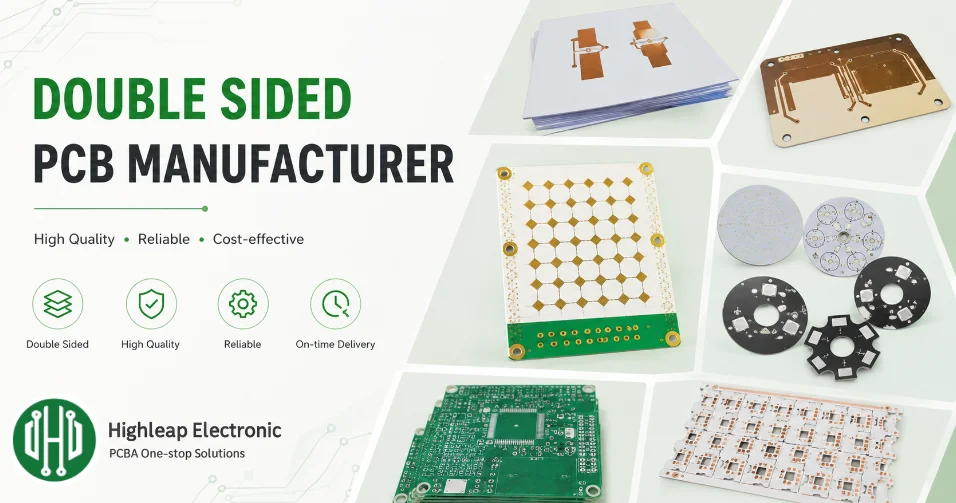
Figure 2. double sided PCB manufacturer details
Double-Sided PCB Manufacturer FAQ
What is a double-sided PCB?
A printed circuit board with copper circuitry on both sides of the substrate, connected through the board by plated through-holes. It’s also called a 2-layer board.
What’s the difference between double-sided and 2-layer?
They mean the same thing in everyday use: two copper layers, top and bottom. “Layer count” simply counts conductive copper layers.
When should I move from double-sided to a 4-layer board?
When you run out of routing room, need a dedicated ground and power plane for signal integrity, or are working with high-speed or RF signals that demand controlled impedance.
Are double-sided boards more expensive than single-sided?
Slightly, because of the extra imaging, plating, and the through-hole plating step — but far less than the jump to multilayer. For most products the added capability is well worth the small cost difference.
Can components be mounted on both sides?
Yes. Surface-mount parts can populate both faces, which is one of the main reasons to choose a double-sided board. Assembly simply runs the second side through reflow as well.
What files does a manufacturer need to build a double-sided PCB?
Gerber (RS-274X/X2) or ODB++ artwork for both copper layers, the solder mask and silkscreen layers, an NC drill file, and the board outline. Send a fabrication note for finish, copper weight, and tolerance.

Recommended Posts
Taconic RF 35 vs RO4350B PCB
Table of contentsRF-35 vs RO4350B Procurement and...
TMM4 Filter PCB Manufacturing
TMM4 filter PCB manufacturing is controlled by the...
TMM3 PCB Manufacturing for RF Modules
TMM3 PCB manufacturing is most useful where the RF module...
TMM6 PCB Fabrication
TMM6 fabrication is the process-control page for a mid-Dk...
How to get a quote for PCBs
Let‘s run DFM/DFA analysis for you and get back to you with a report. You can upload your files securely through our website. We require the following information in order to give you a quote:
-
- Gerber, ODB++, or .pcb, spec.
- BOM list if you require assembly
- Quantity
- Turn time
For PCBA services, please provide your BOM (Bill of Materials) and any specific assembly instructions. We also offer DFM/DFA analysis to optimize your designs for manufacturability and assembly, ensuring a smooth production process.