
Edge Server PCB Manufacturer for High-Speed & AI Edge Computing

Figure 1. Edge Server PCB Manufacturer – Highleap Electronic multilayer HDI PCB for edge computing servers
If you are designing an edge server — a 1U/2U short-depth appliance, a ruggedized industrial node, or a private 5G compute box — the PCB is no longer a commodity. It carries PCIe Gen4/Gen5 lanes, DDR4/DDR5 buses, multi-gigabit Ethernet, and high-current VRMs into a chassis that often has no active cooling, runs 24/7, and sits in a cabinet at the side of a factory or a cell tower. Choosing the right edge server PCB manufacturer directly affects your signal margins, your thermal headroom, your field failure rate, and your time to market.
Highleap Electronic is a Guangzhou-based PCB fabrication and PCB assembly factory with 15+ years building boards for server, communication, and industrial control hardware. This page is a working reference for hardware engineers and sourcing managers evaluating edge server PCB suppliers — what we build, what we measure, and what to send us when you are ready to quote.
What an Edge Server PCB Actually Has to Survive
An edge server PCB is not a smaller version of a hyperscale datacenter board. The constraints are different:
- Deployment environment — cell sites, factory cabinets, retail back-of-store, vehicle gateways. Ambient can swing from 0°C to 55°C, vibration is real, and dust filters are often the only thermal management.
- Form factor — short-depth 1U, half-width 1U, OCP open edge, or custom enclosures down to mini-ITX class. PCB area is fixed; layer count and routing density absorb the complexity.
- Mixed-signal density — a CPU/SoC with PCIe Gen4/5, DDR4/5, a BMC, multiple 10G/25G PHYs, M.2 NVMe, and PoE or 48V power input all share one board.
- Long lifecycle — telecom and industrial customers expect 7–10 years of field service, not the 3-year refresh cycle of consumer products.
These constraints push edge server PCBs toward higher layer counts than the chassis size suggests, mixed low-loss/FR-4 stackups, controlled impedance on every high-speed net, and surface finishes selected for solder joint reliability rather than cosmetic appearance.
Edge Server PCB Manufacturing Capability at Highleap
Our full rigid PCB capability sheet lists every parameter, but the items below are the ones edge server designs hit most often:
- Layer count: 4 to 60 layers. Most edge server motherboards land between 10 and 22 layers.
- Board thickness: 0.4 mm to 6.0 mm; typical server-class stackups 1.6–3.2 mm.
- Copper weight: 0.5 oz inner / 1 oz outer for signal-dense designs, up to 10 oz heavy copper for 48V power planes and rectifier sections.
- Trace / space: down to 2.5 mil / 2.5 mil on inner layers for fan-out under 0.5 mm pitch BGAs.
- Microvia: laser-drilled microvias down to 0.075 mm (3 mil), stacked or staggered, supporting 2-N-2 and 3-N-3 HDI stackups for SoC and CPU breakouts.
- Impedance control: single-ended ±5 Ω (≤50 Ω) or ±7% (>50 Ω), differential ±7%, sufficient for PCIe Gen4/Gen5, DDR5, and 25G Ethernet.
- Back drilling: stub control to ±0.1 mm for clean eye diagrams on 25 Gbps+ lanes.
- Surface finish: ENIG, ENEPIG, immersion silver, hard gold (for edge-finger card slots), OSP for cost-sensitive runs.
For high-speed sections we routinely build with Panasonic Megtron 6, Megtron 7, ITEQ IT-968, TU-883, and Isola Tachyon-class laminates, in pure or hybrid stackups. For RF or precision-timed sections we hybridize FR-4 with a specialty low-loss laminate or a specialty low-loss laminate.
Stackup and Material Choices That Save Money Without Killing Margin
The cost difference between a fully-Megtron-7 stackup and a hybrid (low-loss only on high-speed signal layers, mid-Dk FR-4 on planes) can be 30–40% on a 16-layer board. The performance difference, if the hybrid is designed correctly, is often within budget for PCIe Gen4 and 25G SerDes.
Edge server motherboards rarely need the most aggressive material on every layer. A typical cost-aware stackup we quote looks like:
- Top & bottom signal: mid-loss laminate (e.g. TU-872 SLK or IT-968) for SerDes breakout.
- Inner high-speed pairs: low-loss core (Megtron 6 or equivalent) only on the 2–4 layers carrying long PCIe / Ethernet runs.
- Power and reference planes: standard FR-4 (Isola 370HR class), which provides plenty of dielectric performance for plane capacitance.
- Heavy copper sub-stackup: 2–3 oz copper on the 12V/48V distribution layers.
Our engineering team runs this material trade-off as part of our DFM review before the first prototype — you get a written recommendation, not a blanket “use what you sent us.” See our DFM process page for what we check.
Upload Your Gerber for a Stackup Review
Signal Integrity: What We Need from Your Design Files
To deliver predictable PCIe Gen5 (32 GT/s) or 25G/56G Ethernet margins on an edge server PCB, we need impedance targets, not guesses. The fastest path to a clean first article is to send us:
- Gerber X2 or ODB++ output
- A stackup drawing with target impedance values per layer (single-ended and differential)
- Drill file with via type definitions (through, blind, buried, microvia)
- Fabrication notes specifying surface finish, solder mask color, silkscreen, and any back-drill depths
- For PCBA: BOM with manufacturer part numbers, CPL/Pick-and-Place file, and quantities
We build impedance coupons on every panel and supply TDR reports with shipment by default for boards above 8 layers or with controlled-impedance nets.
Edge Server PCB Assembly: From Prototype to Volume
We are a combined PCB fab and PCB assembly factory, which matters for edge server hardware because the BGA fan-outs and high-pin-count connectors that dominate these boards have very little tolerance for fab/assembly handoff errors.
- Component size range: 01005 minimum to large BGAs over 50 mm square.
- BGA pitch: down to 0.35 mm. We routinely place 0.4 mm and 0.5 mm pitch BGAs used on edge-class CPUs, FPGAs and switching ASICs. See our BGA assembly capability.
- Press-fit: PCIe edge-finger and high-density backplane connectors with controlled insertion force.
- Inspection: 3D SPI, dual-side AOI, X-ray on every BGA and bottom-terminated component, and ICT or flying probe.
- Programming and test: in-circuit programming for BMC, EEPROM, and configuration parts; functional test rigs built to your spec.
- Box build: chassis integration, cable harnesses, and FAT testing if you want a single PO covering the whole appliance — see our box build assembly service.
Prototype quantities (1–20 boards) ship in 7–14 working days for PCB only, 15–25 working days for fully assembled units once components are in hand. Volume runs are quoted on a per-project basis depending on stackup and BOM complexity.
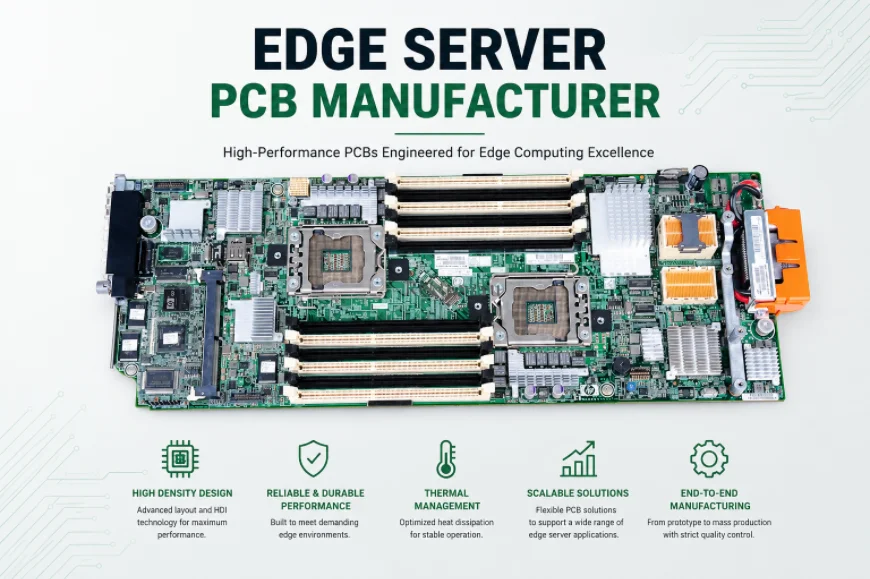
Figure 2. Edge Server PCB Manufacturer
Reliability Testing Edge Server Boards Should Pass Before You Ship
Telecom and industrial customers will ask for one or more of the following — we can build to all of them and supply the test reports:
- IPC-6012 Class 2 or Class 3 for rigid PCB acceptance, depending on whether your end customer demands the higher reliability tier.
- IPC-A-610 Class 2/3 for solder joint acceptance after assembly.
- Thermal cycling: −40°C to +85°C, 500–1000 cycles, for outdoor or uncontrolled-environment edge nodes.
- Thermal shock and damp heat per JEDEC profiles for the components on board.
- CAF resistance: relevant for boards in humid environments with fine pitch.
- Microsection analysis on first articles for plating thickness, layer alignment, and via barrel integrity.
Why Edge Server OEMs Work with Highleap Electronic
We are not the cheapest PCB shop on Alibaba and we are not a hyperscaler-only fab with a 20-week lead time. We sit in the practical middle that edge server programs need: server-grade process control, real DFM engineering, fab + assembly under one roof, and the volume flexibility to go from a 5-board prototype to a 5,000-unit production run on the same line.
Other Highleap pages that may be useful while you scope your project:
- Server Motherboard PCB Assembly
- AI Server PCB Manufacturing
- Communication PCB Solutions
- High Frequency PCB
- Turnkey PCB Assembly
Get a Quote for Your Edge Server PCB Project
Send us your Gerber or ODB++ files, your stackup target, your BOM (if you need assembly), and your quantity. You will get a written DFM report and a price on PCB-only or full PCBA within 1–2 business days. We work to your IPC class, your material list, and your delivery date — not to a generic catalog.
Start an Edge Server PCB Quote Now or contact our engineering team to discuss stackup, impedance, or assembly questions before you upload files.

Recommended Posts
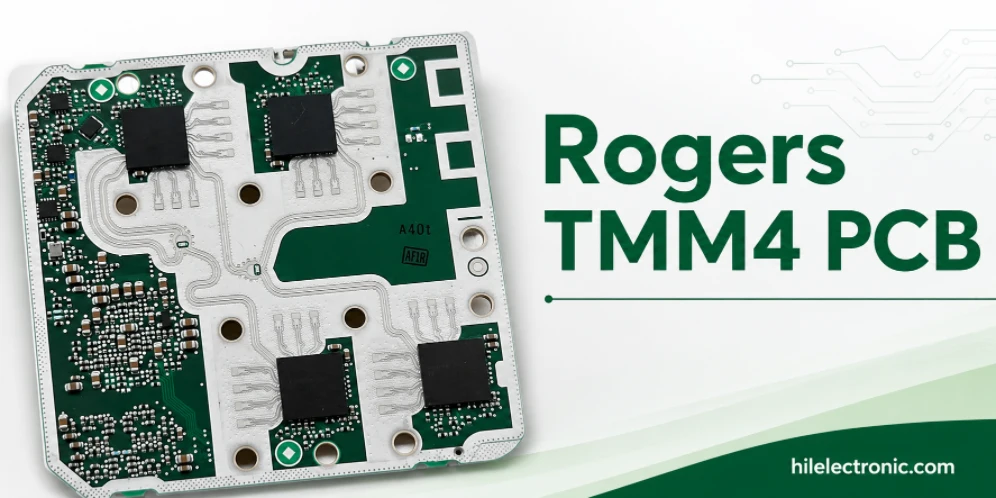
TMM4 Filter PCB Manufacturing
TMM4 filter PCB manufacturing is controlled by the...
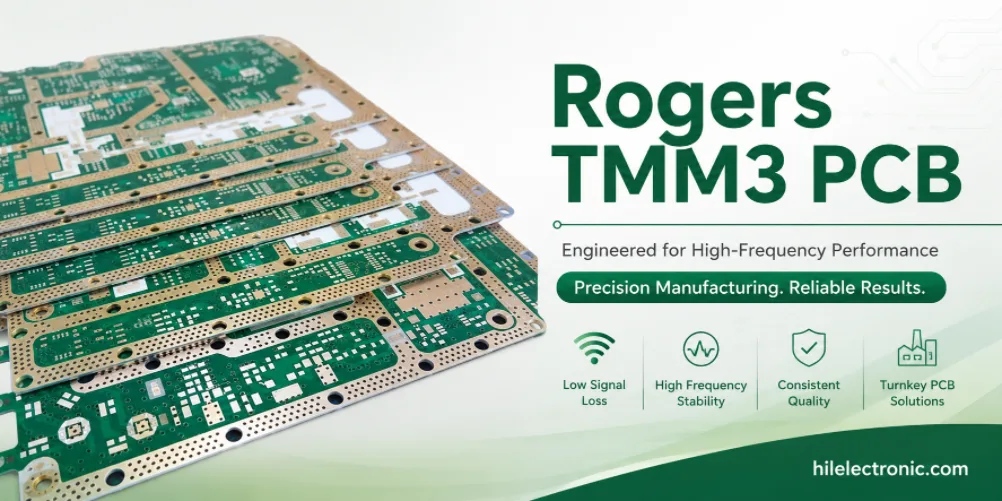
TMM3 PCB Manufacturing for RF Modules
TMM3 PCB manufacturing is most useful where the RF module...
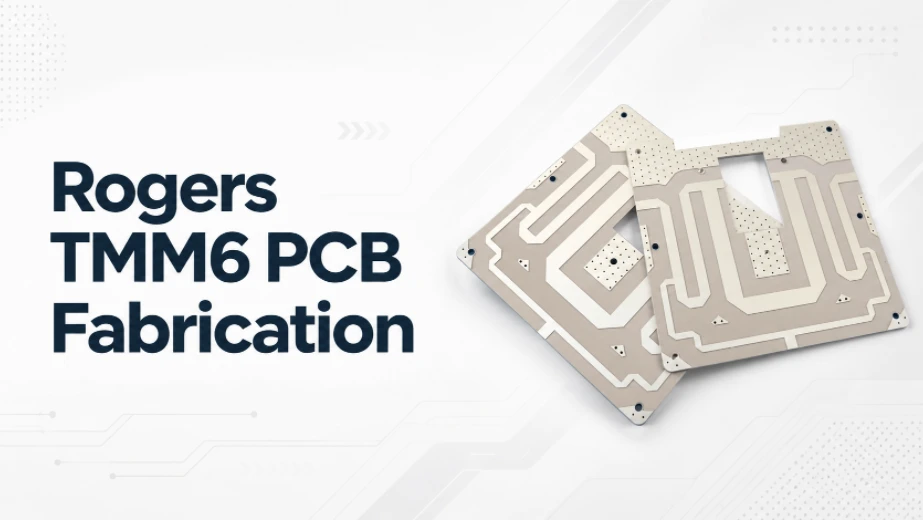
TMM6 PCB Fabrication
TMM6 fabrication is the process-control page for a mid-Dk...

TMM10 PCB Manufacturing for Compact RF Designs
Table of contentsHow TMM10 Shrinks RF StructuresTMM10 vs...
How to get a quote for PCBs
Let‘s run DFM/DFA analysis for you and get back to you with a report. You can upload your files securely through our website. We require the following information in order to give you a quote:
-
- Gerber, ODB++, or .pcb, spec.
- BOM list if you require assembly
- Quantity
- Turn time
For PCBA services, please provide your BOM (Bill of Materials) and any specific assembly instructions. We also offer DFM/DFA analysis to optimize your designs for manufacturability and assembly, ensuring a smooth production process.