
Fiber Optic FPV Drone PCB Manufacturing and Assembly for Low-Latency UAV Video Systems

Fiber optic FPV changes the role of the drone communication board. Instead of fighting RF interference, bandwidth limits, and unstable link conditions, the PCB is designed around optical transmission, low-latency video handling, compact integration, and reliable system control. In this architecture, the board is not just a camera interface or a radio replacement. It becomes the hardware bridge between the onboard video path, control link, optical transceiver, and the rest of the UAV electronics stack.
For this reason, a fiber optic FPV drone PCB needs more than basic signal routing. It must support high-speed video interfaces, stable low-latency transport, clean power delivery, controlled impedance, compact board integration, and reliable PCB assembly. Highleap Electronics provides PCB fabrication and PCB assembly for advanced UAV electronics, including fiber-optic FPV systems, optical communication boards, and other custom drone PCB applications.
Table of Contents
What a Fiber Optic FPV Drone PCB Must Support
A fiber optic FPV drone PCB is designed for UAV platforms that transmit video and control data through an optical link instead of relying on conventional RF FPV architecture. That shift changes the engineering priorities of the board. The design no longer centers on RF front-end tuning, antenna matching, and wireless coexistence. Instead, it must support optical transmission stability, high-speed onboard interfaces, low-latency signal flow, and compact integration with the aircraft’s control electronics.
In practical UAV use, this type of PCB usually supports several critical functions at the same time:
- Video capture and transport from the onboard camera or image-processing path
- Optical transmission handling between the airborne board and the tether or fiber communication path
- Control uplink and telemetry return over the same physical link or a coordinated parallel channel
- Low-latency data flow for real-time pilot view, mission response, or guided operation
- Stable electrical performance for processors, memory, optical modules, and interface devices
This makes the board fundamentally different from a conventional analog FPV board or an RF digital video transmitter. It is better understood as part of a larger drone PCB development workflow for fiber-based UAV communication systems, where video, control, and link integrity are engineered together at the board level.
Video, Control, and Optical Link Integration
The main technical challenge in a fiber optic FPV drone PCB is not simply transmitting video. It is integrating high-speed video, low-latency control, and optical communication into one reliable UAV electronics platform. In most real systems, the board must move video downstream while also preserving a dependable upstream control path and maintaining synchronization with the flight-control or mission-control electronics.
Depending on the architecture, the board may integrate:
- Camera input interfaces such as MIPI CSI, LVDS, or other high-speed video links
- Compression or lightweight processing when bandwidth or system format requires it
- Optical transceiver circuitry for video and control transport over fiber
- Bidirectional communication management so control traffic is protected even under heavy video load
- OSD, telemetry, or overlay support where mission data must be shown without compromising latency
In higher-performance systems, control data should not be treated as just another payload stream. Command traffic, telemetry, head-tracking data, or gimbal-control signals often need higher delivery priority than video quality itself. That requirement has a direct effect on PCB architecture, interface partitioning, clocking, and power integrity.
PCB Design Priorities for Fiber Optic FPV Systems
Once fiber replaces RF as the primary transmission medium, the board-level priorities shift. The PCB must support signal integrity and low-latency behavior inside the drone rather than focusing mainly on external wireless transmission. That makes stackup, routing, grounding, component placement, and connector strategy especially important.
Key PCB design priorities often include:
- Controlled impedance routing for high-speed camera lanes, SerDes paths, and optical-module interfaces
- Clean power architecture for image processors, FPGA or SoC devices, optical modules, and memory
- Compact multilayer stackup to manage dense routing while preserving return-path quality
- Thermal management for processors, transceivers, and power devices in small UAV airframes
- Connector and cable integration that fits the actual mechanical path of the fiber system
- EMI control where power stages, digital video, and optical electronics share limited space
For lightweight FPV drones, size and weight remain critical. That means the board often has to deliver optical communication performance in a compact form factor, sometimes on thinner substrates or with higher-density assembly. In more advanced platforms, this design work may also overlap with broader custom UAV PCB design requirements, where flight control, payload, communications, and power must be optimized as one integrated hardware system.
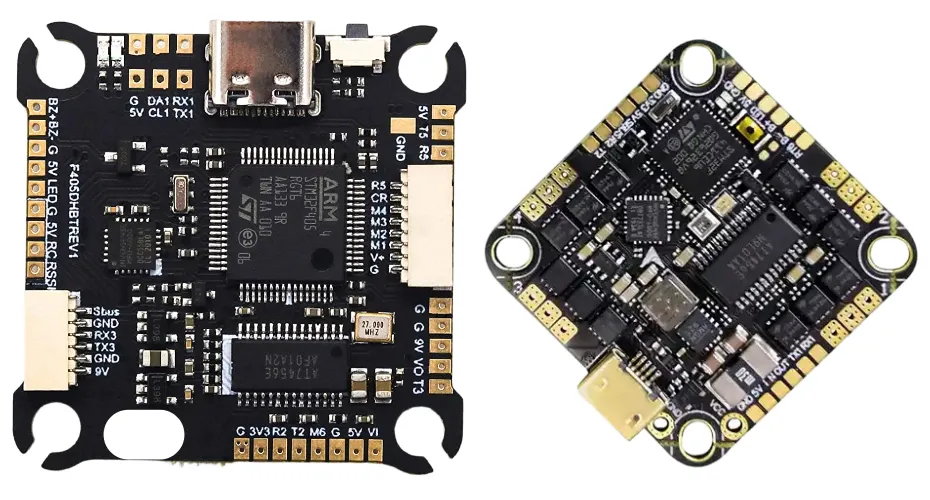
Manufacturing and PCBA Requirements for FPV Optical Boards
Fiber optic FPV drone boards are usually more demanding to manufacture than standard RF FPV hardware. The combination of high-speed interfaces, optical modules, fine-pitch ICs, compact connectors, and mixed-signal routing creates tighter fabrication and assembly requirements.
From the fabrication side, important considerations may include:
- Impedance-controlled PCB fabrication for high-speed video and optical interconnects
- Stable multilayer registration for dense routing and consistent signal behavior
- Fine-feature processing for compact drone electronics layouts
- Thermal and mechanical design support for optical modules and processor-heavy assemblies
- Material selection based on signal speed, thermal load, and structural requirements
From the assembly side, the requirements are just as important. These boards often need high-accuracy placement for processors, memory, camera connectors, optical devices, and miniature passive networks. Reflow behavior, board warpage control, connector alignment, cleanliness, inspection strategy, and functional testing all affect whether the final board performs as intended.
For projects that combine sourcing, build coordination, and system-level production support, Highleap also provides turnkey PCB assembly. Where fabrication, PCBA, and follow-on production need to stay under one coordinated workflow, that can also extend into a broader electronic manufacturing service model.
Why Highleap Electronics Fits Fiber Optic FPV Drone Projects
Highleap Electronics is well suited to fiber optic FPV drone PCB projects because this type of hardware sits at the intersection of high-speed signal design, compact UAV integration, optical communication, and precision assembly. These are not generic boards. They require a manufacturing partner that can support both the PCB itself and the final electronic build with tighter control over process consistency, interface quality, and production coordination.
Highleap’s advantages for this type of project include:
- PCB fabrication and PCB assembly under one workflow
- Support for high-density and signal-sensitive UAV electronics
- Experience with fiber-related, tether-related, and custom drone boards
- Scalable support from engineering samples to repeat production
- One-stop manufacturing coordination for sourcing, assembly, testing, and production planning
For UAV developers building fiber optic FPV systems, guided drones, tethered optical platforms, or other non-RF communication architectures, Highleap offers a more practical path from design release to production hardware than a supplier focused only on bare board output.
FAQ
What is a fiber optic FPV drone PCB?
It is a UAV circuit board designed to support FPV video and related control or telemetry signals over an optical link instead of a traditional RF FPV transmission path.
How is it different from a standard FPV drone board?
A standard FPV board usually centers on RF transmission. A fiber optic FPV board focuses on optical link integration, high-speed video routing, lower-latency internal signal flow, and coordination with tethered or guided communication hardware.
Does this type of board always require a tether?
In many practical systems, yes, because the optical path is usually delivered through a fiber connection. But the exact architecture depends on the drone platform and communication method.
Why is PCB assembly especially important for fiber optic FPV boards?
Because these boards often include high-density devices, optical modules, fine-pitch processors, and signal-sensitive interfaces that depend on accurate assembly and controlled production quality.
Can Highleap Electronics support prototyping and production for these boards?
Yes. Highleap supports PCB fabrication, PCB assembly, turnkey assembly, and broader EMS workflows for advanced UAV electronics, including fiber optic FPV drone hardware.
A fiber optic FPV drone PCB is more than a video board. It is a compact optical communication platform that connects camera interfaces, low-latency video transport, control signaling, and UAV integration into one manufacturable system. For projects that require reliable fiber-based FPV hardware, Highleap Electronics provides PCB fabrication and PCB assembly support from prototype stage to repeat production.

Recommended Posts
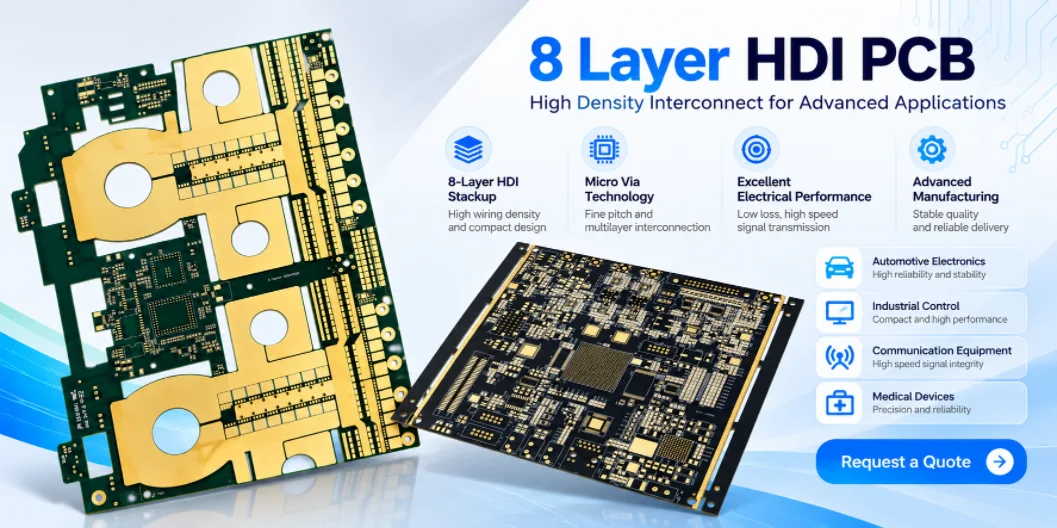
8 Layer HDI PCB Manufacturer in China
Highleap Electronics provides 8 layer HDI PCB...
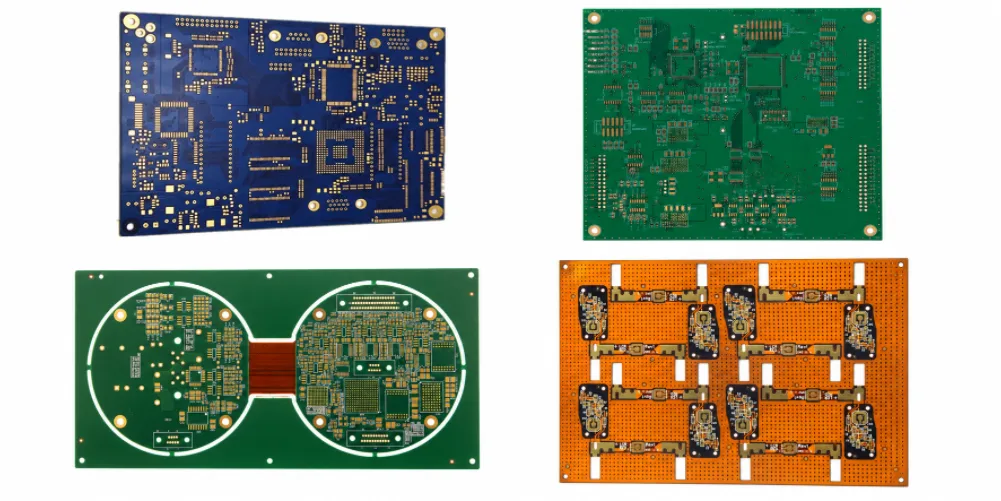
8 Layer Rigid-Flex PCB Manufacturing and Cost Guide
An 8 layer rigid-flex PCB combines multilayer rigid...
8 Layer PCB Cost in China: Rigid, Flexible & Rigid-Flex Pricing
How much does an 8 layer PCB cost? The answer depends on...
8 Layer PCB Manufacturing for Prototypes and Volume Production
Highleap Electronics provides 8-layer PCB manufacturing...
How to get a quote for PCBs
Let us run DFM/DFA analysis for you and get back to you with a report.
You can upload your files securely through our website.
We require the following information in order to give you a quote:
-
- Gerber, ODB++, or .pcb, spec.
- BOM list if you require assembly
- Quantity
- Turn time