
KB-6167 PCB Material: Technical Specifications, Properties & Design Guide

Introduction
KB-6167 PCB material is a high-Tg (175°C), low-CTE FR-4 laminate engineered for multilayer PCB fabrication requiring lead-free assembly compatibility and long-term thermal reliability. Developed by Kingboard Laminates, this phenolic-cured epoxy resin system with inorganic fillers delivers stable dielectric properties through repeated thermal cycles—making it suitable for automotive, telecom, and industrial applications where dimensional stability matters. See the full KB-6167 datasheet and specifications below.
KB-6167 Material Overview
KB-6167 is classified as a high-performance FR-4 laminate designed to meet IPC-4101E/126 specifications. It uses a multi-functional phenolic-cured epoxy resin system reinforced with E-glass fabric and enhanced with inorganic fillers for improved thermal performance. The material is UL-recognized under file number E123995.
Key Specification Summary
| Parameter | Unit | Specification | Typical Value |
|---|---|---|---|
| Glass Transition Temperature (Tg) | °C | ≥170 | 175 |
| Decomposition Temperature (Td) | °C | ≥340 | 357 |
| Dielectric Constant (Dk) @ 1 MHz | — | ≤5.4 | 4.5 |
| Loss Tangent (Df) @ 1 MHz | — | ≤0.035 | 0.018 |
| CTE Z-Axis (Alpha 1) | ppm/°C | ≤60 | 46 |
| CTE Z-Axis (Alpha 2) | ppm/°C | ≤300 | 267 |
| T-260 | min | ≥30 | 50 |
| T-288 | min | ≥15 | 30 |
| Flammability | Rating | UL94 V-0 | V-0 |
| Copper Cladding Available | oz | — | 1/3 oz – 6 oz |
| Thickness Range | mm | — | 0.05 – 3.20 |
| CAF Resistance | hrs | ≥1000 | 1000 |
The Dk value of 4.5 at 1 MHz directly influences impedance calculations in controlled-impedance designs. Engineers should use the manufacturer-specified Dk rather than generic FR-4 assumptions when designing trace widths and stackups. The Tg of 175°C indicates the material maintains dimensional stability through standard lead-free reflow profiles with peaks of 245–260°C.
KB-6167 Electrical & Thermal Properties
Understanding how KB-6167 PCB material behaves under electrical and thermal stress helps engineers make informed decisions during design and layout phases.
Dielectric Constant (Dk) and Impedance Control
KB-6167 exhibits a Dk of approximately 4.5 at 1 MHz, with values ranging from 3.9 to 4.7 at 1–10 GHz depending on resin content and glass style. For controlled-impedance designs, stack-up calculations must account for frequency-dependent Dk variation. Higher resin content prepregs (70–76%) yield lower Dk values, which can reduce trace width requirements for target impedances.
Loss Tangent (Df) and Signal Integrity
The typical Df of 0.016–0.018 at 1 GHz is acceptable for most digital designs operating below 3 GHz. For high-speed SerDes links exceeding 10 Gbps, verify insertion loss budgets using actual frequency-dependent Df data. At higher frequencies, Df increases, which affects signal attenuation in long trace runs.
Thermal Reliability Parameters
The Tg of 175°C ensures the material remains dimensionally stable through multiple lead-free reflow cycles. The Td of 357°C provides significant margin before thermal decomposition begins—critical for boards requiring multiple soldering operations or rework. T-260 and T-288 values of 50 and 30 minutes respectively indicate excellent resistance to delamination under sustained thermal stress.
CTE and Via Reliability
Z-axis CTE of 46 ppm/°C (Alpha 1, below Tg) combined with total Z-expansion of 2.8% (50–260°C) supports reliable plated through-hole and via structures. Low CTE reduces barrel cracking risk in high-layer-count designs and improves interconnect reliability through thermal cycling.
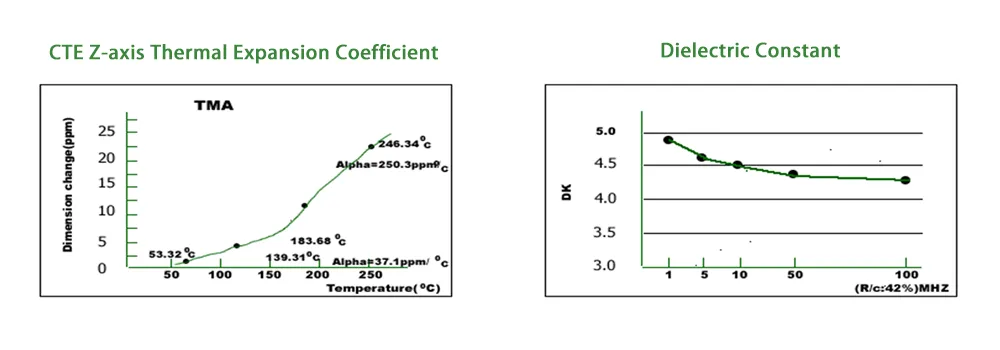
Figure 2. KB-6167 PCB Material Speciality Chart
KB-6167 Manufacturability & Process Compatibility
KB-6167 PCB material integrates into standard FR-4 manufacturing workflows while supporting advanced fabrication requirements.
Lamination Process Parameters
The recommended lamination window for KB-6067F prepreg includes a heat-up rate of 1.5–2.5°C/min (80–140°C), curing time exceeding 60 minutes above 190°C, and curing pressure of 350±50 PSI. Prepreg storage requires maximum 50% RH at 23°C or refrigeration at 5°C. Allow prepreg to normalize at room temperature for at least 4 hours before use.
Drilling and Plating Compatibility
KB-6167 machines well with standard carbide drill bits. The material is compatible with electroless copper and electrolytic copper plating processes. For blind and buried via structures, the low CTE minimizes registration shift between layers, supporting fine-pitch HDI designs with laser-drilled microvias.
Surface Finish Options
This laminate is compatible with all standard surface finishes including ENIG, OSP, immersion tin, immersion silver, and lead-free HASL. No special pre-treatment is required. The low moisture absorption (0.15–0.25% typical) supports stable finish adhesion.
DFM Guidelines for KB-6167
| Design Parameter | Recommended Value |
|---|---|
| Minimum trace width/space | 3/3 mil (standard); 2/2 mil (advanced) |
| Minimum mechanical drill | 0.15 mm |
| Minimum laser drill (HDI) | 0.075 mm |
| Minimum annular ring | 0.1 mm |
| Maximum layer count | 20+ layers supported |
| Board thickness range | 0.4 – 3.2 mm |
KB-6167 Typical Applications
The thermal and electrical properties of KB-6167 PCB material make it suitable for applications requiring lead-free compatibility and multi-cycle thermal stress resistance.
High-Layer-Count Multilayer PCBs
The low Z-axis CTE and high Tg support reliable 12–20+ layer constructions. Dimensional stability during lamination minimizes layer-to-layer registration drift, critical for high-density interconnect designs.
Automotive Electronics
KB-6167 meets thermal cycling requirements for engine compartment and body control modules. CAF resistance of ≥1000 hours at 85°C/85%RH supports long-term reliability in high-humidity automotive environments. Consider IATF 16949 process verification for production qualification.
Telecom Infrastructure Equipment
Backplane and line card applications benefit from the material’s stable Dk through temperature variations. The combination of Tg 175°C and low Df supports base station power amplifiers and switch fabric boards operating in outdoor enclosures.
Industrial Control Systems
Power supply modules, motor drives, and PLC boards utilize KB-6167 for its thermal resistance and mechanical strength. Flexural strength exceeding 450 N/mm² (fill direction) prevents board warpage under component mounting stress.
Server and Computing Platforms
High-end server motherboards and memory modules use KB-6167 for its balance of performance and cost. The material supports BGA/LGA package mounting with reliable via structures under repeated thermal cycling.
KB-6167 Comparison with Common Substrates
Selecting the right laminate requires understanding trade-offs between performance, cost, and manufacturability.
Comparison Table
| Parameter | KB-6167 (High-Tg FR-4) | Standard FR-4 (Tg 135°C) | a specialty low-loss laminate | Aluminum-Base (IMS) |
|---|---|---|---|---|
| Tg | 175°C | 130–140°C | 280°C+ | N/A |
| Dk @ 1 GHz | 4.5–4.6 | 4.2–4.5 | 3.48 | ~4.5 (dielectric layer) |
| Df @ 1 GHz | 0.016–0.018 | 0.018–0.025 | 0.0037 | 0.02+ |
| Lead-Free Compatible | Yes | Limited | Yes | Yes |
| Cost Index | 1.2–1.5× | 1× (baseline) | 5–8× | 2–4× |
| Max Frequency Range | Sub-6 GHz | Sub-3 GHz | 10+ GHz | Power applications |
| Typical Applications | Multilayer, automotive, telecom | Consumer, general purpose | RF/microwave, 5G | LED, power modules |
When to Choose KB-6167 Over Alternatives
Select KB-6167 when designs require lead-free compatibility, multiple reflow cycles, or operation in elevated ambient temperatures—but don’t need the ultra-low-loss properties of PTFE or ceramic-filled laminates. For RF front-end modules above 6 GHz, specialty low-loss laminate or equivalent low-loss materials remain appropriate. For high-power LED or IGBT applications requiring thermal dissipation, metal-core substrates are more suitable.

Figure 3. KB-6167 PCB Material
KB-6167 Design & Verification Checklist
A structured approach to design validation reduces risk and accelerates production release.
Impedance Calculation Reference
Use manufacturer-specified Dk values from the datasheet rather than generic assumptions. For KB-6167 at 1 GHz, Dk ranges from 3.9 to 4.7 depending on prepreg style and resin content. Request stack-up simulation support from your fabricator if targeting ±10% impedance tolerance.
Recommended Stackup Practice
For 8-layer designs, consider symmetric stackups with 7628 or 2116 glass styles on outer layers and 1080 or 106 high-resin prepregs for thin dielectric layers. Document target impedances, layer-to-layer dielectric thicknesses, and copper weights in fabrication notes.
Thermal Management Considerations
Place thermal-sensitive components away from board edges where CTE mismatch stress concentrates. For BGA packages with >400 pins, verify via-in-pad reliability with cross-section analysis on first articles. Consider thermal vias under power components to distribute heat through the Z-axis.
Verification Workflow
The recommended validation sequence: (1) prototype build with 3–5 panels, (2) first-article inspection including cross-section and impedance testing, (3) thermal cycling per IPC-TM-650 2.6.7.2 or equivalent, (4) surface insulation resistance (SIR) testing if required, and (5) production release with defined incoming inspection criteria.
Practical Recommendation
Request work-in-progress photos and sample test reports from your manufacturer before committing to volume production. This provides visibility into process control and reduces risk of surprises at final inspection.
KB-6167 Quality & Reliability
Reliability testing validates that KB-6167 PCB material meets application-specific lifetime requirements.
Standard Reliability Tests
| Test | Condition | Requirement |
|---|---|---|
| Thermal Stress | Float 288°C, unetched | ≥10 sec (typical: 240+ sec) |
| T-260 Delamination | TMA, 260°C sustained | ≥30 min (typical: 50 min) |
| T-288 Delamination | TMA, 288°C sustained | ≥15 min (typical: 30 min) |
| CAF Resistance | 85°C/85%RH, 50V DC | ≥1000 hrs |
| Moisture Absorption | D-24/23 | ≤0.35% (typical: 0.15%) |
These tests map directly to real-world conditions: T-288 validates lead-free reflow survival, CAF resistance predicts electrochemical migration lifetime, and moisture absorption influences long-term insulation reliability in humid environments.
Certifications and Compliance
KB-6167 carries UL recognition under E123995 with V-0 flammability rating. The material is RoHS and REACH compliant. For automotive applications, fabricators should provide process-level IATF 16949 certification rather than relying solely on material compliance.
KB-6167 Procurement & Lead Time
Efficient procurement reduces project delays and ensures consistent material quality.
Ordering Considerations
Standard panel sizes include 37″×49″, 41″×49″, and 43″×49″ for laminates, with larger sizes available. Copper cladding options range from 1/3 oz to 6 oz in both RTF (reverse treated foil) and HTE configurations. Prepreg styles include 106, 1080, 2116, 1506, 7628, and others with resin content from 42% to 76%.
Lead Time Guidance
Prototype quantities (1–5 panels) typically ship within 2–3 weeks from established suppliers. Production volumes require 4–6 week lead times depending on laminate thickness and copper weight specifications. Maintain safety stock for critical programs to avoid line-down situations.
Incoming Inspection Checklist
Request and verify: Certificate of Conformance (CoC) with lot traceability, UL recognition documentation, RoHS/REACH compliance statements, and Dk/Df data at operating frequency if available. For critical applications, request impedance test coupons and cross-section reports with first-article deliveries.
Sample Request Template
When requesting samples or quotes, include: laminate thickness and tolerance, copper weight, panel size, surface finish, impedance requirements (if any), IPC class, quantity, and delivery location. Specify whether you require test reports with shipment.
Conclusion
KB-6167 PCB material delivers the thermal reliability and dimensional stability required for lead-free multilayer fabrication without the cost premium of specialty high-frequency laminates. For designs operating below 6 GHz that require multiple reflow cycles, elevated temperature exposure, or automotive-grade durability, KB-6167 represents a practical choice balancing performance against total cost.
From my perspective, I recommend considering KB-6167 when standard FR-4 materials fall short on Tg or thermal cycling requirements but ultra-low-loss RF substrates aren’t necessary. The material’s wide availability, established process compatibility, and favorable cost structure make it a reliable baseline for industrial, telecom, and automotive multilayer designs. For critical applications, invest in proper stack-up simulation and first-article verification rather than relying solely on datasheet values—real-world performance depends on both material properties and fabrication process control.
KB-6167 FAQ
Q1: Can KB-6167 be used for 6-layer or higher layer count boards?
Yes. KB-6167 supports 20+ layer constructions. The low Z-axis CTE (46 ppm/°C typical) and high Tg (175°C) maintain via reliability and dimensional stability across high-layer-count builds.
Q2: What surface finishes are compatible with KB-6167?
KB-6167 works with all standard finishes: ENIG, OSP, immersion tin, immersion silver, and lead-free HASL. Low moisture absorption (0.15% typical) supports consistent finish adhesion.
Q3: What is the maximum reflow temperature KB-6167 can withstand?
The T-288 rating of 30+ minutes indicates the material survives lead-free reflow profiles with peaks up to 260°C. For profiles peaking at 245°C, multiple reflow cycles are supported without delamination.
Q4: Is KB-6167 suitable for RF or high-frequency designs?
KB-6167 performs adequately for applications below 3–6 GHz. For higher frequencies or designs requiring Df below 0.010, consider specialty low-loss laminate, Isola Astra, or other low-loss laminates.
Q5: What prepreg options are available for KB-6167 stackups?
The corresponding prepreg is KB-6067F, available in glass styles 106, 1080, 2116, 1506, 7628, and others. Resin content ranges from 42% to 76%, affecting both Dk and pressed thickness.
Q6: Does KB-6167 meet automotive qualification requirements?
The material itself meets thermal and CAF requirements typical for automotive applications. Final qualification depends on fabricator-level IATF 16949 process certification and application-specific testing.
Q7: What is the dielectric constant (Dk) of KB-6167 at different frequencies?
Dk ranges from 4.5 at 1 MHz to approximately 3.9–4.5 at 10 GHz depending on prepreg style and resin content. Higher resin content yields lower Dk values.
Q8: Can KB-6167 be used for HDI designs with microvias?
Yes. The material is compatible with laser drilling for blind via formation. Low CTE supports reliable microvia interconnects, and the resin system handles sequential lamination processes.
Q9: What is the shelf life for KB-6167 prepreg?
Store at ≤23°C and ≤50% RH for standard shelf life, or refrigerate at 5°C for extended storage. Allow 4+ hours at room temperature before lamination. Consult supplier for specific lot expiration dates.
Q10: How does KB-6167 compare to other Kingboard high-Tg materials like KB-6165?
KB-6167 offers higher Tg (175°C vs. 153°C) and better CAF resistance. Choose KB-6167 for applications requiring more aggressive thermal cycling or higher operating temperatures. KB-6165 may be more cost-effective for less demanding designs.

Recommended Posts
Taconic RF 35 vs RO4350B PCB
Table of contentsRF-35 vs RO4350B Procurement and...
TMM4 Filter PCB Manufacturing
TMM4 filter PCB manufacturing is controlled by the...
TMM3 PCB Manufacturing for RF Modules
TMM3 PCB manufacturing is most useful where the RF module...
TMM6 PCB Fabrication
TMM6 fabrication is the process-control page for a mid-Dk...
How to get a quote for PCBs
Let‘s run DFM/DFA analysis for you and get back to you with a report. You can upload your files securely through our website. We require the following information in order to give you a quote:
-
- Gerber, ODB++, or .pcb, spec.
- BOM list if you require assembly
- Quantity
- Turn time
In addition to PCB manufacturing, we offer a comprehensive range of electronic services, including PCB design, PCBA, and turnkey solutions. Whether you need help with prototyping, design verification, component sourcing, or mass production, we provide end-to-end support to ensure your project’s success.
For PCBA services, please provide your BOM (Bill of Materials) and any specific assembly instructions. We also offer DFM/DFA analysis to optimize your designs for manufacturability and assembly, ensuring a smooth production process.