
Motion Sensor & Smart LED Light PCBs: Sensor, Control, Driver & Wireless Boards
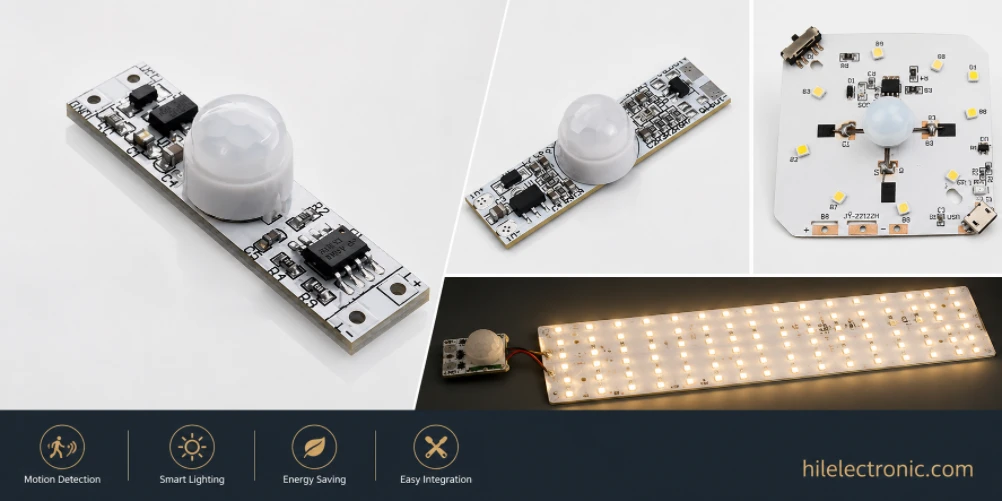
Figure 1. motion sensor LED light PCB manufacturing reference.
Table of Contents
- Why smart lighting is inherently a multi-board product
- The sensor, control, driver, and wireless architecture
- Sensor boards: PIR, microwave, and dual-tech
- Wireless and connectivity boards
- Drivers and dimming for sensor-controlled fixtures
- Integration, signal integrity, and coexistence
- Why one factory for the whole smart-lighting stack
- How to Order — Files, MOQ & Lead Time
- Motion Sensor & Smart LED PCB — Frequently Asked Questions
A motion-sensor or smart light is, by definition, more than a light. It senses its environment, decides what to do, drives the LEDs accordingly, and often talks to other devices or an app. Each of those functions — sensing, deciding, driving, communicating — is a distinct circuit with distinct requirements, which makes smart lighting the most inherently multi-board product in the whole lighting world. The intelligence is not in the LEDs; it is in the boards around them.
Highleap Electronics is a full-capability high-mix PCB fabrication and volume PCB assembly factory, and mixed sensor-plus-power-plus-RF designs are exactly the kind of multi-discipline work our lines are built for. We build the sensor board, the control board, the wireless board, the driver, and the engine, and integrate them into one tested stack. This guide explains the smart-lighting architecture and why integrating it matters, and how to order. The wider category is on our lighting PCB services page.
Quick answer: A motion-sensor or smart light is inherently multi-board: a sensor (PIR or microwave), an MCU control board, a wireless connectivity board, a driver, and a light engine — each a different discipline that must be integrated without interfering with the others. Highleap Electronics fabricates and assembles the whole stack, managing the signal-integrity and RF-coexistence challenges of combining sensitive sensors and RF with a switching driver, at MOQ 1 and a 24-hour quote.
Why smart lighting is inherently a multi-board product
Every other lighting product in this series can, in principle, be reduced to an engine and a driver. Smart lighting cannot, because intelligence adds functions that are genuinely separate circuits. A sensor is a low-level analog detector. A controller is a digital decision-maker. A radio is a sensitive RF circuit. A driver is a noisy switching power converter. A light engine is a thermal board. Putting all of those in one fixture is not optional complexity — it is what “smart” means.
And here is the catch that makes smart lighting hard: these circuits actively interfere with each other if they are not designed together. The switching driver generates electrical noise that can blind a sensitive sensor or corrupt a radio. The radio needs clean space and a clear antenna. The sensor needs a quiet analog environment. Integrating them so they coexist is the central engineering challenge, and it is precisely the kind of problem that gets solved within one manufacturer and falls apart across several.
The sensor, control, driver, and wireless architecture
The smart-lighting stack rewards a close look, because the way its boards fit together — and the interference problems that arise when they do — is the whole story of why integration matters.
The four functional blocks. A connected motion-sensing fixture is built from these circuits, each with its own needs:
- The sensor — detects presence, ambient light, or both. It is a low-signal analog circuit that must pick out a faint, slow change (a person moving) against noise, so it is acutely sensitive to electrical interference.
- The controller (MCU) — the brain that reads the sensor, applies the logic (turn on, hold, dim, time out), and commands the driver; often a high-density mixed-signal board bridging analog sensing and digital control.
- The wireless radio — the link to other fixtures, a hub, or an app; a sensitive RF circuit needing a clean antenna environment, frequently on HDI for the fine routing modern modules use.
- The driver — the power converter that runs the LEDs and executes the controller’s dimming commands; a switching circuit and the main source of electrical noise in the fixture.
Why putting them together is hard. The difficulty is not building each block — it is making them coexist on the same power and in the same small fixture. The conflicts are real and specific:
- Switching noise vs sensitive sensing — the driver’s high-frequency switching couples into nearby circuits; a PIR sensor reading microvolts can be swamped by it, causing false triggers or missed detection unless the layout separates and filters carefully.
- Power-supply separation — the sensor and MCU need clean, quiet power, so the board has to derive and filter a stable low-voltage rail away from the noisy driver section.
- RF coexistence and antenna keepout — the radio’s antenna needs clear space free of copper and metal; route a noisy trace or a ground plane too close and range collapses. Antenna keepout zones and placement are a layout-level discipline.
- Grounding and partitioning — the board is partitioned into analog (sensor), digital (MCU), RF (radio), and power (driver) domains, with grounding arranged so noise from one does not flow through another.
- EMC as a whole — the finished fixture has to pass electromagnetic-compatibility limits, which is far easier when the noisy and sensitive sections were partitioned from the start than when they were combined late.
This is exactly why smart lighting is the strongest multi-board case of all. The boards are not just assembled together — they are designed together, with the noise budget, the power partitioning, the grounding, and the antenna environment planned as one layout. A sensor from one supplier, a radio module from another, and a driver from a third, combined late, is how smart fixtures end up with false triggers, short wireless range, or EMC failures that nobody can pin down. When one manufacturer lays out the whole stack — keeping the switching noise away from the sensor, giving the antenna its clear space, partitioning the grounds — the fixture senses reliably, connects at full range, and passes compliance. Building the integrated stack is the product, not a convenience.
Sensor boards: PIR, microwave, and dual-tech
The sensing technology shapes the board, and we build for each type:
- PIR (passive infrared) — detects the heat signature of a moving person through a Fresnel lens, low-power and reliable for room-scale occupancy; the classic corridor and storeroom sensor.
- Microwave / radar — emits and reads reflected microwaves (Doppler), so it can sense through the fixture housing and non-metal obstacles and cover larger areas, useful for high-bay and outdoor fixtures.
- Dual-tech — combining PIR and microwave so both must agree, cutting false triggers in demanding installations.
- Ambient-light sensing — a photocell input so the fixture only activates when it is actually dark, saving energy.
Each sensor type has its own layout and shielding needs, which we handle as part of integrating it with the rest of the stack.
Wireless and connectivity boards
Connected lighting speaks a range of protocols, and we build boards for the common ones:
- Bluetooth / BLE — for app control and mesh networks of fixtures.
- Zigbee and Thread — low-power mesh protocols for smart-building and smart-home ecosystems.
- Wi-Fi — direct cloud and app connectivity where mains power makes the higher consumption acceptable.
- Sub-GHz / LoRa — long-range, low-power links for outdoor and large-site lighting control.
Whatever the protocol, the radio is integrated with attention to the antenna environment and noise, and coordinated with the controller and our intelligent power control approach so the whole fixture behaves as one connected device.
Drivers and dimming for sensor-controlled fixtures
A smart fixture’s driver has to take commands, not just deliver power. We build drivers that the controller can modulate smoothly:
- Dimmable on command — the controller sets output in response to occupancy and daylight, so the driver must dim cleanly across a wide range.
- Step and fade behavior — smooth ramps when motion is detected or a timeout expires, rather than abrupt switching.
- Low standby power — since the fixture is often idle waiting for motion, efficient standby matters; a dynamic power control concern.
- Quiet operation — designed and laid out so its switching does not disturb the sensor or radio sharing the fixture.
Built with the sensor and controller, the driver responds to commands cleanly and stays out of the sensitive circuits’ way.
Integration, signal integrity, and coexistence
Pulling the stack together is the value we add, and it is real engineering: partitioning the board into analog, digital, RF, and power domains; deriving clean rails for the sensitive circuits; placing and routing the antenna for full range; arranging grounds so noise does not cross domains; and verifying the whole fixture passes EMC. For fixtures with awkward mechanics — a sensor that must face down while the engine faces a different way — we also build rigid-flex constructions that fold the functions into one connector-free board. The result is a fixture that senses reliably, connects at range, and passes compliance, because the integration was designed in rather than discovered in testing.
Why one factory for the whole smart-lighting stack
Smart lighting is where single-source manufacturing matters most, because the boards do not merely sit together — they interfere with each other, and making them coexist is the entire design problem. A sensor, a radio, and a driver bought from three suppliers and combined late is the recipe for false triggers, poor range, and EMC failures with no clear owner. One manufacturer that lays out the whole stack — noise partitioned, power separated, antenna placed, grounds arranged — produces a fixture that simply works.
Highleap Electronics builds the sensor, control, wireless, driver, and engine boards and integrates them into one tested smart-lighting stack, managing the signal-integrity and RF-coexistence challenges as one job, at MOQ 1 so you can prove a design before volume. Send your sensing type, protocol, and fixture concept to our LED-grade PCB assembly team for a 24-hour quote.
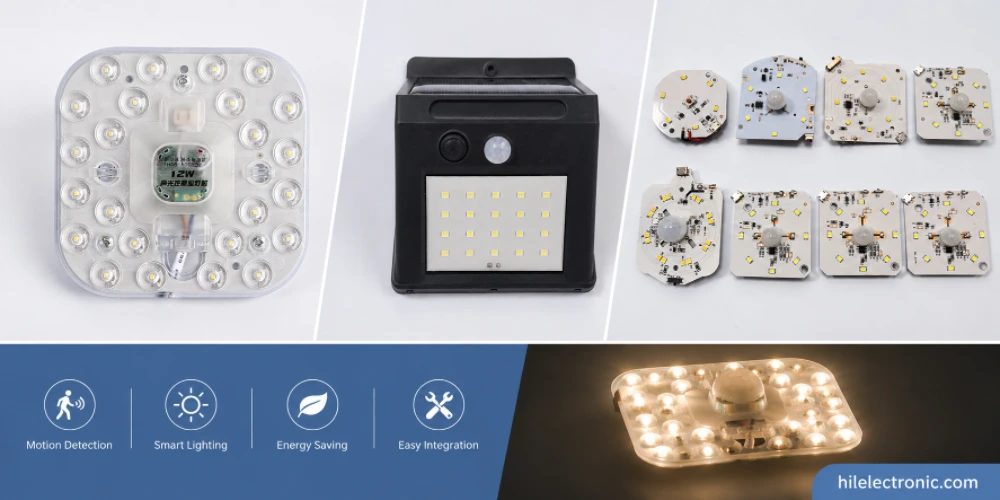
Figure 2. motion sensor LED light PCB assembly production and assembly detail.
How to Order — Files, MOQ & Lead Time
Ordering smart and motion-sensor boards from Highleap Electronics starts with your sensing type (PIR, microwave, dual-tech), wireless protocol, and fixture concept. Every quote includes a free Design for Manufacturability (DFM) review, and our minimum order is a single unit with no prototype surcharge.
What files to send
- PCB fabrication only — Gerber RS-274X files (all copper, solder-mask, and silkscreen layers), Excellon drill file, board outline on the mechanical layer, and fabrication notes covering substrate, dielectric, copper weight, surface finish, and solder-mask color.
- PCB assembly (PCBA) — the above plus a Bill of Materials with manufacturer part numbers and quantities, and a Pick-and-Place (Centroid) file for the SMT components.
- Turnkey electronics — the above plus mechanical files (STEP/DXF) for the heat sink or housing, optic or lens details, driver or control specification, firmware if applicable, and any branding or packaging artwork. If files are missing, send what you have and our engineering team identifies the gaps during the DFM review.
MOQ and pricing
- Minimum order quantity is 1 unit for both fabrication and assembly, with no prototype penalty fee.
- Volume price breaks at 10, 50, 100, 500, and 1,000+ units.
- We retain your files so repeat orders skip re-quoting the engineering cost.
Lead times
- PCB fabrication — 5 to 7 business days standard; 24 to 48 hours express, subject to capacity confirmation.
- PCB assembly (PCBA) — 7 to 12 business days including component sourcing; 5 days express for an in-stock BOM.
- Turnkey modules — typically 12 to 18 business days depending on substrate, protection, and volume.
- All lead times are confirmed in your quote and begin from order confirmation and file approval.
Certifications and standards: ISO 9001 quality management, IPC Class 2 and Class 3 workmanship, AOI and functional testing on every board, with X-ray, ICT, and burn-in screening available. We ship to more than 40 countries with full tracking and provide compliance documentation on request. For motion sensor or smart LED light PCBs, upload the Gerber files, BOM, sensor notes, wireless-control requirements, and target quantities through the website quote form so Highleap Electronics can review the driver, control, and assembly details together.
Motion Sensor & Smart LED PCB — Frequently Asked Questions
Why is a smart light harder to build than a normal LED fixture?
Because it is inherently multi-board, and the boards interfere with each other. A smart fixture combines a sensitive analog sensor, a digital controller, an RF radio, and a noisy switching driver in one small housing — and the driver’s switching noise can blind the sensor or corrupt the radio, while the radio needs a clean antenna environment the other circuits threaten. The hard part is not building each block but making them coexist, which means partitioning the board and planning the noise, power, grounding, and antenna as one layout.
Do you build the sensor, controller, radio, and driver, or just assemble modules?
We build and integrate the whole stack. That matters because the integration is the product: a sensor from one supplier, a radio from another, and a driver from a third, combined late, is how smart fixtures get false triggers, short wireless range, and EMC failures nobody can pin down. We lay out the analog, digital, RF, and power domains together so switching noise stays away from the sensor, the antenna gets clear space, and the grounds are partitioned — so the fixture senses reliably and connects at full range.
What sensing technologies and wireless protocols do you support?
Sensing: PIR (passive infrared) for room-scale occupancy, microwave/radar for sensing through the housing and covering larger areas, dual-tech combining both to cut false triggers, and ambient-light sensing so the fixture only activates in the dark. Wireless: Bluetooth/BLE, Zigbee, Thread, Wi-Fi, and sub-GHz/LoRa for long-range outdoor control. We integrate whichever combination your fixture needs with attention to the antenna environment and noise.
How do you stop the driver’s noise from causing false sensor triggers?
By layout discipline. We partition the board into separate analog (sensor), digital (controller), RF (radio), and power (driver) domains; derive and filter a clean low-voltage rail for the sensitive circuits away from the switching driver; arrange grounding so driver noise does not flow through the sensor; and design the driver to switch quietly. Designed this way from the start, the fixture passes EMC and senses reliably — problems that are nearly impossible to fix when noisy and sensitive boards are combined late.
Can you build fixtures where the sensor and light face different directions?
Yes. When the mechanics are awkward — a sensor facing down while the light engine faces another way — we build rigid-flex constructions that fold the sensor, control, and engine sections into one connector-free board, which improves reliability by removing the connectors that otherwise fail. We design the fold and the domain partitioning together so the integrated board still keeps noise away from the sensor and the antenna clear.

Recommended Posts
Taconic RF 35 vs RO4350B PCB
Table of contentsRF-35 vs RO4350B Procurement and...
TMM4 Filter PCB Manufacturing
TMM4 filter PCB manufacturing is controlled by the...
TMM3 PCB Manufacturing for RF Modules
TMM3 PCB manufacturing is most useful where the RF module...
TMM6 PCB Fabrication
TMM6 fabrication is the process-control page for a mid-Dk...
How to get a quote for PCBs
Let’s run DFM/DFA analysis for you and get back to you with a report. You can upload your files securely through our website. We require the following information in order to give you a quote:
-
- Gerber, ODB++, or .pcb, spec.
- BOM list if you require assembly
- Quantity
- Turn time
For PCBA services, please provide your BOM (Bill of Materials) and any specific assembly instructions. We also offer DFM/DFA analysis to optimize your designs for manufacturability and assembly, ensuring a smooth production process.