
Custom MEC Server PCB Supplier for AI

Figure 1. MEC Server PCB Supplier – Highleap Electronic 5G multi-access edge computing high-speed multilayer PCB and backplane assembly
Sourcing a PCB supplier for a Multi-access Edge Computing (MEC) server is different from sourcing for a standard datacenter board. MEC platforms sit between the radio access network and the cloud — vEPC/UPF workloads, O-RAN DU/CU, edge AI inference, and low-latency vertical applications all converge onto compute hardware that has to meet telecom-grade availability while shipping in operator-driven volumes.
Highleap Electronic supplies PCBs and PCBA for MEC server programs run by network appliance OEMs, ODMs, and private-5G integrators. This page is for the sourcing engineer or hardware lead deciding whether we belong on your AVL. It covers the technical capability that matters for MEC hardware — high-speed laminates, backplane construction, controlled impedance at PCIe Gen5 / 25G+ rates — and the supply-chain behavior that telecom procurement teams actually evaluate.
What Makes a PCB “MEC-Class”
MEC servers are physically diverse — short-depth 1U/2U appliances at central offices, ruggedized boxes at far-edge cell sites, hyperconverged units in carrier-grade enclosures — but the PCB requirements converge on a consistent profile:
- High-density compute: Xeon-D, EPYC Embedded, Ampere Altra, or merchant SoCs paired with GPU/SmartNIC accelerators, all on one board or split across mainboard plus mezzanine/riser.
- High-speed I/O dominance: PCIe Gen4/Gen5, CXL, DDR5, 25G/100G/400G Ethernet from the front-panel ports to the SerDes-heavy backplane.
- Wired and wireless interfaces: SFP28/QSFP28/QSFP-DD cages, optical timing, and in some designs integrated O-RAN front-haul.
- Carrier-grade availability: NEBS Level 3 thermal and shock targets, redundant power feeds, hot-swap fans, and 5+ year continuous-duty operation.
- Operator scrutiny: PCBs must be traceable batch by batch; many telecom programs require IPC Class 3 acceptance and full microsection on first articles.
An MEC server PCB supplier therefore has to be fluent in high-layer-count construction, low-loss material handling, and disciplined process control — not just in turning Gerbers into boards.
MEC Server PCB Manufacturing Capability
Below are the parameters we hit on MEC-class boards. The complete spec sheet lives on our rigid PCB capability page.
| Parameter | Capability |
|---|---|
| Layer count | 4 to 60 layers; MEC mainboards typically 16–28 |
| Board thickness | 0.4 mm to 6.0 mm; backplanes commonly 4.0–6.0 mm |
| Max board size | up to 610 × 1100 mm (panel) |
| Minimum trace / space | 2.5 / 2.5 mil (inner), 3 / 3 mil (outer) |
| Copper weight | 0.5 oz to 10 oz |
| Microvia diameter | 0.075 mm laser-drilled, stacked or staggered |
| Aspect ratio (mechanical via) | up to 20:1 |
| Impedance tolerance | ±5 Ω (≤50 Ω) or ±7%; differential ±7% |
| Back drilling stub control | ±0.1 mm |
| Surface finish | ENIG, ENEPIG, immersion silver, hard gold, OSP |
Low-Loss and Hybrid Materials We Stock for MEC Work
SerDes lanes above 25 Gbps are unforgiving — material Dk/Df and copper roughness drive your eye diagram more than routing does. We carry inventory of the laminates that actually appear on MEC and O-RAN BOMs:
- Panasonic — Megtron 6, Megtron 7, Megtron 8
- ITEQ — IT-968, IT-988
- TUC — TU-872 SLK, TU-883, TU-933
- Isola — I-Tera MT40, IS620i, Tachyon-class for advanced SerDes
- specialty low-loss laminate — a specialty low-loss laminate, a specialty low-loss laminate, a specialty low-loss laminate for RF and antenna sub-sections
For MEC platforms that integrate small-cell or O-RAN front-haul radio sections, we routinely build specialty low-loss laminate + FR-4 hybrid stackups so the RF zone gets a specialty low-loss laminate performance while the digital zone stays on cost-effective mid-loss laminate.
Backplane and Midplane PCBs for MEC Chassis
MEC platforms that follow the disaggregated O-RAN model — separate compute blades, switching fabric, and accelerator cards — depend on a high-speed backplane to glue everything together. Backplane PCBs are some of the toughest boards we build, and the construction details matter:
- High layer counts (24–48 layers typical) to route hundreds of differential pairs with reference-plane isolation.
- Thick boards with deep press-fit holes — our process supports up to 6 mm board thickness with controlled-depth back drilling.
- Low-loss core throughout the SerDes layers, because backplane traces are long and the loss budget is tight.
- Heavy copper sub-stackups for power distribution; we build 3–6 oz copper layers under the connector zones to handle bus-bar currents.
- Press-fit qualification: hole geometry and plating thickness controlled to vendor spec for connectors like Amphenol ExaMAX, TE Strada Whisper, and Molex Impel.
If you are running blade compute + switch fabric on one chassis, we can quote mainboard, riser, and backplane as a single bundled program — same fab process, same revision tracking, single supplier.
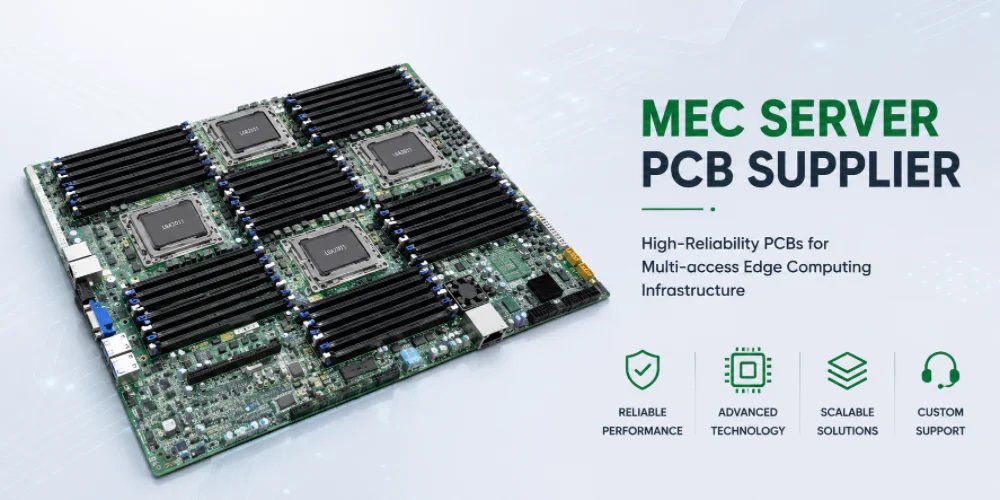
Figure 2. MEC Server PCB Supplier
MEC Server PCBA: From Pilot to Volume
Telecom OEMs typically run an MEC program through three phases — EVT/DVT prototype, pilot (50–500 units), and operator-driven production. We support all three on the same SMT line, with the same engineers, so revision changes between phases stay traceable.
- Placement accuracy: ±25 µm @ 3σ, supporting 01005 passives and BGAs down to 0.35 mm pitch.
- BGA capability: see our BGA assembly page — including fine-pitch flip-chip BGAs used on edge SoCs and SmartNICs.
- Press-fit station: controlled-force insertion for high-density backplane connectors.
- X-ray inspection: 5 µm resolution on every BGA, BTC, and via-in-pad area.
- Functional test: we build test fixtures to your spec, or run boundary scan / JTAG / ICT depending on access.
- IC programming: BMC, EEPROM, FPGA bitstream loading — see IC programming services.
- Conformal coating: for outdoor or street-cabinet MEC enclosures where condensation is a concern.
Lead times: prototype PCB 7–14 working days, PCBA 15–25 working days from component readiness; pilot and production lead times quoted per project.
Supply-Chain Behavior That Telecom Procurement Actually Cares About
Capability lists are easy to publish. What separates a real MEC server PCB supplier from a generic shop is what happens during the program:
- Material traceability: every batch tagged with laminate manufacturer, lot, and date code. Your operator customer will ask.
- Revision control: engineering change orders processed against a fixed BOM and stackup; no silent substitutions.
- First-article reports: microsection, impedance TDR, solderability, and dimensional inspection delivered with every new revision.
- IPC class compliance: most MEC programs require IPC-6012 Class 2 or Class 3 for the PCB and IPC-A-610 Class 2/3 for assembly. We build to both.
- RoHS / REACH: full compliance, declarations available with shipment.
- Capacity headroom: when an operator activates a region and you need to scale 3× in a quarter, the line can absorb it.
Highleap holds ISO 9001, ISO 14001, IATF 16949, and UL certifications, and our quality system is described on our PCB quality assurance page.
Related MEC and Communication PCB Resources
- Communication PCB Solutions
- High Frequency PCB Manufacturing
- High Speed PCB Materials
- Server Motherboard PCB Assembly
- AI Server PCB Manufacturing
- Turnkey PCB Assembly
Start Your MEC Server PCB Quote
Send us your Gerber/ODB++, stackup with impedance targets, BOM (for assembly), and target quantity. For backplane or chassis programs, include the connector spec and press-fit hole drawing. You will get a written DFM review and a price within 1–2 business days. If your program requires a supplier audit before quoting, our sales engineering team will arrange it.
Get an MEC Server PCB Quote or contact our engineering team to discuss stackup, materials, or backplane construction.

Recommended Posts
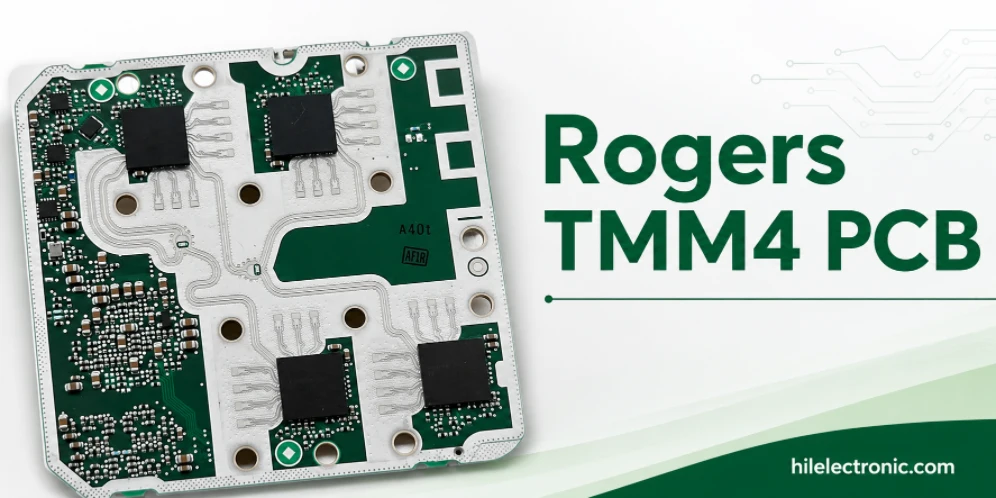
TMM4 Filter PCB Manufacturing
TMM4 filter PCB manufacturing is controlled by the...
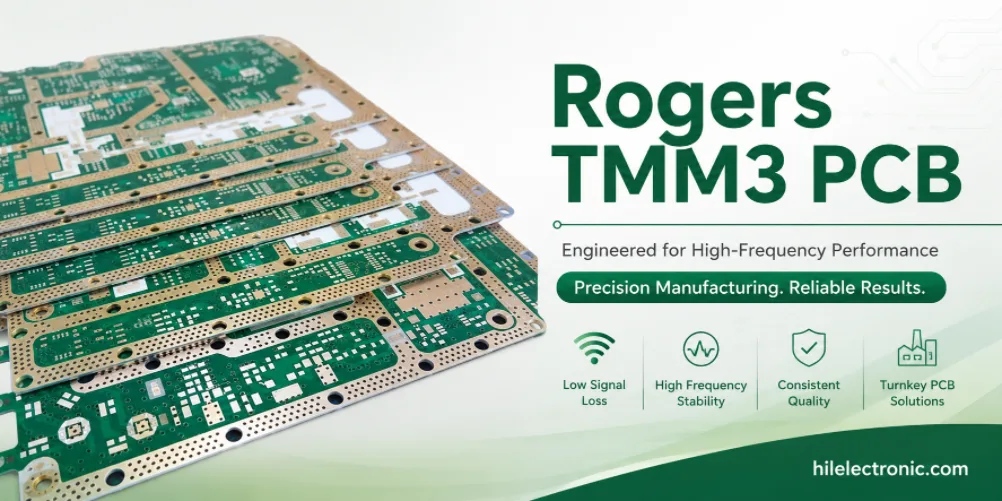
TMM3 PCB Manufacturing for RF Modules
TMM3 PCB manufacturing is most useful where the RF module...
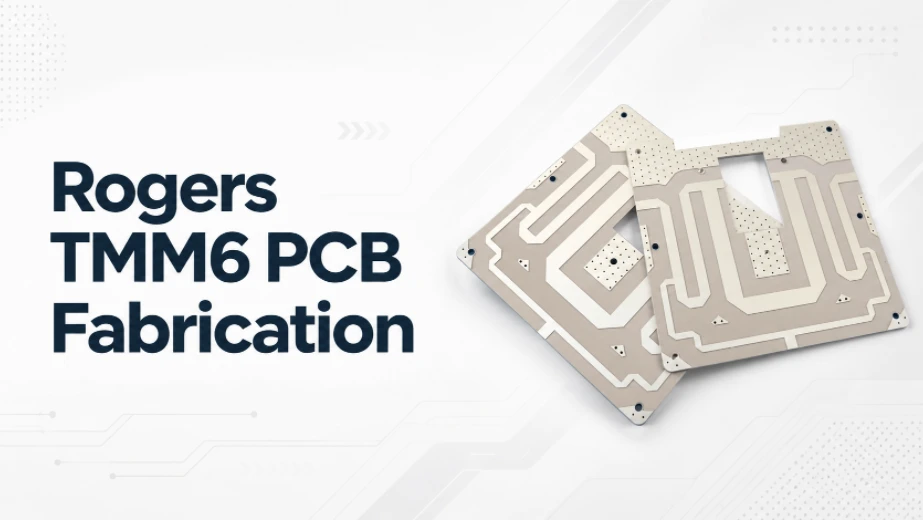
TMM6 PCB Fabrication
TMM6 fabrication is the process-control page for a mid-Dk...
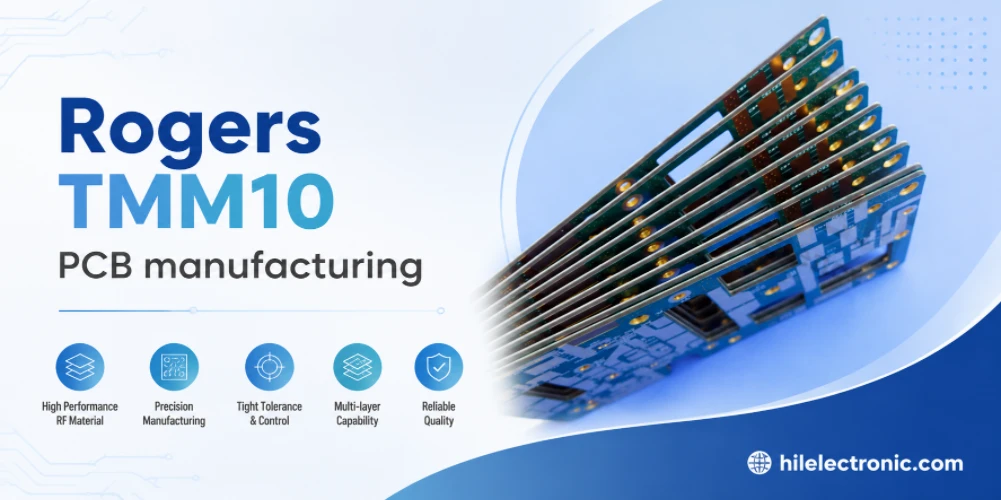
TMM10 PCB Manufacturing for Compact RF Designs
Table of contentsHow TMM10 Shrinks RF StructuresTMM10 vs...
How to get a quote for PCBs
Let‘s run DFM/DFA analysis for you and get back to you with a report. You can upload your files securely through our website. We require the following information in order to give you a quote:
-
- Gerber, ODB++, or .pcb, spec.
- BOM list if you require assembly
- Quantity
- Turn time
For PCBA services, please provide your BOM (Bill of Materials) and any specific assembly instructions. We also offer DFM/DFA analysis to optimize your designs for manufacturability and assembly, ensuring a smooth production process.