
Micro Server PCB Manufacturing and Turnkey PCBA for Compact Compute Nodes

Figure 1. Micro Server PCB Assembly
Highleap Electronics supports PCB fabrication, component sourcing, SMT assembly, inspection, programming and test preparation for micro server boards, compact compute nodes, modular server cartridges and edge infrastructure hardware.
Micro server products usually depend on many compact compute boards working as repeatable nodes. One design may be copied across dozens, hundreds or thousands of units, so small manufacturing differences can affect assembly yield, thermal behavior, firmware loading, final test and field consistency.
This page is written for hardware engineers, sourcing managers and product teams preparing a micro server PCB or PCBA build. It focuses on manufacturing decisions that affect quotation accuracy, build stability and production transfer, not on generic PCB service claims.
Micro Server PCB Project Fit
This service is suitable when the board is part of a compact compute system and must be built repeatedly with stable quality. The design may include a low-power ARM or x86 processor, memory, storage, Ethernet, management circuitry, power regulation, board-to-board connectors, M.2 connectors or custom I/O.
Typical project types include:
- ARM or x86 micro server compute nodes
- Modular cartridge-style server boards
- Compact cloud-native workload boards
- Edge compute and edge AI node boards
- Storage, network and hyperconverged appliance modules
- Single-board server products for embedded or industrial platforms
Highleap Electronics can support PCB-only builds, partial turnkey assembly or full turnkey PCBA depending on your BOM strategy, sourcing rules, test requirements and production schedule.
Compute Node Manufacturing Scope
A micro server PCB project should be scoped as a node-level manufacturing program. The PCB, BOM, SMT process, inspection method, programming flow and functional test should be reviewed together because a change in one area can affect the next build stage.
| Scope area | Highleap support | Project value |
|---|---|---|
| PCB fabrication | Multilayer or HDI PCB manufacturing based on approved stackup, impedance targets, via structure and fabrication notes. | Keeps bare board decisions aligned with node density and assembly needs. |
| BOM and sourcing | Full-turnkey, partial-turnkey or consigned component models according to your AVL and approval rules. | Reduces substitution risk and improves repeat-build consistency. |
| SMT assembly | Assembly planning for BGA, QFN, LGA, DFN, memory, Ethernet, clock, power and connector sections. | Improves yield control for compact boards with repeated node builds. |
| Inspection and test | SPI, AOI, X-ray, first-article checks, programming and functional test preparation where required. | Helps detect process issues before they repeat across many compute nodes. |
| Box-level support | Board installation, cable assembly, labeling, packaging or final acceptance steps when included in the project scope. | Useful when the buyer needs a tested assembly or module instead of PCBAs only. |
Micro Server Node Build Plan: Files, Stackup, BOM, Assembly, Test and Release Control
This is the most important section for a micro server PCB program. A compact compute node is usually not a one-time prototype; it becomes a repeated production item. The quotation should therefore be based on the complete build path: design data, stackup, sourcing model, SMT process, inspection method, programming flow, test coverage and revision control.
1. Design data review before price confirmation
The first review should confirm that the manufacturing package is complete enough for pricing and engineering feedback. A low PCB price based on incomplete data is not useful if the project later requires HDI changes, controlled impedance updates, stencil redesign, component substitutions or fixture changes.
- Gerber X2, ODB++ or IPC-2581 files should match the PCB revision being quoted.
- Stackup information should include material type, copper weight, dielectric thickness and target impedance values where applicable.
- Drill data should identify through vias, blind vias, buried vias, microvias and via-in-pad locations.
- Fabrication notes should define surface finish, solder mask, silkscreen, via filling, controlled impedance and IPC class.
- BOM and CPL files should use the same revision as the Gerber or ODB++ package.
- Programming and functional test information should be included early if test cost or fixture planning affects the quote.
2. Stackup and routing risk check
Micro server boards often combine processor fanout, DDR routing, PCIe or Ethernet lanes, management circuitry, clock distribution and local power regulation. The stackup must support both routing density and signal integrity. A practical review should check whether the current layer count and via structure can support the layout without forcing unnecessary process cost.
| Review item | Common risk | Manufacturing response |
|---|---|---|
| BGA fanout | Processor or controller packages leave too little routing channel for conventional vias. | Review HDI, microvia, via-in-pad or adjusted stackup options before fabrication. |
| DDR routing | Reference plane breaks, inconsistent dielectric spacing or unnecessary layer transitions affect margin. | Check layer assignment, return path continuity and impedance targets against the stackup. |
| PCIe or Ethernet lanes | Material loss, via stubs or connector path may affect high-speed performance. | Confirm material class, differential impedance, via strategy and any need for back-drill or lower-loss layers. |
| Power density | Local heating, voltage drop or copper imbalance may affect node reliability. | Review copper distribution, thermal vias, plane design and assembly temperature exposure. |
| Mechanical fit | Board outline, keep-out zones, connector height or mounting holes may conflict with node enclosure or carrier system. | Confirm assembly drawing, panelization, tooling holes and any box-level restrictions before release. |
3. BOM control for repeated node builds
Micro server designs are sensitive to component changes because one approved board may be replicated across many nodes. Even a passive component, clock part, power component, Ethernet PHY, connector or EEPROM substitute can affect validation if the replacement is not approved through the correct process.
A practical BOM review should separate components into three groups:
- Controlled parts: processor, memory, Ethernet PHY, clock, power controller, programmable IC, connector and any component tied to firmware or compliance.
- Approved alternates: parts already reviewed and accepted by the customer for use in future builds.
- Open sourcing items: standard passives or mechanical items where substitution rules can be defined in advance.
This approach helps avoid delays when a component becomes unavailable and prevents unapproved substitutions from entering a server-class build.
4. SMT process planning for compact nodes
Assembly planning should confirm stencil aperture, solder paste volume, board support, component orientation, connector coplanarity, reflow profile and inspection access. This is especially important when the same board will be repeated across many compute nodes because small assembly variation can become a large batch problem.
- Fine-pitch BGA and bottom-terminated components should be reviewed for pad design, via-in-pad and solder void risk.
- Dense memory and power sections should be checked for placement clearance and rework access.
- Connectors such as M.2, board-to-board, Ethernet, USB-C or edge connectors should be reviewed for coplanarity and mechanical stress.
- Double-sided assembly should be checked for component weight, reflow sequence and fixture support.
- Thermal pads should be reviewed so that voiding and solder volume are controlled within the customer’s acceptance criteria.
5. Inspection and test coverage
Test coverage should be defined before pilot build. If the project needs firmware programming, power-on checks, interface validation or full functional testing, these steps should be included in the quote package. The buyer should define the pass/fail criteria, fixture responsibility, test software and data-recording requirements.
| Test or inspection step | Used for | Information needed from customer |
|---|---|---|
| SPI and AOI | Solder paste and placement inspection during SMT assembly. | Assembly drawing, polarity information and critical component list. |
| X-ray | BGA, LGA, QFN, DFN and hidden solder joint inspection. | Inspection criteria for voiding, bridge risk or customer-specific acceptance limits. |
| Programming | EEPROM, MCU, BMC, FPGA or other programmable devices. | Firmware file, programming method, checksum or verification instruction. |
| Functional test | Power-on, communication, interface or customer-defined node test. | Test procedure, fixture design, software, pass/fail criteria and data logging needs. |
| First article | New revision, new stackup, new BOM or process change confirmation. | FAI scope, critical dimensions, inspection report format and approval workflow. |
6. Revision release and repeat-build control
Micro server projects need clear revision control because the same node may be used across several system versions. The quote package should identify PCB revision, BOM revision, CPL revision, firmware revision and test revision. If the product moves from prototype to pilot or production, changes should be recorded rather than handled informally.
- Freeze the production Gerber or ODB++ package before pilot build.
- Use a controlled BOM with approved alternates and do-not-substitute parts.
- Record stackup, material and impedance decisions with the PCB revision.
- Keep programming files and test procedures tied to the assembly revision.
- Review engineering changes before releasing the next production batch.
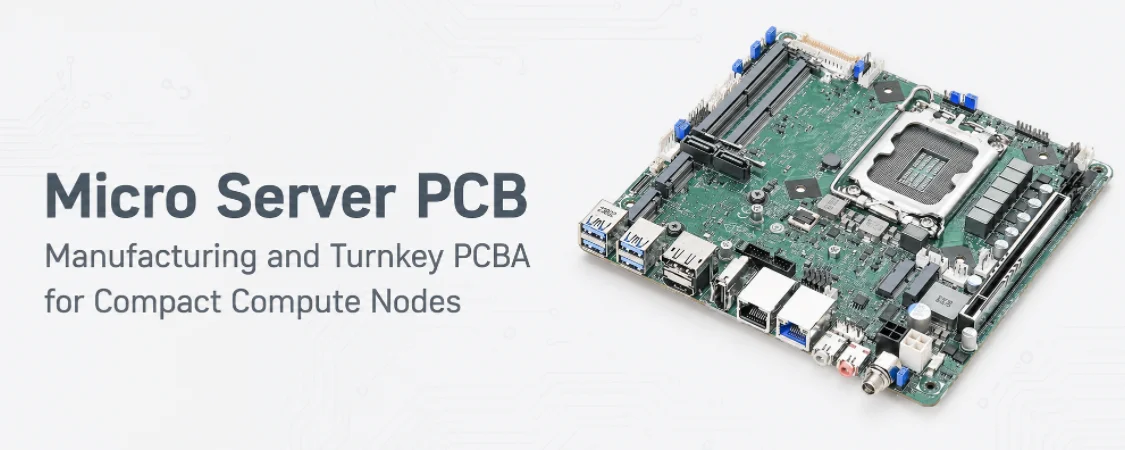
Figure 2. Micro Server PCB
PCB Fabrication and HDI Review
Micro server boards often require multilayer or HDI construction because the layout must support compact processors, memory, storage interfaces, Ethernet, management controllers and power sections within a small outline. The process should be selected after reviewing the stackup, BGA pitch, routing density, impedance targets and production volume.
| Fabrication area | Review point | Decision impact |
|---|---|---|
| Layer count | Routing density, power distribution, reference planes and controlled impedance needs. | A practical layer count improves routing without unnecessary PCB cost. |
| HDI structure | Microvia layers, stacked or staggered vias, buried vias and via-in-pad requirements. | Supports dense BGA fanout but should not be over-specified if a simpler structure works. |
| Controlled impedance | Single-ended and differential targets tied to the approved stackup and material. | Supports PCIe, DDR, USB, Ethernet and SerDes stability during validation. |
| Material class | High-Tg FR-4, mid-loss, low-loss or customer-specified laminate based on interface speed and channel length. | Balances signal margin, cost and supply availability. |
| Surface finish | ENIG, ENEPIG, immersion silver, OSP or hard gold selected according to assembly, connector and storage needs. | Affects solderability, fine-pitch assembly, shelf life and connector durability. |
Exact fabrication limits should be confirmed after reviewing your files. For high-density boards, it is safer to quote from the real stackup and data package rather than from a generic capability list.
Component Sourcing and BOM Stability
Micro server programs often use repeated boards across many nodes, so component stability has a direct impact on delivery, validation and field consistency. Highleap Electronics can support full-turnkey, partial-turnkey or consigned BOM models depending on your sourcing policy.
- Source components according to customer BOM, AVL and approved alternates.
- Review long-lead, end-of-life or allocation-risk components before build release.
- Separate do-not-substitute parts from parts that allow approved alternates.
- Confirm customer approval before using alternates that affect electrical, thermal, firmware or validation behavior.
- Align BOM revision with PCB revision, CPL revision and test plan.
For server-class hardware, a substitution should not be judged only by package and nominal value. Power rating, tolerance, temperature behavior, signal performance, firmware compatibility and previous validation history may all matter.
SMT Assembly, BGA Inspection and Connector Control
Micro server PCB assembly may include fine-pitch processors, memory, clock devices, power modules, Ethernet PHYs, management controllers, storage connectors and dense passive networks. Assembly planning should confirm footprint accuracy, stencil design, board support, reflow profile and inspection coverage before repeated production.
Assembly focus areas
- Fine-pitch SMT assembly for BGA, QFN, LGA, DFN and small passive components.
- Stencil aperture and solder paste review for bottom-terminated components and thermal pads.
- SPI and AOI for solder paste and placement inspection.
- X-ray inspection for BGA and hidden solder joints where required.
- Connector review for M.2, SO-DIMM, Ethernet, USB-C, board-to-board, edge or press-fit sections.
- First-article inspection for new revisions, new stackups or process changes.
Connector control is especially important for compact compute nodes because a small coplanarity, insertion, height or keep-out issue can affect chassis installation, airflow, cable routing or system-level reliability.
Programming, Functional Test and Box-Level Integration
Testing should be defined before pilot build. A repeated compute node needs consistent pass/fail rules so the buyer knows whether failures come from PCB fabrication, SMT assembly, firmware, test fixture, component selection or system integration.
- Programming: MCU, EEPROM, BMC, FPGA or other programmable devices can be programmed when files, methods and verification rules are provided.
- Functional test: power-on checks, interface checks, communication checks or customer-defined node tests can be prepared around the supplied procedure.
- Fixture planning: pilot and production runs may need test fixture discussion before the first production release.
- Box-level steps: board installation, cable assembly, labels, packaging and final acceptance can be quoted if enclosure and work instructions are supplied.
If box-level work is needed, include mechanical drawings, cable drawings, torque requirements, label artwork, packaging instructions and acceptance criteria with the RFQ package.
Quote Package and Next Step
To receive an accurate quotation and useful engineering feedback, send the most complete package available. Missing BOM, CPL, stackup or test information can delay both pricing and DFM review.
- Gerber X2, ODB++ or IPC-2581 fabrication files
- Stackup drawing with material, copper weight and impedance targets
- NC drill file with through, blind, buried and microvia definitions
- Fabrication notes including surface finish, solder mask, via fill, IPC class and controlled impedance requirements
- BOM with manufacturer part numbers, approved alternates and do-not-substitute parts
- CPL or pick-and-place file with coordinates, rotation and side information
- Assembly drawing, mechanical restrictions and connector notes
- Programming files, test procedure, fixture information or acceptance standard if available
- Target quantity for prototype, pilot and production stages
- Packaging, labeling, box-build or shipment requirements if applicable
Send your files to Highleap Electronics for PCB fabrication, partial turnkey assembly, full turnkey PCBA or box-level support. We will review the manufacturing path, identify items that affect cost or build stability, and prepare a quotation based on your actual project scope.
Request a Micro Server PCB Quote or contact Highleap Electronics to discuss HDI stackup, component sourcing, BGA assembly, functional test or production planning.

Recommended Posts
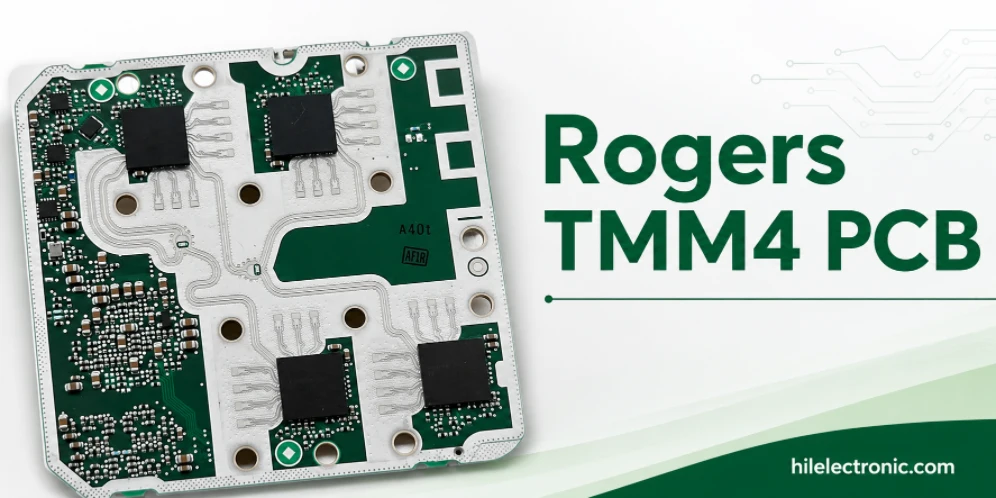
TMM4 Filter PCB Manufacturing
TMM4 filter PCB manufacturing is controlled by the...
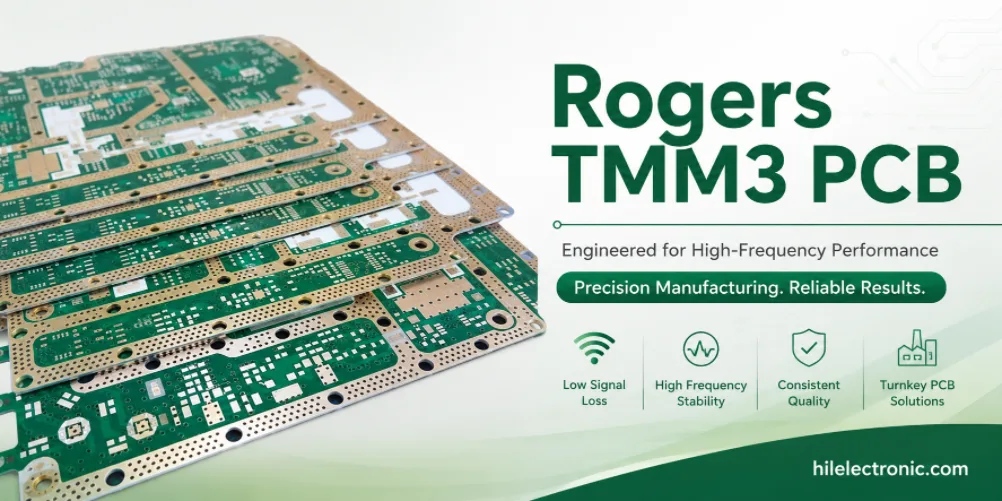
TMM3 PCB Manufacturing for RF Modules
TMM3 PCB manufacturing is most useful where the RF module...
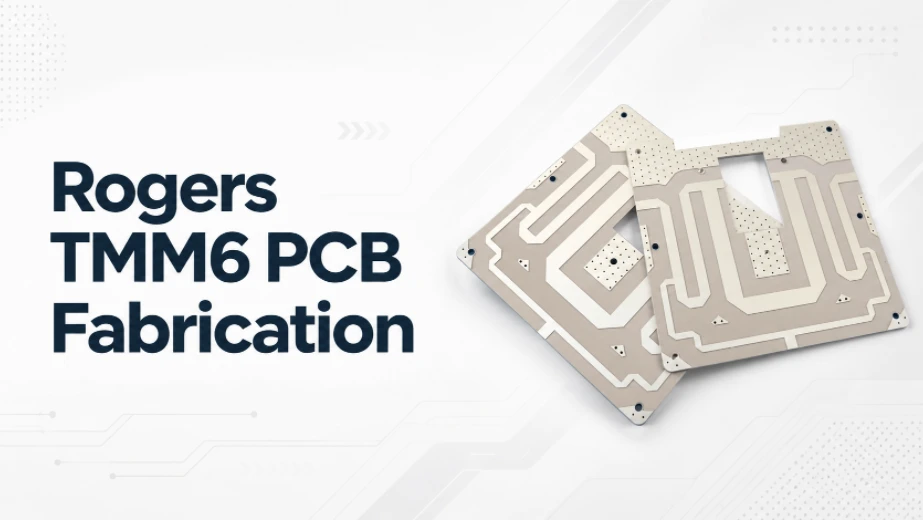
TMM6 PCB Fabrication
TMM6 fabrication is the process-control page for a mid-Dk...

TMM10 PCB Manufacturing for Compact RF Designs
Table of contentsHow TMM10 Shrinks RF StructuresTMM10 vs...
How to get a quote for PCBs
Let‘s run DFM/DFA analysis for you and get back to you with a report. You can upload your files securely through our website. We require the following information in order to give you a quote:
-
- Gerber, ODB++, or .pcb, spec.
- BOM list if you require assembly
- Quantity
- Turn time
For PCBA services, please provide your BOM (Bill of Materials) and any specific assembly instructions. We also offer DFM/DFA analysis to optimize your designs for manufacturability and assembly, ensuring a smooth production process.