
Panasonic Megtron 6 PCB Manufacturing
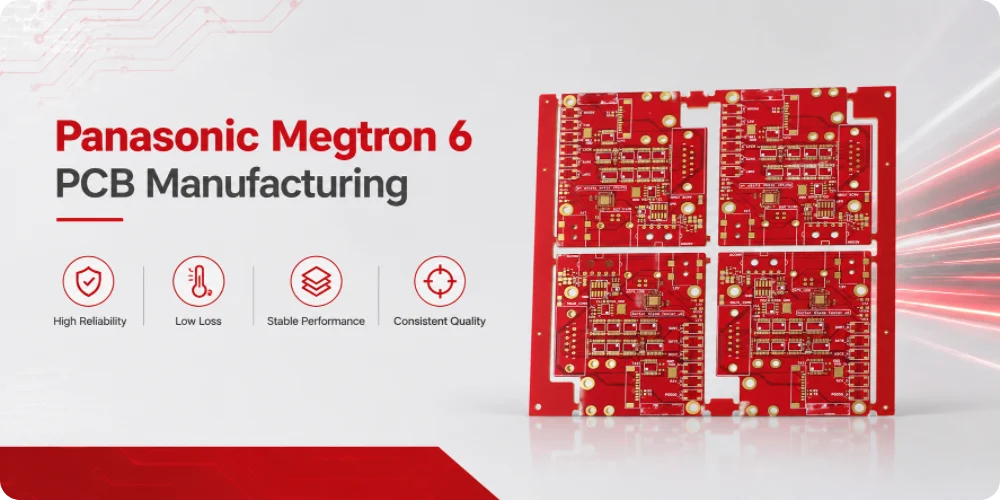
Figure 1. Panasonic Megtron 6 PCB
Highleap Electronics provides Panasonic Megtron 6 PCB manufacturing and PCB assembly services for high-speed digital PCB projects that require low-loss laminate processing, multilayer stackup control, tight impedance tolerance and reliable signal integrity support.
As a PCB manufacturing and PCB assembly factory, Highleap builds printed circuit boards using Panasonic Megtron 6 laminate according to customer-approved drawings, stackup requirements, material callouts, controlled impedance notes, fabrication specifications and quality documentation requirements. Our service covers Megtron 6 PCB fabrication, Megtron 6 multilayer PCB manufacturing, high-speed PCB stackup review, controlled impedance PCB production, back-drilling, blind and buried vias, surface finish selection, SMT assembly and final inspection. For MEGTRON M multilayer-board production, approve the exact laminate construction and stackup independently rather than treating different MEGTRON grades as automatic substitutes.
Panasonic Megtron 6 PCB manufacturing requires more than simply replacing standard FR-4 with a low-loss laminate. The manufacturing result depends on stackup accuracy, dielectric thickness control, copper foil selection, lamination balance, drilling quality, via stub control, plating consistency, solder mask registration and inspection records. Highleap reviews these points before production to help customers move from prototype builds to stable production.
Panasonic Megtron 6 PCB Manufacturing Capabilities
Highleap Electronics supports Panasonic Megtron 6 PCB manufacturing for customers who need low-loss multilayer PCB fabrication with stable impedance, controlled via structures and reliable assembly compatibility. Megtron 6 is commonly specified in high-speed PCB designs where material loss, copper roughness, via stubs and stackup tolerance must be managed carefully during fabrication.
Our Megtron 6 PCB manufacturing service includes engineering review, production tooling, multilayer lamination, mechanical drilling, laser drilling when required, desmear, electroless copper, electrolytic copper plating, solder mask, surface finish, electrical testing, impedance testing and PCB assembly support.
| Manufacturing Item | Highleap Support | Manufacturing Focus |
|---|---|---|
| Material | Panasonic Megtron 6 laminate and prepreg according to customer stackup. | Material callout, dielectric thickness, copper foil type and lot traceability. |
| PCB Type | Megtron 6 multilayer PCB, high-speed digital PCB, HDI PCB and hybrid stackup PCB. | Layer count, board thickness, lamination sequence and panel yield. |
| Stackup Review | High-speed PCB stackup review before production. | Impedance, dielectric spacing, copper weight, reference planes and symmetry. |
| Via Process | Through-hole vias, blind vias, buried vias, via-in-pad and back-drilling. | Aspect ratio, stub length, plating thickness and via reliability. |
| Impedance Control | Single-ended and differential controlled impedance with coupon testing. | Trace width, spacing, copper thickness, dielectric height and etching tolerance. |
| PCB Assembly | SMT assembly, BGA assembly, component sourcing, AOI and X-ray inspection. | Surface finish, solder paste, reflow profile, BGA escape and inspection coverage. |
| Quality Documentation | Electrical test, impedance report, microsection, CoC and material documentation when required. | Customer quality clauses, inspection records and production traceability. |
Highleap does not manufacture Panasonic laminate material. We manufacture PCBs using Panasonic Megtron 6 material specified by the customer. If the drawing allows equivalent materials, Highleap will only review alternatives after customer approval.
Panasonic Megtron 6 PCB Stackup and Material Review
Stackup review is the most important front-end step in Panasonic Megtron 6 PCB manufacturing. A Megtron 6 PCB stackup directly affects impedance, insertion loss, routing density, lamination balance, via structure, copper distribution, warpage control, assembly yield and final inspection acceptance. For high-speed multilayer PCBs, small changes in dielectric thickness, copper roughness, trace width or reference-plane spacing can change measured impedance and channel performance.
Highleap reviews the Megtron 6 PCB stackup before releasing the job to production. This review confirms whether the customer drawing clearly defines Panasonic Megtron 6 core and prepreg, laminate thickness, copper foil type, layer order, finished board thickness, impedance requirements, signal layer locations, power and ground plane arrangement, via structures and surface finish.
Material Callout and Megtron 6 Laminate Verification
The drawing should clearly specify Panasonic Megtron 6 when this material is required. If the drawing only says “low-loss material” or “Megtron equivalent,” the material requirement should be clarified before quotation or production. For controlled production, Highleap confirms the Megtron 6 laminate and prepreg type against the approved stackup and customer notes.
Material verification is important because Panasonic Megtron 6 PCB fabrication is usually selected for controlled loss and stable electrical performance. Changing the laminate, prepreg or copper foil without approval can affect impedance, insertion loss, dielectric spacing, lamination behavior and qualification consistency.
Layer Count and Signal Layer Planning
Panasonic Megtron 6 multilayer PCB designs often use high layer counts, dense routing and multiple reference planes. During stackup review, Highleap checks whether the signal layers, power layers and ground layers are arranged in a manufacturable and balanced way.
- High-speed signal layers: differential pairs should have stable reference planes and controlled dielectric spacing.
- Ground planes: continuous reference planes help return-current control and reduce impedance discontinuity.
- Power planes: copper thickness and plane distribution should be reviewed for both electrical and lamination balance.
- Layer symmetry: balanced copper and dielectric construction helps reduce bow and twist after lamination.
- Sequential lamination: HDI or blind/buried via structures may require multiple lamination cycles.
Dielectric Thickness, Copper Foil and Impedance Control
Controlled impedance is a core requirement in many Megtron 6 PCB manufacturing projects. Highleap reviews dielectric height, copper thickness, trace width, trace spacing, solder mask condition and copper foil selection before production tooling.
For high-speed PCB manufacturing, copper profile is not only a mechanical detail. Low-profile copper options such as VLP or HVLP copper can help reduce conductor loss in high-speed channels. If the customer stackup specifies a copper type, Highleap checks the material availability and confirms whether the copper foil requirement is included in the build documentation.
| Stackup Item | Highleap Review Content | Impact on Megtron 6 PCB Manufacturing |
|---|---|---|
| Megtron 6 Material Callout | Core, prepreg, laminate thickness and approved substitute rules. | Prevents wrong material use and supports production traceability. |
| Signal Layer Location | Stripline, microstrip, high-speed layer pairs and reference planes. | Affects impedance, insertion loss and routing quality. |
| Dielectric Thickness | Prepreg thickness, core thickness and finished dielectric spacing. | Controls impedance and finished board thickness. |
| Copper Foil Type | ED, RT, VLP or HVLP copper according to stackup requirement. | Affects conductor loss, etching behavior and high-speed performance. |
| Copper Balance | Inner-layer copper distribution, plane density and outer-layer copper pattern. | Affects lamination pressure, resin flow, bow and twist. |
| Controlled Impedance | Single-ended impedance, differential impedance, tolerance and coupon design. | Determines etching compensation and test reporting requirements. |
| Via Structure | Through-hole, blind via, buried via, via-in-pad, back-drill and filled via. | Defines drilling sequence, lamination sequence, plating control and inspection plan. |
Hybrid Megtron 6 PCB Stackup Review
Some Panasonic Megtron 6 PCB projects use Megtron 6 only on critical high-speed signal layers, while lower-speed layers use another approved material. This type of hybrid Megtron 6 PCB stackup can reduce cost, but it must be reviewed carefully before manufacturing.
For a hybrid Megtron 6 PCB build, Highleap checks dielectric compatibility, lamination sequence, CTE behavior, copper balance, controlled impedance models and material availability. If the stackup mixes Megtron 6 with FR-4-class materials or another low-loss material, the final impedance and board thickness should be calculated from the actual construction rather than from a single-material assumption.
Manufacturing Risks Reviewed Before Production
Highleap reviews manufacturing risks at the stackup stage to reduce production issues later. The main points include high layer count, tight impedance tolerance, thin dielectric spacing, dense BGA escape, back-drilling depth, blind/buried via sequence, copper plating requirement, solder mask registration and panel utilization.
- For tight impedance Megtron 6 PCBs: etching compensation and coupon position should be confirmed before production.
- For back-drilled Megtron 6 PCBs: drill depth, residual stub length and microsection location should be defined.
- For HDI Megtron 6 PCBs: lamination sequence, laser via parameters and via filling requirements should be reviewed early.
- For high-layer-count boards: copper balance, press flow and bow/twist control should be checked before panelization.
- For PCBA projects: surface finish, BGA pad design, via-in-pad, stencil design and reflow requirement should be reviewed together.
A complete Panasonic Megtron 6 PCB stackup review helps align design intent with real manufacturing capability. This is the foundation for stable Megtron 6 PCB fabrication, controlled impedance PCB production and repeatable high-speed PCB assembly.
Megtron 6 PCB Lamination, Drilling and Plating Process
Panasonic Megtron 6 PCB manufacturing requires controlled lamination, accurate drilling and reliable copper plating. These process steps determine whether the finished board can meet mechanical, electrical and inspection requirements after fabrication and assembly.
Megtron 6 PCB Lamination
Megtron 6 multilayer PCB lamination requires proper material preparation, layup accuracy, vacuum control, pressure control, temperature control and cooling control. Highleap checks the released stackup, material lot, prepreg type, copper distribution and tooling before pressing.
- Material preparation: Megtron 6 core and prepreg are prepared according to the approved stackup.
- Layup control: layer order, copper orientation and tooling registration are checked before lamination.
- Vacuum pressing: vacuum control helps reduce void risk in multilayer construction.
- Resin flow control: pressure and temperature must support proper bonding and thickness control.
- Post-lamination inspection: thickness, registration, surface condition, bow and twist are checked before drilling.
Drilling and Desmear
For Megtron 6 PCB fabrication, drilling quality affects via reliability, impedance consistency and back-drilling accuracy. Highleap reviews the minimum hole size, aspect ratio, board thickness, copper thickness and hole density before production drilling.
After drilling, hole-wall preparation and desmear are required before electroless copper deposition. Proper desmear exposes inner-layer copper and improves copper adhesion on the hole wall. For high-layer-count Megtron 6 PCBs, microsection inspection can verify hole-wall condition and smear removal quality.
Copper Plating Control
Electroless copper creates the initial conductive layer in drilled holes. Electrolytic copper plating then builds the required copper thickness on the hole wall and surface. For Megtron 6 PCB manufacturing, plating control is important because via structures, back-drilled holes and high-density routing require consistent copper coverage.
- Electroless copper: provides initial hole-wall conductivity.
- Electrolytic copper: builds required copper thickness according to customer specification.
- Throwing power: plating distribution must support deep holes and high aspect ratio structures.
- Microsection: cross-section inspection verifies plating thickness and internal connection quality.
- Electrical test: finished boards are tested for continuity and isolation before shipment.
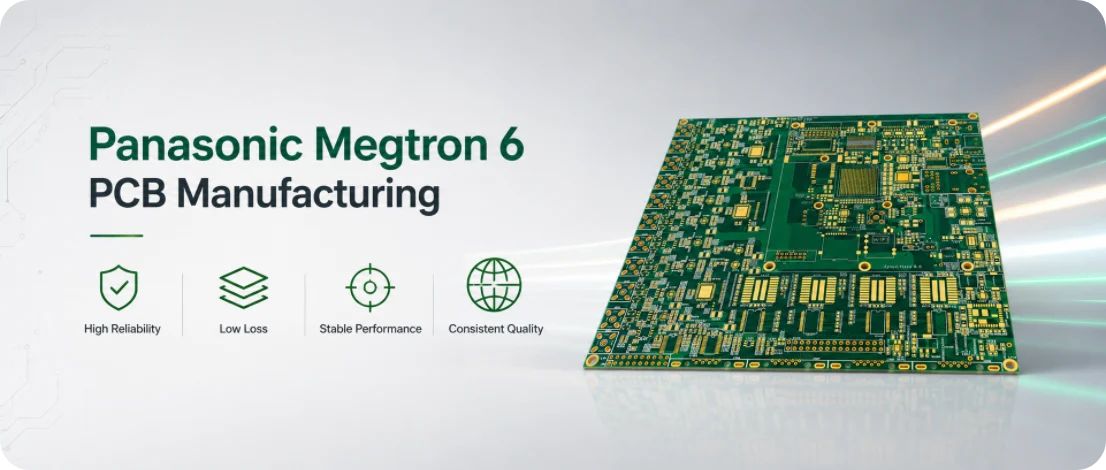
Figure 2. Panasonic Megtron 6 PCB Manufacturing
Megtron 6 Controlled Impedance, Back-Drilling and Verification
Controlled impedance is a major requirement in Panasonic Megtron 6 PCB manufacturing. High-speed digital boards often require single-ended impedance, differential impedance, insertion loss control, back-drilling and production test coupons.
Highleap reviews the impedance requirement during front-end engineering. The review includes material Dk, dielectric height, copper thickness, trace width, trace spacing, solder mask condition, etching compensation and impedance coupon design.
Controlled Impedance PCB Manufacturing
- Single-ended impedance: commonly used for clock, control or specific high-speed signal lines.
- Differential impedance: used for high-speed differential pairs and serial channels.
- Coupon design: impedance coupons are added according to customer requirement and panel layout.
- Etching compensation: trace width compensation is adjusted according to copper thickness and production capability.
- TDR testing: impedance results can be reported with production documentation when required.
Back-Drilling for Megtron 6 PCB Fabrication
Back-drilling removes unused via stubs that can create signal reflections in high-speed PCB structures. For Megtron 6 PCBs with high-speed channels, back-drill depth, registration and residual stub length should be defined in the fabrication drawing.
- Back-drill depth: controlled according to layer connection and stackup thickness.
- Residual stub: reviewed according to signal integrity requirement and customer specification.
- Microsection verification: representative back-drilled vias can be checked by cross-section inspection.
- Process documentation: back-drill requirements should be included clearly in the fabrication notes.
Signal Integrity Verification Support
For production Megtron 6 PCB builds, Highleap can support impedance testing, insertion loss coupons, microsection reports and electrical test records according to customer requirements. These controls help verify that the finished PCB is consistent with the approved stackup and manufacturing plan.
Megtron 6 PCB Assembly, Quality Control and RFQ Checklist
Highleap supports both Panasonic Megtron 6 bare PCB fabrication and PCB assembly. For turnkey Megtron 6 PCBA projects, the PCB fabrication data and assembly data should be reviewed together to avoid mismatch between surface finish, pad design, via-in-pad, solder mask, component package and inspection method.
Surface Finish and Assembly Review
Surface finish affects solderability, storage life, BGA assembly, inspection and reflow compatibility. Highleap reviews the surface finish requirement before production and confirms whether the finish matches the customer’s assembly process.
| Surface Finish | Use in Megtron 6 PCB Manufacturing | Production Review Point |
|---|---|---|
| ENIG | Common finish for high-speed multilayer PCB and SMT assembly. | Flatness, solderability, nickel/gold thickness and storage life. |
| ENEPIG | Used for special assembly requirements including wire bonding or mixed processes. | Palladium/gold control, bonding requirement and cost impact. |
| Immersion Silver | Used when low surface resistance and flat finish are required. | Storage control, handling and tarnish prevention. |
| OSP | Used when cost and short storage cycle are acceptable. | Assembly timing, handling control and shelf-life planning. |
Megtron 6 PCB Assembly Support
- BOM review: part number, quantity, package, polarity and sourcing status are checked before assembly.
- Pick & Place review: centroid data and component rotation are checked against the assembly drawing.
- BGA assembly: BGA pad design, via-in-pad, solder mask opening and X-ray inspection requirements are reviewed.
- Stencil review: stencil thickness and aperture design are reviewed according to component package and soldering requirement.
- Reflow support: reflow profile is selected according to board structure, surface finish and component requirement.
- Inspection: AOI, visual inspection and X-ray inspection can be used according to assembly complexity.
Quality Documentation
Depending on customer requirements, Highleap can provide quality documentation for Panasonic Megtron 6 PCB manufacturing and assembly projects.
- Certificate of Conformance
- Panasonic material certificate or material lot reference when required
- Electrical test report
- Controlled impedance test report
- Microsection report for plating and via inspection
- Back-drill microsection report when required
- Final visual inspection report
- RoHS / REACH compliance declaration when applicable
- Assembly inspection report for PCBA projects
Panasonic Megtron 6 PCB RFQ Checklist
To receive an accurate Panasonic Megtron 6 PCB manufacturing quote, please send a complete data package.
- Gerber files
- Drill files
- Layer stackup drawing
- Panasonic Megtron 6 material callout
- Core and prepreg thickness requirements
- Finished board thickness and tolerance
- Inner and outer copper weight
- Copper foil type if specified
- Minimum trace and spacing
- Minimum hole size and via structure
- Back-drilling requirement if any
- Controlled impedance requirement
- Surface finish requirement
- IPC class or customer quality specification
- Quantity and expected delivery schedule
- BOM and Pick & Place file if PCB assembly is required
- Assembly drawing and test procedure if PCBA is required
Need Panasonic Megtron 6 PCB manufacturing or PCB assembly? Send your Gerber files, drill files, stackup, BOM and quantity requirements to Highleap Electronics. Our engineering team can review your Megtron 6 PCB project and provide a fabrication or turnkey PCBA quotation.

Recommended Posts
Taconic RF 35 vs RO4350B PCB
Table of contentsRF-35 vs RO4350B Procurement and...
TMM4 Filter PCB Manufacturing
TMM4 filter PCB manufacturing is controlled by the...
TMM3 PCB Manufacturing for RF Modules
TMM3 PCB manufacturing is most useful where the RF module...
TMM6 PCB Fabrication
TMM6 fabrication is the process-control page for a mid-Dk...
How to get a quote for PCBs
Let‘s run DFM/DFA analysis for you and get back to you with a report. You can upload your files securely through our website. We require the following information in order to give you a quote:
-
- Gerber, ODB++, or .pcb, spec.
- BOM list if you require assembly
- Quantity
- Turn time
For PCBA services, please provide your BOM (Bill of Materials) and any specific assembly instructions. We also offer DFM/DFA analysis to optimize your designs for manufacturability and assembly, ensuring a smooth production process.