
PCB Manufacturing Cost 2026: Why Your Entire BOM Is Getting More Expensive at Once

The conversation about PCB manufacturing cost in 2026 has moved well past copper and gold. Those two raw materials were the headline story through 2025. What’s happening right now — in April 2026 — is something qualitatively different and significantly more difficult to manage: every major line item in an electronics bill of materials is increasing simultaneously, at a pace and breadth that procurement professionals describe as unlike anything since the 2021–2022 chip shortage. But where the 2021 crisis was primarily a semiconductor shortage, the 2026 crisis is a full BOM crisis — PCB substrates, laminates, passive components, memory, and microcontrollers all under pressure at the same time, from different structural causes that do not share the same resolution timeline.

The 2026 BOM Crisis at a Glance
- Copper: Hit a record $13,300/tonne in January 2026 — directly raising CCL, copper foil, and plating costs across all PCB categories.
- CCL (Copper-Clad Laminate): Up 45% versus prior periods; some suppliers have moved to a quota system, with lead times extending to 6 months as of late March 2026.
- Fiberglass cloth: A separate, underreported shortage — electronic-grade glass fiber cloth is in critical supply deficit, adding a second structural constraint to CCL production entirely independent of copper prices.
- DRAM: PC DRAM rose 105–110% quarter-over-quarter in Q1 2026; HBM is completely sold out through end-2026. Net BOM cost for an AI server PCBA is estimated up 25–40% versus equivalent H2 2025 designs.
- MCUs and active components: Texas Instruments price increases of 15–85% effective April 1, 2026; Infineon MCUs at 20–30 week lead times; Nexperia supply effectively frozen due to wafer viability concerns.
- Passive components: Murata MLCC price increases under consideration through Q4 2026, driven by rare earth material constraints.
Get a Current-Market PCB Cost Quote →
Table of Contents
- Beyond Copper and Gold: Why 2026 Is a Different Kind of Cost Crisis
- The Fiberglass Shortage Nobody Is Talking About — But Should Be
- CCL Lead Times Hit 6 Months: When Price Becomes Availability
- DRAM Up 105%, MCUs at Crisis-Era Lead Times: The Active Component Layer
- What the Full BOM Crisis Means for Total PCBA Cost in 2026
- Five Procurement Moves That Actually Work in This Environment
- When Does the Pressure Ease? An Honest 2026–2027 Outlook
Beyond Copper and Gold: Why 2026 Is a Different Kind of Cost Crisis
The distinction matters. The PCB manufacturing cost pressures of 2025 — while severe — were concentrated in two identifiable raw materials with identifiable causes. Copper surged because mine supply could not keep pace with AI infrastructure, EV, and grid expansion demand. Gold surged because of its dual role as an industrial material and financial safe-haven asset. Both were painful. Both were, in a structural sense, diagnosable.
The 2026 cost environment is harder to diagnose and harder to manage because the pressure points have multiplied. As of April 2026, a PCB assembly order faces cost escalation at the substrate layer (copper and CCL), the laminate layer (fiberglass cloth in genuine shortage), the memory layer (DRAM more than doubling in a single quarter), and the active component layer (multiple major MCU suppliers implementing double-digit percentage increases simultaneously, while one major discrete supplier has frozen supply entirely). These cost vectors are structurally independent of each other — they have different causes, different timelines, and different potential resolution paths. That independence is precisely what makes this environment so difficult for procurement teams who have built processes around managing one variable at a time.
“Net BOM cost for an AI server PCBA is estimated to have increased 25–40% compared to equivalent designs in H2 2025. Customers accept the increases because supply alternatives are limited.”
— Electronics component market analysis, Q1 2026
The underlying driver is the same across all of these pressures: the scale and pace of AI infrastructure build-out has exceeded the capacity of the electronics supply chain to respond. Total CSP capital expenditure in 2026 is forecast to exceed $60 billion — a 40% year-on-year increase. Every dollar of that capital expenditure requires semiconductors, circuit boards, substrates, laminates, and passive components. The supply chain was not built for this demand profile, and it cannot be rebuilt at the pace the demand is growing.
The Fiberglass Shortage Nobody Is Talking About — But Should Be
Copper gets the headlines. Fiberglass cloth does not — but for PCB manufacturing cost in 2026, the fiberglass situation may be the more structurally significant constraint, because it affects CCL pricing through a completely separate supply chain from copper.
Every CCL — the copper-clad laminate substrate from which circuit boards are fabricated — requires glass fiber fabric as its dielectric base. Electronic-grade glass fiber cloth, and specifically the low-CTE (coefficient of thermal expansion) variants required for high-end PCB applications, is now in genuine supply shortage. CCL costs are seeing hikes of up to 45% compared to previous periods, driven by a combination of high copper costs and a critical shortage of fiberglass fabric. The fiberglass constraint is independent of copper — even if copper prices moderated tomorrow, the fiberglass shortage would continue to constrain CCL supply and maintain upward pressure on PCB substrate costs.
There is currently a growing shortage of low-CTE glass fiber fabric, an overlooked yet critical component of semiconductor manufacturing for communications. The low-CTE variants are particularly important for advanced PCB applications — AI server boards, high-speed communication infrastructure, and automotive electronics — where dimensional stability under thermal cycling is a design requirement, not an option. Manufacturers of these specialized glass fiber fabrics face long lead times for new capacity investment, and ramping production of these specialty products is significantly more difficult than ramping standard glass fiber production.
The practical consequence for a PCB buyer in April 2026 is that CCL availability — not just CCL price — is a procurement constraint. Some IC substrate makers report that limited production capacity for glass fiber cloth and copper foil has led CCL lead times to extend to 6 months, with a quota system imposed. A 6-month CCL lead time means that a production order placed today for a product requiring advanced laminate materials may not receive substrate until October 2026 — a timeline that invalidates most standard production planning assumptions.
CCL Lead Times Hit 6 Months: When Price Becomes Availability
There is an important distinction between a market where PCB manufacturing cost is rising and a market where the materials required for PCB manufacturing are not reliably available at any price. In the first half of 2026, the CCL market has moved from the first condition toward the second for certain material grades.
The high-end CCL categories most affected are the ultra-low-loss laminates — M6, M7, M8, and the newly qualifying M9 and M10 grades — required for AI server boards, 5G/6G infrastructure, and advanced automotive applications. Demand for these materials is growing faster than supplier capacity for a compound reason: not only is the volume of AI server production increasing, but each successive generation of AI server architecture demands a higher-specification laminate. At 224 Gbps signalling rates, M7 ultra-low-loss CCL is mandatory at 6–9× the cost of standard FR-4. At 448 Gbps+ for next-generation Vera Rubin architecture, M9/M10 materials will cost 15–20× FR-4. Each platform generation step creates a new wave of demand for a material category that has not yet been fully qualified or ramped.
For standard and industrial-grade FR-4 and high-Tg FR-4 — the laminate categories relevant to the majority of industrial, commercial, and consumer PCB production — the situation is less severe but still meaningfully tighter than twelve months ago. Surging demand for high-end PCBs driven by AI servers and switches is intensifying supply imbalances for upstream materials, with CCL price increases accelerating down the supply chain and prompting PCB manufacturers to adjust quotes. The tightness in high-end laminate supply is creating allocation pressure that ripples into standard-grade materials as CCL suppliers prioritize their highest-value customers and highest-margin products.

DRAM Up 105%, MCUs at Crisis-Era Lead Times: The Active Component Layer
If the PCB substrate and laminate story were the only cost pressure in 2026, it would be a manageable challenge for most procurement teams — uncomfortable, but diagnosable and addressable through lead time adjustments and forward purchasing. What makes 2026 qualitatively different is that the active component layer of the BOM is under simultaneous, severe pressure from entirely separate causes.
DRAM: A Market in Structural Upheaval
DRAM prices rose 90–95% quarter-over-quarter in Q1 2026. PC DRAM has been even more severely impacted, climbing 105–110% QoQ — effectively more than doubling in a single quarter. High Bandwidth Memory (HBM) is completely sold out through end-2026.
The cause is structural, not cyclical. AI infrastructure build-out has redirected the production capacity of major memory manufacturers toward HBM and high-capacity DDR5, leaving conventional DRAM and NAND supply constrained for the general electronics market. As hyperscale buildouts siphon away enormous volumes of DRAM and NAND flash from traditional markets, prices have soared and consumer electronics makers have been pushed into a supply crunch that could stretch deep into 2026. For OEM product teams designing consumer electronics, industrial equipment, or commercial communication hardware that incorporates any DRAM, the cost and availability environment has deteriorated to a degree not seen since the 2021–2022 shortage.
MCUs: Simultaneous Price Increases Across Multiple Suppliers
The MCU situation adds a different dimension of difficulty: not a single supplier event, but coordinated price increases across multiple major suppliers taking effect within weeks of each other. Texas Instruments price increases of 15% to 85% across affected product lines took effect April 1, 2026. Infineon MCUs and power devices are at 20–30 week lead times with a price increase scheduled for the same date. NXP Semiconductors is at 12–20 weeks lead time.
The Nexperia situation deserves separate attention. Nexperia’s supply has been effectively frozen as a result of export control measures, with wafer supply halted since October 2025. For designs that rely on Nexperia discrete semiconductors, transistors, or logic ICs, an urgent engineering review and alternative sourcing strategy is required. No timeline for supply resumption is available. For any PCB assembly that uses Nexperia components — and that category is broad, covering many standard discrete semiconductors — this is not a cost problem. It is an availability problem with no current resolution path.
Passive Components: The Coming Wave
MLCC (multilayer ceramic capacitor) price increases have not yet materialized at the scale of memory and MCU increases, but the leading indicators are concerning. Rare earth materials — particularly yttrium, a critical precursor for ceramic MLCC dielectrics — remain heavily supply-restricted. China’s dominance of rare earth refining creates structural supply risk for ceramic components that is not directly addressable by production capacity investment alone. Industry intelligence suggests that MLCC price decisions from major manufacturers will be made before end-2026, and the direction of those decisions is unlikely to be favorable for buyers.
What the Full BOM Crisis Means for Total PCBA Cost in 2026
The compounding effect of simultaneous cost pressure at multiple BOM layers is not additive — it is multiplicative in its impact on project budgets. A design that was costed in Q3 2025 may face the following cost environment if produced in Q2–Q3 2026:
The net effect on a typical industrial or commercial PCBA order — a 6–10 layer board with standard FR-4, an MCU, some DRAM, and standard passive components — is a total BOM cost increase of 30–60% compared to H2 2025 pricing, depending on the specific component mix. For designs with DRAM and affected MCU families, the upper end of that range is realistic. For designs that avoided affected component families through prior specification decisions, the impact is lower but still significant.
Five Procurement Moves That Actually Work in This Environment
The standard procurement response to a single-material cost spike — wait for prices to stabilize, find alternative suppliers, negotiate volume discounts — does not translate well to a full BOM crisis. When every line of the BOM is under simultaneous pressure from different structural causes, the procurement strategy needs to change in character, not just in tactics.
Identify every line item sourced from TI, Infineon, NXP, or Nexperia. Quantify the cost delta from April 1 price changes. For Nexperia components, initiate an engineering review immediately — there is no supply resumption timeline and workarounds cannot be found at the last minute.
The CCL quota system means that requesting laminate allocation at order time is too late for many material grades. Engage your PCB manufacturer to understand what laminate grades are pre-allocated versus available on the spot market, and build your production schedule around confirmed material availability rather than assumed lead times.
With DRAM more than doubling in a single quarter, designs that specified DRAM generously may benefit from an engineering review of minimum memory requirements. This is not about cutting corners — it is about ensuring that memory specifications are driven by actual system requirements, not by historical headroom assumptions made when DRAM was cheap.
A single-number PCBA quote obscures which cost driver is causing increases and prevents you from evaluating specification trade-offs. Itemized quotes — showing bare board cost, BOM component cost by category, assembly cost, and testing separately — give you the visibility to make informed decisions about where to absorb cost increases and where to redesign.
The combination of 6-month CCL lead times for advanced grades, 20–40 week MCU lead times, and DRAM allocation-only availability means that any production schedule based on historical lead time assumptions will fail. 16–24 week buffer lead times are the new planning baseline for products with advanced material specifications or affected component families.
Highleap Electronics: Itemized Quotes, Pre-Allocated Materials, Transparent Cost Management
At Highleap Electronics, our response to the 2026 BOM cost environment includes forward purchasing of CCL for confirmed production orders, active monitoring of component availability against client BOMs, and fully itemized quotations that separate bare board, component, assembly, and testing cost lines. If your current PCB manufacturing cost quote is a single number without a breakdown, you are operating without the visibility this market requires. Contact us for a current-market quote that shows you exactly where your costs are coming from.
When Does the Pressure Ease? An Honest 2026–2027 Outlook
The answer varies meaningfully by BOM category, which is itself a reflection of the multi-causal nature of the current environment.
For copper and CCL pricing, the structural forces driving cost — AI infrastructure demand, EV electrification, grid expansion — are not going to moderate significantly in 2026. The copper market deficit is projected to widen in 2026 relative to 2025. New mining capacity takes 10–15 years from decision to production. The most credible scenario for copper price relief involves a combination of demand softening (unlikely given current AI investment commitments) or a supply disruption resolution (unpredictable by nature). The honest assessment is that copper-driven CCL cost pressure will persist through at least end-2026 and likely into 2027.
For DRAM, the timeline is somewhat more defined. Eighteen new semiconductor fabrication facilities are planned globally across 2025 and 2026, but the majority will not reach full operational capacity until 2027 or later. New memory capacity will come online, but not before H2 2026 at the earliest — meaning the current DRAM pricing environment is likely to persist through most of the year. Some moderation from current peak levels is possible in H2 2026 as new capacity begins contributing, but a return to 2024 pricing levels before 2027 is unlikely.
For MCU lead times and pricing, the industry has demonstrated in previous cycles that it can add capacity faster than for advanced memory. The 2021–2022 MCU crisis resolved over approximately 18–24 months from peak pressure. If the current MCU situation follows a similar arc, H2 2026 and H1 2027 would represent the period of gradual normalization — with the caveat that the Nexperia supply freeze introduces an element of uncertainty that is not present in a conventional capacity-constrained shortage.
For fiberglass cloth — the least-discussed constraint — capacity additions are genuinely slow due to the specialized nature of low-CTE glass fiber production. This is likely the constraint with the longest resolution timeline, making the high-end CCL availability situation the most persistent single constraint in the PCB substrate supply chain through 2026 and potentially into 2027.
The practical planning implication: design decisions made now for products shipping in H1 2027 can still be influenced by component family selection and material specification choices. Designs locked into constrained component families or advanced laminate grades without alternatives will face the full duration of these constraints. Designs with engineering flexibility to specify alternative components or material grades have meaningful options for managing cost and availability risk.
Discuss Your 2026 Production Cost with Highleap Electronics →
Sources: Digitimes (CCL Price Hikes Extend Through 2026, April 15, 2026; CCL Lead Times Hit 6 Months with Quota System, March 27, 2026); J2 Sourcing AB (Electronic Component Shortage Update, March 2026); Sourceability (DRAM Price Surges and AI Copper Demand, January 2026); Minnitron Ltd (Rising PCB Material Costs in 2026, April 2026); TrendForce (Gold and CCL Price Surge Analysis; CSP CapEx Forecast 2026); International Copper Study Group (2025–2026 Mine Supply Outlook); IDC (Global Memory Shortage Crisis Analysis, February 2026); Prismark Partners (PCB Material Cost Analysis, Q3 2025).

Recommended Posts
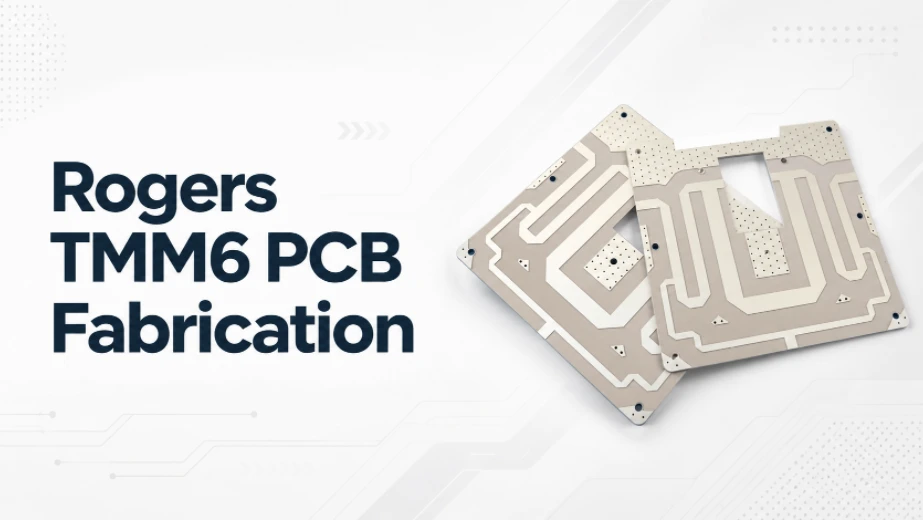
TMM6 PCB Fabrication
TMM6 fabrication is the process-control page for a mid-Dk...
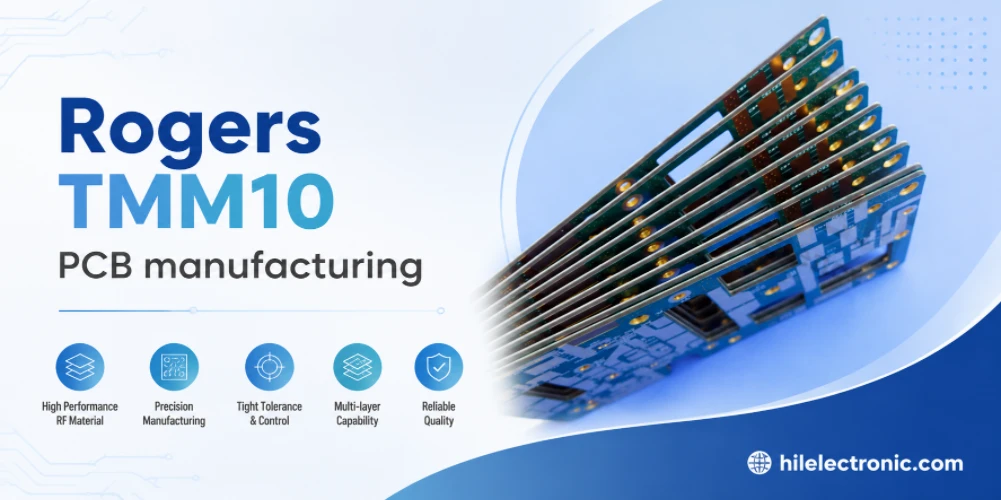
TMM10 PCB Manufacturing for Compact RF Designs
Table of contentsHow TMM10 Shrinks RF StructuresTMM10 vs...

TMM10i PCB Fabrication and DFM
TMM10i PCB fabrication has a stronger DFM emphasis because...
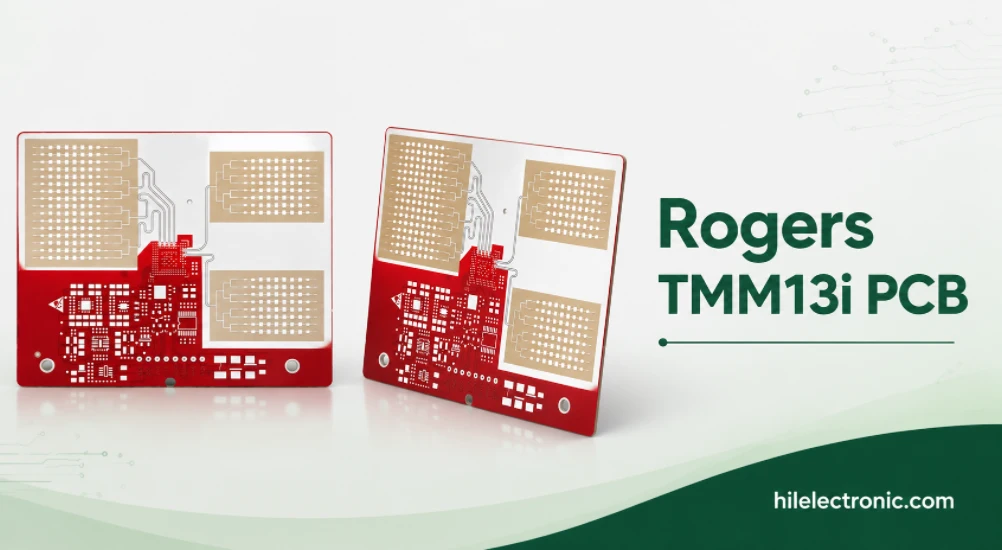
TMM13i PCB Manufacturing
TMM13i PCB manufacturing is aimed at ultra-compact RF...
How to get a quote for PCBs
Let us run DFM/DFA analysis for you and get back to you with a report.
You can upload your files securely through our website.
We require the following information in order to give you a quote:
-
- Gerber, ODB++, or .pcb, spec.
- BOM list if you require assembly
- Quantity
- Turn time