
Printed Circuit Board Assembly Process Guide
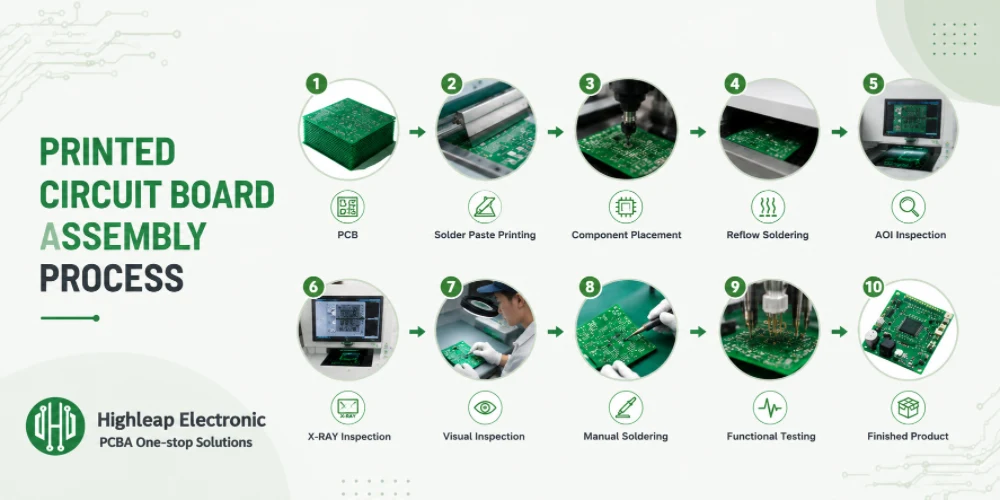
Figure 1. printed circuit board assembly process
Last updated: May 2026 · A complete walkthrough of how PCBs are populated and verified
The printed circuit board assembly process (PCBA) is the sequence that turns a bare board and a pile of components into a finished, tested electronic assembly. Modern assembly is mostly surface-mount (SMT): solder paste is printed onto the board, components are placed by machine, and the whole board is reflowed in an oven. Through-hole parts are added separately, then the board is inspected, tested, and packaged. This guide walks through every stage in order, explains the equipment and inspection at each one, and shows where SMT and through-hole differ.
Before the PCB Assembly Process: Files, BOM, and Stencil
Assembly starts before any solder is applied. The assembler needs three data sets that must agree with each other: the BOM (every part, its value, and manufacturer part number), the centroid / pick-and-place file (each part’s X-Y position, rotation, and side), and an assembly drawing (polarity, pin one, fiducials, and any do-not-fit notes). A DFM/DFA check confirms footprints, spacing, and edge clearances are sound. From the paste layer, a laser-cut stencil is produced so paste can be deposited only where it’s needed.
The SMT Assembly Process, Step by Step
1. Solder paste printing
The bare board is clamped under the stencil, and a squeegee sweeps solder paste — a mix of tiny solder spheres and flux — through the stencil apertures onto the pads. Aperture size, stencil thickness, and squeegee pressure together control how much paste lands on each pad, which is the single biggest driver of joint quality downstream.
2. Solder paste inspection (SPI)
Many lines add automated SPI to measure paste volume, height, and registration on every pad before components go down. Catching a clogged aperture or a smear here is far cheaper than finding the resulting defect after reflow.
3. Pick-and-place
High-speed placement machines pick components from reels, trays, and tubes and set them onto the wet paste at the coordinates in the centroid file. Vision systems verify each part’s orientation as it’s placed. A single machine can place tens of thousands of parts per hour.
4. Reflow soldering
The populated board travels through a reflow oven on a controlled thermal profile with four zones: preheat (ramp the board up gently), soak (even out temperature and activate the flux), reflow (peak temperature melts the solder so it wets the pads and forms joints), and cooling (solidify the joints). Getting this profile right — matched to the solder paste and the board’s thermal mass — is what separates shiny, sound joints from cold joints, voids, and tombstoned parts.
5. Second side (if double-sided)
If both faces carry SMT parts, the board is flipped and the print–place–reflow sequence repeats for the second side, with the heavier or more heat-tolerant parts usually scheduled to survive the second pass.
Through-Hole Component Assembly (THT)
Connectors, large electrolytic capacitors, and other through-hole (THT) parts are inserted into plated holes after SMT. There are three common ways to solder them:
- Wave soldering: the board passes over a wave of molten solder that fills the holes — efficient for many through-hole joints at once.
- Selective soldering: a small nozzle solders specific joints, ideal when only a few through-hole parts sit among sensitive SMT components.
- Pin-in-paste (intrusive reflow): paste is printed into the holes and the through-hole parts are reflowed alongside SMT, eliminating a separate soldering step on mixed boards.
- Hand soldering: for prototypes, odd-form parts, and low volumes.
PCB Assembly Inspection and Testing Methods
Verification happens in layers, matched to the risk on the board:
| Method | What it checks |
|---|---|
| AOI (automated optical) | Presence, alignment, polarity, and visible solder defects |
| X-ray (AXI) | Hidden joints under BGAs and QFNs; voids; bridging you can’t see |
| ICT (in-circuit test) | Component values, opens/shorts via test points or a bed-of-nails |
| FCT (functional test) | The board behaves as the product should when powered and exercised |
A typical flow runs AOI after reflow, X-ray where there are area-array parts, and ICT and/or FCT before the board leaves the factory. First-article inspection signs off the first build of a batch.
Cleaning, Coating, and Final Assembly Steps
- Cleaning: if a water-soluble or activated flux was used, the board is washed and dried; no-clean residues may be left or cleaned depending on the requirement.
- Programming: firmware is loaded into microcontrollers and memory, either before assembly or in-circuit afterward.
- Conformal coating: a protective film is applied where the product faces moisture, dust, or vibration.
- Final inspection and packaging: a last visual and functional check, then ESD-safe packing, labelling, and any box-build integration.
Common PCB Assembly Defects and Their Causes
Most PCBA defects trace back to paste volume, the reflow profile, or footprint design. Knowing the cause is what lets a line prevent the defect rather than just scrap the board.
| Defect | Typical cause | Prevention |
|---|---|---|
| Tombstoning (chip part stands up) | Uneven pad heating or unequal paste on the two pads | Balance pad sizes/thermals; tune soak zone; equal apertures |
| Solder bridging (shorts between pins) | Too much paste, or apertures too large for fine pitch | Reduce aperture size; check stencil; verify with SPI |
| Cold / dull joint | Peak reflow temperature too low or time too short | Profile to the paste spec; verify oven zones |
| Voids (gas trapped in the joint) | Flux outgassing, poor wetting, large thermal pads | Vented pad/aperture design; profile ramp; verify by X-ray |
| Insufficient solder | Too little paste, clogged or under-sized apertures | Increase aperture; clean stencil; check squeegee pressure |
| Component shift / skew | Placement error, or float during reflow | Check placement accuracy; symmetric pads; correct paste volume |
| Solder balls / beading | Paste spatter, moisture, or too-fast ramp | Adjust ramp; control paste storage; clean stencil |
The Reflow Soldering Profile Explained
The reflow oven is the heart of SMT, and its four-zone thermal profile is what the steps above all serve. Each zone has a job, and the whole profile must match the solder paste’s datasheet and the board’s thermal mass.
| Zone | What it does | If it’s wrong |
|---|---|---|
| Preheat | Ramps the board up at a controlled rate | Too fast → spatter, solder balls, thermal shock |
| Soak | Evens out temperature, activates flux | Too short → uneven heating, tombstoning |
| Reflow (peak) | Melts solder so it wets pads and forms joints | Too low → cold joints; too high → damaged parts |
| Cooling | Solidifies joints into a fine grain structure | Too slow → weak, coarse joints |
SMT vs Through-Hole Assembly
| Aspect | SMT | Through-hole |
|---|---|---|
| Mounting | On the surface, both sides | Leads through holes |
| Density | High, miniaturised | Lower |
| Mechanical strength | Good for small parts | Strongest — best for connectors |
| Process | Print, place, reflow | Insert, wave/selective/PiP |
Most boards today are mixed-technology: SMT for the bulk of the components and through-hole for connectors and high-stress parts.
PCB Design Choices for Easier Assembly (DFA)
- Provide complete, agreeing BOM, centroid, and assembly-drawing data.
- Mark polarity, pin one, fiducials, and do-not-fit parts unambiguously.
- Balance copper and add thermal relief so parts heat evenly in reflow.
- Keep adequate spacing and edge clearance for placement and any wave/selective fixturing.
- Design test access — pads or a header — if ICT or FCT is planned.
PCB Assembly Services at Highleap
Highleap Electronics (founded 2002) runs SMT and through-hole assembly with the inspection and test stages above built into the workflow, from prototype quantities to volume:
- PCB assembly and turnkey PCBA covering sourcing through finished boards.
- SMT capability with fine-pitch and BGA placement.
- Layered verification: AOI, X-ray, functional testing, comprehensive inspection, and first-article inspection.
- DFA review so assembly issues are caught before the line starts.
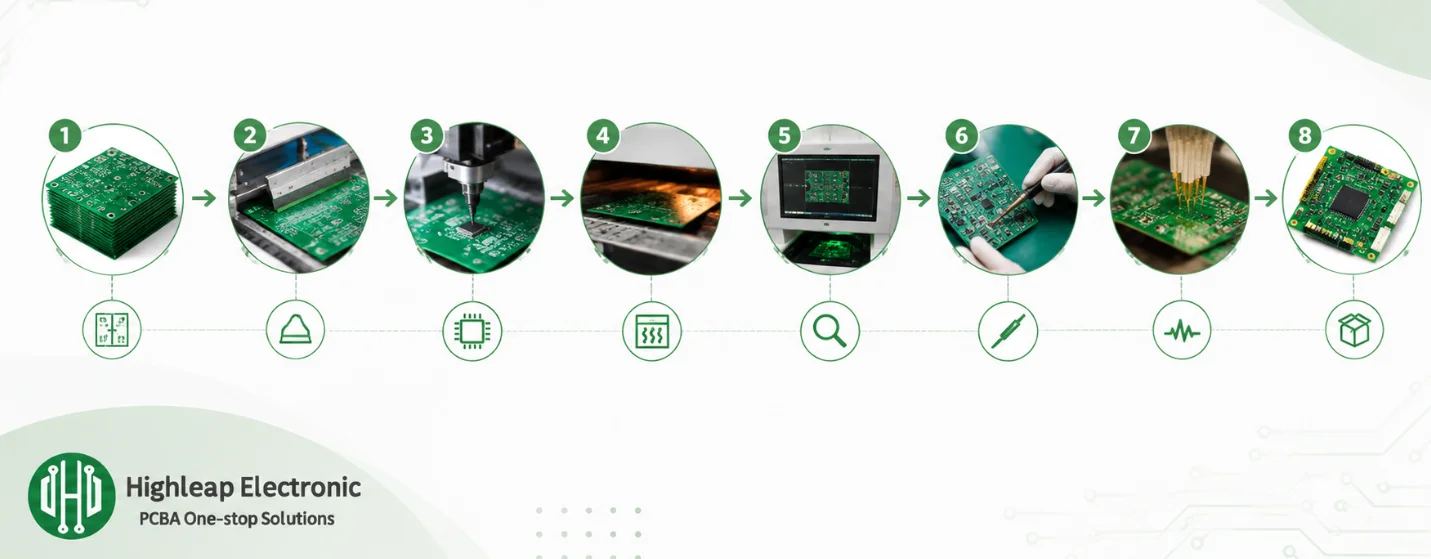
Figure 2. printed circuit board assembly process details
PCB Assembly Process FAQ
What are the main steps of PCB assembly?
Solder paste printing, paste inspection, pick-and-place, reflow, optical inspection, through-hole soldering, electrical and functional testing, cleaning/coating, and final inspection and packaging.
What’s the difference between PCB fabrication and PCB assembly?
Fabrication produces the bare board; assembly populates that board with components to create a working PCBA. They’re separate processes, often at separate stages of the supply chain.
What is reflow soldering?
The process of melting solder paste in a controlled-temperature oven so it forms joints between SMT components and pads. The four-zone thermal profile (preheat, soak, reflow, cool) is matched to the paste and board.
Why use X-ray inspection?
Because BGA and QFN joints are hidden under the package and can’t be seen optically. X-ray reveals voids, bridges, and missing joints beneath those parts.
Can SMT and through-hole parts be on the same board?
Yes — most boards are mixed-technology. SMT runs first, then through-hole parts are added by wave, selective, or pin-in-paste soldering.
Do I need functional testing on every order?
Not always. Prototypes may rely on AOI and a visual check, while production builds usually add ICT and/or FCT. Match the test depth to the product’s reliability requirements.

Recommended Posts
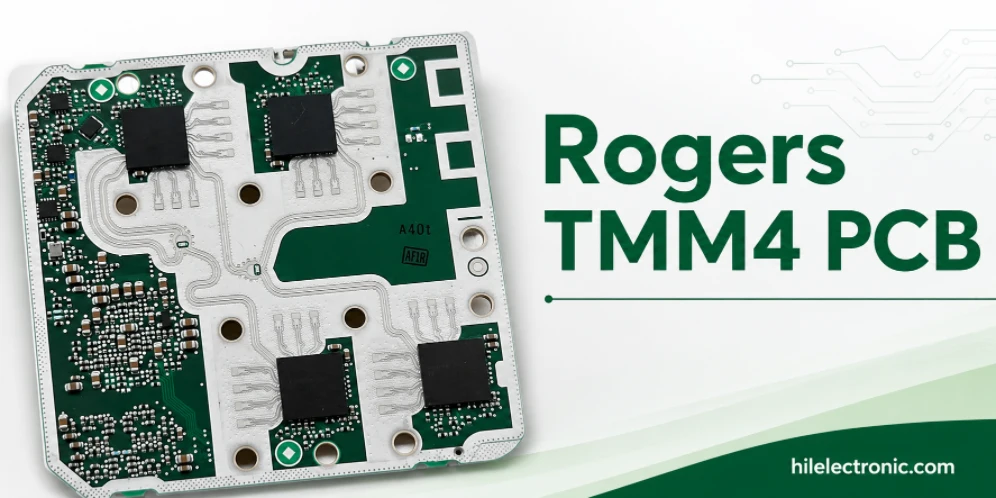
TMM4 Filter PCB Manufacturing
TMM4 filter PCB manufacturing is controlled by the...
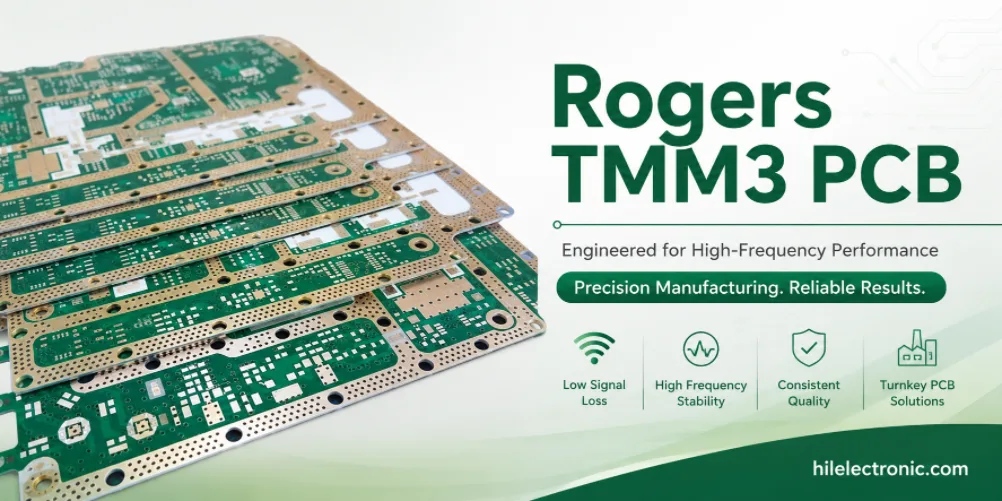
TMM3 PCB Manufacturing for RF Modules
TMM3 PCB manufacturing is most useful where the RF module...
TMM6 PCB Fabrication
TMM6 fabrication is the process-control page for a mid-Dk...

TMM10 PCB Manufacturing for Compact RF Designs
Table of contentsHow TMM10 Shrinks RF StructuresTMM10 vs...
How to get a quote for PCBs
Let‘s run DFM/DFA analysis for you and get back to you with a report. You can upload your files securely through our website. We require the following information in order to give you a quote:
-
- Gerber, ODB++, or .pcb, spec.
- BOM list if you require assembly
- Quantity
- Turn time
For PCBA services, please provide your BOM (Bill of Materials) and any specific assembly instructions. We also offer DFM/DFA analysis to optimize your designs for manufacturability and assembly, ensuring a smooth production process.