
Robot Power Distribution PCB for DC-DC Rails, Protection and Sequencing
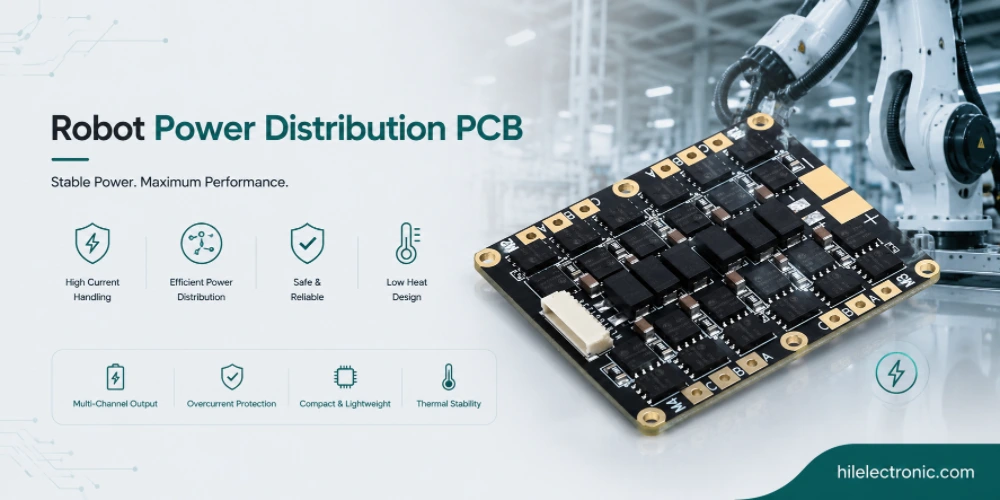
Robot power distribution PCBs take battery, DC-bus, or AC-derived input power and deliver regulated, protected, sequenced rails to every subsystem. They are not just wiring boards. They define fault containment, startup order, runtime efficiency, rail monitoring, and how safely the robot behaves when a downstream board fails.
This guide explains the industry-level decisions behind robot power distribution boards: input topology, DC-DC converter selection, rail sequencing, over-current and reverse-polarity protection, monitoring, battery-management integration, thermal design, and production test. It is intended for teams designing mobile robots, industrial robots, service robots, and high-current robotic platforms.
What Robot Power Distribution PCBs Actually Do
Role in the Robot System
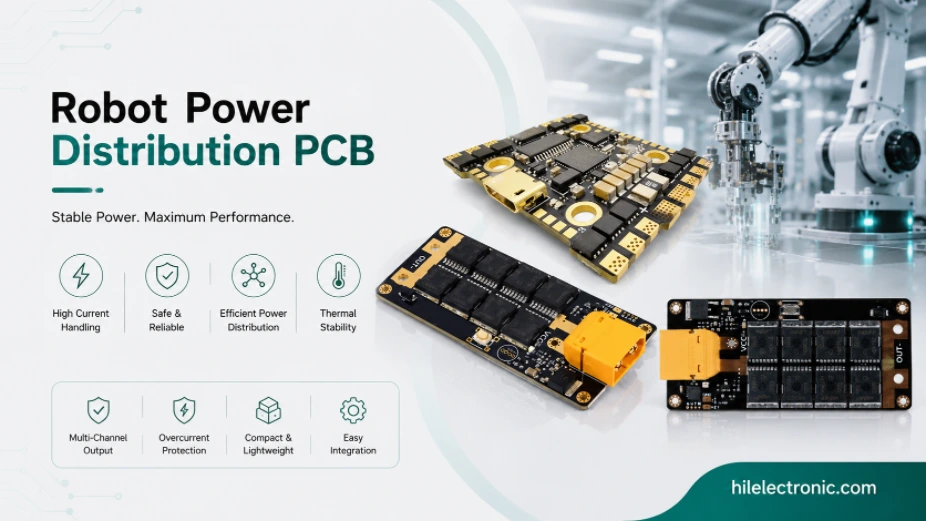
Power distribution PCBs take input power (battery, DC bus, or AC input) and deliver conditioned power to every subsystem in the robot. On a modern robot this means multiple DC-DC converters, power sequencing, protection, monitoring, and hot-swap capability. The board is often physically the largest single PCB in the robot because of the power components. What makes robot power distribution boards distinct:
- High input current: battery discharge current at tens to hundreds of amps continuous; peak current higher during motion. Input path and connectors sized for the current.
- Multiple output rails: one input converted to 5-15 different rails for various subsystems. Each rail has its own current, voltage, and sequencing requirements.
- Efficiency: battery-powered robots waste energy through the power distribution stage. High efficiency directly extends run time.
- Protection: over-current, over-voltage, short-circuit, and reverse-polarity protection at input and per rail. Fault behavior defined and tested.
- Monitoring: per-rail voltage and current monitoring for diagnostics and battery management integration.
- Isolation: some architectures require galvanic isolation between input and output. Determined by application safety requirements.
Design Risks to Control
Power distribution board design is where much of the robot’s overall efficiency is determined. A robot with well-designed power distribution operates longer on the same battery than a robot with lossy distribution; the difference across the fleet lifetime can be substantial. Programs that invest in power distribution efficiency benefit through improved robot runtime; programs that treat it as an afterthought sometimes ship robots with shorter runtime than the batteries would otherwise support.
The power distribution board also serves as a robot-level supervisor for power state. Wake, sleep, and standby coordination often lives on this board because the board is always powered when any part of the robot is powered. Programs that centralise power supervision on the distribution board simplify the overall power architecture; programs that distribute supervision often produce complex coordination that is hard to reason about.
At the system level, the board should be specified by function, environment, lifetime, and test coverage rather than by schematic alone. This prevents the common error of building a technically correct PCB that is difficult to fixture, hard to service, or insufficiently robust once installed in the robot.
Battery-fed designs should be reviewed together with the robot battery-management board, while plug-in or docked platforms may need coordination with an AC-DC power supply PCB.
Input Topology: Battery, DC Bus, AC-DC, Multi-Source
Selection Criteria for Input Topology
Input topology depends on the robot’s power source. Battery-powered mobile robots have different input requirements than mains-powered industrial cabinets. The main input topologies are:
- Direct battery input: battery voltage feeds DC-DC converters directly. Standard on most mobile robots.
- DC bus input: a common DC bus fed from battery or AC-DC frontend. Simplifies rail distribution to multiple subsystems.
- AC-DC frontend: mains input converted to DC. Standard on stationary industrial robots. PFC required above a few hundred watts.
- Multi-source input: battery plus AC input with automatic transfer. Common on robots that operate both docked and mobile.
How Input Topology Affects Cost and Reliability
Input topology selection has cascading effects across the robot design. A battery-powered mobile robot with direct battery input needs converters handling wide input voltage range; a robot with DC bus input can use converters with narrower input range and simpler design. The topology choice affects both cost and complexity across every downstream rail.
Multi-source input topologies enable operation from either battery or shore power, which is common on delivery and service robots that dock to charge but operate untethered. The transfer between sources needs to be seamless enough that operation continues without interruption; hardware design supporting this is more complex than single-source systems but enables operational flexibility.
The practical rule is to choose the simplest construction that still meets the signal, safety, thermal, and mechanical requirement. Over-specification raises cost, while under-specification creates rework during test or field deployment.
DC-DC Converter Topology Selection
Selection Criteria for DC-DC Converter Topology Selection
DC-DC converter topology matched to load determines conversion efficiency and cost. The main topology categories are:
- Buck (step-down): standard for high-current low-voltage rails. Efficiency typically 90-95% with synchronous rectification.
- LDO: low dropout linear regulator. Simple and low-noise; low efficiency. Standard for small low-power rails or clean analog supplies.
- Boost (step-up): converts lower voltage to higher. Common on battery-powered robots where some rails exceed battery voltage.
- Buck-boost: handles input voltage that spans the output. Common on battery-powered robots where battery voltage may drop below rail voltage during discharge.
- Isolated DC-DC: galvanic isolation between input and output. Common on communication interfaces and safety-critical rails.
How DC-DC Converter Topology Selection Affects Cost and Reliability
DC-DC converter selection at design time considers not just efficiency but also transient response, ripple, and startup behaviour. A converter with 95% efficiency at nominal load may fall to 80% at light load — significant on a robot that spends much of its time in standby. Programs that specify efficiency across the operating range preserve battery life; programs that specify only at nominal load sometimes ship robots with disappointing runtime.
Multi-phase converters at higher currents distribute load across multiple switching stages, reducing input and output ripple while improving thermal distribution. Standard on high-current rails feeding motor drives or high-power compute. The design complexity is higher than single-phase but the electrical and thermal benefits justify it on high-current applications.
Power Sequencing and Coordination
Electrical and Thermal Requirements
Power sequencing coordinates rail turn-on and turn-off. Modern SoCs and complex subsystems need specific rail ordering and timing during power-up. The main sequencing considerations are:
- Sequenced turn-on: specific rail order during startup. Sometimes with defined ramp rates or delays.
- Coordinated turn-off: reverse sequence during shutdown. Sometimes with defined coasting behaviour on power loss.
- Fault propagation: fault on one rail may require related rails to shut down. Local hardware plus system-level supervision.
- Ready-signal handshaking: downstream subsystems confirm readiness before proceeding. Standard on SoC-scale power distribution.
- Standby modes: low-power state with only critical rails on. Enables sleep and wake behaviour.
Production Test and Failure Modes
Sequencing errors during power-up or power-down are a specific source of hard-to-diagnose failures. A rail that comes up slightly out of sequence may or may not cause visible problems depending on the specific SoC and specific state of the failure. Programs that design and test sequencing carefully avoid this class of issue; programs that treat sequencing casually sometimes ship products with intermittent boot failures.
The failure mode analysis for power sequencing should include not just correct-order power-up but also disorderly power-down (dying battery, main switch off during operation, brownout). Robots that handle disorderly shutdown gracefully preserve state and restart cleanly; robots that handle it poorly sometimes require full firmware reload after abrupt power loss.
Protection: Over-Current, Over-Voltage, Reverse Polarity, Short-Circuit
Electrical and Thermal Requirements
Protection at the power distribution board is the first line of defence against faults. The main protection categories are:
- Input over-current: fuse, PTC, or eFuse limiting input current. Response time matched to source capability.
- Reverse polarity: protection against incorrect battery connection. FET-based or diode-based.
- Over-voltage: clamp or shutdown when input exceeds safe limit. Prevents damage from load dumps or wrong supply.
- Per-rail over-current: shutdown or foldback on individual rail overload. Localises fault to affected subsystem.
- Over-temperature: shutdown when board temperature exceeds safe limit. Prevents thermal runaway.
- Short-circuit: fast response to output short. Protects both the power stage and downstream wiring.
Production Test and Failure Modes
Protection component qualification matters because these components implement the safety behaviours. eFuses, TVS diodes, protection FETs, and current-limiting components must actually behave as specified when the fault occurs; component substitution during production could compromise protection behaviour. Programs that qualify protection components carefully preserve safety; programs that treat them as commodities sometimes discover protection failures under fault conditions.
Fault behaviour testing verifies the protection actually works. Applying representative faults during test — over-current, over-voltage, reverse polarity — confirms the protection responds correctly. Programs that test protection during production catch component and manufacturing issues that would otherwise appear only during actual faults in the field.
Monitoring circuits are most useful when their fault data reaches the robot network interface and can be validated through a repeatable electrical test workflow.
Monitoring and Battery Management Integration
Electrical and Thermal Requirements
Monitoring integrates power distribution with battery management and system diagnostics. The main monitored parameters are:
- Input voltage and current: integrated with battery management for state-of-charge estimation.
- Per-rail voltage: confirms rails are within tolerance. Detects gradual degradation before failure.
- Per-rail current: load monitoring for diagnostics and consumption analysis.
- Board temperature: multiple sensors for thermal monitoring. Sometimes integrated with cooling control.
- Fault status: fault flags accessible to the supervisor for diagnostics and event logging.
- Communication interface: I²C, CAN, or similar to the main controller. Standard PMBus in some architectures.
Production Test and Failure Modes
Monitoring granularity affects diagnostic capability. Per-rail current monitoring identifies which subsystem is drawing excessive current; aggregate monitoring only identifies that something is. Programs that instrument monitoring finely enable rapid diagnosis of field issues; programs that instrument coarsely sometimes struggle to identify the specific subsystem causing observed symptoms.
Battery management integration through PMBus or similar protocol enables coordinated power management across the pack and distribution board. State of charge estimation, charging control, and thermal management all benefit from tight coordination. Programs that design this integration deliberately produce robots that manage power intelligently; programs that treat pack and distribution as separate concerns sometimes ship robots with suboptimal power management.
For adjacent design decisions, see the robot BMS PCB battery safety guide and the heavy-current motor driver PCB for robots.
Manufacturing Power Distribution PCBs at Highleap
DFM Review Before Production
Highleap manufactures power distribution boards with the specific process discipline high-current power boards need. The specific capabilities include:
- Heavy copper fabrication: for the high-current input and rail traces. 2-4 oz standard; heavier on consultation.
- High-current SMT and through-hole: placement and soldering discipline for high-current joints. Reflow profile tuned for thermal mass.
- Press-fit terminals: high-cycle-count high-current connections. Standard on industrial power distribution.
- Thermal management: heavy copper plus thermal via arrays plus heatsink attachment on DC-DC converters.
- Efficiency validation: sample efficiency measurement on request. Verifies design intent matches manufactured reality.
- Documentation: per-unit test records including efficiency and protection verification.
Test, Traceability, and Build Handoff
Highleap’s power distribution board manufacturing has produced boards from small consumer service robots at tens of watts through industrial platforms at kilowatt scale. The manufacturing process discipline scales with the power level — small boards use standard SMT and multilayer; large boards use heavy copper, press-fit terminals, and thermal-management integration.
The consolidation of power distribution manufacturing at a supplier with power-focused experience is one of the specific ways robotics programs benefit from Highleap’s practice. Power distribution is a specialty area where accumulated understanding — of thermal design, protection behaviour, sequencing verification, and monitoring integration — improves outcomes; programs building with suppliers who don’t specialise in power distribution sometimes miss the benefits of this accumulated understanding.
Robot Power Distribution PCB FAQs
What does a robot power distribution PCB do?
A robot power distribution PCB receives the main power source and converts, switches, protects, sequences, and monitors the rails used by the robot. It may feed motor drives, sensors, compute boards, communication modules, safety circuits, and charging interfaces. Its design strongly affects runtime, reliability, diagnostics, and fault containment.
What voltages are common in robot power distribution?
Common inputs include 12 V, 24 V, 36 V, 48 V, and higher battery or DC-bus voltages. Output rails often include 12 V, 5 V, 3.3 V, 1.8 V, and processor-specific core rails. The right voltage architecture depends on motor power, cable losses, battery pack design, safety requirements, and downstream converter efficiency.
When does a power distribution PCB need heavy copper?
Heavy copper is used when current density, voltage drop, or temperature rise would be too high with standard copper. It is common on battery inputs, motor-drive feeds, charging paths, and high-current output rails. The decision should be based on continuous current, peak current, trace width, board area, temperature rise, and manufacturability.
Why is power sequencing important in robots?
Power sequencing prevents subsystems from starting in an unsafe or undefined order. Compute, sensors, motor drives, safety circuits, and communication modules often have different startup requirements. Controlled sequencing reduces latch-up risk, protects downstream boards, improves diagnostic clarity, and enables predictable wake, sleep, charge, and emergency-shutdown behaviour.
What protection circuits should robot power boards include?
Typical protection includes input fusing, reverse-polarity protection, inrush current limiting, over-current protection, short-circuit protection, surge or transient suppression, over-voltage protection, thermal shutdown, and per-rail fault reporting. Safety-critical robots may also require redundant shutoff paths and hardware-defined safe states.
How does power distribution affect robot runtime?
Every conversion loss becomes heat and reduces runtime. Efficient DC-DC topology, correct voltage architecture, low-loss connectors, appropriate copper weight, and minimized idle consumption all improve battery life. Runtime should be evaluated at realistic duty cycles, not only under a single steady load condition.
How should robot power distribution PCBs be tested?
Testing should verify input current, output voltage accuracy, rail sequencing, load regulation, ripple, thermal behaviour, protection thresholds, fault reporting, and communication to the supervisor. High-current boards should be tested under realistic loads where practical, because low-current bench tests may not reveal thermal or voltage-drop problems.
How can robot power distribution PCB cost be reduced safely?
Cost can be reduced by partitioning high-current and low-current sections intelligently, avoiding unnecessary rail count, using common converter families, selecting realistic copper weight, consolidating connectors, and designing test access early. Cost should not be reduced by removing protection, derating margin, or thermal paths needed for safe operation.

Recommended Posts
TMM4 Filter PCB Manufacturing
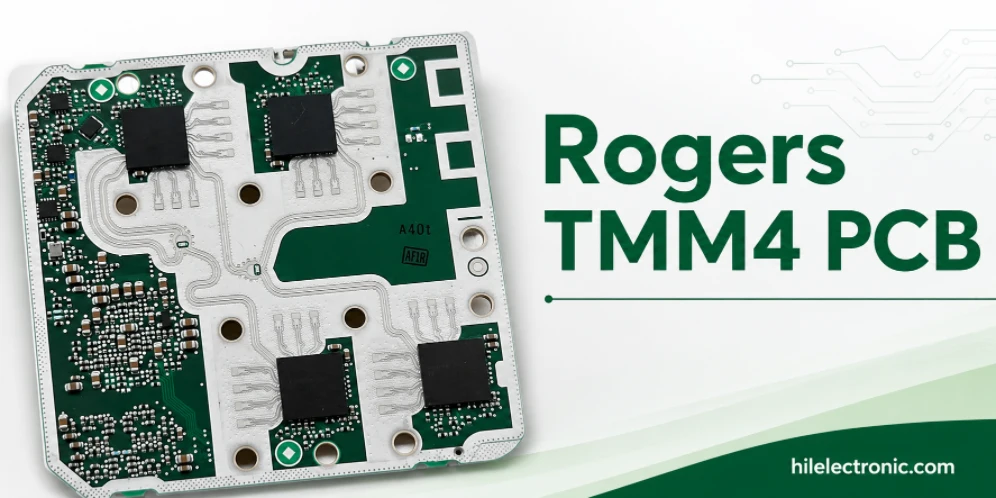
TMM4 filter PCB manufacturing is controlled by the...
TMM3 PCB Manufacturing for RF Modules
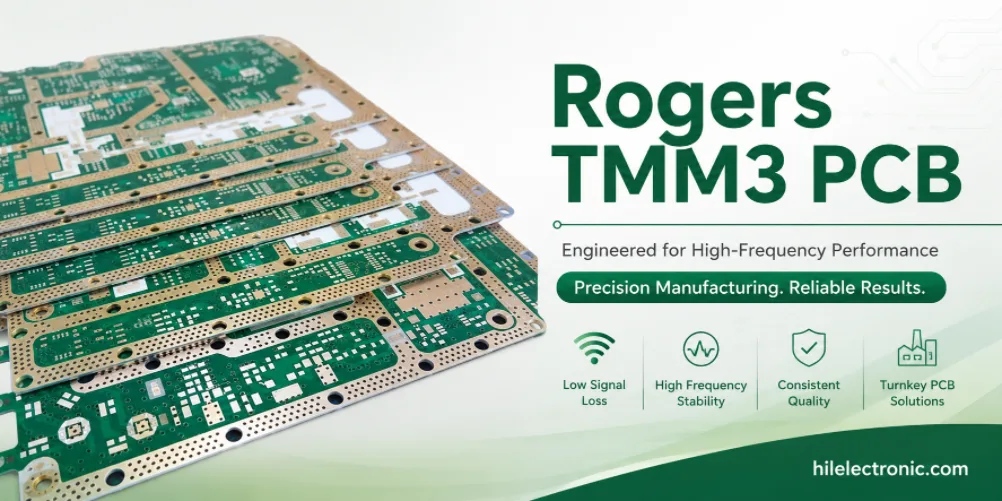
TMM3 PCB manufacturing is most useful where the RF module...
TMM6 PCB Fabrication
TMM6 fabrication is the process-control page for a mid-Dk...
TMM10 PCB Manufacturing for Compact RF Designs
Table of contentsHow TMM10 Shrinks RF StructuresTMM10 vs...
How to get a quote for PCBs
Let’s run DFM/DFA analysis for you and get back to you with a report. You can upload your files securely through our website. We require the following information in order to give you a quote:
-
- Gerber, ODB++, or .pcb, spec.
- BOM list if you require assembly
- Quantity
- Turn time
For PCBA services, please provide your BOM (Bill of Materials) and any specific assembly instructions. We also offer DFM/DFA analysis to optimize your designs for manufacturability and assembly, ensuring a smooth production process.