
RO4725JXR PCB Fabrication
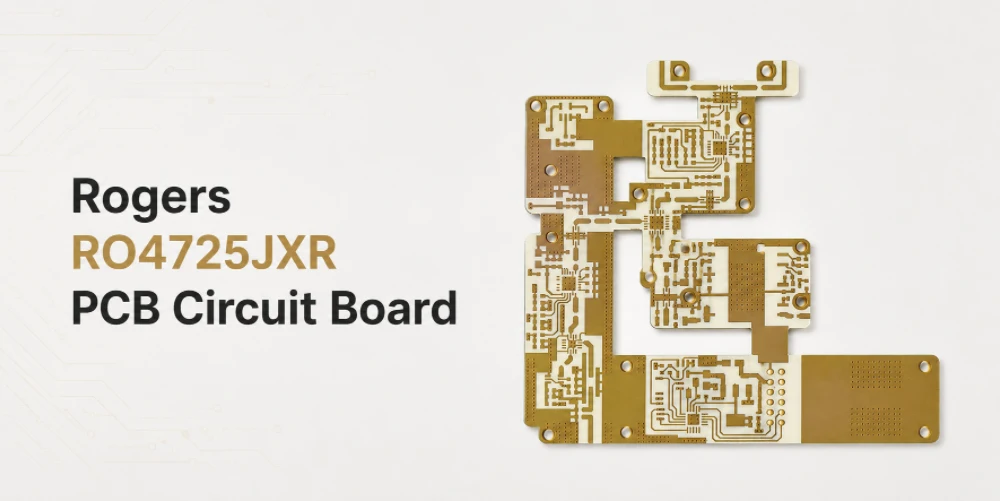
Low-PIM fabrication extends beyond the laminate callout. Copper surfaces, plating, cleaning, connector interfaces, mechanical hardware and handling should all be controlled so that the finished antenna board does not introduce avoidable passive-intermodulation sources.
Figure 1. Rogers RO4725JXR PCB fabrication
RO4725JXR PCB fabrication for low-PIM antenna boards depends on keeping the RF surfaces and mechanical interfaces consistent. Low PIM is a finished-assembly characteristic, so laminate selection, copper geometry, finish, cleanliness and connector interfaces have to work together. Rogers RO4725JXR PCB fabrication is selected for antenna boards where low PIM, panel uniformity, and repeatable RF behavior matter. RO4725JXR is a Dk 2.55 antenna-grade laminate used in base-station, distributed antenna, and array antenna designs. Rogers documentation positions RO4725JXR for reduced PIM and low insertion loss, with demonstrated low-PIM performance better than -160 dBc under the stated test condition. Highleap Electronics reviews laminate callout, copper system, panel layout, plating, solder finish, connector areas, and inspection records before production release.
Table of Contents
Material scope: This page concerns PCB fabrication using the specified Rogers material. Highleap Electronics manufactures the finished board and PCBA; laminate manufacturing and material sales are outside our service scope.
When RO4725JXR Is the Right Antenna PCB Material
RO4725JXR is used for antenna boards that need low loss, stable dielectric behavior, lead-free processing, and careful passive intermodulation control. It is especially relevant for base-station antennas, distributed antenna systems, RF feed networks, and outdoor communication hardware where a small defect in the current path can affect final RF performance.
The material choice should be tied to the finished antenna requirement. If the product will be tested for PIM, the PCB drawing and RFQ should identify the target, connector interface, surface finish, copper features, cleaning requirement, and whether the supplier is responsible for assembly. These details matter more than simply naming the laminate. If the antenna material shortlist also includes RO4533, RO4533 antenna laminate comparisons should use a separate frequency model and board specification.
Low PIM Depends on Fabrication Cleanliness, Not Only the Laminate Name
For antenna boards, a low-PIM laminate is only the starting point. Passive intermodulation can be affected by small discontinuities and imperfect metal interfaces, including inconsistent copper plating, contaminated contact areas, rough connector pads, cracked solder joints, burrs, loose hardware, or uneven surface finish. That is why RO4725JXR production should be treated as a controlled RF process rather than a normal two-layer PCB order. If AD250C is also shortlisted for an antenna, AD250C low-PIM antenna construction needs its own approved dielectric geometry, copper and connector requirements.
The detailed production focus should be the RF current path. Highleap checks copper features, plated holes, connector launch pads, solder mask clearances, route edges, panel handling, connector soldering areas, and any hardware interface that can become a nonlinear contact. A small burr on an edge, a scratched launch pad, or residue around a connector land may not look serious in ordinary visual inspection, but it can matter when the finished antenna is measured for PIM.
If the antenna is part of a base-station, DAS, repeater, or outdoor RF unit, the RFQ should state the PIM target, connector type, test frequency, power level, acceptance method, and whether Highleap is quoting bare PCB fabrication only or PCB assembly as well. This information changes how the supplier controls cleaning, packaging, connector pad protection, soldering, and outgoing inspection.
- Specify the required PIM target and test method before quoting when the finished product will be PIM-tested.
- Protect connector launch areas and contact surfaces from scratches, residues, burrs, and rough handling.
- Review assembly hardware and solder joints together with the bare-board process, not after PCB delivery.
RO4725JXR Properties Relevant to Low-PIM Fabrication
| Item | Manufacturing meaning |
|---|---|
| Dk 2.55 class material | Supports antenna and feed-network designs that need predictable geometry and stable RF behavior. |
| Low-PIM intent | Fabrication must avoid contamination, rough handling, and inconsistent plated interfaces. |
| Panel uniformity | Array antenna boards need repeatable dielectric thickness, outline accuracy, and etch control. |
| Lead-free assembly | Finish and soldering conditions should be checked before volume production. |
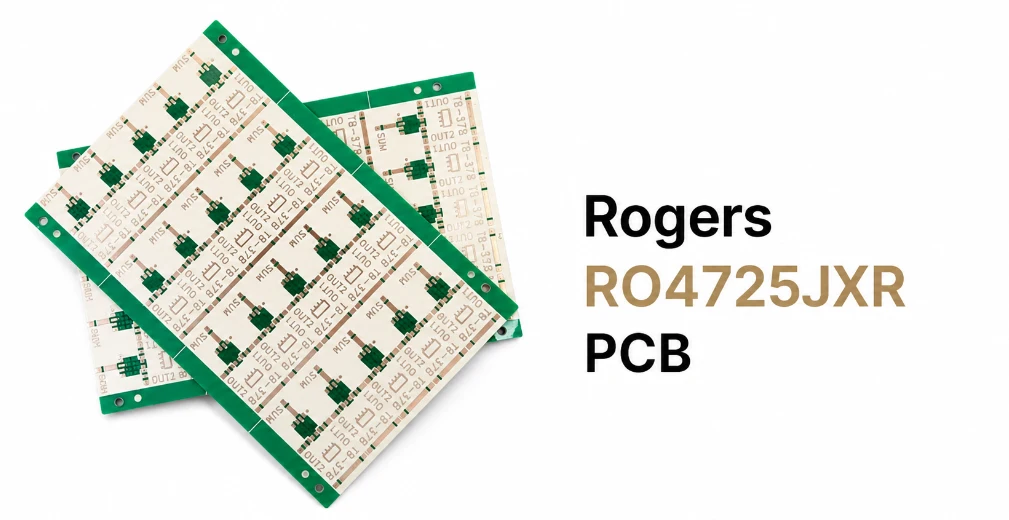
DFM and Stackup Review Before Quoting
A reliable quote starts with the complete Gerber set, drill files, netlist, board outline, stackup drawing, material callout, copper weight, surface finish, solder mask notes, impedance targets, and any assembly requirements. Highleap checks whether the design can be fabricated repeatably before tooling starts.
| DFM item | What to check |
|---|---|
| Copper and plating | Keep RF current paths clean, consistent, and free from avoidable surface defects. |
| Antenna geometry | Review array spacing, slots, edge features, connector pads, and solder mask openings. |
| Process records | For production lots, request material lot traceability and outgoing inspection data. |
Manufacturing Process Controls
The process route should be selected before material is released to production. Typical controls include material verification, inner layer inspection, lamination review, drill quality, hole-wall preparation, copper plating, solder mask registration, surface finish, routing accuracy, electrical test, and final inspection. Highleap reviews antenna features, copper definition, surface finish and drilling with low-PIM requirements in mind. Where a PIM test is required, the acceptance method should match the assembled hardware rather than the bare board alone. Exact material property values should be checked against the current supplier documentation for the specified grade and construction.
For repeat low-PIM builds, maintain the approved surface finish, cleaning route, copper construction, connector interface and incoming-material records. Process changes should be evaluated against the same RF qualification method rather than ordinary bare-board acceptance alone.
RFQ Package and Production Records
Typical applications include base-station antennas, phased arrays, DAS hardware, RF feed networks, low-PIM passive boards, and antenna subassemblies where small process changes can affect system-level RF performance.
Send Gerber files, drill data, board outline, RO4725JXR thickness, copper weight, surface finish, solder mask notes, antenna panel requirements, connector details, PIM expectations, quantity, and production schedule.
For RO4725JXR low-PIM builds, useful evidence may include material traceability, surface-finish records, cleanliness controls, mechanical inspection and the RF test method used for low-PIM acceptance. The documentation should cover the board-to-connector and metal-interface conditions that can affect the finished assembly. For an RFQ, include the antenna drawing, frequency band, PIM target, stackup, finish, connector details and quantity. This gives the fabricator a clear production and test boundary.

Recommended Posts
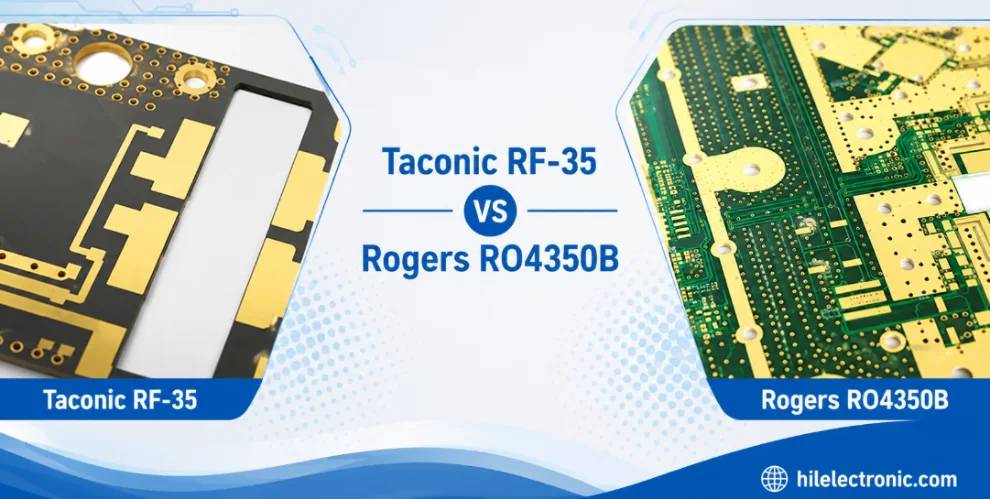
Taconic RF 35 vs RO4350B PCB
Table of contentsRF-35 vs RO4350B Procurement and...
TMM4 Filter PCB Manufacturing
TMM4 filter PCB manufacturing is controlled by the...
TMM3 PCB Manufacturing for RF Modules
TMM3 PCB manufacturing is most useful where the RF module...
TMM6 PCB Fabrication
TMM6 fabrication is the process-control page for a mid-Dk...
How to get a quote for PCBs
Let’s run DFM/DFA analysis for you and get back to you with a report. You can upload your files securely through our website. We require the following information in order to give you a quote:
-
- Gerber, ODB++, or .pcb, spec.
- BOM list if you require assembly
- Quantity
- Turn time
For PCBA services, please provide your BOM (Bill of Materials) and any specific assembly instructions. We also offer DFM/DFA analysis to optimize your designs for manufacturability and assembly, ensuring a smooth production process.