
TMM10 PCB Fabrication
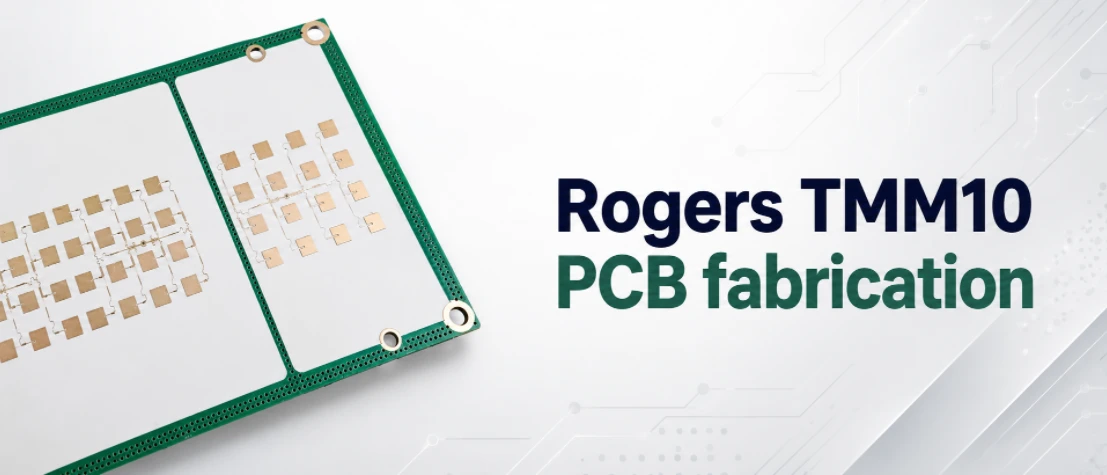
TMM10 fabrication is the process-specific page for a high-Dk thermoset microwave construction. It owns drilling, lamination, registration and dimensional control, while the broader TMM10 manufacturing page addresses compact RF production and quotation.
Figure 1. Rogers TMM10 PCB fabrication
TMM10 PCB fabrication is the process-specific route for a high-Dk thermoset construction. The important manufacturing target is the finished geometry after lamination and etch, especially where compact RF structures depend on small dimensional changes. Rogers TMM10 PCB fabrication is used when a microwave board needs a Dk 9.2 thermoset ceramic laminate for compact RF geometry. TMM10 has process Dk 9.20 +/- 0.230 and dissipation factor 0.0022 at 10 GHz. It helps reduce circuit size for filters, patch antennas, couplers, and resonators, but high-Dk layouts leave less room for etch, drill, routing, and solder mask variation.
Table of Contents
Material scope: Highleap Electronics is the PCB manufacturer and assembler for the build described here. Rogers and the referenced grade names identify the specified material and are not a description of Highleap material manufacturing.
When TMM10 Is the Right PCB Material
TMM10 is used when a microwave design needs high-Dk thermoset material for compact RF structures. It fits small filters, antennas, resonators, couplers, delay lines, and RF modules where Dk 9.2 helps reduce circuit size while avoiding some processing challenges associated with PTFE laminates.
The important question is whether the compact geometry can be manufactured repeatably. Finished copper, etch compensation, solder mask clearance, routed edge tolerance, connector launch geometry, and inspection records should be defined early because small TMM10 features can directly affect frequency response.
TMM10 Needs Compact-Geometry Control, Not Generic RF PCB Processing
The value of TMM10 is that it provides high dielectric constant in a processable thermoset microwave material. The risk is that high-Dk miniaturization can make traces, gaps, and resonator features small enough that etch compensation and solder mask registration become performance variables. TMM10 should therefore be quoted as a compact-geometry RF part, not as a generic microwave PCB.
The most important content focus is geometry control from RF model to finished copper. Highleap checks the RF feature sizes before accepting a stackup, then reviews copper weight, final trace target, routing tolerance, connector launch geometry, solder mask clearance, and the inspection plan. If a filter, coupler, or antenna feature is frequency-critical, the drawing should mark that area so CAM, etching, inspection, and outgoing review all understand its priority.
For repeat production, the approved panel format, etch compensation, coupon method, and inspection notes should be kept stable. A later batch made with a different copper weight, different panel compensation, or a different coupon approach may pass ordinary electrical test but still shift the frequency response of compact RF structures.
- Treat small RF features as controlled geometry, not ordinary copper artwork.
- Lock finished copper and etch compensation so compact TMM10 circuits stay repeatable.
- Use coupons or agreed inspection records when the product needs batch-to-batch RF consistency.
TMM10 Properties That Affect Finished RF Geometry
| Item | Manufacturing meaning |
|---|---|
| Process Dk | 9.20 +/- 0.230 at 10 GHz, supporting high-Dk miniaturization. |
| Dissipation factor | 0.0022 at 10 GHz. |
| Compact geometry | Small dimensional changes can shift RF behavior, so etch control matters. |
| Inspection strategy | Coupons, microsections, and final dimensional checks should be defined before build. |
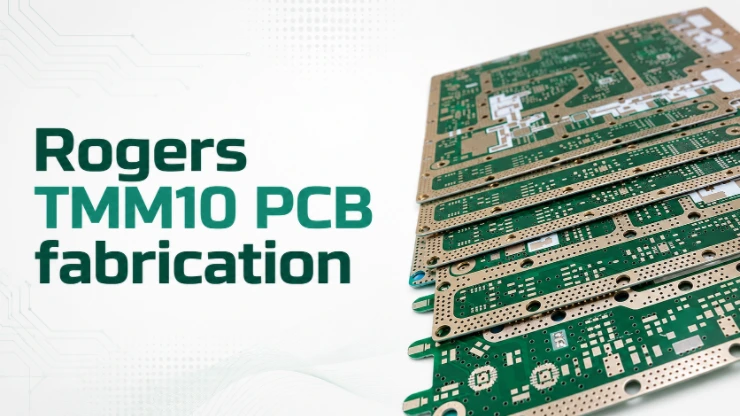
DFM and Stackup Review Before Quoting
A reliable quote starts with the complete Gerber set, drill files, netlist, board outline, stackup drawing, material callout, copper weight, surface finish, solder mask notes, impedance targets, and any assembly requirements. Highleap checks whether the design can be fabricated repeatably before tooling starts.
| DFM item | What to check |
|---|---|
| Feature tolerance | Check trace/space, annular ring, solder mask registration, routing, and edge launch areas. |
| Thermal behavior | Review copper balance, soldering exposure, and any metal carrier or heat spreader. |
| Repeat production | Lock stackup, coupon design, panel format, and outgoing inspection requirements. |
Manufacturing Process Controls
The process route should be selected before material is released to production. Typical controls include material verification, inner layer inspection, lamination review, drill quality, hole-wall preparation, copper plating, solder mask registration, surface finish, routing accuracy, electrical test, and final inspection. Highleap reviews drilling, lamination, registration and copper definition against the released TMM10 stackup. The process plan should reserve tighter controls for RF-critical features rather than applying the same tolerance to every dimension on the drawing. Exact material property values should be checked against the current supplier documentation for the specified grade and construction.
For repeat TMM10 builds, keep the approved stackup, copper target, panel format, etch compensation, coupon method and inspection criteria stable. A later process change should be evaluated against the qualified RF result rather than only standard PCB dimensional acceptance.
RFQ Package and Production Records
TMM10 is suitable for compact filters, patch antennas, couplers, high-Dk resonators, delay lines, aerospace RF modules, and microwave circuits where board size and dimensional stability are both important.
Send Gerber data, drill data, stackup, TMM10 thickness, copper weight, impedance targets, finish, inspection records, quantity, delivery schedule, and PCBA files if assembly is required.
For TMM10 builds, useful evidence includes finished RF-feature inspection, impedance checks where specified, microsections, material records and first-article measurements. When the circuit is frequency-sensitive, the inspection record should identify the dimensions that were controlled during fabrication. For quotation, provide the TMM10 grade, finished thickness, copper, minimum RF features, hole classes and quantity. This gives the fabricator enough information to plan tooling and inspection.

Recommended Posts
TMM4 Filter PCB Manufacturing
TMM4 filter PCB manufacturing is controlled by the...
TMM3 PCB Manufacturing for RF Modules
TMM3 PCB manufacturing is most useful where the RF module...
TMM6 PCB Fabrication
TMM6 fabrication is the process-control page for a mid-Dk...

TMM10 PCB Manufacturing for Compact RF Designs
Table of contentsHow TMM10 Shrinks RF StructuresTMM10 vs...
How to get a quote for PCBs
Let’s run DFM/DFA analysis for you and get back to you with a report. You can upload your files securely through our website. We require the following information in order to give you a quote:
-
- Gerber, ODB++, or .pcb, spec.
- BOM list if you require assembly
- Quantity
- Turn time
For PCBA services, please provide your BOM (Bill of Materials) and any specific assembly instructions. We also offer DFM/DFA analysis to optimize your designs for manufacturability and assembly, ensuring a smooth production process.