
GPS Denied Drone PCB Manufacturing and PCBA Services

A GPS denied drone PCB is designed for UAV platforms that are built to operate without relying on GPS as the core navigation method. These drones may use fiber-optic control, visual navigation, inertial guidance, tethered links, onboard sensing, or other non-GNSS system architectures.
In this type of platform, the PCB is part of the flight system itself. It must support stable sensing, clean power delivery, reliable data transmission, and repeatable hardware behavior. Highleap Electronics provides integrated PCB fabrication and PCB assembly for advanced UAV electronics, helping customers move from engineering samples to production-ready non-GPS drone hardware.
Table of Contents
Non-GPS UAV Hardware
A GPS denied drone PCB is not a backup board for GPS loss. It is a purpose-built board for UAV systems that use a different navigation or control model from the start.
Common non-GPS drone architectures include:
- Fiber-optic drones using wired command and data transmission
- Tethered UAVs using cable-based power or communication links
- Vision-based drones using cameras, optical flow, or onboard image processing
- Inertial-guided platforms using IMU-centered navigation and control
- Indoor and enclosed-environment drones used in tunnels, factories, warehouses, and underground spaces
These systems place more responsibility on onboard electronics. Sensor interfaces, processing hardware, signal routing, and power integrity all become more important when the airframe is not built around GNSS dependency.
Board Design Priorities
Because a non-GPS UAV depends more heavily on onboard electronics, the PCB must be designed as a stable system platform rather than a simple controller board. The goal is to support clean sensing, predictable processing, and reliable interconnection inside a compact drone architecture.
- Stable sensor support for IMUs, cameras, optical modules, and other navigation-related devices
- Controlled impedance routing for high-speed video, optical, RF, or processor-connected interfaces
- Clean power architecture for processors, memory, sensor arrays, and mixed-signal sections
- Layer stack stability for reference continuity, return-path control, and denser integration
- Shielding and grounding compatibility for electrically sensitive subsystems
For UAV electronics that combine compact packaging and higher interconnect density, Highleap also supports complex drone PCB manufacturing and multilayer builds suited to advanced drone hardware.

Fabrication and PCBA
For GPS denied drone PCB programs, fabrication and assembly quality directly affect the final system. Boards of this type often include compact processors, sensor clusters, optical interfaces, fine-pitch components, and tighter routing density than standard commercial drone electronics.
That makes manufacturing support especially important in these areas:
- Precision PCB fabrication for compact multilayer layouts and signal-sensitive structures
- PCBA support for fine-pitch devices, dense connectors, and mixed-technology assemblies
- DFM, DFA, and DFT coordination before the first build
- Component sourcing control for specialized or hard-to-replace parts
- Inspection and testing workflows for stronger consistency across builds
When the product uses lightweight or folded internal layouts, board structure also matters. Highleap can support flex PCB assembly for compact integration as well as rigid-flex drone board construction where the mechanical design demands it.
Prototype to Production
GPS denied drone PCB projects usually begin with engineering hardware and then move through validation, pilot builds, and recurring production. That process needs tighter control than ordinary board purchasing, because hardware changes can affect communication quality, sensing consistency, and system integration.
- Engineering samples for architecture verification and subsystem testing
- Pilot builds for manufacturability and assembly confirmation
- Low-volume production for controlled deployment or program ramp-up
- Repeat manufacturing for stable long-term supply
- Sourcing and logistics coordination across materials, parts, and delivery schedules
For specialized UAV electronics, keeping fabrication, assembly, and sourcing under one workflow helps reduce hardware drift between build stages. Project files and BOM details can be submitted through the quote request portal.
Why Highleap
Highleap Electronics is a practical manufacturing partner for GPS denied drone PCB programs because we combine PCB fabrication, PCBA, sourcing, and engineering-oriented production support in one system. That creates a cleaner path from first prototype to repeat supply.
- Integrated fabrication and assembly for better production coordination
- Engineering-focused support including manufacturability review and process alignment
- Flexible board structures across rigid, flex, and rigid-flex formats
- Support for specialized UAV electronics with compact, signal-sensitive layouts
- Scalable production modes from early builds to recurring orders
For fiber-optic drones, vision-based UAVs, inertial-guided platforms, and other non-GPS systems, Highleap offers a more complete manufacturing model than a supplier focused only on bare board output. Our UAV electronics manufacturing solutions page shows how this support extends across broader drone applications.
FAQ
What is a GPS denied drone PCB?
It is a UAV circuit board designed for drones that do not rely on GPS as the main navigation method. These systems may use fiber-optic control, vision-based navigation, inertial guidance, tethered links, or other non-GNSS architectures.
Is it only used after GPS is lost?
No. In many cases, the drone is designed from the beginning as a non-GPS platform rather than a GPS platform with a fallback mode.
What kinds of drones use this type of PCB?
Typical examples include fiber-optic drones, tethered UAVs, indoor drones, vision-guided drones, and other mission-specific systems designed to operate without depending on satellite navigation.
Why do these projects need integrated fabrication and assembly?
Because signal integrity, sensor stability, component accuracy, and system consistency all depend on how well the board is fabricated, assembled, and controlled through production.
Can Highleap support both prototypes and production?
Yes. Highleap supports prototype builds, pilot runs, PCBA, sourcing, and repeat manufacturing for advanced UAV electronics projects.
Highleap Electronics provides GPS denied drone PCB manufacturing and assembly for UAV systems that are designed to operate without relying on GPS. For fiber-optic drones, vision-based platforms, and other non-GNSS architectures, integrated support across PCB fabrication, PCBA, and sourcing creates a stronger path from engineering release to repeat production.

Recommended Posts
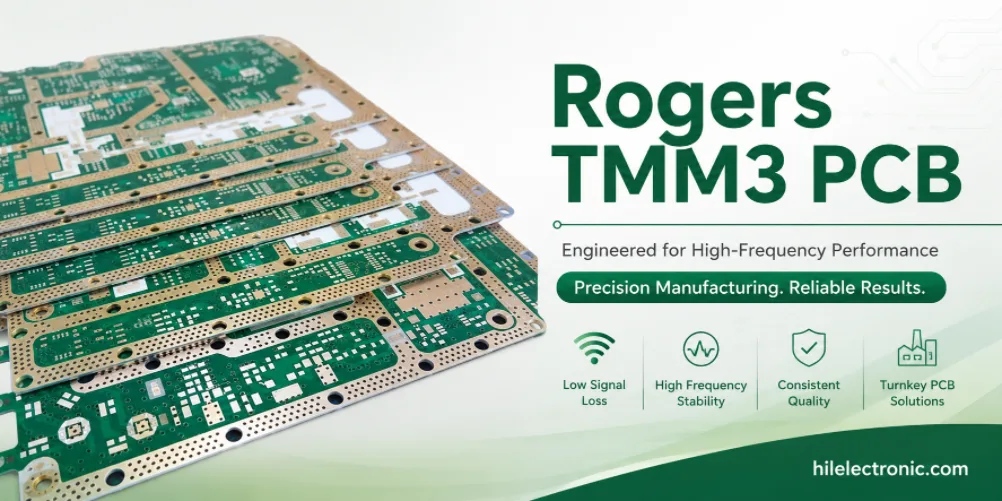
TMM3 PCB Manufacturing for RF Modules
TMM3 PCB manufacturing is most useful where the RF module...
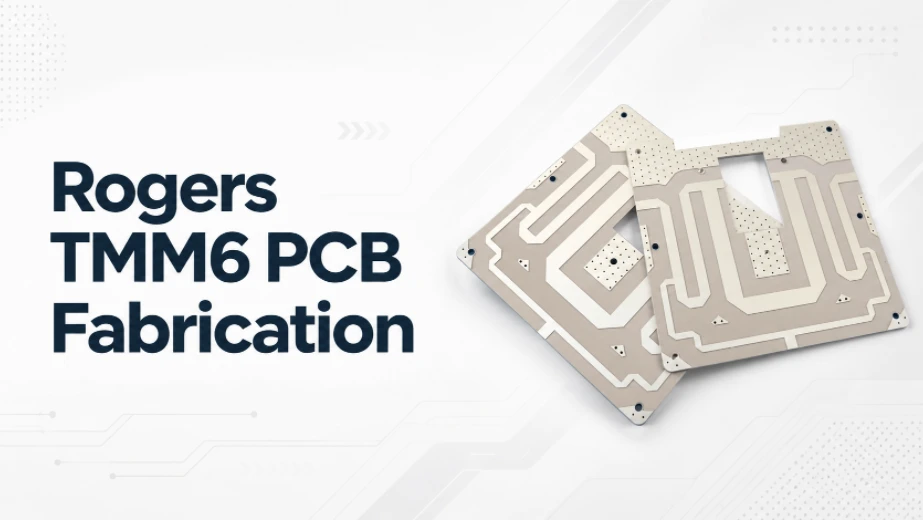
TMM6 PCB Fabrication
TMM6 fabrication is the process-control page for a mid-Dk...

TMM10i PCB Fabrication and DFM
TMM10i PCB fabrication has a stronger DFM emphasis because...
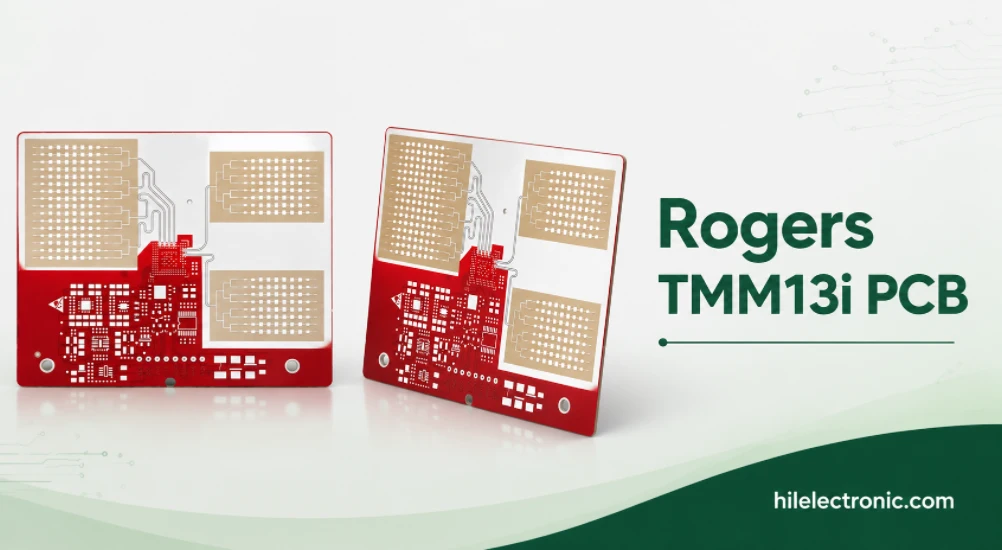
TMM13i PCB Manufacturing
TMM13i PCB manufacturing is aimed at ultra-compact RF...
How to get a quote for PCBs
Let us run DFM/DFA analysis for you and get back to you with a report.
You can upload your files securely through our website.
We require the following information in order to give you a quote:
-
- Gerber, ODB++, or .pcb, spec.
- BOM list if you require assembly
- Quantity
- Turn time