
PCB Potting Services: Compounds, Process, and Design Rules
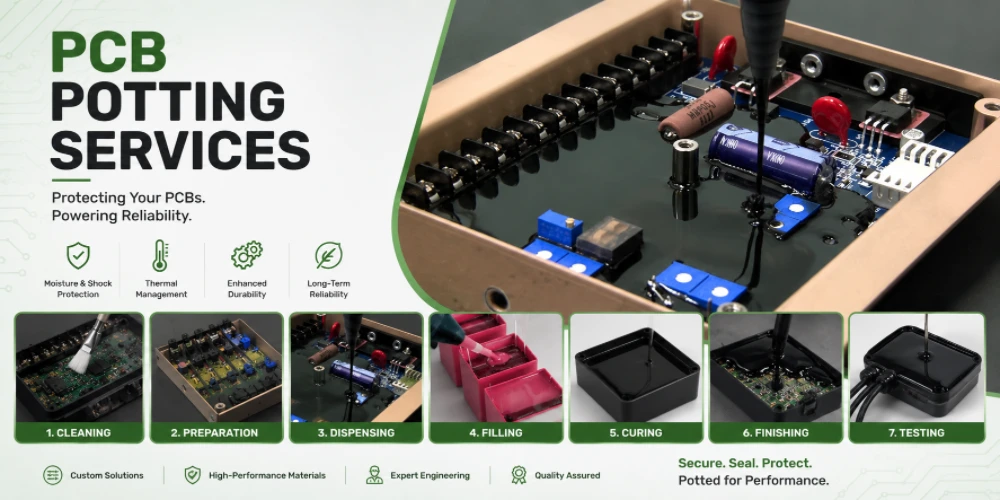
Figure 1. PCB potting services image for Highleap Electronics PCB manufacturing and assembly review.
PCB potting encases an assembled board (or a connector or module) in a solid block of resin, sealing it completely against moisture, vibration, chemicals, and tampering. It is the most rugged form of electronics protection — far tougher than a thin coating — but it adds weight, cost, and makes the board unrepairable, so it is used where the environment demands it. This guide explains what potting is, how it differs from conformal coating, the common resins and their trade-offs, and how Highleap Electronics provides potting as part of assembly.
1. What is PCB potting and what does it protect against?
PCB potting is the process of filling an enclosure or mold around an assembled board with a liquid resin that cures into a solid mass, fully encapsulating the electronics. It protects against moisture and water ingress, mechanical shock and vibration, dust, aggressive chemicals, thermal cycling, and reverse-engineering or tampering — a far more complete seal than a surface coating because the components are embedded in solid material rather than merely covered.
That total encapsulation is why potting is chosen for the harshest applications: automotive and industrial modules, outdoor and marine electronics, power supplies, and anything subjected to constant vibration or submersion. The same goal — keeping the environment out — also drives a fully waterproof PCB design, of which potting is often the decisive step. The trade-offs are weight, added cost, some thermal considerations, and the fact that a potted board generally cannot be repaired, which is why potting is reserved for products that genuinely need it.
2. PCB potting vs conformal coating: which do you need?
Choose conformal coating for general humidity and contamination protection at low weight and cost, and potting when the board faces water immersion, heavy vibration, or aggressive chemicals and needs maximum ruggedness. The two protect against overlapping threats but differ enormously in degree:
| Conformal coating | Potting | |
|---|---|---|
| Coverage | Thin film over the surface | Solid block encasing the board |
| Protection level | Humidity, dust, light contamination | Immersion, vibration, chemicals, tamper |
| Weight & cost | Low | Higher |
| Repairable? | Yes, with effort | No |
For most indoor and consumer electronics, a conformal coating is the right, economical level of protection. Potting earns its weight and cost only when the application is genuinely harsh — submersion, constant shock, chemical exposure, or a need to hide the circuit. A useful rule: if a thin film would survive the environment, coat it; if the board must be sealed in solid material to survive, pot it.
3. Potting compounds: epoxy, polyurethane, and silicone
The three main potting compounds are epoxy (hardest and most chemical- and tamper-resistant), polyurethane (tough but more flexible, good for vibration), and silicone (soft, flexible, and best for wide temperature ranges and thermal stress). The resin choice is a balance of hardness, flexibility, temperature range, and thermal behavior:
- Epoxy cures hard and bonds strongly, giving the best chemical resistance and the strongest barrier against tampering — but its rigidity transmits thermal stress, so it suits stable-temperature applications.
- Polyurethane is tough yet more elastic than epoxy, absorbing vibration and mechanical shock well, which makes it a common choice for moving or rugged equipment.
- Silicone stays soft and flexible across very wide temperatures, relieving thermal-expansion stress on components, and is favored for high-temperature or thermally cycled assemblies.
Because the resin is built directly onto the assembly, it is closely related to the PCB epoxy resin materials used in encapsulation generally, and the right one depends on the operating temperature, the mechanical environment, and whether heat dissipation through the potting matters for your board.
4. How to design a board for potting
Design a board for potting by accounting for the resin’s weight and thermal expansion, avoiding trapped air pockets, protecting connectors and adjustable parts that must stay accessible, and managing heat from power components embedded in the resin. Potting changes the mechanical and thermal behavior of the assembly, so it should be planned into the design rather than added blindly. Key considerations:
- Thermal expansion stress. A rigid resin expanding and contracting can stress solder joints and components, so component placement and resin choice must suit the temperature range.
- Air entrapment. Tall parts and tight gaps can trap air voids during pouring; layout and degassing (often vacuum potting) prevent voids that weaken the seal.
- Keep-out areas. Connectors, test points, and adjustable components that must remain usable need masking or to sit outside the potted region.
- Heat dissipation. Power parts embedded in resin lose airflow cooling, so the resin’s thermal conductivity and the board’s thermal design must handle it.
These are exactly the kinds of issues a manufacturing review surfaces early, the same way a pre-build manufacturability review catches assembly risks before they reach production — far cheaper to address in design than after a board is sealed in resin.
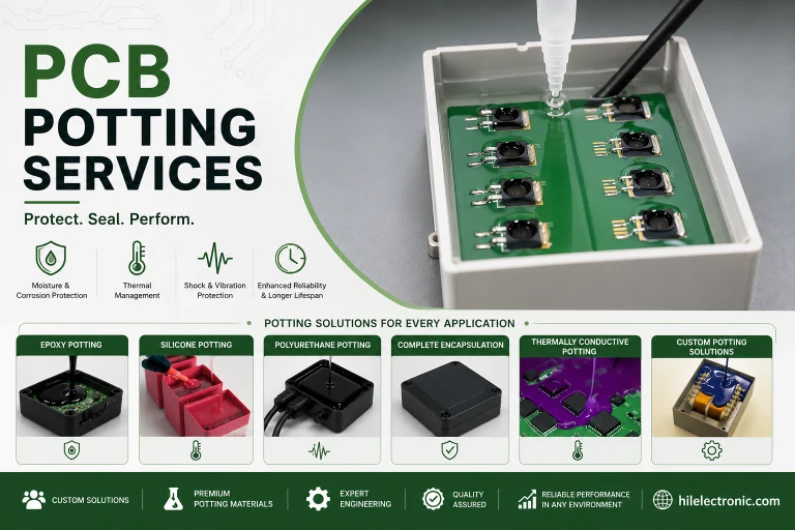
Figure 2. Manufacturing details for PCB potting services should be checked before quotation and production.
5. The PCB potting process step by step
The potting process runs in five steps: prepare and mask the board, mix the two-part resin to the correct ratio, dispense it into the enclosure or mold, remove trapped air by vacuum degassing, then cure it to a solid. Each step has a failure mode that determines whether the finished encapsulation actually protects the board, which is why potting is a controlled process rather than simply pouring resin:
- Prepare and mask. The board is cleaned so the resin bonds well, and any connectors, test points, or adjustable parts that must stay accessible are masked off before potting.
- Mix to ratio. Most potting compounds are two-part systems that must be mixed in an exact ratio and thoroughly blended; an off-ratio or poorly mixed batch may never fully cure or may cure with weak spots.
- Dispense. The resin is poured or pumped into the enclosure or mold around the board, filling the volume without disturbing components.
- Vacuum degas. The assembly is placed under vacuum to pull trapped air out of the liquid resin and out from under low-standoff parts, since air voids weaken the seal and create thermal and moisture-ingress paths.
- Cure. The resin hardens — at room temperature or with heat depending on the compound — forming the final solid block. Cure schedule affects the resin’s mechanical and thermal properties.
Vacuum degassing is the step most often underestimated: without it, air pockets trapped during the pour leave voids that compromise the very protection potting is meant to provide. The resin chosen for these steps is closely related to the epoxy resin systems used in encapsulation, and for products where full immersion is the goal, the process is a core part of building a waterproof PCB.
6. How Highleap pots and protects your assemblies
Highleap provides potting and encapsulation as part of assembly, selecting the resin and process to match your environment and protecting the areas that must stay accessible. Through PCB encapsulation, boards are sealed with the appropriate epoxy, polyurethane, or silicone compound, with attention to voids, thermal stress, and connector keep-outs.
Because potting is the final protective step on top of a built board, Highleap delivers it within turnkey assembly — so a board is fabricated, populated, tested, and then potted as one coordinated flow, and lighter-duty products can instead receive conformal coating where that is the right level. When you request a quote, describe the operating environment (immersion, vibration, temperature range, chemical exposure), which areas must stay accessible, and any heat-dissipation needs so the right compound and process are chosen.
7. PCB potting FAQ
How much does PCB potting cost?
Potting adds cost from the resin material, the labor and equipment for mixing, dispensing, and vacuum degassing, and the cure time, so per-unit cost rises with board size and resin volume. It is most economical when designed into the assembly and run in batches rather than added as a one-off afterthought.
Is potting the same as encapsulation?
The terms are used interchangeably in most electronics work — both mean encasing a board in cured resin. Strictly, “potting” implies pouring resin into a housing that stays on the product, while “encapsulation” can mean a molded resin body, but the process and materials are the same.
Can potting compound be removed for repair?
Rigid epoxy potting is effectively permanent and cannot be removed without destroying the board; softer silicone and some polyurethane compounds can sometimes be cut or dug away for limited rework, but potting is generally chosen for products that will not be repaired.
Does potting cause components to overheat?
It can, because embedding parts in resin removes airflow cooling. The fix is to use a thermally conductive potting compound or design heat paths to the housing, so power components shed heat through the resin rather than building it up internally.
What IP rating can a potted PCB achieve?
A correctly potted board with sealed cable entries can reach high ingress-protection levels including full dust-tight and submersion ratings, which is why potting is common for outdoor, marine, and buried electronics. The achieved rating depends on the housing, the seal at connectors, and void-free potting.
How long does potting take to cure?
Cure time depends on the compound and method, ranging from a few hours for heat-cured epoxies to a day or more for some room-temperature systems. The cure schedule affects the resin’s final hardness and thermal behavior, so it is matched to the application rather than rushed.

Recommended Posts

Isola Astra MT77 PCB Manufacturing
Figure 1. Isola Astra MT77 PCB ManufacturingIsola Astra...

Nelco N4000-13 PCB Material and Manufacturing Guide | Highleap Electronics
Figure 1. Nelco N4000-13 PCBNelco N4000-13 PCB is a...

Copper Clad Laminate: Complete Material Selection Guide for PCB Engineers
Every electrical property that matters in a printed...

Inside a China Ceramic PCB Factory: Process Control Across Power/LED/RF/Medical
Table of Contents Inside a China Ceramic PCB Factory: How...
How to get a quote for PCBs
Let’s run DFM/DFA analysis for you and get back to you with a report. You can upload your files securely through our website. We require the following information in order to give you a quote:
-
- Gerber, ODB++, or .pcb, spec.
- BOM list if you require assembly
- Quantity
- Turn time
For PCBA services, please provide your BOM (Bill of Materials) and any specific assembly instructions. We also offer DFM/DFA analysis to optimize your designs for manufacturability and assembly, ensuring a smooth production process.