
Solar LED Street Light PCB: Charge Controllers, BMS & Light Engines
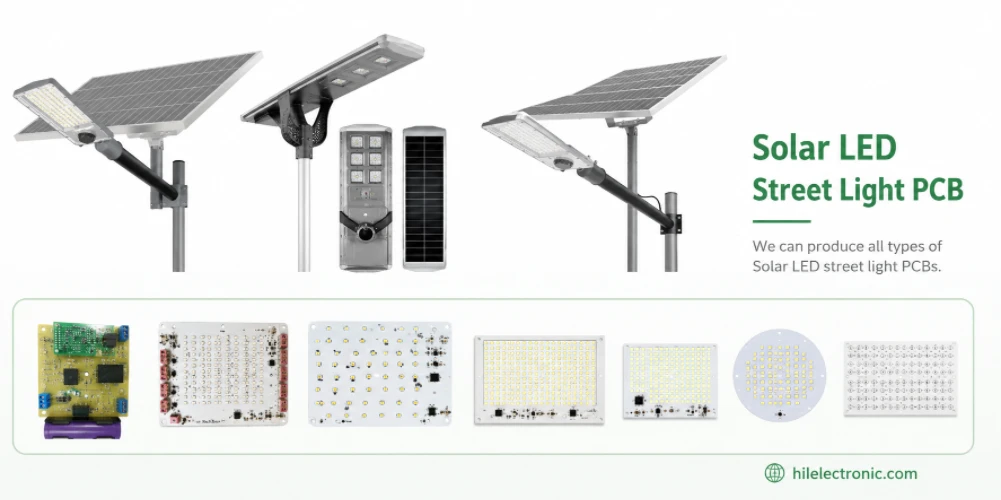
Figure 1. Solar LED street light PCB product architecture for off-grid roadway lighting.
Where a mains street light needs only a driver, a solar street light needs an entire energy-management system packed into the pole head or the panel frame. During the day the panel charges a battery through a charge controller; at night a battery management system and a DC driver feed the LED load on a timed or sensor-driven profile. Every one of those functions is a PCB, and the reliability of the whole product depends on how well those boards are built and protected against the outdoor environment.
Highleap Electronics is a full-service PCB manufacturing and PCB assembly factory, and solar street-light electronics are one of the lighting programs we routinely build under our one-stop service. We fabricate every board in the solar lighting stack, assemble them on our SMT lines, and deliver tested electronics ready to drop into your housing. If you want the broader energy-system background first, our guide to solar-powered embedded systems is a good companion to this page; otherwise the sections below walk through each board.
The thing to understand about solar street lighting is that the luminaire is the easy part — the hard part is the energy system that keeps it running through the night and through bad weather, all year. That system is a chain of boards, and a weakness in any link shows up as a light that goes dark before dawn in winter. The sections below treat the electronics as the integrated energy system they really are, which is the only way to build solar lighting that performs reliably in the field.
1. Solar street-light configurations we support
Solar roadway lighting comes in several architectures, and the board set changes with each. We build electronics for all of them:
- Split-type solar street lights — separate panel, separate battery box, and a pole-mounted luminaire. The controller and BMS usually live in the battery box; the LED engine and DC driver sit in the luminaire head.
- All-in-one (integrated) solar street lights — panel, lithium battery, controller, sensor, and LED engine in a single slim housing. These demand compact, highly integrated boards — often the controller, BMS, driver, and light engine combined; see the integration approach below.
- Semi-integrated (all-in-two) systems — panel separate, everything else integrated; a popular balance of efficiency and easy install.
- Solar garden and pathway lights — lower-power cousins using the same controller-plus-driver logic at smaller scale.
- Hybrid solar-plus-mains street lights — solar primary with grid backup; these add an AC input stage to the DC architecture.
- Smart solar street lights — adding motion sensing, remote monitoring, or wireless mesh on a dedicated control board.
The common thread is off-grid power discipline: the system must harvest, store, and deliver energy efficiently enough to light the road every night through cloudy stretches. That starts at the charge controller.
2. The solar charge controller PCB
The charge controller is the brain of a solar street light. It draws maximum energy from the panel, charges the battery safely, and protects against over-charge, over-discharge, and reverse polarity. We build both common control topologies:
- MPPT controllers — maximum power point tracking extracts substantially more energy from the panel, especially in cold or low-light conditions; these are switching converters built on our solar charge-controller platform.
- PWM controllers — simpler and lower cost for small lights where panel and battery voltages are well matched.
- DC-DC conversion stages — buck or boost regulation between panel, battery, and load, built as DC-DC converter PCB designs.
- Power-conversion front end — for larger systems we apply our intelligent power-management PCB experience for adaptive control.
Because the controller switches current continuously, thermal and copper design matter. We build these boards with the current-carrying practices from our power-supply PCB work, and on heavy-copper stack-ups where load current is high.
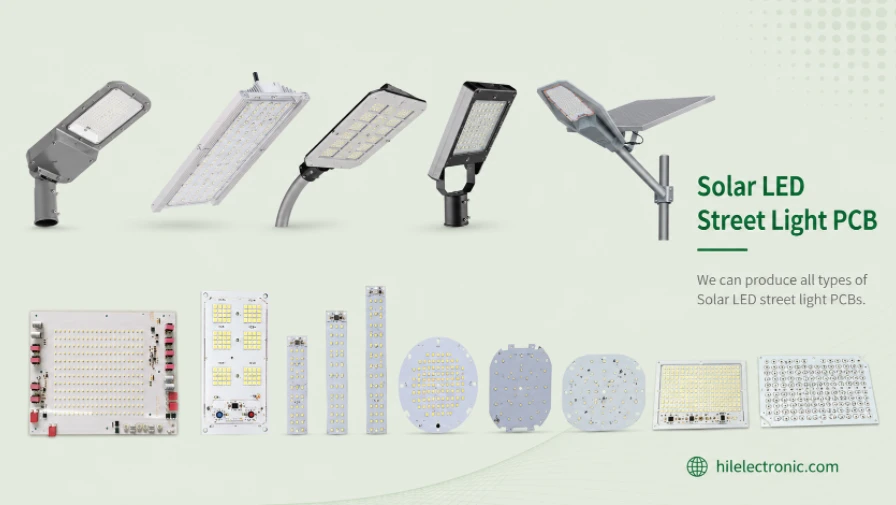
Figure 2. Solar LED street light PCB and PCBA integration for controller, driver, and light engine builds.
3. Battery management: protecting the energy store
The battery is the most expensive and most failure-prone part of a solar street light, and the battery management system (BMS) is what keeps it alive through thousands of charge cycles. Lithium chemistries in particular must be protected against over-voltage, over-current, deep discharge, and out-of-range temperature.
- Lithium BMS boards — cell balancing, protection, and state-of-charge logic on our battery-management PCB platform.
- Lithium protection boards — discrete protection for LiFePO4 and Li-ion packs; see lithium battery protection board.
- Energy-storage integration — for larger off-grid arrays we apply our energy-storage experience.
- Charge management — coordinated with the controller for full pack life and predictable run-time.
LiFePO4 is now the dominant chemistry in solar street lights for its cycle life and temperature tolerance; we build BMS boards tuned to your cell count, capacity, and balancing strategy.
4. The LED light engine and DC driver
At night the stored energy drives the LED load. Because the source is a battery, the driver is a DC-input constant-current stage rather than a mains driver — but the light engine itself is the same aluminum metal-core board used in any quality street light.
- Aluminum MCPCB light engine — built on our aluminum LED PCB line for fast heat removal.
- DC constant-current driver — battery-input driver with dimming and timing; see LED driver PCB.
- SMD or COB LEDs — SMD for even optics across the road surface, COB for compact high-flux heads.
- Thermal design — the same LED thermal design discipline applies; efficiency is doubly important off-grid because every watt of waste heat is battery energy lost.
5. All-in-one integration: four boards becoming one
The fastest-growing segment is the all-in-one solar street light, where the panel, battery, controller, sensor, and LED engine share a single slim housing. Electrically this is a packaging challenge: the controller, BMS, DC driver, and sometimes the light engine must coexist on one or two tightly integrated boards, often with the aluminum light-engine layer bonded to the heat-sink lid.
- Integrated multi-function boards — combining charge control, protection, and drive on a multilayer aluminum PCB where the LED layer also dumps heat to the case.
- Compact power management — fitting the energy chain into a slim profile with high-power-density practices.
- Motion and ambient sensing — PIR or radar sensor inputs and adaptive dimming on the same control board.
- Thermal partitioning — keeping the warm LED layer thermally separated from the temperature-sensitive battery, a key reliability detail in integrated designs.
We prototype these as a single unit so you can validate fit, thermal behavior, and run-time before committing to volume.
6. Outdoor hardening for solar electronics
Solar street-light boards face the same outdoor enemies as any roadway luminaire — plus the extra thermal stress of a battery that must not overheat. We harden the full board set:
- Conformal coating on all populated boards; see conformal coating.
- Moisture and ingress resistance using our waterproof PCB build practices, important for panel-frame-mounted electronics.
- Wide-temperature design — components and layout rated for the temperature extremes a sealed solar head reaches in direct sun.
- Reverse-polarity and surge protection on the controller input to survive field wiring errors and induced transients.
7. System sizing: matching panel, battery, and load
The hardest engineering in a solar street light is not any single board — it is balancing the whole system so the light reliably runs through the night, and through cloudy stretches, across the seasons. The electronics have to be designed around that energy balance.
- Autonomy days — the battery and controller are sized so the light keeps working for several days of poor sun; the BMS and charge logic are tuned to that target.
- Charge-rate matching — the controller’s input stage is matched to the panel’s output so charging is efficient across temperature and irradiance, which is where MPPT earns its cost.
- Discharge profiles — full-power, dimmed-midnight, and motion-triggered profiles are programmed into the driver to stretch run-time from a fixed battery.
- Temperature derating — battery capacity and charge acceptance fall in cold weather; the control logic accounts for it so winter performance holds.
We build the controller, BMS, and driver as a coordinated set so these behaviors work together rather than fighting each other.
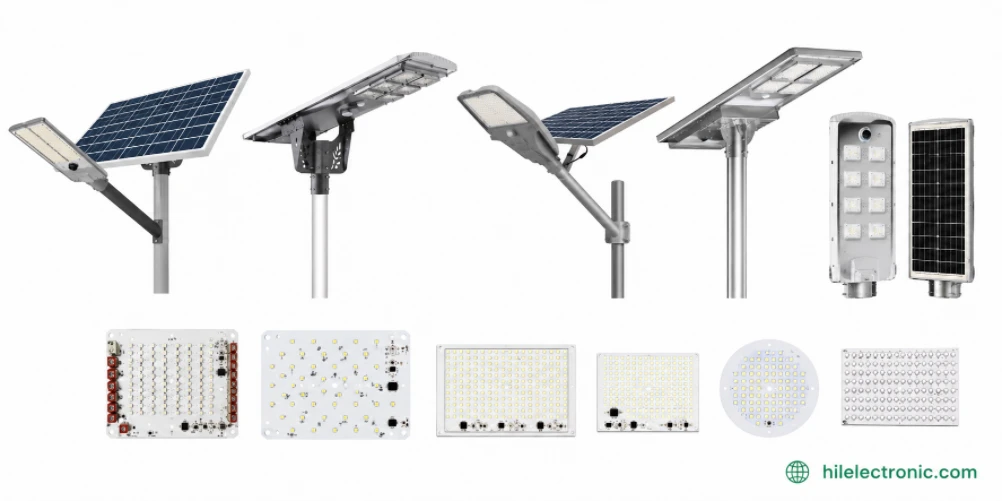
Figure 3. Solar LED street light PCB reference for controller and battery-management quotation review.
8. Smart monitoring and remote management
Large solar street-light deployments increasingly want visibility into each pole — state of charge, fault status, and usage — without sending a technician. That adds a communications layer to the electronics:
- State-of-charge and health reporting — the BMS exposes battery condition for remote monitoring.
- Fault detection — charge faults, LED faults, and tamper events flagged to a gateway.
- Wireless connectivity — cellular, LoRa, or mesh modules integrated on or alongside the control board.
- Adaptive scheduling — remotely adjustable dimming profiles for centralized fleet management.
We integrate the sensing and connectivity into the board set so a deployment can be managed at scale.
9. Battery chemistry and pack design
The battery defines a solar street light’s cost, size, lifespan, and cold-weather behavior, so the BMS and pack design are central engineering decisions:
- LiFePO4 — the dominant choice for cycle life, safety, and temperature tolerance; our BMS boards are tuned to its charge profile.
- Ternary lithium (NMC) — higher energy density for compact fixtures, with protection tuned accordingly.
- Cell balancing — keeping multi-cell packs matched for full usable capacity and long life.
- State-of-charge accuracy — so the controller can manage run-time and dimming intelligently.
- Protection coordination — over-charge, over-discharge, over-current, short-circuit, and temperature cutoffs working as one system.
We design the BMS to your cell chemistry, count, and capacity so the pack delivers its rated life in the field.
10. Developing a solar lighting product with us
Solar lighting development lives or dies on system integration, so we engineer the controller, battery management, driver, and light engine as one coordinated set rather than four separate boards. The design-for-manufacture review works through the energy balance — panel, battery, autonomy target, and lighting profile — and the thermal partitioning that keeps the battery healthy in an integrated head. We build full-system samples so you can verify charge, discharge, run-time, and cold-weather behavior before any volume commitment, which is the only reliable way to validate an off-grid product.
Production runs under our ISO 9001 system, with the complete electronics package sourced, built, wired, and tested under one order. Building the whole energy chain together — fabrication, assembly, and integration in one factory — means the boards cooperate instead of fighting each other, which is what delivers dependable all-night performance.
11. Turnkey solar lighting electronics
As a comprehensive PCB manufacturing and assembly factory, we can deliver the complete electronics package for a solar street light, tested and ready to assemble into your housing:
- All boards fabricated and assembled — controller, BMS, driver, and light engine through our LED PCB assembly and turnkey PCB assembly services.
- Component sourcing — panels, cells, sensors, and connectors sourced or supplied by you.
- Integration and wiring — the energy chain wired and bench-tested end to end.
- Run-time and functional validation — charge, discharge, and lighting profile verified before shipment.
- One-stop program management via our one-stop PCB assembly service.
12. Solar Street Light PCB Capabilities & Specifications
The table below summarizes our fabrication and assembly capabilities for solar street-light electronics, from standard builds to advanced off-grid systems:
| Parameter | Standard | Advanced |
|---|---|---|
| Light-engine substrate | Aluminum MCPCB | Copper-core, multilayer aluminum |
| Dielectric conductivity | 1.0–2.0 W/m·K | 3.0–8.0 W/m·K |
| Controller topology | PWM | MPPT switching |
| Battery chemistry | Li-ion | LiFePO4, NMC with balancing |
| BMS protection | OV/UV/OC | + temperature, cell balancing, SOC |
| Driver | DC constant-current | + adaptive dimming, motion profiles |
| Connectivity | — | Cellular, LoRa, mesh monitoring |
| Protection | Conformal coating | Potting, IP65–IP68 |
| Workmanship | IPC Class 2 | IPC Class 3 |
| MOQ | 1 unit | Volume breaks from 50+ |
We recommend the controller, battery, and driver configuration that fits your panel wattage, climate, and autonomy target during the free DFM review.
13. How to Order — Files, MOQ & Lead Time
Ordering a solar street-light PCB from Highleap Electronics is straightforward whether you already have production files or only a specification. Every quote includes a free Design for Manufacturability (DFM) review, and our minimum order is a single unit with no prototype surcharge.
What files to send
- PCB fabrication only — Gerber RS-274X files (all copper, soldermask, and silkscreen layers), Excellon drill file, board outline on the mechanical layer, and fabrication notes covering substrate, dielectric, copper weight, surface finish, and solder-mask color.
- PCB assembly (PCBA) — the above plus a Bill of Materials with manufacturer part numbers and quantities, and a Pick-and-Place (Centroid) file for the SMT components.
- Turnkey luminaire electronics — the above plus mechanical files (STEP/DXF) for the heat sink or housing, optic details, driver or control specification, firmware if applicable, and any branding or packaging artwork. If files are missing, send what you have and our engineering team will identify the gaps during the DFM review.
MOQ and pricing
- Minimum order quantity is 1 unit for both fabrication and assembly, with no prototype penalty fee.
- Volume price breaks at 10, 50, 100, 500, and 1,000+ units.
- Turnkey light-engine and driver modules are available from low volumes; we retain your files so repeat orders skip re-quoting the engineering cost.
Lead times
- PCB fabrication — 5 to 7 business days standard; 24 to 48 hours express, subject to capacity confirmation.
- PCB assembly (PCBA) — 7 to 12 business days including component sourcing; 5 days express for an in-stock BOM.
- Turnkey modules — typically 12 to 18 business days depending on substrate, protection (coating or potting), and volume.
- All lead times are confirmed in your quote and begin from order confirmation and file approval.
Certifications and standards: ISO 9001 quality management, IPC Class 2 and Class 3 workmanship, AOI and lit functional testing on every board, with X-ray, run-time validation, and burn-in screening available. We ship to more than 40 countries with full tracking and provide compliance documentation on request. For solar LED street light PCB projects, submit Gerber files, BOM, solar charge-controller notes, battery-management requirements, and target quantities through the website quote form so Highleap Electronics can review the complete PCBA package.
14. Solar Street Light PCB — Frequently Asked Questions
What is the difference between MPPT and PWM solar charge controller boards?
A PWM controller connects the panel to the battery through a simple switch and works best when panel and battery voltages are closely matched. An MPPT controller is a switching converter that continuously finds the panel’s maximum power point and converts the excess voltage into additional charging current — harvesting meaningfully more energy, especially in cold or low-light conditions. MPPT costs more but is the better choice for larger solar street lights where every watt-hour counts.
Can you build an all-in-one integrated solar street light board?
Yes. We design and build the controller, battery management, DC driver, and aluminum LED light engine as one or two tightly integrated boards for all-in-one luminaires, including bonding the LED layer to the heat-sink lid and partitioning heat away from the battery. We prototype the full unit so you can validate fit, thermal behavior, and run-time before volume production.
Which battery chemistry do your BMS boards support?
We build battery-management and protection boards for LiFePO4, Li-ion, and ternary lithium packs, tuned to your cell count, capacity, and balancing strategy. LiFePO4 is the most common choice for solar street lights because of its cycle life and temperature tolerance, and our boards include cell balancing plus over-voltage, over-current, deep-discharge, and temperature protection.
Do the boards include reverse-polarity and surge protection?
Yes. The charge-controller input includes reverse-polarity protection to survive field wiring errors and surge protection against induced transients. Combined with conformal coating and moisture-resistant build practices, this keeps the electronics reliable through years of outdoor operation.
Are you a dedicated solar lighting manufacturer, or a general PCB factory?
We are a comprehensive PCB manufacturing and PCB assembly factory, and solar LED lighting is one of the application areas we serve under our one-stop service. That means you get the depth of a specialist — metal-core light engines, MPPT controllers, BMS boards, DC drivers, and full integration — combined with the breadth of a general electronics manufacturer that also builds power, industrial, automotive, and consumer boards. The same fabrication, SMT, coating, and test lines that build our other programs build your solar lighting electronics.

Recommended Posts
TMM4 Filter PCB Manufacturing
TMM4 filter PCB manufacturing is controlled by the...
TMM3 PCB Manufacturing for RF Modules
TMM3 PCB manufacturing is most useful where the RF module...
TMM6 PCB Fabrication
TMM6 fabrication is the process-control page for a mid-Dk...

TMM10i PCB Fabrication and DFM
TMM10i PCB fabrication has a stronger DFM emphasis because...
How to get a quote for PCBs
Let’s run DFM/DFA analysis for you and get back to you with a report. You can upload your files securely through our website. We require the following information in order to give you a quote:
-
- Gerber, ODB++, or .pcb, spec.
- BOM list if you require assembly
- Quantity
- Turn time
For PCBA services, please provide your BOM (Bill of Materials) and any specific assembly instructions. We also offer DFM/DFA analysis to optimize your designs for manufacturability and assembly, ensuring a smooth production process.