
Buying a PCB: The Complete Guide to Ordering Boards That Arrive Right

Figure 1. Buying PCBs From a Manufacturer
Last updated: May 2026 · A buyer’s roadmap from design files to delivered boards
Buying a PCB is straightforward once you understand the two decisions that shape everything — bare board or assembled, and exactly which files and specs to provide — plus the handful of factors that actually drive price and lead time. This guide walks through the whole purchase: what to decide first, what files to send, what really moves the cost and schedule, how to vet a supplier, what changes when buying overseas, and the mistakes that turn a cheap quote into an expensive mess.
- First decision: bare board or assembled?
- The files and specs you must provide
- What actually drives PCB price
- What drives PCB lead time
- How to choose a PCB supplier
- Buying PCBs from overseas: shipping and compliance
- The costly mistakes PCB buyers make
- Ordering with a free DFM review
- Frequently asked questions
First decision: bare board or assembled?
This fork determines your whole order, the files you need, and the price you’ll pay. Decide it before you do anything else, and state it clearly when requesting a quote — because a quote for a bare board and a quote for a fully assembled board are completely different things.
Bare PCB
This is just the fabricated board with no components on it. You — or someone else — solder the parts on later. It’s the cheapest option, and you supply only fabrication files. Bare boards suit anyone who assembles in-house, needs only the board itself, or wants to source and place components separately.
Assembled PCB (PCBA)
This is the board with components soldered on, ready to use. You supply the fabrication files plus a BOM and centroid, and the supplier sources the parts and assembles the board. It’s more expensive but turnkey — you receive a finished, populated board rather than a blank one. Turnkey assembly suits anyone who doesn’t want to source parts or solder them.
Why stating this up front matters
If you ask for “a PCB quote” without specifying, you may get a bare-board price and then be surprised by the assembly cost later — or vice versa. Saying “bare board” or “fully assembled” at the first contact gets you an accurate, comparable quote and avoids confusion down the line.
The files and specs you must provide
The exact files depend on whether you want a bare board or assembly too. The table shows what each path requires.
| Item | Bare PCB | Assembly too |
|---|---|---|
| Gerber or ODB++ files | ✔ | ✔ |
| NC drill + board outline | ✔ | ✔ |
| Specs (layers, thickness, finish, color, qty) | ✔ | ✔ |
| BOM (with part numbers) | — | ✔ |
| Centroid / pick-and-place | — | ✔ |
| Assembly drawing | — | ✔ |
The fabrication files in detail
Every order needs the geometry of the board: Gerber (or the more complete ODB++ package), an NC drill file giving every hole’s size and position, and a board outline defining the mechanical shape. Together these tell the fab exactly what copper, mask, silkscreen, holes, and shape to produce. Without all three, the fab cannot build your board.
The assembly files in detail
Assembly adds three files. The BOM lists every component with part numbers, values, and quantities so parts can be sourced. The centroid (pick-and-place) file gives the X-Y position, rotation, and side for each component so the machine knows where everything goes. The assembly drawing resolves ambiguity — polarity, pin-one orientation, fiducials, and which parts to leave unpopulated.
What actually drives PCB price
A handful of factors dominate the cost. Knowing them lets you control your spend rather than being surprised by it.
The main bare-board cost drivers
- Size and quantity — small runs carry fixed tooling costs, so per-unit price drops sharply with volume; a single board carries the full setup cost.
- Layer count — 2-layer is cheapest; cost climbs with 4, 6, 8+ layers as each added layer means more processing.
- Surface finish — HASL is cheapest; ENIG costs more but is flatter and better for fine-pitch parts.
- Special requirements — controlled impedance, heavy copper, unusual thickness, tight tolerances, and exotic materials all add cost.
What dominates assembled-board cost
For assembled boards, component cost and sourcing usually dominate the bill — often more than the board and labor combined. This is especially true when parts are scarce, on long lead times, or when you require specific manufacturers rather than accepting equivalents. The board itself may be a small fraction of an assembled board’s total cost.
How to keep costs down
Use standard layer counts and finishes, avoid unnecessary tight tolerances, choose standard lead times, and order in sensible batches rather than tiny repeated runs that each pay the full tooling cost. The biggest lever is usually quantity — consolidating orders spreads fixed costs across more boards.
What drives PCB lead time
Lead time is not a single number; it stacks up across distinct phases. Understanding where the time goes lets you plan and, where needed, pay to compress it.
The phases that stack up
A board’s schedule runs through engineering/DFM review, material procurement, fabrication, assembly, test, and shipping. Standard fabrication is cheaper; rush jobs cost a premium but compress the fab phase. Asking your supplier to break the schedule into these phases tells you exactly where the time is spent and which phases you can pay to shorten.
Why components often dominate
For assembled boards, component lead times frequently dominate the entire schedule — a single long-lead part can hold up the whole order regardless of how fast the board is fabricated. Identifying long-lead parts early, and ordering them ahead, is often the single biggest schedule lever for a PCBA.
Don’t forget shipping
Plan freight separately, because it creates very different schedules. Prototype air freight is fast but costly; volume ocean freight is cheap but slow, adding weeks. Building the right freight choice into your plan from the start avoids a finished board sitting in a warehouse waiting on a shipping decision.
How to choose a PCB supplier
Beyond price, several factors separate a supplier that delivers a correct board from one that delivers a cheap headache.
What to weigh
- DFM check before building — catches errors cheaply, before they become scrapped boards. A supplier that reviews your files first saves you from expensive mistakes.
- Capability match — confirm they can do your minimum trace/space, layer count, finishes, and board size. A supplier outside your spec range is no bargain.
- Communication and revision control — clear technical dialogue and disciplined version control prevent the wrong revision being built.
- Inspection and certifications — IPC class, RoHS, AOI/X-ray, and test reports show they can verify quality, not just hope for it.
- Logistics — for overseas suppliers, how they handle shipping, Incoterms, and customs.
The cheapest quote isn’t the cheapest board
The cheapest quote is no bargain if the board comes back wrong — you pay again in respins, delays, and wasted parts. Weigh the supplier’s ability to deliver a correct board the first time against the headline price. A slightly higher quote from a supplier who runs DFM and inspects properly is usually cheaper overall.
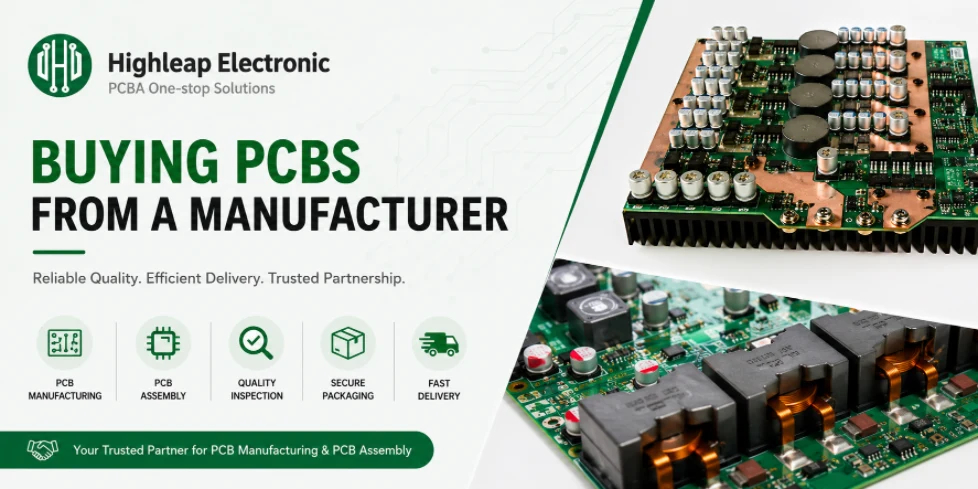
Figure 2. buying PCB manufacturing checklist
Buying PCBs from overseas: shipping and compliance
China remains a practical source because regions like Shenzhen concentrate fabrication, assembly, component sourcing, and logistics in one place — but international orders add a few things to clarify before production.
What to agree before production
- Incoterms — EXW, FOB, CIF, DAP, or DDP — agreed up front so you know exactly who handles and pays for each leg of shipping and customs.
- Compliance docs — RoHS, REACH, CE, UL, as your target market requires; arrange these before shipping, not after.
- Packaging — vacuum packing, moisture-barrier bags, and ESD trays to protect boards in transit.
- Customs — correct HS codes, and whether the shipment is classified as a bare PCB, a PCBA, or a boxed module.
Why this is worth the attention
Most overseas ordering problems are logistics and paperwork problems, not manufacturing problems. Agreeing Incoterms and compliance documentation before production starts prevents a finished, correct board from getting stuck at a border or arriving with the wrong paperwork for your market.
The costly mistakes PCB buyers make
A few recurring mistakes account for most expensive surprises. Avoiding them is mostly a matter of discipline before ordering.
- Chasing the lowest price before locking the spec — define the board fully first, then compare quotes like-for-like. Comparing different specs is comparing nothing.
- Sending only Gerbers for an assembly job — assembly also needs a BOM, centroid, and assembly drawing. Gerbers alone can’t be assembled.
- Skipping the Gerber-viewer check — open your own files in a viewer before ordering. It’s the cheapest QA there is and catches missing or mirrored layers.
- No first-article approval on a production run — approve a sample before committing to the full batch, so a single error doesn’t ruin hundreds of boards.
- Forgetting compliance — confirm RoHS/REACH/UL needs early, not after the boards have shipped.
The common thread
Every one of these mistakes shares a cause: ordering before everything is locked down. Spec, files, file check, sample approval, and compliance all belong before the production button is pushed. A few minutes of discipline up front prevents the most expensive errors.
Ordering with a free DFM review
Highleap Electronics handles bare-board fabrication and turnkey assembly, runs a free DFM review before building, and ships worldwide with the documentation your market needs — so the board you receive matches the board you intended to buy. State whether you want a bare board or full assembly, send your files, and we confirm the spec and flag any manufacturability issue before quoting.
Frequently asked questions
What files do I need to buy a PCB?
At minimum: Gerber or ODB++, an NC drill file, and a board outline. For assembly, add a BOM, centroid, and assembly drawing.
What’s the difference between PCB and PCBA?
A PCB is the bare board; a PCBA is the board with components assembled onto it. State which you want when requesting a quote.
Which surface finish should I choose?
HASL is the cheapest general-purpose option; ENIG is flatter, better for fine-pitch, and has a longer shelf life, at a higher cost.
How do I keep PCB costs down?
Use standard layer counts and finishes, avoid unnecessary tight tolerances, choose standard lead times, and order in sensible batches rather than tiny repeated runs.
Is it safe to buy PCBs from China?
Yes, with a capable supplier — look for DFM review, clear communication, revision control, inspection and certifications, and export experience.
Should I approve a sample before full production?
Yes. First-article approval on a sample before committing to the full batch prevents a single error from ruining the whole run.
Why is my assembled-board quote so much higher than the bare board?
Because component cost and sourcing usually dominate an assembled board’s price, often exceeding the board and labor combined — especially for scarce or specific parts.

Recommended Posts
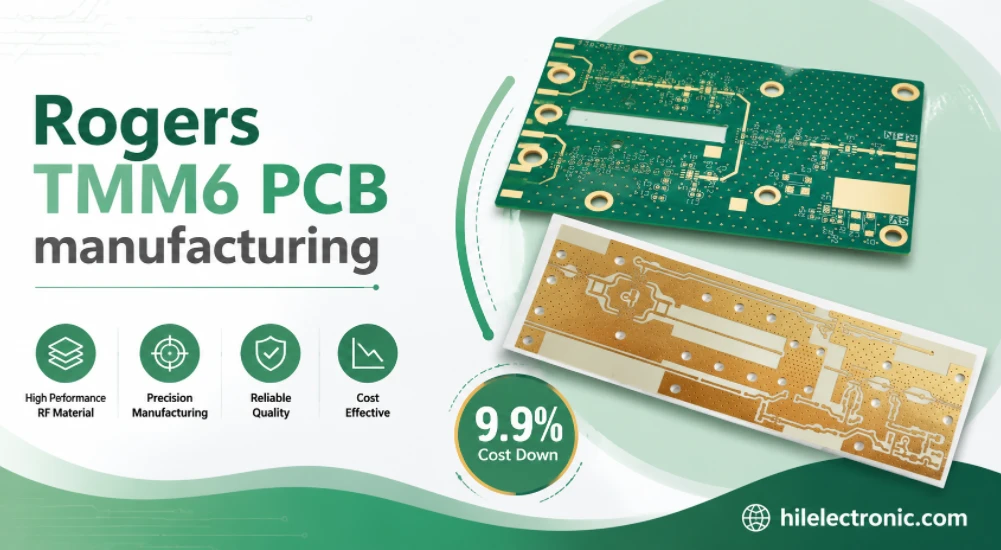
TMM6 Filter PCB Manufacturing
Table of contentsWhy Microwave Filter Designers Use...
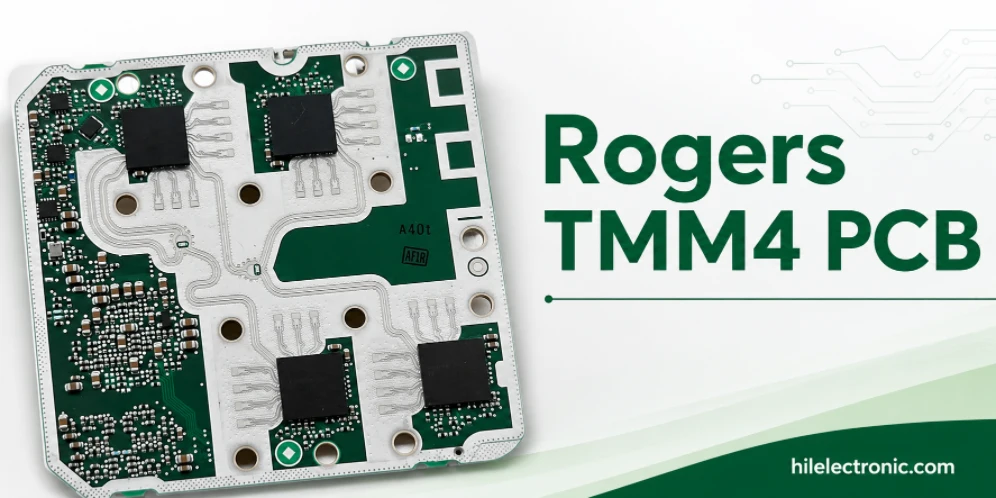
TMM4 Filter PCB Manufacturing
TMM4 filter PCB manufacturing is controlled by the...
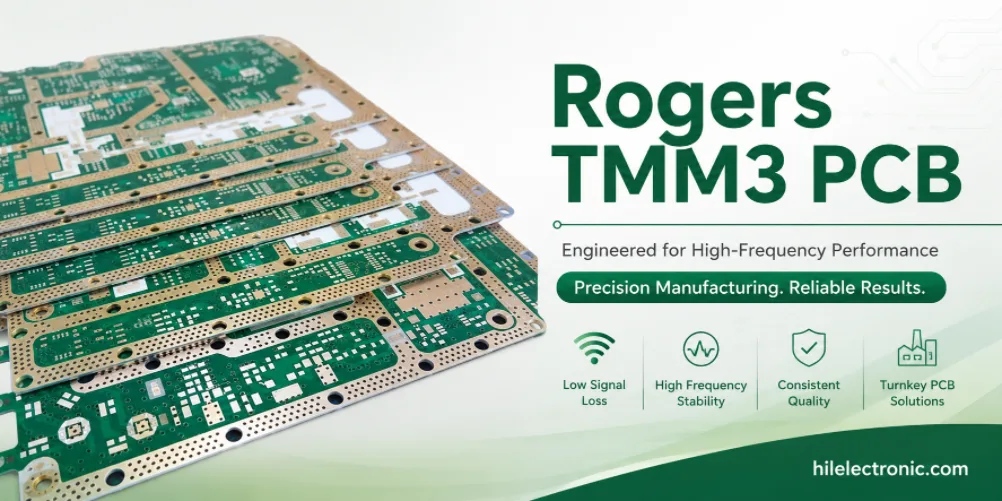
TMM3 PCB Manufacturing for RF Modules
TMM3 PCB manufacturing is most useful where the RF module...
TMM6 PCB Fabrication
TMM6 fabrication is the process-control page for a mid-Dk...
How to get a quote for PCBs
Let‘s run DFM/DFA analysis for you and get back to you with a report. You can upload your files securely through our website. We require the following information in order to give you a quote:
-
- Gerber, ODB++, or .pcb, spec.
- BOM list if you require assembly
- Quantity
- Turn time
For PCBA services, please provide your BOM (Bill of Materials) and any specific assembly instructions. We also offer DFM/DFA analysis to optimize your designs for manufacturability and assembly, ensuring a smooth production process.