
DBC Substrate Manufacturer for PCB Fabrication and PCBA

Selecting the right DBC substrate manufacturer affects thermal performance, insulation reliability, and overall power module yield. Highleap Electronics is a PCB manufacturing and PCB assembly (PCBA) factory that supports DBC-based power electronics by helping you source/coordinate qualified DBC substrates, then delivering production-ready PCB fabrication and turnkey assembly under one streamlined workflow.
Table of Contents
- Choosing a Reliable DBC Substrate Manufacturer
- How Highleap Supports DBC-Based Projects (PCB Fabrication + PCBA)
- DBC Materials and Specifications to Confirm
- Quality Assurance: Incoming DBC Checks + Assembly Quality Control
- Lead Time and Global Delivery
- Start Your RFQ (DBC Substrate + PCB + Assembly)
Engineers often search for a DBC substrate manufacturer when developing power electronics for EV/HEV, industrial drives, fast chargers, energy storage, and renewable energy systems. In real production, the DBC is only one piece of the final hardware—reliability, yield, and time-to-market are heavily influenced by how well the DBC substrate integrates with PCB fabrication and PCB assembly (PCBA).
Highleap Electronics is a PCB manufacturing and PCB assembly factory, not a direct DBC substrate manufacturer. We support DBC-based projects with DFM review, PCB fabrication, and turnkey PCBA, and when needed, we can also help coordinate sourcing with qualified DBC substrate manufacturers to simplify your supply chain. To evaluate the best fit for your project, explore our PCB fabrication services and ceramic PCB fabrication capabilities for power electronics applications.
1. Choosing a Reliable DBC Substrate Manufacturer
Not all DBC substrates are produced with the same process control or inspection standards. If you are qualifying a DBC substrate manufacturer (or want us to help coordinate sourcing), focus on the criteria below to reduce risk in later assembly stages.
1.1 Bonding Process Expertise
The DBC process requires tight control of temperature profiles, atmosphere conditions, and surface preparation. A qualified DBC substrate manufacturer should provide clear process capability, consistent quality data, and reliability test evidence. Weak control often shows up as voiding, delamination, or warpage—issues that can reduce assembly yield and module reliability.
1.2 Material Breadth for Your Application
Power electronics requirements vary widely. Confirm the supplier can support the ceramic material, thickness range, and copper options that match your thermal and electrical targets. For material guidance, see our DBC ceramic substrate resource.
1.3 Quality Systems and Traceability
For industrial and automotive programs, quality management is critical. ISO 9001 is a common baseline, and IATF 16949 is often preferred for automotive supply chains. Ask how the supplier manages incoming material verification, in-process controls, outgoing inspection, and traceability.
1.4 Engineering Support and Fast Communication
DBC projects frequently require design iterations. Strong suppliers support DFM feedback, finish selection guidance (for soldering, sintered silver, or wire bonding), and clear documentation. Fast engineering communication helps prevent delays and rework.
2. How Highleap Supports DBC-Based Projects (PCB Fabrication + PCBA)
Choosing a DBC substrate manufacturer is only one part of the supply chain. Highleap Electronics supports the rest of the build by delivering PCB manufacturing and PCB assembly services that help customers bring DBC-based designs to production.
2.1 PCB Manufacturing for Power Electronics
- Multi-layer PCB fabrication for gate drivers, control boards, and power control circuits
- Process-focused stack-up review for manufacturability and reliability
- Support for thermal management PCB options based on design requirements
- DFM review to reduce risk before mass production
2.2 PCB Assembly (PCBA) and Turnkey Manufacturing
- SMT and through-hole assembly for mixed-technology power electronics builds
- Assembly support for high-current connectors, terminals, and mechanical hardware
- Controlled soldering and inspection workflows tailored to BOM and build class
- Testing support based on customer requirements (continuity, insulation, functional test)
2.3 DBC Substrate Sourcing Coordination (Optional)
- Specification review to confirm DBC compatibility with assembly requirements
- Supply coordination with qualified DBC substrate manufacturers to simplify procurement
- Incoming verification alignment to reduce downstream assembly risk
Learn more about related ceramic solutions at China ceramic PCB manufacturing, including AMB, DPC, and thick/thin-film ceramic circuit options.
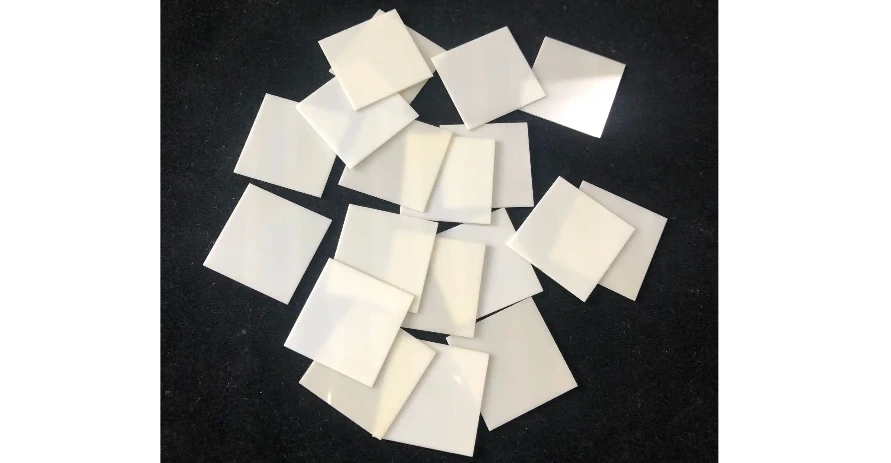
3. DBC Materials and Specifications to Confirm
When comparing a DBC substrate manufacturer, confirm key material and dimensional requirements early. These parameters directly impact heat spreading, insulation performance, and the suitability of later assembly processes.
3.1 Ceramic Materials
- Alumina (Al₂O₃): cost-effective option for many applications; commonly available in multiple thicknesses
- Aluminum Nitride (AlN): higher thermal conductivity for high power density designs
- Silicon Nitride (Si₃N₄): higher mechanical toughness for demanding thermal cycling environments
3.2 Copper Thickness and Structure
- Common copper thicknesses: 0.127mm (5 mil), 0.254mm (10 mil), 0.3mm, 0.508mm (20 mil), 0.635mm (25 mil)
- Single-sided or double-sided copper bonding depending on your electrical and thermal design
3.3 Surface Finish Options
- ENIG for stable solderability and corrosion resistance
- Nickel/gold finishes often used for wire bonding (confirm bonding requirements with your process)
- Silver plating options for sintered silver die attach applications
3.4 Dimensions, Flatness, and Tolerances
- Confirm panel size and unit size to match tooling and fixture requirements
- Flatness and edge quality directly influence printing, placement, and bonding stability
- Define tolerance targets early to prevent downstream fit or reliability issues
For more thermal board options, visit our ceramic PCB page.
4. Quality Assurance: Incoming DBC Checks + Assembly Quality Control
DBC projects need quality control across both the substrate and the assembly process. Highleap’s focus is protecting final build yield and reliability through practical inspection and controlled PCBA workflows.
4.1 Incoming Verification for DBC Substrates
- Dimensional and appearance checks to confirm shipment condition
- Basic surface and finish review to reduce soldering/bonding risk
- Traceability records aligned to production builds
4.2 In-Process Controls During Assembly
- Process checks for solder paste printing and placement accuracy
- Reflow profile control based on BOM requirements
- Inspection checkpoints for critical joints and high-current paths
4.3 Final Inspection and Test Options
- AOI and visual inspection based on design requirements
- Electrical tests such as continuity and insulation verification as specified
- Functional test support (customer-provided or co-developed where applicable)
5. Lead Time and Global Delivery
Lead time depends on DBC substrate availability, PCB complexity, BOM sourcing, and test requirements. Consolidating PCB fabrication and PCBA with one factory helps reduce scheduling risk and simplifies communication.
5.1 Typical Scheduling Factors
- DBC substrate: ceramic type, copper thickness, finish, and supplier loading
- PCB fabrication: layers, copper weight, stack-up, special processes
- PCBA: BOM availability, package complexity, inspection and testing scope
5.2 Global Shipping
- Express courier service for time-sensitive shipments
- Air freight options for larger batches
- Sea freight for volume production cost optimization
- Export documentation and customs support
5.3 Protective Packaging
- ESD-protective packaging for assemblies
- Moisture barrier packaging with desiccant when required
- Shock-absorbing outer packaging to reduce transit damage
6. Start Your RFQ (DBC Substrate + PCB + Assembly)
If you are sourcing a DBC substrate manufacturer and also need a reliable partner for PCB fabrication and PCB assembly, Highleap Electronics can quote your complete scope and help you streamline the full manufacturing workflow.
6.1 What to Include in Your RFQ
- PCB/PCBA files: Gerbers, BOM, assembly drawing, pick-and-place (if available)
- DBC substrate requirements: ceramic type, thickness, copper thickness, finish, panel/unit size
- Assembly requirements: special process notes, connectors/terminals, mechanical constraints
- Quantity: prototype, pilot, and annual forecast
- Testing: electrical test, insulation test, and functional test requirements (if any)
- Timeline: target delivery dates or key milestones
Not ready with full documentation? Send what you have—Gerbers and a preliminary BOM are enough to start. Our team can help you finalize manufacturable specifications quickly.

Recommended Posts
PCB Panelization for Volume Production: Cost and Yield
A fabrication panel that holds more boards is not...
PCB SET Delivery and Panelization: Quantities and Acceptance
A purchase order for “500 SET” looks straightforward until...
Optical Transceiver PCB Cost: Compare Equivalent Quotes
Two suppliers may quote a nominally identical six-layer...
PCB Materials Database: Laminate Grades & Properties
How to get a quote for PCBs Let‘s run DFM/DFA analysis for...
How to get a quote for PCBs
Let us run DFM/DFA analysis for you and get back to you with a report.
You can upload your files securely through our website.
We require the following information in order to give you a quote:
-
- Gerber, ODB++, or .pcb, spec.
- BOM list if you require assembly
- Quantity
- Turn time
In addition to PCB manufacturing, we offer a comprehensive range of electronic services, including PCB design, PCBA (Printed Circuit Board Assembly), and turnkey solutions. Whether you need help with prototyping, design verification, component sourcing, or mass production, we provide end-to-end support to ensure your project’s success. For PCBA services, please provide your BOM (Bill of Materials) and any specific assembly instructions. We also offer DFM/DFA analysis to optimize your designs for manufacturability and assembly, ensuring a smooth production process.