
From Drone PCB Prototype to Mass Production: A Structured Transition Framework

Introduction
Achieving a smooth transition from a drone PCB prototype to mass production requires manufacturing precision and a structured NPI process that ensures design validation, scalability, and long-term reliability. The drone market demands rapid iteration during development while maintaining strict quality standards for volume manufacturing.
A drone PCB prototype serves as the critical testing ground where circuit functionality, component placement, and structural integrity are validated before committing to production tooling and material procurement. This transition phase determines whether a design can scale efficiently while meeting cost targets and performance specifications.
From Drone PCB Prototype to Production: Fast Iteration and Design Validation
Prototype Objectives and Quick-Turn Capabilities
The drone PCB prototype phase validates electrical performance, mechanical fit, and thermal behavior under actual operating conditions. Quick-turn manufacturing with seven to ten-day lead times enables engineering teams to test multiple design iterations before finalizing the layout. This rapid feedback loop identifies issues with signal routing, power distribution, and component selection when changes require minimal resources and tooling adjustments.
Prototype PCB Assembly Requirements
Prototype PCB assembly demands flexible engineering support to accommodate component substitutions and layout modifications. SMT placement accuracy becomes critical for drone applications where compact designs incorporate high-density interconnects and fine-pitch BGAs. Functional testing during the prototype stage verifies flight controller communication, sensor integration, and power management circuits under simulated flight conditions to catch design flaws early.
Design Validation Through Engineering Samples
Engineering samples provide the data foundation for scaling decisions. Testing multiple drone PCB prototype units reveals manufacturing variations and identifies components sensitive to process tolerances. This validation stage includes environmental stress testing to confirm performance across temperature extremes and vibration profiles typical of flight operations.
Engineering Optimization Before Mass Production
DFM Analysis and Manufacturing Readiness
The transition from drone PCB prototype to production requires comprehensive Design for Manufacturability analysis. This review examines trace spacing, via structures, copper weights, and solder mask clearances to ensure the design accommodates standard manufacturing processes. Adjustments during this phase prevent yield-limiting features that only become apparent during volume production runs.
Structured NPI Process Stages
A structured NPI process guides the prototype-to-production transition through three validation gates:
- Engineering Validation Testing (EVT) – Confirms the drone PCB prototype meets functional and electrical requirements under laboratory conditions.
- Design Validation Testing (DVT) – Verifies the product performs correctly in target application environments including flight stress conditions.
- Production Validation Testing (PVT) – Demonstrates manufacturing processes can produce units consistently at target volumes with acceptable yield rates.
Signal Integrity and Thermal Management
High-speed communication interfaces and power electronics in drone applications require careful attention to signal integrity. Pre-production optimization includes impedance control verification, return path analysis, and thermal simulation to prevent issues appearing under sustained operating conditions. These refinements ensure the production design maintains performance margins across component tolerances and environmental variations.

Assembled PCB in Drone Solutions
Scaling Drone PCB Prototype to Mass Production: Process Stability and Yield Control
Manufacturing Consistency and Process Control
Mass production PCB manufacturing depends on process stability to deliver consistent electrical and mechanical characteristics across production lots. Statistical Process Control monitors critical parameters including solder paste deposition volume, reflow profile temperatures, and placement accuracy. This data-driven approach identifies process drift before defects reach significant levels that impact delivery schedules.
Automated Inspection Systems
Quality control during mass production relies on automated inspection to maintain throughput while catching defects:
- Automated Optical Inspection (AOI) – Examines solder joint quality, component presence, polarity, and placement accuracy after reflow.
- X-ray Inspection – Verifies BGA ball connections, QFN pad wetting, and hidden solder joints that visual inspection cannot assess.
- In-Circuit Testing (ICT) – Validates component values, opens, shorts, and basic circuit functionality before power-up.
Yield Optimization and Traceability
Production yield optimization requires systematic defect analysis to identify root causes and implement corrective actions. Traceability systems track material lots, process parameters, and test results for each production unit. This capability enables rapid response when field issues emerge and provides the data foundation for continuous improvement in drone PCB manufacturing operations.
Supply Chain and Component Readiness
BOM Evaluation During Prototype Phase
Component sourcing strategy significantly impacts production scalability and cost structure. BOM evaluation during the drone PCB prototype phase identifies parts with long lead times exceeding twelve weeks, single-source risks, or potential obsolescence issues. This early analysis allows design modifications before production commitments lock in component selections.
Supply Chain Stability Planning
Mass production requires stable component supply aligned with production schedules. Establishing relationships with authorized distributors and component manufacturers ensures reliable material flow and access to technical support when qualification issues arise. Volume pricing agreements provide cost predictability for production planning and protect against market price fluctuations during allocation periods.
Alternative Component Qualification
BOM management includes maintaining qualified alternative components for critical parts vulnerable to supply disruptions. Pre-qualified alternatives enable rapid response to allocation situations without requiring full design revalidation cycles. This preparation maintains production continuity despite supply chain volatility common in semiconductor and passive component markets.

One-Stop Manufacturing Services for Drones in China
Quality and Reliability Validation for Drone PCB Applications
Environmental Testing Requirements
Drone circuit boards operate in demanding conditions requiring validation beyond standard commercial temperature ranges. Testing protocols include thermal cycling from -40°C to +85°C, random vibration testing per MIL-STD-810, humidity exposure at 85% RH, and altitude simulation. These tests identify weaknesses in solder joints, conformal coating adhesion, and connector reliability before field deployment.
Electrical Testing Strategy
In-Circuit Testing verifies component values and circuit continuity, catching assembly errors before power-up. Flying probe testing offers flexible fixture-less testing for drone PCB prototype and low-volume production runs. Functional testing validates the assembled board performs correctly with actual flight controller firmware and sensor inputs under realistic operating scenarios including motor load simulation.
Reliability Validation Methods
Long-term reliability validation uses accelerated stress testing to predict field performance over the product lifecycle. These tests expose latent defects through thermal cycling, power cycling, and operational life testing. Reliability data supports warranty predictions and identifies opportunities for design improvements in future product iterations based on failure mode analysis.
Conclusion
The transition from drone PCB prototype to mass production succeeds when structured engineering processes validate design readiness before scaling manufacturing volumes. This approach requires comprehensive DFM analysis, systematic NPI validation stages, stable supply chain management, and rigorous quality control systems.
Manufacturing consistency depends on process stability, automated inspection, and traceability systems that enable continuous improvement. Environmental and reliability testing ensures drone circuit boards withstand operational stresses throughout their service life. Organizations that invest in thorough prototype validation and pre-production optimization achieve faster production ramps, higher yields, and better field reliability outcomes.

Recommended Posts
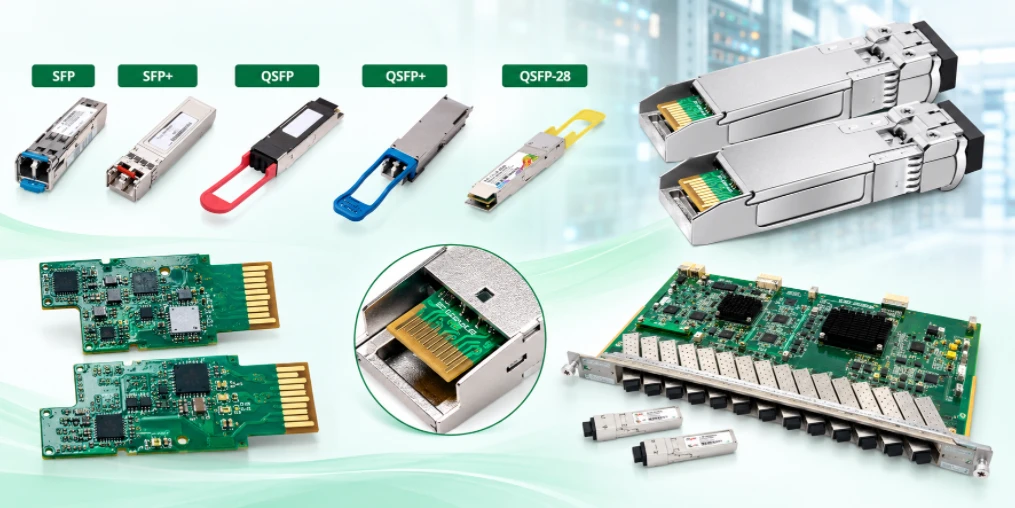
Optical Transceiver PCB Assembly Services in China
Highleap Electronics provides optical transceiver PCB...
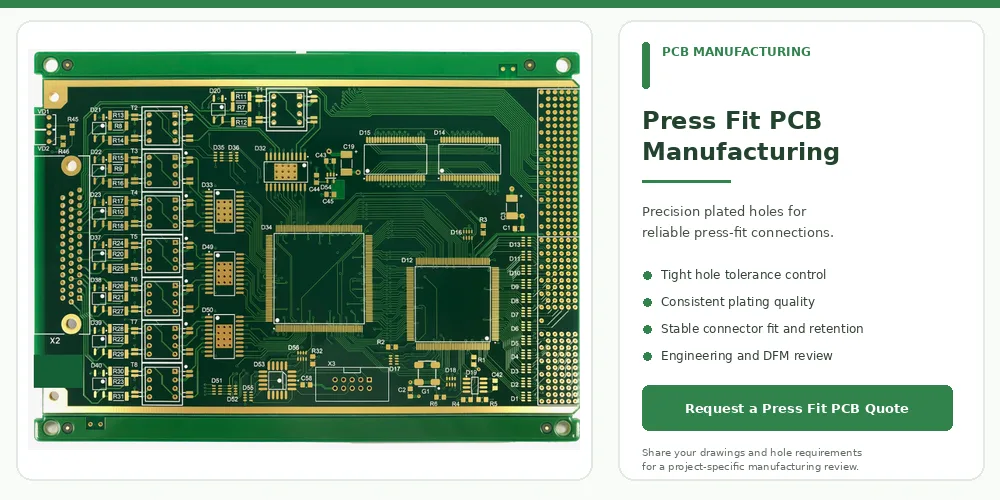
Precision Press Fit PCB Manufacturing with Tight Tolerances
Press-fit PCB manufacturing requires close coordination...
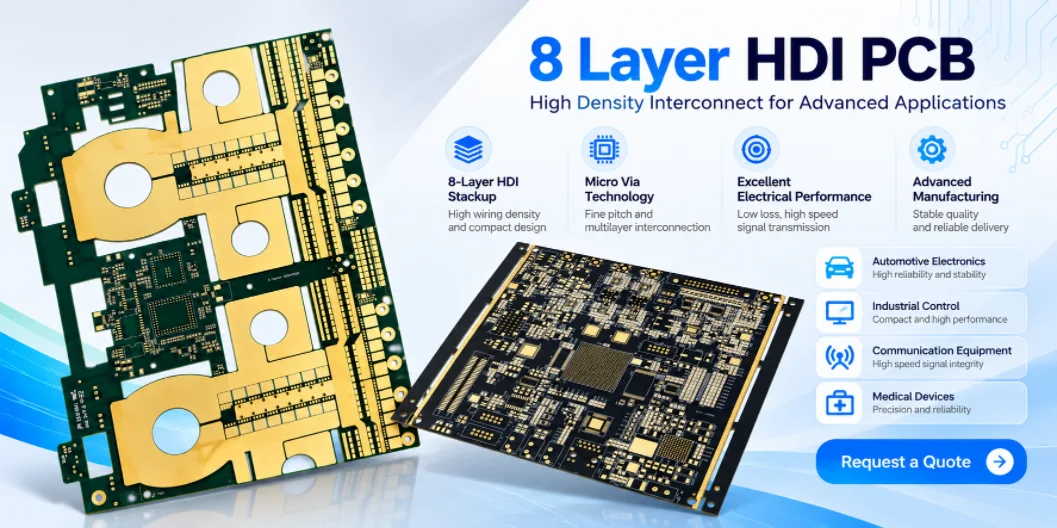
8 Layer HDI PCB Manufacturer in China
Highleap Electronics provides 8 layer HDI PCB...
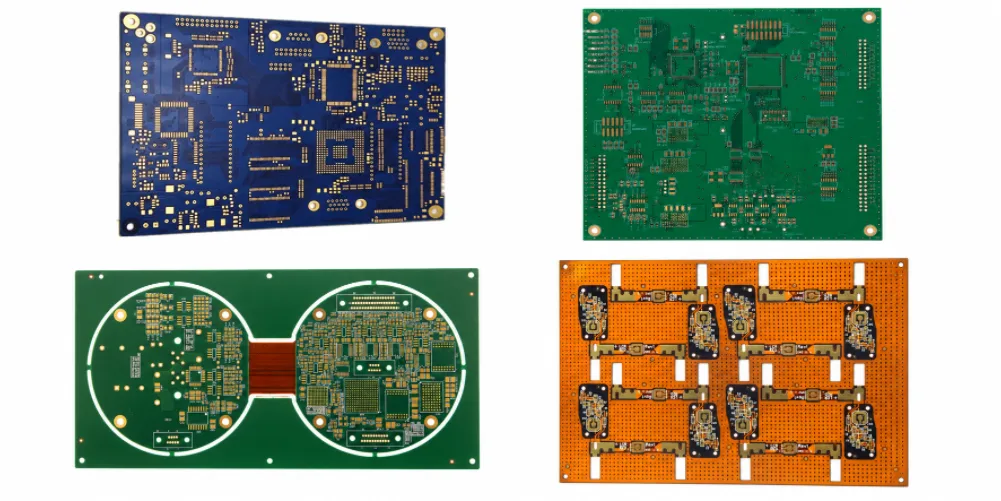
8 Layer Rigid-Flex PCB Manufacturing and Cost Guide
An 8 layer rigid-flex PCB combines multilayer rigid...
How to get a quote for PCBs
Let‘s run DFM/DFA analysis for you and get back to you with a report. You can upload your files securely through our website. We require the following information in order to give you a quote:
-
- Gerber, ODB++, or .pcb, spec.
- BOM list if you require assembly
- Quantity
- Turn time
In addition to PCB manufacturing, we offer a comprehensive range of electronic services, including PCB design, PCBA, and turnkey solutions. Whether you need help with prototyping, design verification, component sourcing, or mass production, we provide end-to-end support to ensure your project’s success.
For PCBA services, please provide your BOM (Bill of Materials) and any specific assembly instructions. We also offer DFM/DFA analysis to optimize your designs for manufacturability and assembly, ensuring a smooth production process.