
Which Metal Has the Lowest Thermal Conductivity? A Complete, Sourced Answer
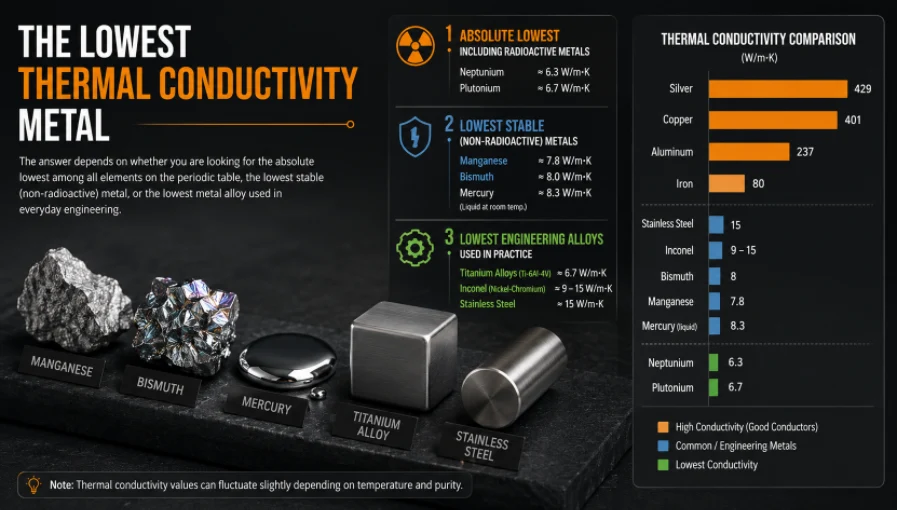
Figure 1. lowest thermal conductivity metal
Last updated: May 2026 · Accurate values and the physics behind them
“Which metal has the lowest thermal conductivity?” sounds like it should have one tidy answer, but the honest reply depends on what you mean — any pure metal, any metal you can practically build with, or the metal people wrongly assume is the worst. This guide gives the precise answer three ways with sourced values, ranks the common metals low to high, explains the physics of why some metals barely conduct heat, debunks a stubborn myth about lead, and shows where low-conductivity metals actually matter in electronics and hardware design.
- The direct answer to “lowest thermal conductivity metal,” three ways
- Thermal conductivity of metals, ranked low to high
- Why some metals conduct heat so poorly
- The lead myth: why lead is not the lowest
- Why alloys conduct less heat than pure metals
- Where low-conductivity metals are deliberately used
- The flip side: moving heat on a PCB
- Choosing a metal by thermal goal
- Frequently asked questions
The direct answer to “lowest thermal conductivity metal,” three ways
Because “lowest” means different things to different people, here is the honest answer split by what you are really asking.
Lowest of any pure metal
Manganese, at about 7.8 W/(m·K), has the lowest thermal conductivity of any pure, non-radioactive metal. If radioactive metals are included, plutonium and neptunium dip even lower — around 6 W/(m·K) — but they are not materials anyone specifies for ordinary engineering, so they belong in a footnote rather than the answer.
Lowest metal you can actually build with
Bismuth, at roughly 8 W/(m·K), is the lowest-conductivity metal most engineers ever actually handle, since manganese is rarely used as a structural metal on its own. Among everyday structural metals you might genuinely specify for a part, stainless steel (~15–17) and titanium (~17–22) are the lowest you will commonly reach for.
The metal people guess wrong
Many assume lead is the worst heat conductor among metals. It is not — at about 35 W/(m·K) it conducts several times better than manganese, bismuth, stainless steel, or titanium. This misconception is common enough to deserve its own section below.
Thermal conductivity of metals, ranked low to high
Approximate values at room temperature (~20 °C), in watts per meter-kelvin. Alloy figures vary by grade, so treat them as representative rather than exact.
| Metal | W/(m·K) | Note |
|---|---|---|
| Plutonium / Neptunium | ~6 | Radioactive; not practical |
| Manganese | ~7.8 | Lowest of any pure metal |
| Bismuth | ~8.0 | Lowest commonly-handled metal |
| Stainless steel (304/316) | ~15–17 | Lowest common structural metal |
| Titanium | ~17–22 | Strong + low conductivity |
| Lead | ~35 | Often wrongly called “lowest” |
| Iron | ~80 | Reference — pure, unalloyed |
| Aluminum | ~237 | Common heat-spreader metal |
| Copper | ~400 | Reference high conductor |
| Silver | ~430 | Highest of any pure metal |
How to read this spread
The striking feature is the range: silver conducts roughly 55 times better than manganese. Metals are generally good heat conductors compared with plastics or ceramics, but among themselves they vary enormously. The “low conductivity” metals at the top of this table still conduct heat far better than wood or glass — “low” here is strictly relative to other metals.
Why some metals conduct heat so poorly
In metals, heat is carried mainly by free electrons — the same mobile electrons that carry electric current. This is why good electrical conductors like silver and copper are also excellent heat conductors: the two properties share a mechanism, a relationship formalized by the Wiedemann-Franz law.
Electron scattering is the key
Metals such as manganese and bismuth have electronic structures and crystal arrangements that impede the free flow of electrons. When electrons scatter more frequently — bouncing off lattice irregularities or each other — both electrical and thermal conductivity drop together. The more obstructed the electron highway, the worse the metal is at moving both charge and heat.
Bismuth as a special case
Bismuth in particular is a semimetal with unusual electronic properties — very few charge carriers compared with a normal metal, and an electronic structure that strongly impedes their flow. That is why it sits so low on the table despite being a heavy, dense, unmistakably metallic element. It demonstrates that density and “metallic feel” tell you nothing reliable about heat conduction; the electronic structure is what matters.
The counterintuitive result
The upshot is that a metal can be dense and shiny and obviously metallic yet conduct heat barely better than some ceramics. Intuition built on “metals are good conductors” breaks down at this end of the scale, which is exactly why the question trips people up.
The lead myth: why lead is not the lowest
The belief that lead is the poorest heat-conducting metal is widespread and wrong. Lead’s roughly 35 W/(m·K) is modest compared with copper, but it is several times higher than manganese (~7.8), bismuth (~8), stainless steel (~15–17), or titanium (~17–22).
Where the confusion comes from
The myth likely arises because lead feels heavy, soft, and dull, and because it is a poor conductor relative to copper — the metal people instinctively compare it to. But “poor relative to copper” is a very low bar when copper sits at 400. Lead is roughly an order of magnitude better than the genuinely low-conductivity metals. Its softness and weight have nothing to do with how it moves heat.
The takeaway
If someone needs a genuinely low-conductivity metal — say, to limit heat flow through a structural part — lead is not the answer, and choosing it on the strength of the myth would be a mistake. Manganese and bismuth lead on paper; stainless steel and titanium are the practical choices.
Why alloys conduct less heat than pure metals
Alloying almost always lowers thermal conductivity, often dramatically. Mixing foreign atoms into a metal’s lattice introduces irregularities that scatter the electrons carrying heat, impeding the flow.
The clearest example
Pure iron conducts at about 80 W/(m·K), but stainless steel — iron alloyed with chromium and nickel — drops to roughly 15–17. That is a fourfold to fivefold reduction from adding alloying elements. The chromium especially suppresses conductivity. This is why stainless steel and titanium, both used structurally, are the practical “low conductivity” metals engineers actually reach for, even though pure manganese and bismuth score lower on paper but are impractical as load-bearing parts.
Why this is useful to know
It means you rarely need an exotic metal to get low conductivity in a real part — a common alloy already gets you most of the way. Stainless steel combines low conductivity with strength, corrosion resistance, and machinability, which is why it dominates applications where blocking heat in a structural component is the goal.

Figure 2. thermal conductivity in PCB material selection
Where low-conductivity metals are deliberately used
Low thermal conductivity is a feature, not a flaw, when you want a structural part that resists heat flow.
Thermal isolation in instruments
Titanium or stainless standoffs, brackets, and flexures limit heat leaking into sensitive instruments or between assemblies that must stay at different temperatures. The metal provides mechanical support while deliberately throttling the heat path — something a copper or aluminum part could never do.
Everyday and structural uses
- Cookware handles and tools: stainless steel stays cooler to the touch than aluminum, which is why pan handles and utensil grips often use it.
- Cryogenic and optical hardware: titanium’s combination of strength and low conductivity suits precision mounts that must not bleed heat into a cold or temperature-stable assembly.
- Fusible and specialty alloys: bismuth’s unusual properties make it useful in low-melting-point alloys and certain specialty applications.
The design principle
Whenever a part must carry load and block heat, low-conductivity structural metals earn their place. The trick is recognizing that conductivity is a selectable property, not an afterthought — choosing stainless or titanium deliberately where a default aluminum bracket would short heat straight into something delicate.
The flip side: moving heat on a PCB
In electronics, the more common need is the opposite of everything above — pulling heat away from a hot component rather than blocking it. That sends you to the high end of the table: copper.
Why copper dominates board thermal design
PCBs use heavy copper pours, thermal vias, and copper or aluminum substrates (metal-core PCBs) precisely because copper’s ~400 W/(m·K) moves heat efficiently away from hot parts toward where it can be dissipated. The same property that makes copper a poor choice for thermal isolation makes it the ideal choice for heat spreading.
The two ends working together
Understanding both ends of the conductivity scale helps you choose materials deliberately: low-conductivity metals to block heat where it shouldn’t go, copper to spread heat where it must be removed. A well-designed product often uses both — copper to carry heat off a chip, and a stainless or titanium element to keep that heat from reaching something sensitive.
Thermal design where it counts
On a board running hot, copper weight, thermal via placement, and substrate choice matter far more than the chassis metal. Highleap Electronics builds standard FR-4, heavy-copper, high-Tg, and metal-core (aluminum/copper) boards, and can advise on copper weight, via strategy, and stackup during a free DFM review.
Choosing a metal by thermal goal
Reduce the whole topic to the question you are actually trying to answer.
If your goal is to block heat
Reach for stainless steel or titanium for real parts — they combine low conductivity with structural strength. Bismuth and manganese score lower but are rarely usable as load-bearing components. Do not reach for lead; the myth that it is a poor conductor is false.
If your goal is to move heat
Reach for copper, or aluminum where weight and cost matter more than ultimate performance. Silver is marginally better than copper but rarely justifies its price outside specialized contacts and coatings.
Discuss a thermal-critical board →
Frequently asked questions
What metal has the lowest thermal conductivity?
Among pure metals, manganese (~7.8 W/(m·K)), with bismuth a close second (~8). Radioactive plutonium and neptunium are lower still but not practical materials.
Is lead the worst heat-conducting metal?
No — that is a common myth. At ~35 W/(m·K), lead conducts several times better than manganese, bismuth, stainless steel, or titanium.
What is the lowest-conductivity metal I can actually build with?
Bismuth among pure metals you might handle; stainless steel or titanium among everyday structural metals strong enough for real parts.
Which metal conducts heat best?
Silver (~430 W/(m·K)), with copper close behind (~400) — the reason copper dominates electronics heat management.
Why do alloys conduct less heat than pure metals?
Added atoms scatter the free electrons that carry heat. Pure iron is ~80 W/(m·K); stainless steel drops to ~15–17 once alloyed with chromium and nickel.
Why is bismuth such a poor conductor despite being a heavy metal?
Bismuth is a semimetal with very few charge carriers and an electronic structure that strongly impedes electron flow, lowering both its electrical and thermal conductivity. Weight and density don’t predict conductivity.
Does low thermal conductivity mean low electrical conductivity too?
In metals, usually yes — both rely on free electrons, so a metal that conducts heat poorly tends to conduct electricity poorly as well, per the Wiedemann-Franz relationship.

Recommended Posts

Taconic RF 35 vs RO4350B PCB
Table of contentsRF-35 vs RO4350B Procurement and...
TMM4 Filter PCB Manufacturing
TMM4 filter PCB manufacturing is controlled by the...
TMM6 PCB Fabrication
TMM6 fabrication is the process-control page for a mid-Dk...

TMM3 PCB Manufacturing for RF Modules
TMM3 PCB manufacturing is most useful where the RF module...
How to get a quote for PCBs
Let‘s run DFM/DFA analysis for you and get back to you with a report. You can upload your files securely through our website. We require the following information in order to give you a quote:
-
- Gerber, ODB++, or .pcb, spec.
- BOM list if you require assembly
- Quantity
- Turn time
For PCBA services, please provide your BOM (Bill of Materials) and any specific assembly instructions. We also offer DFM/DFA analysis to optimize your designs for manufacturability and assembly, ensuring a smooth production process.