
RO4350B vs RO4003C Cost and Performance

RO4350B vs RO4003C cost comparisons are most useful when performance and manufacturing complexity are considered together. Two grades can meet the same nominal RF requirement but produce different total costs because of stackup, board size, testing and the amount of RF margin the design needs. Material scope: Highleap Electronics manufactures and assembles the finished PCB. The Rogers grade named on this page identifies the specified laminate; Highleap does not manufacture or sell Rogers laminates. The values used for this decision should be reconciled with datasheet conditions behind the Rogers comparison before a production stackup is approved.
When designing high-frequency printed circuit boards, material selection is critical to achieving target performance. Two of the most popular substrate materials from Rogers Corporation are RO4350B and RO4003C. At Highleap Electronics, we frequently work with both materials and understand the importance of choosing the right substrate for your specific application requirements.
The comparison is limited to decisions that change the finished PCB: electrical target, stackup, copper construction, fabrication route, cost and qualification effort. The page avoids duplicating the broader RO4000 manufacturing guide.
Overview of Rogers High-Frequency Materials
Rogers Corporation has established itself as a leader in high-frequency PCB materials, offering solutions that meet the demanding requirements of RF, microwave, and millimeter-wave applications. Both RO4350B and RO4003C belong to Rogers’ RO4000 series, designed to provide excellent electrical performance while maintaining cost-effectiveness for volume production.
Rogers RO4350B: Premium Performance Characteristics
Key Specifications
- Dielectric Constant (Dk): 3.48 ± 0.05 at 10 GHz
- Dissipation Factor (Df): 0.0037 at 10 GHz
- Thermal Coefficient of Dk: +40 ppm/°C
- Coefficient of Thermal Expansion (CTE): 10/12 ppm/°C (X/Y axis)
- Thermal Conductivity: 0.69 W/m/K
- Operating Temperature: -55°C to +280°C
Performance Advantages
RO4350B offers superior electrical performance with its low dissipation factor and tight dielectric constant tolerance. The material exhibits excellent thermal stability and low moisture absorption, making it well suited to demanding applications where signal integrity is paramount.
Manufacturing Fit and Typical Board Uses
- Automotive Radar Systems: 24 GHz and 77 GHz radar applications
- 5G Infrastructure: Base station antennas and power amplifiers
- Aerospace Communications: Satellite communication systems
- Test and Measurement Equipment: High-frequency test fixtures
Rogers RO4003C: Cost-Effective High Performance
Key Specifications
- Dielectric Constant (Dk): 3.38 ± 0.05 at 10 GHz
- Dissipation Factor (Df): 0.0027 at 10 GHz
- Thermal Coefficient of Dk: +40 ppm/°C
- Coefficient of Thermal Expansion (CTE): 11/14 ppm/°C (X/Y axis)
- Thermal Conductivity: 0.71 W/m/K
- Operating Temperature: -55°C to +280°C
Performance Characteristics
RO4003C provides an excellent balance between performance and cost. With an even lower dissipation factor than RO4350B, it offers superior signal integrity while maintaining manufacturability with standard PCB processing techniques.
Manufacturing Fit and Typical Board Uses
- Wireless Infrastructure: Cellular base stations and repeaters
- Automotive Electronics: Collision avoidance systems
- Industrial RF: RFID readers and wireless sensors
- Consumer Electronics: Wi-Fi routers and Bluetooth devices

Direct Comparison: RO4350B vs RO4003C
1. Dielectric Properties and Signal Integrity
RO4350B has a dielectric constant (Dk) of 3.48, while RO4003C features a slightly lower Dk of 3.38. This difference impacts trace width calculations for controlled impedance designs. RO4003C’s lower Dk allows for wider traces at the same impedance, which can simplify PCB layout, improve yield, and reduce conductor loss.
In terms of dielectric loss, RO4003C also has an advantage. With a dissipation factor (Df) of 0.0027 at 10 GHz, it outperforms RO4350B’s 0.0037 Df, making it better suited for applications where minimizing insertion loss is critical, such as high-frequency transceivers and low-power RF systems.
2. Thermal and Mechanical Performance
RO4350B is designed for superior thermal reliability, offering better dimensional stability and higher resistance to thermal cycling. This makes it well suited to customer-defined environments such as automotive radar, aerospace, and outdoor telecom equipment where temperature swings and heat exposure are common.
In contrast, RO4003C provides adequate thermal performance for most commercial and industrial applications, but is not as robust in high-stress thermal environments. If thermal cycling is minimal and cost control is a priority, RO4003C is often sufficient.
3. Manufacturability and Process Compatibility
Both RO4350B and RO4003C are compatible with standard FR-4 processing, including lead-free soldering, traditional drilling and plating, and conventional lamination cycles. Their processability makes them easy to integrate into existing production lines.
They also offer flexible thickness options, ranging from 0.003” to 0.060”, allowing designers to optimize for impedance, stack-up requirements, and mechanical strength without switching materials.
4. Cost Efficiency and Selection Strategy
RO4003C is more cost-effective, making it a popular choice for volume production of RF circuits where thermal performance is not the top concern. Its lower dielectric constant also eases impedance matching, which can reduce manufacturing variability and improve yields.
RO4350B, with its higher price point, delivers better thermal stability and long-term reliability in harsh environments. It is the preferred choice for high-end applications that justify the investment through enhanced performance and durability.
RO4350B vs RO4003C: How to Choose the Right Material for Your RF PCB
RO4350B and RO4003C are two of the most popular high-frequency laminates from Rogers Corporation, often used in 5G, radar, and RF front-end designs. While both materials support controlled impedance and high-speed signal transmission, their differences can significantly impact performance, reliability, and cost. If the shortlist extends beyond the Rogers family, RF-35 versus RO4350B substitution review introduces another material and processing comparison.
Choose RO4350B when reliability under thermal stress is a top priority. It offers better thermal stability and dimensional consistency, making it well suited to applications with extreme temperature cycles, such as automotive radar, aerospace RF modules, or outdoor base station hardware. If your product must perform consistently over time and temperature, and budget is less of a constraint, RO4350B is the preferred option.
Choose RO4003C when cost-effectiveness and low loss are more important than ruggedization. With a lower dissipation factor (Df=0.0027) and competitive electrical performance, RO4003C is well-suited for high-frequency circuits where budget control matters—such as consumer-grade RF devices, sub-6 GHz 5G systems, or commercial IoT hardware. It is easier to scale for volume production and offers excellent signal integrity at a lower total cost.
At Highleap Electronics, we support both materials with precision manufacturing, impedance tuning, and fast turnaround prototyping. Our engineering team helps you make the right material decision based on your electrical specs, thermal conditions, and target cost.
Conclusion
Both Rogers RO4350B and RO4003C are proven materials in the field of high-frequency PCB manufacturing. Choosing between them depends on your project’s performance needs and cost constraints. RO4003C is often the more cost-effective option for low-loss RF applications, while RO4350B is well suited to environments that demand enhanced thermal stability and long-term reliability.
At Highleap Electronics, we specialize in the fabrication and assembly of Rogers-based PCBs, including both RO4350B and RO4003C. Our team has extensive experience optimizing stackups, impedance control, and material processing to deliver superior results for RF, microwave, and mmWave designs. Highleap compares the finished board by looking at loss requirements, dimensional control, layer construction and the production process needed to hold them. The right comparison is therefore the qualified design, not a standalone material price. Exact material property values should be checked against the current supplier documentation for the specified grade and construction.
Need help selecting the right high-speed PCB material? Contact our engineering team today. We’ll guide you through material selection, provide design-for-manufacturing support, and ensure your Rogers PCB project meets both performance and cost targets. For procurement, request both options against the same drawing and acceptance criteria. A dual-route quote can show whether any material premium changes the total qualified cost enough to justify the alternate construction.

Recommended Posts
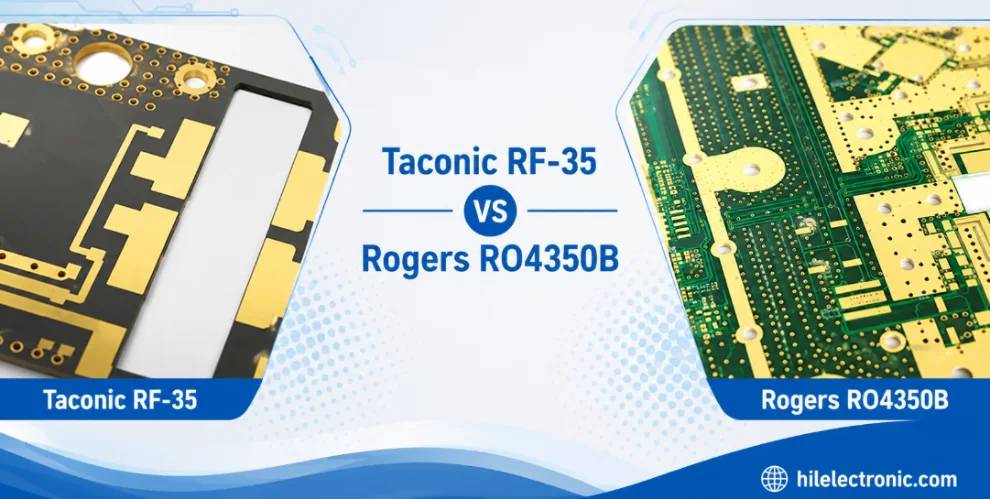
Taconic RF 35 vs RO4350B PCB
Table of contentsRF-35 vs RO4350B Procurement and...
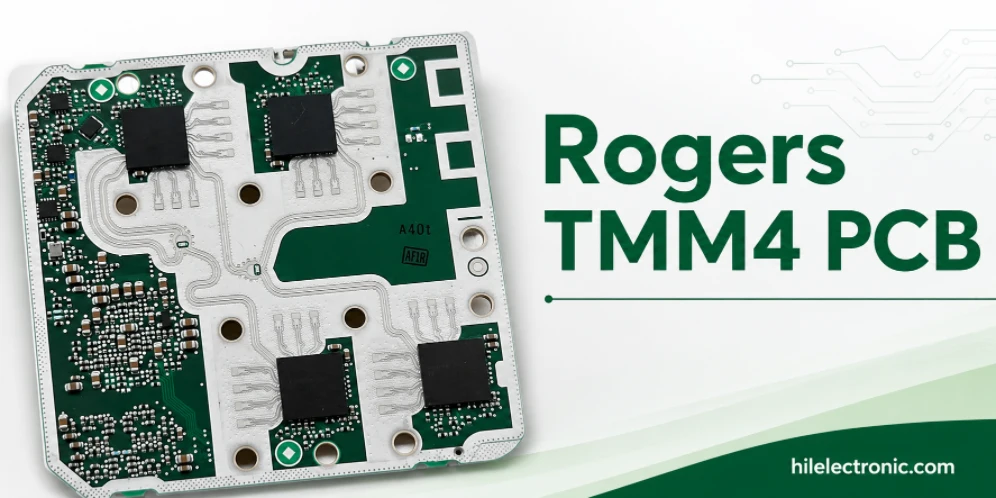
TMM4 Filter PCB Manufacturing
TMM4 filter PCB manufacturing is controlled by the...
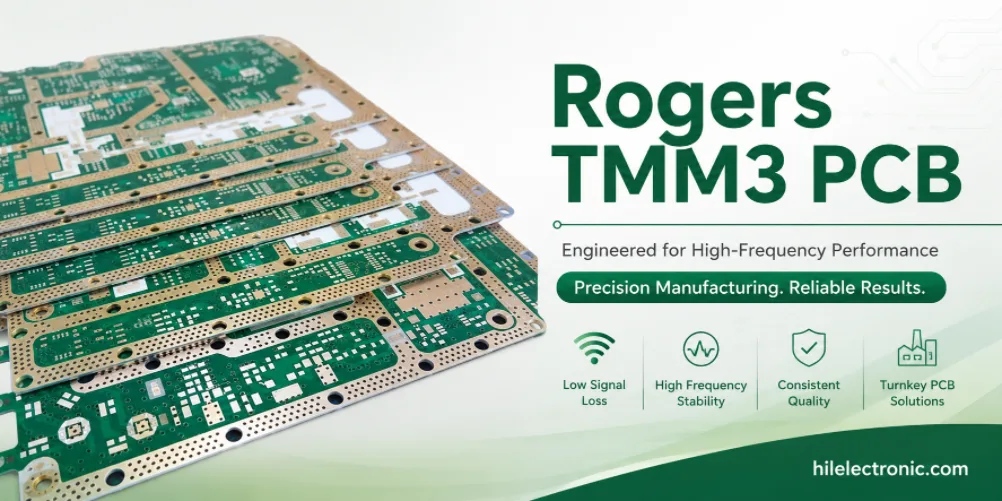
TMM3 PCB Manufacturing for RF Modules
TMM3 PCB manufacturing is most useful where the RF module...
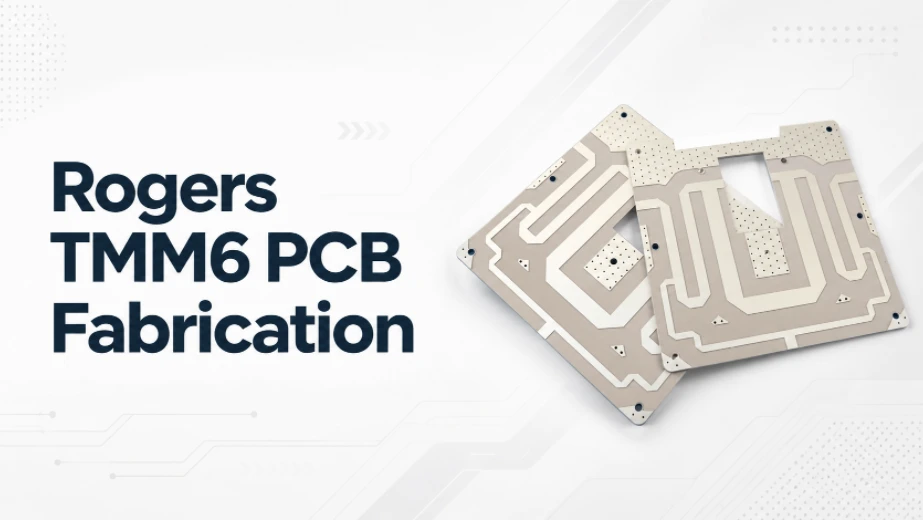
TMM6 PCB Fabrication
TMM6 fabrication is the process-control page for a mid-Dk...
How to get a quote for PCBs
Let’s run DFM/DFA analysis for you and get back to you with a report. You can upload your files securely through our website. We require the following information in order to give you a quote:
-
- Gerber, ODB++, or .pcb, spec.
- BOM list if you require assembly
- Quantity
- Turn time
For PCBA services, please provide your BOM (Bill of Materials) and any specific assembly instructions. We also offer DFM/DFA analysis to optimize your designs for manufacturability and assembly, ensuring a smooth production process.