
Signal Integrity in High Frequency PCB Design – Key Factors & Tips

Introduction
Signal integrity refers to the quality and reliability of electrical signals as they propagate through PCB traces in high frequency applications. In modern communication systems, radar modules, and automotive electronics operating above 1 GHz, even minor signal degradation can cause data errors, timing violations, and system failures. This guide examines the fundamental factors that influence signal integrity in high frequency PCB design and provides practical techniques to maintain optimal signal quality.
What Is Signal Integrity?
Signal integrity describes the ability of an electrical signal to maintain its amplitude, phase, and timing characteristics as it travels from source to destination. In high frequency PCB design, signals behave as electromagnetic waves rather than simple voltage levels, making them susceptible to various distortions.
Common signal integrity challenges include:
- Reflection – Signal bounce caused by impedance mismatches between driver, trace, and receiver
- Crosstalk – Unwanted coupling between adjacent traces that introduces noise
- Timing skew – Propagation delay variations in parallel signal paths that cause synchronization errors
- Noise coupling – Interference from power distribution networks and switching circuits
The evaluation of signal integrity relies on both time domain and frequency domain analysis. Eye diagrams reveal timing margins and noise levels in digital signals, while S-parameters quantify transmission and reflection characteristics across frequency ranges.

High Frequency Circuit Board
Key Factors Affecting Signal Integrity in High Frequency PCB
Transmission Line Effects
At high frequencies, PCB traces function as transmission lines with distributed inductance, capacitance, and resistance. The characteristic impedance of these transmission lines must match the driver and receiver impedances to minimize signal reflection. Typical controlled impedance values range from 50 ohms for single-ended signals to 90 or 100 ohms for differential pairs.
Any discontinuity in the signal path creates impedance variations that degrade signal integrity. Vias, connectors, and layer transitions introduce reflection and insertion loss that become increasingly problematic as frequencies exceed 10 GHz.
Material Properties and Dielectric Selection
The dielectric constant and dissipation factor of PCB substrate materials directly impact signal propagation and attenuation. Standard FR-4 materials exhibit dielectric constants around 4.2 to 4.5 with dissipation factors of 0.02, resulting in significant signal loss above 5 GHz. With RO3003G2 boards for low-loss RF paths, copper profile, dielectric thickness and transitions still need review because laminate selection alone does not establish channel performance.
High frequency PCB applications benefit from specialized low-loss materials:
- a specialty low-loss laminate – Dielectric constant of 3.48, dissipation factor of 0.0037 at 10 GHz
- Isola I-Tera MT – Dielectric constant of 3.45, dissipation factor of 0.0035 at 10 GHz
- Panasonic Megtron 6 – Dielectric constant of 3.4, dissipation factor of 0.002 at 10 GHz
Selecting materials with stable dielectric properties across temperature and frequency ranges maintains consistent signal integrity throughout the operating envelope.
PCB Stack-up and Return Path Design
Proper layer stack-up design establishes continuous reference planes that provide low-impedance return paths for high frequency signals. Signal layers positioned adjacent to solid ground or power planes minimize loop area and control characteristic impedance effectively.
Stitching vias placed near signal transitions maintain return path continuity when signals change layers. Without proper stitching, return currents seek alternate paths that increase loop area, radiation, and crosstalk. Plane splits or gaps force return currents through longer paths, creating discontinuities that severely compromise signal integrity.
Crosstalk and Electromagnetic Interference
Electromagnetic coupling between adjacent traces generates crosstalk that degrades signal integrity in high frequency PCB layouts. The coupling strength increases with trace proximity and parallel routing length, making spacing strategy critical. The 3W rule recommends maintaining trace-to-trace spacing of at least three times the trace width to minimize crosstalk.
Differential pair routing provides superior noise immunity by rejecting common-mode interference. Ground planes and guard traces between sensitive signals offer additional shielding, while consistent layer stack-up reduces electromagnetic interference through controlled impedance.
Design Techniques to Maintain Signal Integrity
Controlled Impedance and Length Matching
Implementing controlled impedance routing throughout the signal path ensures consistent transmission line characteristics and minimizes reflection. Trace width, dielectric thickness, and copper weight must be precisely controlled to achieve target impedance values within ±10% tolerance.
Length matching between parallel signals or differential pair legs prevents timing skew that causes eye closure in high-speed digital interfaces. Critical nets require matching within 5 mils for frequencies above 5 GHz, with tighter tolerances needed at higher frequencies.
Via Optimization and Layer Transitions
Via optimization minimizes impedance discontinuities that degrade signal integrity. Back-drilling removes unused stub lengths that create resonances at specific frequencies, while blind and buried vias reduce layer transitions. Each via transition should be treated as a controlled impedance element with attention to pad size, anti-pad clearance, and barrel diameter.
Reference plane continuity must be maintained across the entire signal routing area to provide uninterrupted return current paths. Avoid routing signals across plane splits, and use stitching vias spaced every quarter wavelength along the discontinuity.
Surface Finish and Simulation
Surface finish selection affects high frequency performance through skin effect and surface roughness. Electroless nickel immersion gold offers superior signal integrity compared to hot air solder leveling due to its smoother surface and consistent thickness. For frequencies above 20 GHz, reverse-treated copper foil reduces conductor loss caused by surface roughness.
Pre-layout signal integrity simulation using tools like HyperLynx, Ansys HFSS, or Keysight ADS validates design decisions before fabrication. Simulation identifies potential impedance mismatches, crosstalk issues, and resonance points, reducing iteration cycles and development costs.

Eye Diagram
Testing and Validation for Signal Integrity
Time and Frequency Domain Analysis
Eye diagram analysis reveals signal quality by overlaying multiple bit periods to visualize timing margins and noise levels. A properly designed high frequency PCB produces clean eye openings with adequate voltage and timing margins. Time domain reflectometry identifies impedance discontinuities and their locations by measuring reflected signals from mismatches.
S-parameter measurements quantify insertion loss, return loss, and crosstalk across the frequency spectrum. Two-port S-parameters provide complete characterization of signal transmission quality, with S21 indicating insertion loss and S11 indicating return loss.
Manufacturing Quality Control
Manufacturing quality control includes impedance testing using specialized test coupons integrated into the PCB panel. Test coupons replicate critical signal structures and enable verification of controlled impedance without damaging functional circuits. Flying probe testing verifies trace continuity and shorts, while functional testing at operating frequencies confirms that fabricated boards meet signal integrity specifications under actual operating conditions.
Conclusion
Signal integrity in high frequency PCB design requires systematic optimization across material selection, stack-up architecture, routing methodology, and manufacturing process control. As operating frequencies continue to increase in modern electronic systems, maintaining signal quality becomes progressively more challenging and critical to system performance.
Success depends on understanding transmission line behavior, selecting appropriate low-loss materials, implementing proven design practices, and conducting thorough validation through simulation and measurement. Each design decision from substrate selection to via placement directly impacts signal integrity and overall system reliability.
At Highleap Electronics, we specialize in high frequency PCB fabrication with precise impedance control, low-loss materials, and rigorous process validation to ensure reliable signal integrity for advanced communication, aerospace, and automotive applications. Our engineering team provides design for manufacturability consultation and signal integrity analysis to help you achieve optimal performance in demanding high frequency environments.

Recommended Posts
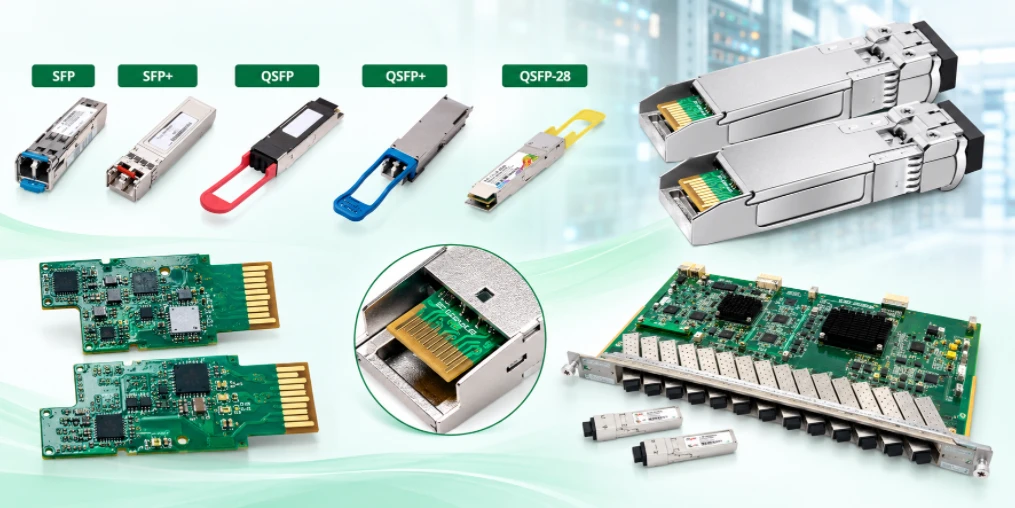
Optical Transceiver PCB Assembly Services in China
Highleap Electronics provides optical transceiver PCB...
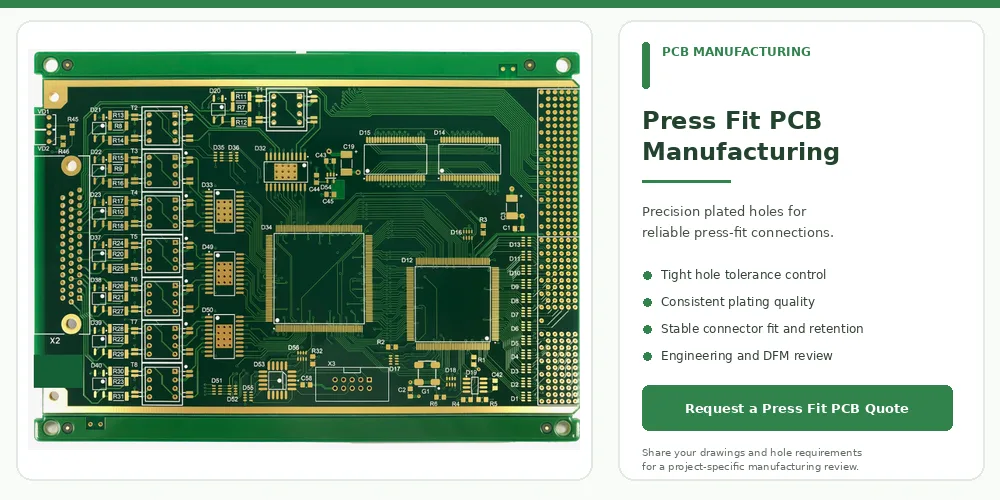
Precision Press Fit PCB Manufacturing with Tight Tolerances
Press-fit PCB manufacturing requires close coordination...
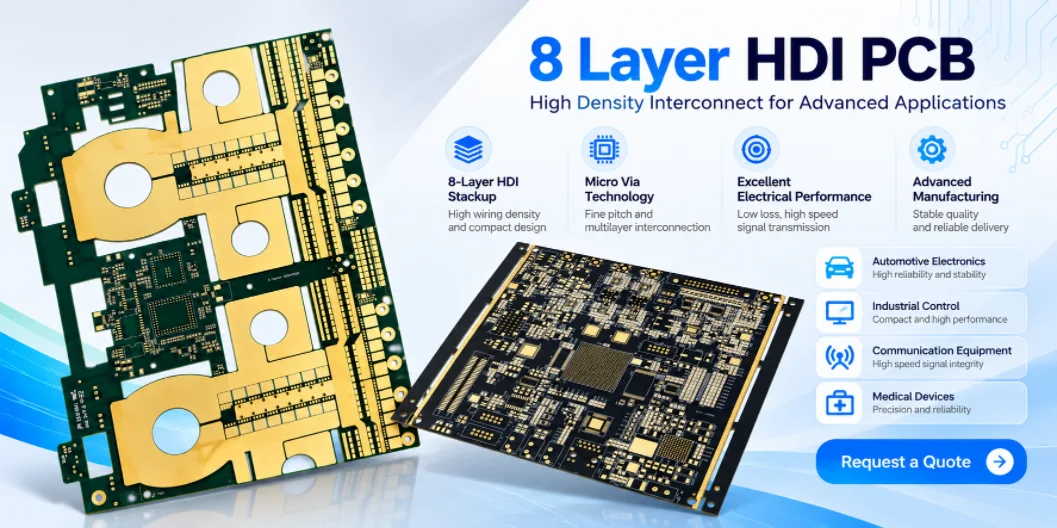
8 Layer HDI PCB Manufacturer in China
Highleap Electronics provides 8 layer HDI PCB...
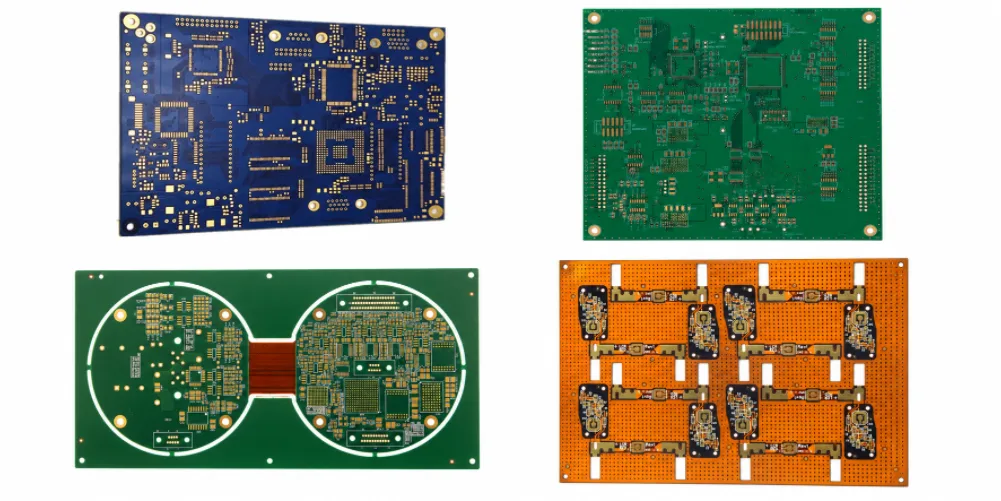
8 Layer Rigid-Flex PCB Manufacturing and Cost Guide
An 8 layer rigid-flex PCB combines multilayer rigid...
How to get a quote for PCBs
Let‘s run DFM/DFA analysis for you and get back to you with a report. You can upload your files securely through our website. We require the following information in order to give you a quote:
-
- Gerber, ODB++, or .pcb, spec.
- BOM list if you require assembly
- Quantity
- Turn time
In addition to PCB manufacturing, we offer a comprehensive range of electronic services, including PCB design, PCBA, and turnkey solutions. Whether you need help with prototyping, design verification, component sourcing, or mass production, we provide end-to-end support to ensure your project’s success.
For PCBA services, please provide your BOM (Bill of Materials) and any specific assembly instructions. We also offer DFM/DFA analysis to optimize your designs for manufacturability and assembly, ensuring a smooth production process.