
Switching Power PCB Design and Manufacturing

Highleap Electronics is a comprehensive PCB manufacturing and assembly provider serving medical, industrial, automotive, and consumer electronics sectors. Switching power supply PCBs showcase our expertise in high-frequency design where component placement determines success or failure. From 5W USB chargers to 3kW industrial power supplies, we deliver boards that exceed efficiency and reliability expectations. Highleap Electronics delivers switching power PCB manufacturing with expertise in EMI control, thermal management, and high-frequency optimization.
Power Loop Optimization: The Critical Path
The primary switching loop—from input capacitor through high-side switch, low-side switch, and back to ground—determines everything in SMPS performance. This loop radiates electromagnetic energy proportional to its area. A 400mm² loop might fail EMI by 20dB, while optimizing to 200mm² passes with margin.
But minimizing loop area requires understanding current flow. High-frequency currents follow the path of least inductance, not resistance. At 500kHz, return current flows directly beneath its forward trace in the ground plane. Any disruption—a slot, via, or plane split—forces current to detour, creating an antenna.
Real example: A 100W adapter failed EMI by 15dB. Investigation revealed ground plane slots forcing return currents around, tripling effective loop area. Filling these slots with careful routing on another layer solved the problem completely.
Temperature compounds the challenge. MOSFET RDS(on) increases 50-70% from 25°C to 125°C, creating more heat in a destructive cycle. We address this through parallel FETs distributing heat, heavy copper planes for spreading, and our thermal management PCB techniques ensuring stable operation.
Four Layers vs Two: Making the Right Choice
Cost pressure pushes toward two-layer boards, but four layers often prove more economical overall. The added PCB cost (40-60% typical) eliminates expensive filters and shielding while improving performance dramatically.
Two-layer limitations:
- Ground returns meander, increasing inductance
- No shielding between noisy and sensitive traces
- Poor thermal spreading without internal copper
- EMI solutions require external filters
Four-layer advantages:
- Solid ground plane reduces emissions 10-15dB
- Controlled impedance for high-speed signals
- Internal power planes minimize voltage drop
- Superior thermal management
The transition point varies, but consider four layers when power exceeds 25W, frequency exceeds 200kHz, or EMI requirements are stringent. The incremental cost often eliminates multiple filter components, actually reducing system cost.
Our high power density PCB designs leverage multi-layer construction for maximum performance in minimal space.
Transformer Integration and Noise Management
The transformer dominates SMPS size, cost, and EMI signature. Poor PCB integration wastes the transformer designer’s efforts and degrades performance.
Start with the footprint. Transformers generate heat requiring thermal relief for hand soldering during prototyping. But these reliefs increase production resistance. Solution: dual footprints—one with thermal relief for prototypes, another with solid connections for production.
Leakage inductance causes voltage spikes stressing switches and generating EMI. While transformer construction primarily determines leakage, PCB layout significantly impacts its effects. Place snubber components immediately adjacent to transformer pins—every millimeter adds inductance preventing proper spike absorption.
Shield windings require special attention. Connect shields to quiet ground, not switching ground. Route shield connections away from sensitive signals. Some designs benefit from dual shields—primary to primary ground, secondary to secondary ground—providing superior common-mode rejection refined through our switching power PCB expertise.
After assembly, soldering quality on the switching power supply PCB becomes critical. Transformer pins, high-current traces, and heat-dissipating components require uniform solder joints with complete wetting to ensure both electrical reliability and thermal conductivity. Care must be taken to avoid excessive solder voids, cold joints, or solder bridges that could compromise insulation distances or create hotspots. Consistent solder fillets not only guarantee long-term reliability but also minimize parasitic effects that could influence EMI performance.

Current Sensing for Protection and Control
Accurate current sensing enables overcurrent protection, prevents saturation, and optimizes efficiency. But PCB parasitics corrupt measurements, causing instability or inadequate protection.
Shunt resistor implementation: The voltage across a 10mΩ shunt at 10A is only 100mV—easily corrupted by noise. Success requires:
- Four-terminal Kelvin connections mandatory
- Differential pair routing for sense lines
- Current sense amplifier adjacent to shunt
- Guard rings preventing noise injection
Current transformer sensing: CTs provide isolation but need careful implementation:
- Burden resistor directly at CT terminals
- Clamping diodes for open-circuit protection
- Routing away from magnetic fields
- Symmetric layout for balance
These techniques ensure accurate current measurement essential for reliable SMPS operation, whether in LED driver PCBs or fast charging controller PCB applications.
EMI Filtering and Compliance
EMI compliance isn’t optional—it’s legally required. Proper PCB design reduces filtering requirements and ensures first-pass certification.
Common-mode chokes need balanced layout maintaining effectiveness. Route traces symmetrically to and from the CMC. Any imbalance converts common-mode to differential noise. Position high-frequency bypass capacitors with minimal trace length.
Input filter placement critically affects performance. Locate filters at power entry, before noise generation. Create physical separation between filtered and unfiltered sections. Use ground plane cuts forcing currents through the filter, not around it.
These EMI control techniques, essential in our GaN power PCB designs, ensure compliance without expensive iterations.
Frequently Asked Questions
Q: Why does my switching power supply fail EMI testing?
A: Common causes include excessive loop area, poor grounding, and inadequate filtering. Highleap Electronics prevents EMI failures through optimized loop layouts, proper 4-layer stackups with solid ground planes, and strategic filter placement achieving >90% first-pass certification rate.
Q: How to improve switching power supply efficiency?
A: Efficiency improvements come from minimizing switching losses, optimizing magnetics, and implementing synchronous rectification. Highleap Electronics achieves 95%+ efficiency through precision layouts, thermal management, and careful component selection.
Q: Which safety standards apply to switching power supplies?
A: Standards vary by application: IEC 62368-1 for IT equipment, IEC 60601-1 for medical devices. Highleap Electronics ensures compliance through proper spacing, isolation barriers, and safety component selection. We provide documentation supporting certification.
Q: Can existing SMPS designs be optimized for size/cost?
A: Yes, through layout optimization, component consolidation, and manufacturing efficiency. Highleap Electronics’ DFM review typically identifies 20-30% cost reduction opportunities while improving performance through our ultra-fast charging PCB miniaturization expertise.

Related Articles
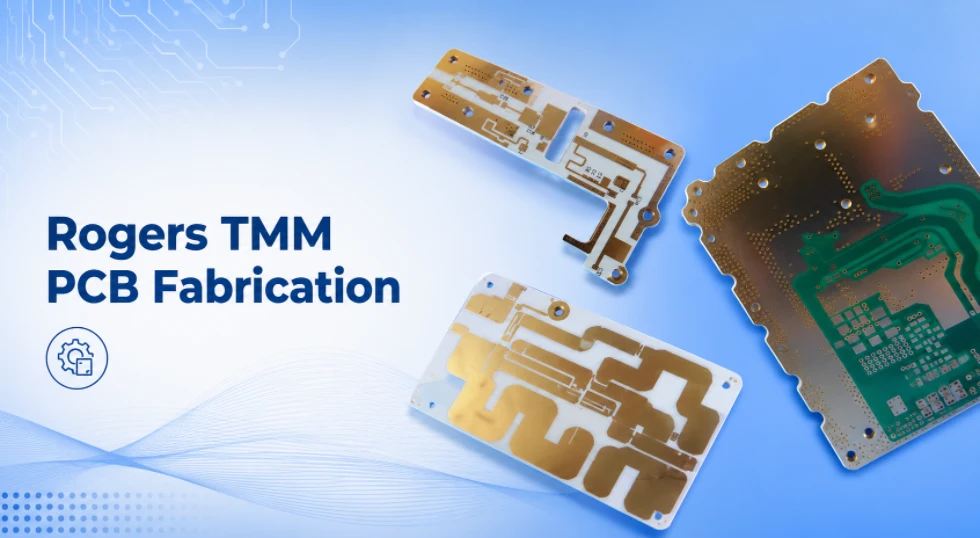
TMM PCB Fabrication
Table of Contents TMM PCB Fabrication Scope for RF and...

RT duroid 6002 PCB Quote and Stackup
This page owns the quotation and stackup-definition task...
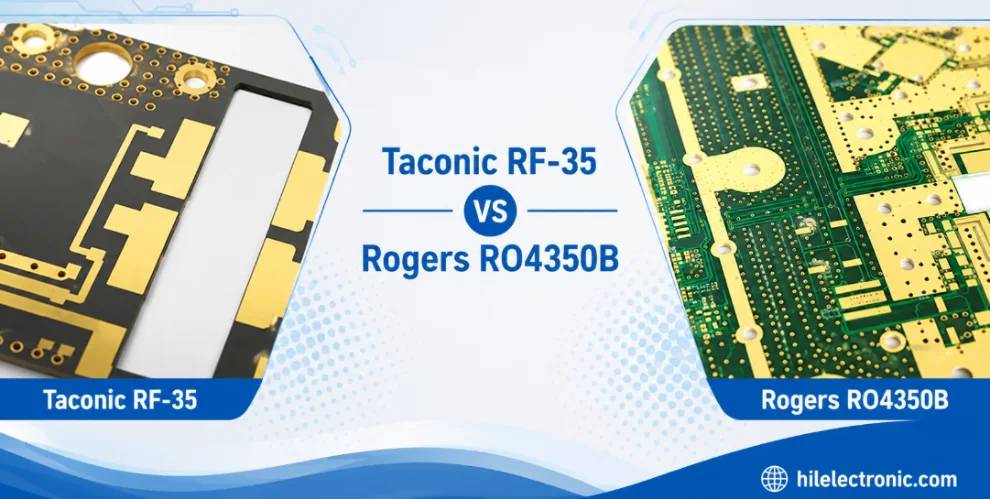
Taconic RF 35 vs RO4350B PCB
Table of contentsRF-35 vs RO4350B Procurement and...
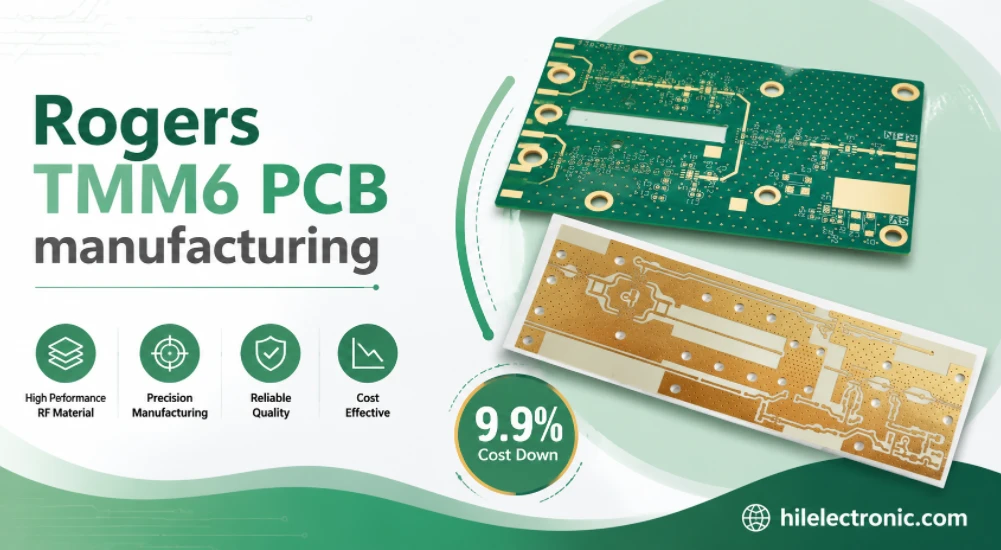
TMM6 Filter PCB Manufacturing
Table of contentsWhy Microwave Filter Designers Use...
How to get a quote for PCBs
Let us run DFM/DFA analysis for you and get back to you with a report.
You can upload your files securely through our website.
We require the following information in order to give you a quote:
-
- Gerber, ODB++, or .pcb, spec.
- BOM list if you require assembly
- Quantity
- Turn time
In addition to PCB manufacturing, we offer a comprehensive range of electronic services, including PCB design, PCBA (Printed Circuit Board Assembly), and turnkey solutions. Whether you need help with prototyping, design verification, component sourcing, or mass production, we provide end-to-end support to ensure your project’s success. For PCBA services, please provide your BOM (Bill of Materials) and any specific assembly instructions. We also offer DFM/DFA analysis to optimize your designs for manufacturability and assembly, ensuring a smooth production process.