
TU-768 PCB Material: Specifications, Performance & Practical Design Guide

Figure 1. TU-768 FR-4 High Tg PCB
TU-768 PCB material is a high-Tg modified epoxy FR-4 laminate engineered for multilayer boards requiring superior thermal stability and lead-free assembly compatibility. This guide delivers essential specifications, performance analysis, design considerations, and selection criteria to help engineers make informed material decisions efficiently.
TU-768 Technical Specifications at a Glance
Understanding the core parameters of TU-768 PCB material is fundamental to assessing its suitability for your application. The table below summarizes the key datasheet values that influence design and manufacturing decisions.
| Parameter | TU-768 Typical Value | Test Condition |
|---|---|---|
| Tg (DMA) | 190°C | E-2/105 |
| Tg (DSC) | 180°C | — |
| Td (Decomposition) | 350°C | TGA, E-2/105 |
| CTE (X/Y-axis) | 11–15 ppm/°C | E-2/105 |
| CTE (Z-axis) | 2.7% | — |
| Dk (εr) @ 1 GHz | 4.4 | E-2/105 |
| Dk @ 10 GHz | 4.3 | — |
| Df (tanδ) @ 1 GHz | 0.019 | E-2/105 |
| Df @ 10 GHz | 0.023 | — |
| T288 (Time to Delamination) | >15 min | — |
| Thermal Stress (288°C) | >60 sec | Solder Float |
| Peel Strength (1 oz RTF Cu) | 7–9 lb/in | — |
| Flammability | UL 94 V-0 | E-24/125 |
| Water Absorption | 0.18% | E-1/105 + D-24/23 |
These specifications position TU-768 PCB material as a robust choice for applications demanding thermal resilience without the cost premium of specialized low-loss laminates.
Key Performance Analysis of TU-768
Electrical Performance
TU-768 exhibits a dielectric constant (Dk) of 4.3–4.4 across 1–10 GHz, with loss tangent (Df) ranging from 0.019 to 0.023. These values support impedance-controlled designs up to approximately 2–3 GHz with acceptable signal integrity. For frequencies exceeding 5 GHz or high-speed digital applications requiring Df below 0.010, consider dedicated low-loss materials like specialty low-loss laminate or Megtron series.
Engineer’s Note: For standard RF front-end modules operating below 2 GHz, TU-768 offers a cost-effective balance between electrical performance and manufacturing compatibility.
Thermal and Mechanical Performance
With a Tg of 190°C (DMA) and Td of 350°C, TU-768 PCB material handles multiple lead-free reflow cycles without structural degradation. The Z-axis CTE of 2.7% minimizes via barrel stress during thermal excursions, making it suitable for high-layer-count designs with buried vias or BGA components requiring reliable interconnects.
Engineer’s Note: For assemblies with fine-pitch BGAs (≤0.5mm pitch), the low Z-CTE reduces the risk of barrel cracking during thermal cycling from -40°C to +125°C operating ranges.
Processability and Reliability
TU-768 demonstrates strong compatibility with standard PCB fabrication processes including mechanical drilling, laser via formation, and electroless copper plating. The material’s UV-blocking properties and AOI fluorescence enhance inspection accuracy in high-volume production. Peel strength of 7–9 lb/in ensures robust copper adhesion through HASL, ENIG, and OSP surface finishes.
Engineer’s Note: When specifying ENIG, verify that the laminate’s thermal budget accommodates the additional reflow cycle typically required for gold plating processes.
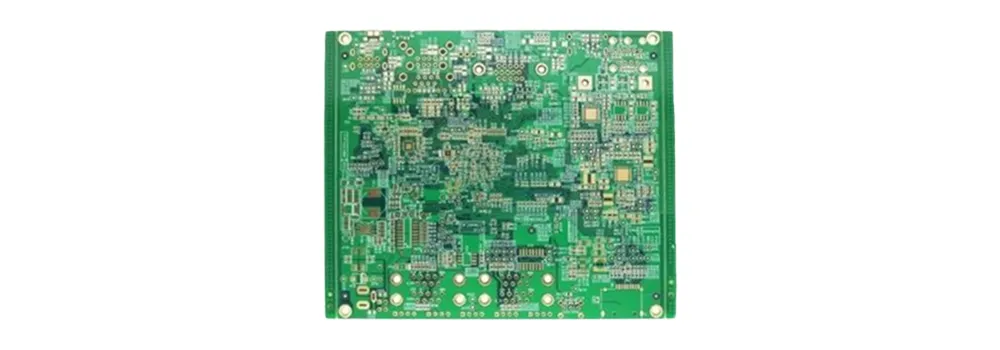
Figure 2. TU-768 PCB Material
TU-768 Applications and Use Cases
TU-768 PCB material serves applications where thermal reliability outweighs the need for ultra-low dielectric loss.
Typical Application Sectors
Industrial control systems benefit from TU-768’s thermal stability in environments with elevated ambient temperatures or frequent thermal cycling. Automotive electronics, particularly body control modules and infotainment systems, leverage the material’s CAF resistance and moisture stability. Server and workstation motherboards utilize TU-768 for multilayer constructions exceeding 8 layers where consistent Dk values support controlled impedance routing.
Practical Case Example
A telecom equipment manufacturer faced intermittent connection failures in a 12-layer base station control board using standard mid-Tg FR-4. Post-failure analysis revealed via barrel cracking after 200+ thermal cycles. Transitioning to TU-768 PCB material reduced Z-axis expansion stress, eliminating field failures while maintaining the existing design rules and manufacturing workflow. The material swap added approximately 8–12% to raw material costs but avoided expensive board redesign.
Design and Manufacturing Best Practices
Impedance Control Guidelines
For single-ended 50Ω traces, a typical stackup uses 4.5 mil trace width over 4 mil prepreg with 1 oz copper. Specify Dk tolerance of ±0.05 for critical impedance layers. Request impedance coupons from your fabricator to validate actual Dk values before production release. Account for Dk variation between core and prepreg when calculating differential pair spacing in mixed-material stackups.
Thermal Profile Recommendations
TU-768 supports standard lead-free reflow profiles with peak temperatures up to 260°C. For boards exceeding 2.0mm thickness, extend the preheat zone to 120–180 seconds to ensure uniform core temperature. Avoid ramp rates exceeding 3°C/second to prevent delamination at layer interfaces. For wave soldering applications, confirm that bottom-side exposure time at 260°C does not exceed 10 seconds to maintain via integrity.
Via and Hole Processing
Mechanical drilling performs reliably with TU-768 down to 0.2mm (8 mil) finished hole sizes. For HDI applications with microvias, laser drilling achieves clean via walls with minimal resin smear. Specify desmear treatment to ensure reliable electroless copper adhesion in high-aspect-ratio holes (>10:1). For buried via structures, verify lamination pressure and duration with your fabricator to prevent resin starvation at inner-layer interfaces.
Surface Finish Compatibility
ENIG provides superior solderability and shelf life for fine-pitch components but adds thermal stress during the immersion gold process. HASL offers cost advantages for standard-pitch assemblies but creates uneven pad surfaces unsuitable for 0.4mm pitch BGAs. OSP delivers flat pads at lower cost but requires tighter process control during assembly. For mixed-technology boards combining BGAs and through-hole connectors, ENIG typically offers the best compromise between assembly yield and long-term reliability.
Reliability Testing Recommendations
Validate TU-768 PCB assemblies through IPC-TM-650 thermal shock testing (-55°C to +125°C, 100 cycles minimum). Conduct 85°C/85% RH testing for 168 hours to verify CAF resistance. Perform cross-sectional analysis on sacrificial coupons to confirm via fill quality and copper plating thickness distribution. Request IPC Class 3 acceptance criteria for mission-critical applications to ensure consistent quality across production lots.
TU-768 Comparison with Alternative Materials
Selecting the right laminate requires understanding how TU-768 positions against common alternatives.
| Parameter | TU-768 | Standard FR-4 | High-Tg FR-4 (IT-180A) | Low-Loss (Megtron 4) |
|---|---|---|---|---|
| Tg (DMA) | 190°C | 130–140°C | 175°C | 200°C |
| Dk @ 1 GHz | 4.4 | 4.5 | 4.4 | 3.8 |
| Df @ 1 GHz | 0.019 | 0.025 | 0.018 | 0.005 |
| Td | 350°C | 300°C | 340°C | 390°C |
| Z-CTE | 2.7% | 3.5% | 2.8% | 2.4% |
| Relative Cost | Medium | Low | Medium | High |
| Best Use Case | Lead-free assembly, multilayer | Consumer electronics | High-reliability industrial | High-speed digital, RF |
Advantages of TU-768: Delivers high-Tg performance at moderate cost, with better thermal endurance than standard FR-4 and comparable Dk stability to premium alternatives. The material represents an optimal balance for applications requiring lead-free compatibility without the expense of specialized high-speed laminates.
Limitations: For applications above 5 GHz or requiring Df below 0.010, low-loss materials remain the better technical choice despite higher cost.
Procurement and Quality Verification
Incoming Quality Assurance
Request Certificate of Conformance (CoC) with lot traceability for each material shipment. Verify UL certification status and confirm RoHS/REACH compliance documentation. For critical applications, request third-party test reports validating Tg, Td, and dielectric properties against datasheet specifications.
Sample Evaluation Protocol
Before production commitment, obtain material samples for impedance testing on representative stackups. Conduct thermal cycling evaluation on assembled test vehicles to verify via reliability. Perform X-ray inspection on BGA solder joints to assess voiding levels with the specific flux and paste combination planned for production.
I recommend requesting factory audit documentation or production capability videos from suppliers, particularly for first-time partnerships. This verification step helps identify potential quality risks before committing to volume production.
Conclusion and Selection Guidance
TU-768 PCB material occupies a practical position in the laminate spectrum, delivering high-Tg thermal performance with acceptable electrical characteristics for mid-frequency applications. Its combination of lead-free assembly compatibility, low Z-axis expansion, and robust copper adhesion makes it well-suited for multilayer industrial, automotive, and server applications.
I believe TU-768 represents the right choice when your project requires reliable thermal cycling performance and lead-free reflow compatibility without the cost premium of specialized low-loss materials. If your design operates primarily above 5 GHz or demands ultra-low insertion loss, I recommend evaluating Megtron or specialty low-loss laminate alternatives despite their higher material costs.
For projects balancing performance requirements against budget constraints, TU-768 consistently delivers predictable results across standard PCB manufacturing processes.
Frequently Asked Questions
Is TU-768 PCB material suitable for high-frequency applications?
TU-768 supports applications up to 2–3 GHz with acceptable performance. For frequencies above 5 GHz or designs requiring Df below 0.010, consider dedicated low-loss laminates.
What is the maximum reflow temperature for TU-768?
TU-768 withstands peak reflow temperatures up to 260°C with standard lead-free profiles. For thick boards (>2.0mm), extend preheat duration to ensure uniform heating.
Can TU-768 support microstrip and stripline impedance control?
Yes. With stable Dk values of 4.3–4.4 across frequency, TU-768 supports both microstrip and stripline configurations. Specify Dk tolerance of ±0.05 for critical impedance layers.
How does TU-768 cost compare to standard FR-4?
TU-768 typically costs 15–25% more than standard FR-4, depending on thickness and order volume. This premium is justified for applications requiring lead-free compatibility or enhanced thermal reliability.
Does TU-768 have RoHS and UL certifications?
Yes. TU-768 complies with RoHS requirements and carries UL 94 V-0 flammability certification. Request specific certification documentation from your supplier for regulatory compliance records.
What copper weights are available with TU-768 laminates?
TU-768 is available with standard copper weights from 0.5 oz to 2 oz. Heavier copper (3 oz+) may require special ordering with extended lead times.
How can I obtain TU-768 samples or complete datasheets?
Contact Highleap Electronics directly for material samples, detailed datasheets, and engineering support. We provide complimentary stackup recommendations based on your specific application requirements.
Is TU-768 suitable for automotive applications?
Yes. TU-768’s high Tg, low moisture absorption, and CAF resistance make it appropriate for automotive electronics operating in demanding thermal and humidity environments.

Recommended Posts
Taconic RF 35 vs RO4350B PCB
Table of contentsRF-35 vs RO4350B Procurement and...
TMM4 Filter PCB Manufacturing
TMM4 filter PCB manufacturing is controlled by the...
TMM3 PCB Manufacturing for RF Modules
TMM3 PCB manufacturing is most useful where the RF module...
TMM6 PCB Fabrication
TMM6 fabrication is the process-control page for a mid-Dk...
How to get a quote for PCBs
Let‘s run DFM/DFA analysis for you and get back to you with a report. You can upload your files securely through our website. We require the following information in order to give you a quote:
-
- Gerber, ODB++, or .pcb, spec.
- BOM list if you require assembly
- Quantity
- Turn time
In addition to PCB manufacturing, we offer a comprehensive range of electronic services, including PCB design, PCBA, and turnkey solutions. Whether you need help with prototyping, design verification, component sourcing, or mass production, we provide end-to-end support to ensure your project’s success.
For PCBA services, please provide your BOM (Bill of Materials) and any specific assembly instructions. We also offer DFM/DFA analysis to optimize your designs for manufacturability and assembly, ensuring a smooth production process.