
Explosion-Proof LED Light PCBs: Hazardous-Location Boards, Drivers & Assembly
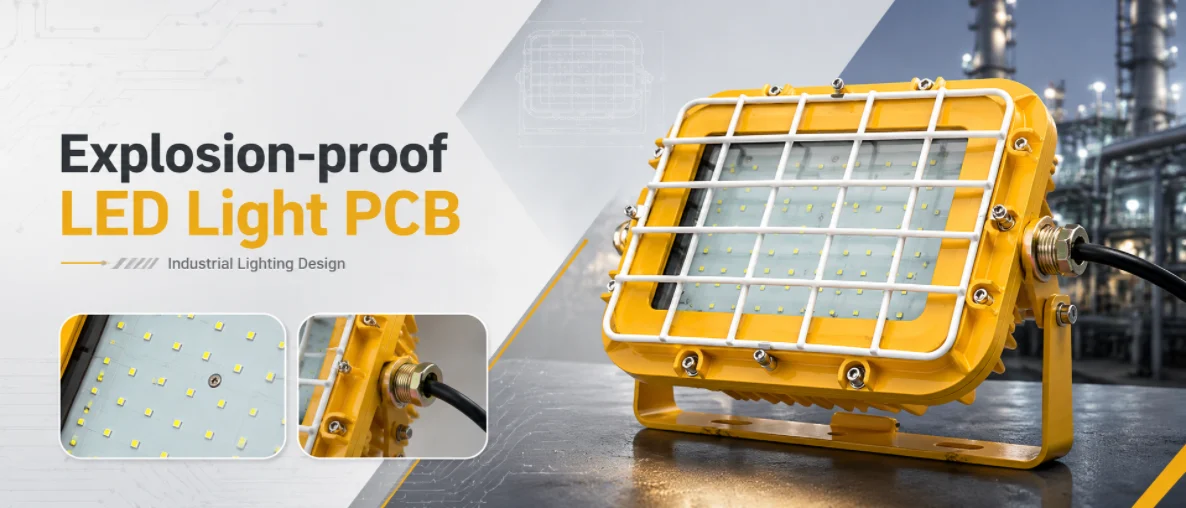
Figure 1. explosion-proof LED light PCB manufacturing reference.
Table of Contents
- What “explosion-proof” actually demands from the electronics
- How the PCB supports hazardous-location compliance
- The board set inside an explosion-proof luminaire
- Substrate, creepage, and clearance engineering
- Potting, coating, and thermal containment
- Drivers and power boards that survive the field
- Capabilities at a glance
- Why build with a comprehensive PCB factory
- How to Order — Files, MOQ & Lead Time
- Explosion-Proof LED PCB — Frequently Asked Questions
Explosion-proof lighting protects places where a single spark or a hot surface could ignite gas, vapor, or dust — petrochemical plants, refineries, offshore platforms, grain handling, mining, paint shops, and fuel depots. The certified enclosure does the headline job of containing any ignition, but the electronics inside still have to be engineered so they do not become the ignition source in the first place: controlled surface temperature, no exposed energy, and components that survive harsh, corrosive, vibrating environments for years.
Highleap Electronics is a comprehensive PCB manufacturing and PCBA factory, and hazardous-location lighting is one of the demanding industrial programs we build for. We do not certify finished luminaires — that is the fixture maker’s and the notified body’s role — but we build the light engine, driver, surge, and control boards to the thermal, creepage, and protection requirements that let a luminaire pass certification and survive the field. This guide explains how the boards support hazardous-location compliance and what we manufacture. The broader category lives on our LED lighting PCB manufacturer page.
Quick answer: In an explosion-proof luminaire the certified enclosure contains ignition, but the PCBs must avoid creating one: the light engine must run at a low, controlled surface temperature, the driver must be potted or coated against the environment, and layouts must respect creepage and clearance so there is no arc path. Highleap Electronics fabricates and assembles all of these boards to coordinate with Ex/ATEX/IECEx-rated enclosures, at IPC Class 3 with potting, conformal coating, and burn-in, MOQ 1.
What “explosion-proof” actually demands from the electronics
It helps to be precise about terms. An “explosion-proof” or “flameproof” (Ex d) luminaire uses a robust enclosure designed to contain an internal explosion and prevent it from propagating to the surrounding atmosphere. Other protection concepts — increased safety (Ex e), encapsulation (Ex m), and intrinsic safety (Ex i) — reduce the energy available to ignite anything in the first place. Real fixtures often combine concepts, and the boards have to suit whichever applies.
Whatever the concept, the electronics share a few hard requirements: the maximum surface temperature must stay within the fixture’s temperature class (T-rating) even at full power and high ambient; there must be no exposed hot component or arc source that the protection method does not account for; and every board must survive corrosive, humid, vibrating, temperature-cycling conditions without degrading. The board is therefore designed around temperature and isolation first, and light output second.
How the PCB supports hazardous-location compliance
A PCB does not carry an Ex certification on its own — certification applies to the finished luminaire, tested by a notified body against the relevant standard (IEC/EN 60079 series, and regional schemes such as ATEX in Europe, IECEx internationally, and UL/CSA for North American Class/Division and Zone systems). But the board’s design is decisive in whether the luminaire can pass, and a manufacturer that understands this builds very differently from one that treats it as a generic light engine.
These are the board-level factors that support hazardous-location compliance, and how we engineer each:
- Controlled surface temperature (T-class) — the single most important factor. The light engine and driver must keep every surface below the fixture’s temperature class limit. We design the LED thermal design and select the metal-core substrate so junction and surface temperatures stay within class with margin, because a board that runs hot can disqualify an otherwise-compliant enclosure.
- Creepage and clearance — adequate spacing between conductors at different potentials prevents tracking and arcing. We lay out boards to the creepage and clearance distances the working voltage and pollution degree require, which is stricter than ordinary commercial practice.
- Encapsulation and potting (Ex m) — where the protection concept relies on encapsulation, we pot the board so energetic components are sealed and cannot contact the atmosphere. Potting also handles vibration and corrosion in one step.
- Conformal coating — for humidity and corrosive-gas resistance, our conformal coating protects the assembly in environments that would corrode an unprotected board.
- Component energy limiting — for intrinsically safe sections, layouts and component choices keep stored and available energy below ignition thresholds; the board supports the barrier design rather than fighting it.
- Robust construction — heavier copper, conservative current densities, and high-reliability finishes so nothing degrades into a fault over the fixture’s life.
Crucially, these have to be coordinated with the enclosure and the certification path. We work to the fixture maker’s specification and temperature class, building the boards so the thermal budget, isolation, and protection method all line up with what the notified body will test. When the engine, driver, and protective boards are built by one manufacturer to one coordinated thermal and isolation plan, the luminaire reaches certification faster and with fewer redesign loops than when boards are sourced separately and discovered to be incompatible during testing.
We provide the documentation customers need to support their certification — material declarations, construction records, thermal data, and traceability — while being clear that the certificate itself belongs to the finished, tested luminaire.
The board set inside an explosion-proof luminaire
Like other industrial fixtures, an explosion-proof luminaire is a multi-board system — and here the coordination between boards is not just a performance nicety, it is part of staying within the safety envelope. Each board is a different PCB family, and building them together is how the thermal and isolation budget is kept coherent:
- Light engine — an aluminum or copper-core metal-core PCB engineered for low surface temperature within the fixture’s T-class, not merely for maximum brightness.
- Driver board — a potted or coated LED driver PCB with conservative derating, since driver heat contributes to the surface-temperature budget the whole fixture must meet.
- Surge and protection board — industrial and outdoor hazardous sites see severe transients; a heavy-copper protection stage shields the driver and keeps faults from escalating.
- Control and monitoring board — dimming, switching, and in some fixtures temperature or fault monitoring, on a low-voltage board coordinated with the driver and coordinated with the driver and monitoring logic.
- Emergency/battery board — many hazardous-area luminaires must stay lit during an outage, adding a battery and a battery protection board that itself has to meet the environment.
The reason to build all of these with one manufacturer is sharper here than in ordinary lighting. The temperature class is a budget shared across every board — if the driver runs hotter than planned, it eats the margin the engine needs, and the fixture can fail certification. When one factory designs and tests the whole stack to a single thermal and isolation plan, that budget stays coherent. Sourcing the boards separately invites exactly the kind of mismatch that surfaces only during expensive certification testing.
Substrate, creepage, and clearance engineering
Two board-level disciplines deserve their own note because they are where hazardous-location boards differ most from ordinary lighting boards.
Substrate selection is driven by the temperature class. A higher dielectric conductivity aluminum core, or copper-core where the load demands it, keeps surface temperature down with margin. For the highest-temperature or highest-flux fixtures we use ceramic substrates (Al₂O₃ or AlN), which combine excellent thermal performance with the dimensional stability harsh environments reward.
Creepage and clearance engineering keeps conductors at different potentials far enough apart to prevent tracking and arcing, sized to the working voltage and the pollution degree of the environment. In a hazardous area this is not a formality — an arc is precisely what the whole fixture exists to prevent. We design these distances conservatively and verify them against the applicable standard’s tables.
Together, substrate and spacing decisions turn a generic light engine into a board that can live inside a certified explosion-proof fixture.
Potting, coating, and thermal containment
Environmental protection is mandatory, not optional, for hazardous-location electronics. We provide it in-house so it is engineered as part of the board rather than added by a third party:
- Potting — full encapsulation of the driver or energetic sections for Ex m protection, vibration resistance, and corrosion sealing in one operation.
- Conformal coating — humidity and corrosive-gas protection for boards that are not fully potted.
- Waterproof and sealed construction — for hazardous sites that are also wet or washdown environments, such as offshore and food/chemical processing.
- Thermal containment — the protection material and the board’s heat path are designed together so potting does not trap heat and push the fixture out of its temperature class.
Getting potting and thermal management to coexist is a genuine engineering trade-off, and building both on the same line is how we keep the fixture within its T-class while fully sealing the electronics.
Drivers and power boards that survive the field
The driver is the component most likely to limit the life of a hazardous-area fixture, so we build driver boards conservatively: derated electrolytics or long-life alternatives, robust power-factor correction for industrial compliance, wide-input tolerance for unstable site power, and surge protection sized for the location. Because the driver’s heat counts against the fixture’s temperature class, we design it to run cool inside a sealed enclosure rather than at the edge of its rating.
Where a fixture needs emergency operation, the battery and protection electronics are built and tested to the same environmental standard — there is no point in a rugged luminaire with a fragile backup board inside it.
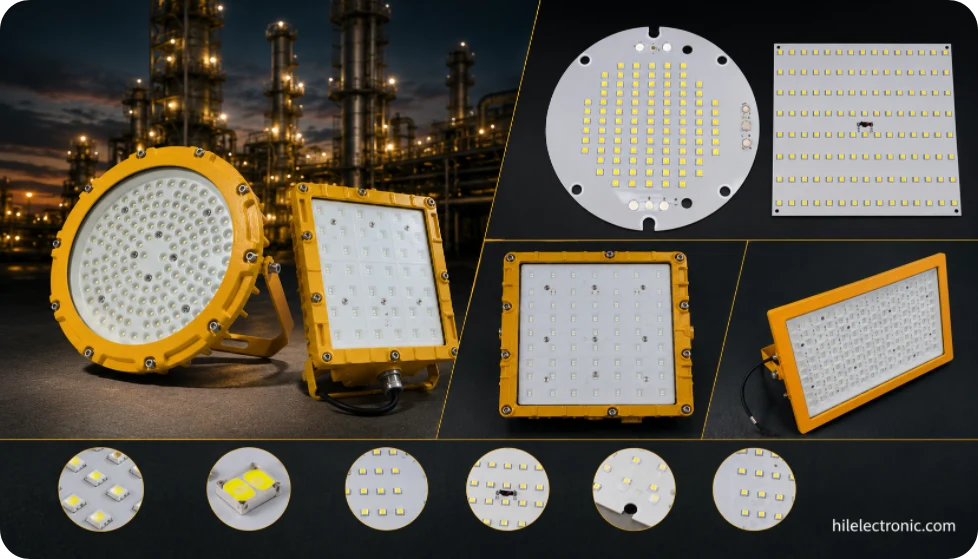
Figure 2. explosion-proof LED light PCB assembly production and assembly detail.
Explosion-proof PCB capabilities at a glance
The table summarizes what we bring to hazardous-location lighting boards:
| Capability | Standard | Advanced |
|---|---|---|
| Engine substrate | Aluminum MCPCB | Copper-core, ceramic (Al₂O₃/AlN) |
| Temperature control | Low-surface-temp design | Verified to fixture T-class with margin |
| Isolation | Standard creepage/clearance | Conservative spacing to pollution degree |
| Protection | Conformal coating | Full potting / encapsulation (Ex m support) |
| Driver | Derated FR-4 | Heavy copper, long-life, surge-hardened |
| Workmanship | IPC Class 2 | IPC Class 3 |
| Testing | AOI + functional | X-ray, burn-in, thermal verification |
| Documentation | RoHS/REACH | Construction & thermal records, full traceability |
| MOQ | 1 unit | Volume breaks from 10+ |
We recommend the construction that fits your protection concept and temperature class during the free DFM review, and provide the records your certification needs.
Why build with a comprehensive PCB factory
Hazardous-location lighting is the clearest case for a single, capable manufacturer. The temperature class and isolation budget are shared across the engine, driver, and protective boards, so building them separately risks a mismatch that only appears during certification. A metal-core-only shop, a general FR-4 shop, or a trading company each forces those boards to be coordinated after the fact — exactly when it is most expensive to fix.
Highleap Electronics builds the engine, driver, surge, control, and battery boards in one ISO 9001 facility, to one coordinated thermal and isolation plan, with potting, coating, IPC Class 3 workmanship, burn-in, and the documentation your notified body will expect. Send your specification and temperature class to our PCB assembly team for a 24-hour quote.
How to Order — Files, MOQ & Lead Time
Ordering explosion-proof LED boards from Highleap Electronics starts with your fixture specification, protection concept, and temperature class. Every quote includes a free Design for Manufacturability (DFM) review, and our minimum order is a single unit with no prototype surcharge.
What files to send
- PCB fabrication only — Gerber RS-274X files (all copper, solder-mask, and silkscreen layers), Excellon drill file, board outline on the mechanical layer, and fabrication notes covering substrate, dielectric, copper weight, surface finish, and solder-mask color.
- PCB assembly (PCBA) — the above plus a Bill of Materials with manufacturer part numbers and quantities, and a Pick-and-Place (Centroid) file for the SMT components.
- Turnkey electronics — the above plus mechanical files (STEP/DXF) for the heat sink or housing, optic or lens details, driver or control specification, firmware if applicable, and any branding or packaging artwork. If files are missing, send what you have and our engineering team identifies the gaps during the DFM review.
MOQ and pricing
- Minimum order quantity is 1 unit for both fabrication and assembly, with no prototype penalty fee.
- Volume price breaks at 10, 50, 100, 500, and 1,000+ units.
- We retain your files so repeat orders skip re-quoting the engineering cost.
Lead times
- PCB fabrication — 5 to 7 business days standard; 24 to 48 hours express, subject to capacity confirmation.
- PCB assembly (PCBA) — 7 to 12 business days including component sourcing; 5 days express for an in-stock BOM.
- Turnkey modules — typically 12 to 18 business days depending on substrate, protection, and volume.
- All lead times are confirmed in your quote and begin from order confirmation and file approval.
Certifications and standards: ISO 9001 quality management, IPC Class 2 and Class 3 workmanship, AOI and functional testing on every board, with X-ray, ICT, and burn-in screening available. We ship to more than 40 countries with full tracking and provide compliance documentation on request. For explosion-proof LED light PCBs, upload the Gerber files, BOM, hazardous-location requirements, potting or coating notes, and target quantities through the website quote form so Highleap Electronics can review the production package carefully.
Explosion-Proof LED PCB — Frequently Asked Questions
Can a PCB be “explosion-proof” on its own?
No — explosion-proof or Ex certification applies to the finished, tested luminaire, assessed by a notified body against standards such as the IEC/EN 60079 series (and ATEX, IECEx, or UL/CSA schemes). What the PCB does is support that certification: keeping surface temperature within the fixture’s temperature class, respecting creepage and clearance, and being potted or coated for the environment. We build the boards to those requirements and supply the construction and thermal documentation your certification needs.
How do you keep the light engine within the fixture’s temperature class?
By designing the thermal path and selecting the substrate to the class limit with margin. That usually means a higher-conductivity aluminum metal-core core, copper-core for higher loads, or ceramic for the most demanding fixtures, combined with conservative driver derating so the driver’s heat does not push the surface temperature over the limit. We verify temperature under full load and high ambient before release.
Do you pot and coat the boards for corrosive and wet hazardous environments?
Yes. We provide full potting/encapsulation for Ex m protection and vibration sealing, conformal coating for humidity and corrosive gases, and waterproof construction for washdown or offshore sites — all in-house, so the protection and the board’s heat path are engineered together rather than added separately.
Do you build the driver, surge, and emergency boards as well as the light engine?
Yes, and for hazardous-location fixtures that matters more than usual. The temperature class is a budget shared across every board, so we build the engine, the potted driver, the surge stage, the control board, and any emergency/battery protection board to one coordinated plan and test them together — avoiding the mismatches that surface during certification when boards come from separate suppliers.
What quality standard and documentation do you provide?
We build to IPC Class 3 for hazardous-area programs in an ISO 9001 facility, with AOI on every batch, X-ray for dense areas, burn-in screening and thermal verification, and full material, batch, and operator traceability. We supply construction records, thermal data, and RoHS/REACH declarations to support your luminaire’s certification, while the Ex certificate itself is held against the finished fixture.

Recommended Posts
TMM4 Filter PCB Manufacturing
TMM4 filter PCB manufacturing is controlled by the...
TMM3 PCB Manufacturing for RF Modules
TMM3 PCB manufacturing is most useful where the RF module...
TMM6 PCB Fabrication
TMM6 fabrication is the process-control page for a mid-Dk...
TMM10 PCB Manufacturing for Compact RF Designs
Table of contentsHow TMM10 Shrinks RF StructuresTMM10 vs...
How to get a quote for PCBs
Let’s run DFM/DFA analysis for you and get back to you with a report. You can upload your files securely through our website. We require the following information in order to give you a quote:
-
- Gerber, ODB++, or .pcb, spec.
- BOM list if you require assembly
- Quantity
- Turn time
For PCBA services, please provide your BOM (Bill of Materials) and any specific assembly instructions. We also offer DFM/DFA analysis to optimize your designs for manufacturability and assembly, ensuring a smooth production process.