
Rogers TMM PCB Price: Cost Factors, Quote Requirements and Cost Control
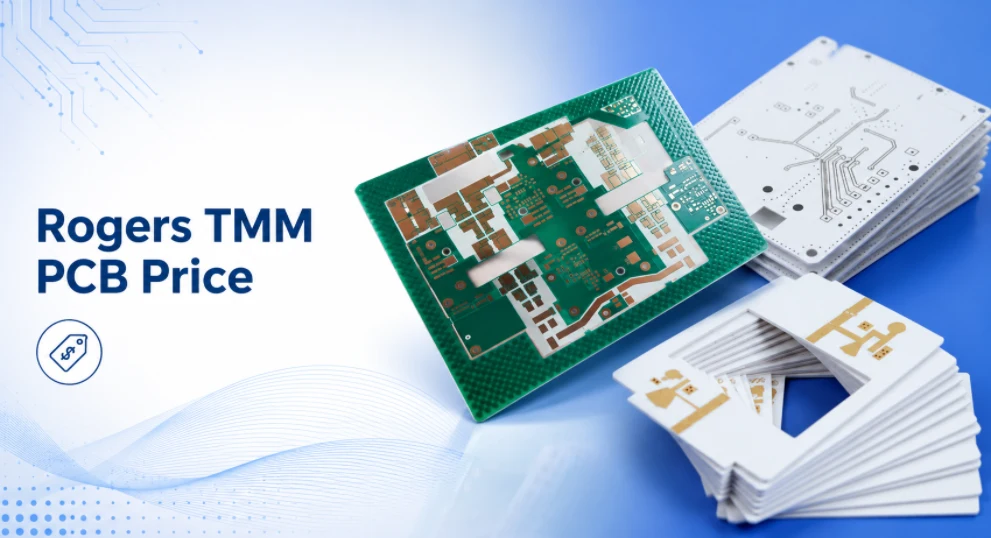
Table of Contents
- Rogers TMM PCB Price and Quote Intent
- Rogers TMM PCB Cost Drivers by Material, Stackup and Process
- How Rogers TMM Grade, Thickness and Copper Affect Price
- Engineering Requirements That Increase Rogers TMM PCB Cost
- Rogers TMM PCB Prototype Price vs Production Price
- How to Reduce Rogers TMM PCB Cost Without Hurting RF Performance
- Files and Specifications Needed for an Accurate Rogers TMM PCB Quote
- Quotation Mistakes That Cause Price Changes or Delays
Rogers TMM PCB price cannot be reduced to one fixed number because the cost depends on TMM grade, dielectric thickness, layer count, hybrid or all-TMM stackup, copper weight, surface finish, controlled impedance, drilling complexity, routing, testing, material availability, quantity and lead time. A buyer searching this page usually wants a realistic quotation path, not a generic price list. This page explains which items move cost and how to prepare a quote package that lets a PCB manufacturer price the board accurately.
Because this is a PCB manufacturing site, the goal is not to give a misleading “from $X” estimate. The goal is to help purchasing and engineering teams understand what drives cost before they release files. For the manufacturing process behind these cost factors, see the Rogers TMM PCB fabrication guide. For supplier evaluation, see the Rogers TMM PCB manufacturer page.
Rogers TMM PCB Price and Quote Intent
Why is there no standard Rogers TMM PCB price?
A Rogers TMM PCB is quoted from the released manufacturing data. Two boards with the same outline can have very different prices if one is a double-sided TMM3 RF board and the other is a multilayer TMM10i hybrid with controlled impedance, ENEPIG, dense via fences and microsection requirements. The laminate itself is only one part of the cost. Tooling, engineering review, process setup, yield risk, coupon testing and documentation can also be significant, especially for prototypes and small lots.
What does a buyer really need when asking about price?
Most buyers need three answers: whether the board is manufacturable, what choices are driving cost and what information is missing from the RFQ. A useful quote should identify assumptions. If the material grade is missing, the quote should say so. If controlled impedance is not specified but the board clearly has RF traces, the manufacturer should ask. If ENIG is specified on a loss-sensitive microwave board, the manufacturer should flag the RF trade-off instead of blindly pricing it.
How should price pages support B2B industrial purchasing?
A B2B price page should help the buyer make a decision: prepare files, avoid unnecessary cost, understand lead-time risk and know what to ask the supplier. It should not pretend that a complex RF PCB can be priced without stackup, quantity and technical requirements. This page is therefore structured around RFQ accuracy and cost control.
Rogers TMM PCB Cost Drivers by Material, Stackup and Process
What are the main cost drivers?
The main cost drivers are laminate grade, laminate thickness, panel utilization, layer count, hybrid construction, copper weight/profile, surface finish, minimum line/gap, controlled impedance, via density, drilling/tool wear, routing complexity, inspection, documentation, quantity and lead time. TMM’s ceramic filler also affects tool wear, which is part of manufacturing cost for dense or thick boards.
| Cost driver | Price impact | Why it changes the quote | Cost-control option |
|---|---|---|---|
| TMM grade | High | Different grades have different availability, Dk and demand. | Use the lowest-cost grade that still meets RF requirements. |
| Layer count | High | More layers add lamination, registration and yield risk. | Keep RF design single/double-sided when possible. |
| Hybrid stackup | Can reduce or increase | Saves premium material but adds lamination complexity. | Use TMM only on RF layers and keep stack symmetric. |
| Surface finish | Medium | ENIG/ENEPIG cost more than OSP/silver and may affect RF loss. | Choose finish from RF and assembly needs, not habit. |
| Controlled impedance | Medium | Requires stackup calculation, coupons and measurement. | Specify only the structures that truly need control. |
| Testing and documentation | Medium to high | Microsection, CoC, lot traceability and RF coupons add work. | Match documentation to product risk. |
| Quantity | Large per-unit effect | Tooling and setup are spread over more boards. | Quote prototype, pilot and production tiers separately. |
Why do controlled-impedance boards cost more?
Controlled impedance adds engineering calculation, stackup confirmation, coupon design, production control and measurement. On TMM, it may also require tighter etch compensation because high-Dk grades create narrower lines. The cost is justified when impedance is part of product function. It is wasteful only when every trace is marked critical without real need.
Why do small quantities look expensive?
Prototype and small-lot pricing includes setup, engineering review, tooling, material procurement and panel setup spread across few boards. The per-board number can look high, but the goal is risk reduction. A measured prototype is much cheaper than discovering an antenna, filter or launch problem in production.
How Rogers TMM Grade, Thickness and Copper Affect Price
Which Rogers TMM grades are more expensive?
Pricing depends on supply, thickness, copper cladding and purchase quantity, so a universal grade ranking is not reliable. In practice, higher-Dk and specialty “i” grades may have more limited stock or smaller purchasing flexibility. If TMM3 or TMM4 meets the electrical requirement, it may quote better than a high-Dk specialty build. If TMM10/TMM10i/TMM13i is required for miniaturization, the higher material cost may be justified by smaller board size or product performance.
How does board thickness change price?
Thicker laminates consume more material and may reduce panel yield. Very thick boards also affect drilling, routing and via aspect ratio. Thin boards may be fragile and need careful handling. A thicker single TMM laminate may sometimes be simpler than bonding multiple layers, but the best answer depends on the required dielectric thickness and stackup.
How do copper weight and copper profile affect cost?
Heavier copper increases material and processing time and can make fine RF geometry harder to etch. Low-profile copper may be preferred for lower RF loss, but availability and adhesion requirements must be reviewed. The copper decision should match the loss budget, current handling and etch tolerance.
Engineering Requirements That Increase Rogers TMM PCB Cost
Which design features increase engineering cost?
Features that increase engineering cost include tight impedance tolerance, multiple impedance structures, insertion-loss coupons, blind or buried vias, backdrilling, dense via fences, very narrow gaps, edge-plated structures, cavity features, tight routed edges near antennas, wire-bondable finish, special packaging and high-reliability documentation. These features may be necessary, but they should be specified deliberately.
Does ENIG make a Rogers TMM PCB more expensive?
ENIG usually costs more than OSP or immersion silver. It can also increase RF conductor loss because of the nickel layer. ENIG is still useful for durability and assembly compatibility, but for microwave loss-sensitive lines, the choice should be reviewed. ENEPIG adds another cost step and is typically chosen when wire bonding or demanding assembly reliability requires it.
Why do inspection and documentation change the quote?
Material traceability, microsection reports, impedance reports, CoC, first-article inspection and thermal-stress coupons all require labor and process control. Industrial, aerospace, defense and high-reliability products often need those records. A consumer prototype may not. The RFQ should state the documentation level so suppliers quote the same requirement.
Rogers TMM PCB Prototype Price vs Production Price
Why is a Rogers TMM prototype more expensive per board?
A prototype absorbs setup and engineering cost across a small quantity. It may also require special material ordering, coupon design, manual review and quick-turn scheduling. The prototype should be priced as an engineering validation step, not a production unit-cost benchmark. Its value is proving impedance, insertion loss, antenna tuning, filter response and manufacturability before volume production.
How does production pricing improve?
Production pricing improves when material purchasing is planned, panel utilization is optimized, tooling is already released, process settings are stable and inspection methods are defined. Per-board cost drops because fixed costs are spread over more units. However, production does not automatically become cheap if the design has poor panel yield, fragile RF gaps, high scrap risk or heavy documentation requirements.
Should buyers ask for tiered pricing?
Yes. Quote prototype, pilot run and production tiers separately. A useful RFQ might ask for 5 pcs, 20 pcs, 100 pcs and 500 pcs. This lets the buyer see how setup, material and yield affect price. It also helps decide whether a prototype should use the full production stackup or a simplified validation coupon.
How to Reduce Rogers TMM PCB Cost Without Hurting RF Performance
How can cost be reduced safely?
- Use TMM only on RF-critical layers in a well-designed hybrid stackup.
- Choose the TMM grade that meets the requirement rather than the highest Dk available.
- Avoid unnecessarily tight impedance tolerance.
- Use low-loss, cost-effective finishes such as OSP or immersion silver when assembly permits.
- Increase dielectric thickness or adjust Dk to create manufacturable line widths.
- Reduce unnecessary blind/buried vias, backdrilling and complex routing features.
- Design for panel utilization and avoid unusual outline waste.
- Build a prototype to prevent production scrap.
What cost reductions are risky?
Risky reductions include changing TMM grade without RF approval, replacing low-profile copper with rougher copper on a loss-sensitive design, switching surface finish without measurement, removing impedance coupons, relaxing critical antenna dimensions or making a hybrid stackup asymmetric. These can reduce purchase price while increasing engineering failure risk.
When should RO4350B be considered instead of TMM?
If the design only needs mainstream RF performance near Dk 3.48 and does not need TMM’s high-Dk range or specific thermoset/thermal behavior, RO4350B may be more economical. If the design needs TMM10/TMM10i/TMM13i for compact high-Dk structures or TMM’s copper-matched reliability, TMM may justify the cost. Material selection should be reviewed by engineering, not purchasing alone.
Files and Specifications Needed for an Accurate Rogers TMM PCB Quote
What files should be sent?
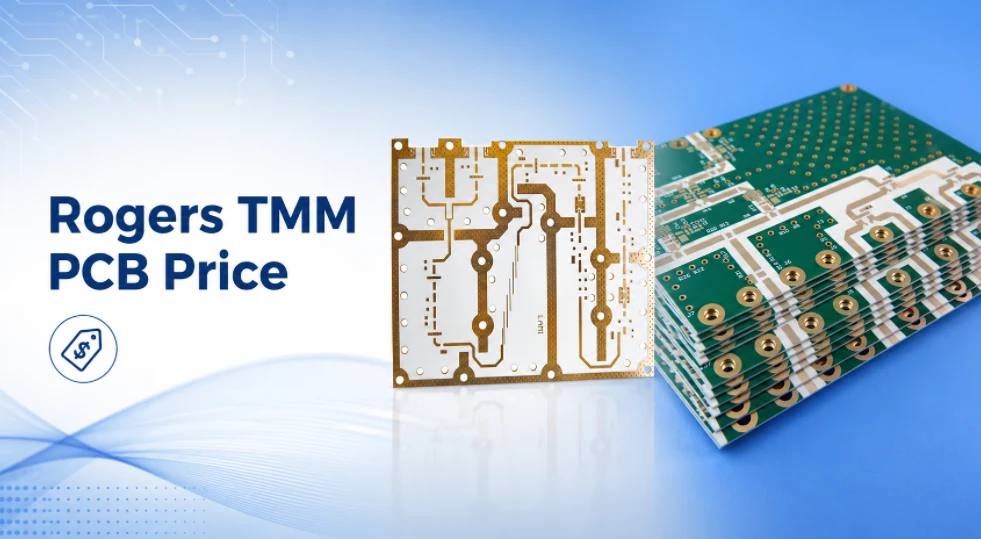
Send Gerber, ODB++ or IPC-2581 data, drill files, fabrication drawing, stackup, netlist if available, assembly drawing if assembly is included and any RF test requirement. The fabrication drawing should include TMM grade, dielectric thickness, finished board thickness, copper weight, surface finish, impedance targets, tolerances, acceptance class and documentation requirements.
What RF information shortens quote time?
Include operating frequency range, critical RF function, line type, impedance tolerance, loss budget, antenna/filter critical dimensions, connector type and whether coupons are required. If the board is a repeat order, include the previous revision and measured results. If it is a new prototype, identify which result the prototype is meant to validate. Prototype planning is covered in the Rogers TMM PCB prototype guide.
Quotation Mistakes That Cause Price Changes or Delays
What causes Rogers TMM quotes to change after review?
Common causes include missing material grade, unclear stackup, unspecified surface finish, controlled impedance added late, unrealistic line/gap, missing drill file, conflicting drawings, ENIG specified on a low-loss RF path, unbalanced hybrid stackup, missing test requirements and a quantity change after material procurement. Most quote changes are caused by missing assumptions rather than supplier bad faith.
How can buyers avoid quotation delays?
Send a complete package, identify the RF-critical features, state the quantity and delivery target, and allow the manufacturer to ask engineering questions before purchase approval. For complex boards, a short DFM review before final quote often saves more time than pushing for the fastest number.
Common Rogers TMM PCB Pricing Scenarios
Why does a simple two-layer TMM board quote differently from a hybrid multilayer?
A simple two-layer TMM board usually has fewer process steps: image, etch, drill, plate if double-sided, finish, route and test. A hybrid multilayer adds lamination, bond material, registration control, more drilling/plating risk and a larger stackup review. Even if the board outline is the same, the process route is different. That difference becomes visible in price, lead time and minimum order planning.
Why does quote validity matter for Rogers TMM materials?
Specialty RF laminate availability and pricing can change with stock, thickness, copper cladding and supplier lead time. A quote may be valid only for a specific period and quantity. If approval is delayed, the manufacturer may need to reconfirm material. Buyers can reduce risk by approving material assumptions early and by asking for alternate quantities or approved alternate constructions when possible.
How should purchasing compare quotes from different suppliers?
Compare the assumptions, not only the final number. One quote may include impedance coupons, material traceability and microsection; another may not. One may use immersion silver; another may assume ENIG. One may quote a true TMM grade; another may assume a substitute. A fair comparison requires the same stackup, finish, test requirement, documentation and delivery target.
MOQ, Lead Time and Material Availability for Rogers TMM PCB Price
Why can MOQ affect Rogers TMM PCB pricing?
Minimum order quantity can be affected by laminate sheet size, stocked thickness, copper cladding and supplier purchasing rules. If only a small area of a special TMM grade is needed, the buyer may still pay for a larger sheet or material lot. Panel utilization then becomes important because unused laminate still affects cost. Asking for multiple quantities helps show where the unit price starts to improve.
How does lead time affect price?
Short lead time can increase price when material is not in stock, when engineering review must be expedited, or when the build requires special coupons and inspection. A realistic lead time allows the manufacturer to source material, prepare tooling, confirm stackup and schedule controlled processing. For critical RF boards, rushing clarification can create a higher risk than the price premium itself.
How can buyers make supplier quotes comparable?
Send the same data package to each supplier and require the same assumptions: material grade, thickness, copper, finish, impedance tolerance, testing, documentation, quantity and lead time. Ask suppliers to state exclusions. A lower quote that excludes impedance coupons, material traceability or required finish is not actually lower; it is quoting a different product.
Rogers TMM PCB FAQ
How much does a Rogers TMM PCB cost?
The price depends on grade, thickness, layer count, copper, finish, impedance, testing, quantity and lead time. A reliable price requires manufacturing files and stackup details.
Why is Rogers TMM more expensive than FR4?
TMM is a specialty microwave laminate with controlled dielectric properties and specialized handling/fabrication requirements. It is used when RF performance and reliability justify the cost.
How can I get a lower Rogers TMM PCB price?
Use TMM only where RF performance needs it, avoid over-tight tolerances, choose finish carefully, improve panel utilization and provide complete quote data to reduce engineering uncertainty.

Recommended Posts

Taconic RF-35 PCB Manufacturing Service — Prototype Through Volume Production
Figure 1. Taconic RF-35 PCBTaconic RF-35 is the workhorse...

Isola Astra MT77 PCB Manufacturing
Figure 1. Isola Astra MT77 PCB ManufacturingIsola Astra...

Custom Rogers RO4835 PCB Fabrication & Assembly Services
Figure 1. Rogers RO4835 PCBRogers RO4835 PCB is a...

Nelco N4000-13 PCB Material and Manufacturing Guide | Highleap Electronics
Figure 1. Nelco N4000-13 PCBNelco N4000-13 PCB is a...
How to get a quote for PCBs
Let’s run DFM/DFA analysis for you and get back to you with a report. You can upload your files securely through our website. We require the following information in order to give you a quote:
-
- Gerber, ODB++, or .pcb, spec.
- BOM list if you require assembly
- Quantity
- Turn time
For PCBA services, please provide your BOM (Bill of Materials) and any specific assembly instructions. We also offer DFM/DFA analysis to optimize your designs for manufacturability and assembly, ensuring a smooth production process.