
PCB Cost Per Square Inch: What Drives PCB Price and How to Reduce It
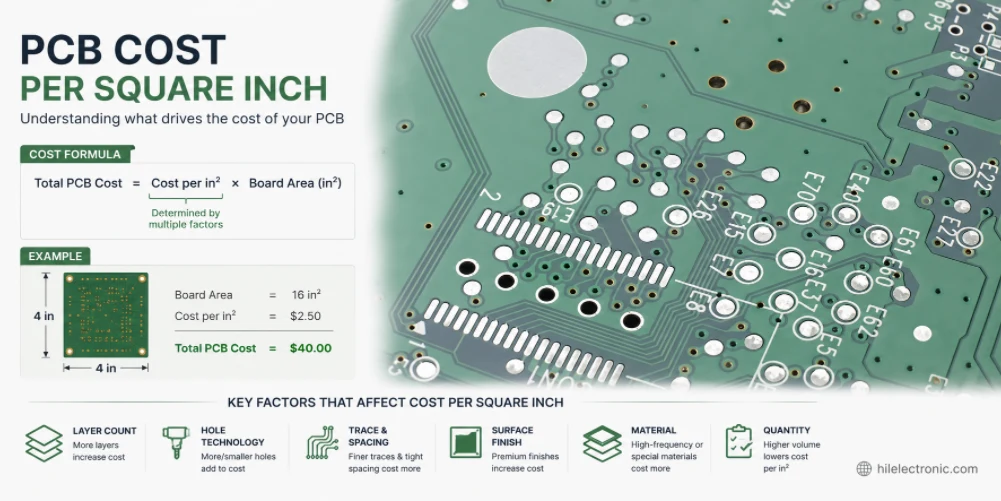
Figure 1. PCB cost per square inch image for PCB manufacturing review.
“Cost per square inch” is how many buyers try to benchmark PCB price — but the honest answer is that area is only one of many factors, and a small, complex board can cost far more per square inch than a large, simple one. Understanding what actually drives the price lets you design for cost and get accurate quotes. This guide breaks down what determines PCB cost, why per-square-inch figures mislead, how prototype and volume pricing differ, how to reduce cost, and how Highleap Electronics quotes transparently.
1. What determines the cost of a PCB?
PCB cost is determined by board size, layer count, material, copper weight, the minimum trace/space and hole sizes, surface finish, special features, and — above all — quantity. No single one sets the price; they combine, and a change in any can move the cost significantly. The main drivers:
| Cost driver | Effect on price |
|---|---|
| Board size (area) | More area uses more material |
| Layer count | Each added layer adds processing and cost |
| Material & copper weight | High-performance laminate and heavy copper cost more |
| Min trace/space & holes | Finer features and small/blind vias raise cost |
| Surface finish | ENIG and specialized finishes cost more than HASL |
| Quantity | Setup is amortized, so unit price falls with volume |
Quantity is the biggest lever because much of a PCB’s cost is fixed setup — tooling, films, and panel preparation — that is spread across the order. The same factors appear whenever you look at a custom circuit board cost, and complex constructions like HDI carry their own premium, as seen in HDI PCB cost. Material prices also move with the market, including copper prices.
2. Why “cost per square inch” can mislead you
Cost per square inch is misleading because it captures only area while ignoring layer count, feature complexity, material, finish, and quantity — so a tiny, dense, multilayer board can cost several times more per square inch than a large, simple two-layer one. Two boards of identical area can have wildly different prices, which means a single per-square-inch number cannot be applied across different designs.
The metric also hides the fixed-cost effect: because setup is spread over the panel and the order, the per-square-inch cost of a small prototype run is far higher than the same board in volume, even though the design is unchanged. Per-square-inch can be a rough sanity check when comparing very similar boards at the same quantity, but it should never replace a real quote based on your actual stackup, features, and order size. Treating it as a fixed rate leads to budget surprises the moment complexity or quantity changes.
3. PCB prototype vs volume pricing: why quantity changes everything
PCB prototypes have a high per-unit cost because fixed setup is spread over only a few boards, while volume production drops the per-unit cost sharply as that same setup is amortized across many units. This is why a quote for 5 boards and a quote for 5,000 of the same design look so different on a per-board basis. The dynamic:
- Prototypes carry the full tooling and setup cost over a handful of boards, so each one is expensive — but that is the right trade for validating a design fast, as with a prototype PCB run.
- Volume production spreads setup across thousands of units and improves panel utilization, so the per-board price falls dramatically, which is the realm of low-volume through high-volume manufacturing.
The practical implication is to budget prototypes and production separately and not to extrapolate one from the other. Knowing your eventual volume also lets a manufacturer advise on panelization and design choices that lower the production cost before you commit.
4. How to reduce PCB cost without hurting quality
You reduce PCB cost by using standard materials and finishes, keeping layer count and feature sizes no tighter than needed, optimizing the board for efficient panelization, and ordering in higher quantity where it fits — not by cutting corners on quality. Most savings come from design choices and order strategy, made before production. Practical levers:
- Use standard specs. Standard FR-4, common copper weight, and a standard finish cost less than specialized options when the design does not need them.
- Right-size complexity. Fewer layers and feature sizes within standard capability avoid premiums; only pay for HDI, blind vias, or tight tolerances where required.
- Panelize efficiently. Good panelization fits more boards per panel, lowering per-board cost and improving assembly throughput.
- Consolidate quantity. Ordering more units, or combining runs, spreads fixed setup further.
The most effective single step is a manufacturability review before building, which flags cost-driving features and tolerances early. Catching them through a manufacturability review turns expensive surprises into cheap design tweaks — far better than discovering them after tooling is cut.
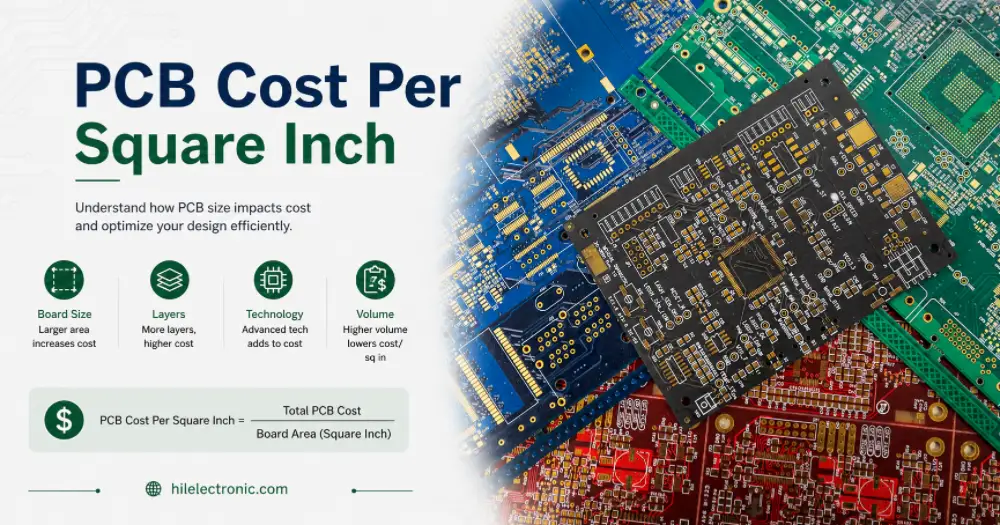
Figure 2. Manufacturing details for PCB cost per square inch should be checked before quotation and production.
5. PCB vs PCBA cost: the bare board is only part of it
The bare PCB is often a small fraction of the finished assembly cost — once you add components, assembly labor, and testing, the populated board (PCBA) can cost many times the bare board, with components frequently the largest single line item. Focusing only on the bare-board price can therefore miss where most of the money actually goes.
Assembled cost includes the components themselves (often dominant), the SMT and through-hole assembly process, inspection and testing, and any special handling or programming. Component sourcing strategy, BOM choices, and test scope can move the total far more than a small change in bare-board price. That is why a complete turnkey assembly quote — covering board, parts, build, and test together — gives a truer picture of landed cost than a bare-board figure alone, and why design decisions that ease assembly and test pay back across the whole order.
6. How Highleap quotes PCB and PCBA cost
Highleap provides a PCB price based on your actual specifications — stackup, material, finish, features, and order size — rather than a flat per-square-inch rate, so the price reflects the real board instead of an assumption. Sending complete data lets the quote be accurate the first time, which is faster and avoids the risk padding that vague RFQs invite.
Because quantity and complexity drive cost so strongly, Highleap can advise where standard specs, panelization, or design tweaks lower the price, and quote both the bare PCB manufacturing and full turnkey assembly so you see the true landed cost. A pre-build manufacturability review surfaces cost-driving features before tooling. When you request a quote, include the board size, layer count, material and finish, finest features, target quantity, and whether you need assembly, so the figure is precise and the cost-reduction options are clear.
7. PCB cost FAQ
How much does a PCB cost per square inch?
There is no fixed rate — it depends on layers, material, features, finish, and quantity. A simple two-layer board in volume is inexpensive per square inch, while a small, dense multilayer board can cost several times more, so a real quote is needed.
Why is my small PCB so expensive?
Because fixed setup costs — tooling, films, panel preparation — are spread over few boards, and complexity (layers, fine features, special finish) adds premiums regardless of size. Small prototypes therefore have a high per-board cost even when the design is simple.
Does a larger PCB always cost more?
More area uses more material and tends to cost more, but layer count, complexity, and quantity often matter more. A large simple board can be cheaper per square inch than a small complex one, so size alone does not decide price.
What is the cheapest PCB surface finish?
HASL is generally the most economical finish, while ENIG and specialized finishes cost more but offer flatness and other benefits. Choosing the finish your design actually needs, rather than the most premium one, controls cost.
How can I get a cheaper PCB without lowering quality?
Use standard materials and finishes, keep layers and feature sizes within standard capability, panelize efficiently, and order in higher quantity where it fits. A manufacturability review before building catches cost-driving features early.
Is the PCB or the components more expensive in an assembly?
In most assembled boards, components are frequently the largest single cost, and the populated board can cost many times the bare PCB once parts, assembly, and test are included. This is why a full assembly quote matters more than the bare-board price.

Recommended Posts
Taconic RF 35 vs RO4350B PCB
Table of contentsRF-35 vs RO4350B Procurement and...
TMM4 Filter PCB Manufacturing
TMM4 filter PCB manufacturing is controlled by the...
TMM3 PCB Manufacturing for RF Modules
TMM3 PCB manufacturing is most useful where the RF module...
TMM6 PCB Fabrication
TMM6 fabrication is the process-control page for a mid-Dk...
How to get a quote for PCBs
Let’s run DFM/DFA analysis for you and get back to you with a report. You can upload your files securely through our website. We require the following information in order to give you a quote:
-
- Gerber, ODB++, or .pcb, spec.
- BOM list if you require assembly
- Quantity
- Turn time
For PCBA services, please provide your BOM (Bill of Materials) and any specific assembly instructions. We also offer DFM/DFA analysis to optimize your designs for manufacturability and assembly, ensuring a smooth production process.