
Water Temperature Sensor PCB Design Guide

Figure 1. water temperature sensor PCB
A water temperature PCB is a circuit board that measures, and often controls, the temperature of water using a temperature sensor, signal-conditioning electronics, and sometimes a controller that switches a heater or pump. The hard parts of the design are not the microcontroller code but the physical realities: choosing a sensor with the right accuracy, getting it reliably into the water, and keeping moisture away from the electronics for years. This guide walks through sensor selection, probe design, waterproofing, accuracy, and the manufacturing choices that decide whether a water temperature PCB survives in a wet environment.
Key takeaways
- Sensor choice drives everything: NTC thermistors are cheap and common, RTDs (PT100/PT1000) are the most accurate, and the DS18B20 is a popular sealed digital probe.
- Keep the electronics out of the water; put a sealed probe in the water and condition the signal on a dry board.
- Moisture protection (conformal coating, potting, or an IP-rated enclosure) and a corrosion-resistant finish such as ENIG are essential for long life.
- Accuracy depends on calibration and a clean analog front end, not just the sensor’s datasheet figure.
- Manufacturing matters: coating, finish, and testing for humid service should be planned with the assembler, not added as an afterthought.
Table of Contents
What a Water Temperature PCB Does
At its simplest, the board reads a temperature and reports it. More often it also acts on that reading, switching a heater, pump, valve, or fan to hold a setpoint. The same core design appears across many products.
- Aquariums and reptile habitats, holding a stable, narrow temperature band.
- Water heaters and boilers, where safety limits and control accuracy both matter.
- Coolant and HVAC loops, monitoring flow temperature for efficiency and protection.
- Industrial process tanks, where the sensor may face chemicals, pressure, or fouling.
- Appliances such as kettles, coffee machines, and dishwashers.
Each application sets the requirements that follow, the accuracy you need, the temperature range, how aggressive the water is, and whether the board only senses or also controls. Pin those down first, because they decide the sensor and the enclosure.
Choosing the Temperature Sensor
The sensor is the most consequential choice in the design. The main options trade accuracy, cost, range, and ease of interfacing against one another.
| Sensor | Typical accuracy | Interface | Notes |
|---|---|---|---|
| NTC thermistor | ±0.2 to ±1 °C | Analog (voltage divider + ADC) | Cheap and common; nonlinear, needs a lookup or equation |
| RTD (PT100 / PT1000) | ±0.1 °C or better | Analog, precision front end | Most accurate and stable; needs 3- or 4-wire wiring for best results |
| DS18B20 (digital) | ±0.5 °C | 1-Wire (digital) | Available as a sealed stainless probe; very easy to use |
| Digital I²C sensor | ±0.1 to ±0.5 °C | I²C (digital) | Integrated ADC; typically mounted on the board, not in the water |
| Thermocouple | ±1 to ±2 °C | Analog, cold-junction compensation | Wide range; usually overkill for water temperatures |
How to read this table for water
For most water applications, an NTC thermistor or a DS18B20 covers the job at low cost. Choose an RTD when you need laboratory-grade accuracy and long-term stability, and accept the more demanding analog front end that comes with it. A thermocouple’s wide range is rarely needed for water, which freezes and boils within a narrow span. The right answer is the cheapest sensor that meets your accuracy and reliability target, not the most precise one available.
Probe Design: Getting the Sensor Into the Water
The single most reliable architecture is to separate the sensing element from the electronics: put a sealed probe in the water and keep the board dry. This avoids the hardest reliability problem in the whole design.
Sealed probes vs board-mounted sensors
A sealed probe, such as a DS18B20 in a stainless-steel sheath or an RTD in a protective tube, sits in the water and connects back to the board by cable. A board-mounted digital sensor is simpler electrically but forces you to bring water to the board or the board to the water, which is far harder to seal. For anything immersed, a probe-plus-cable approach is almost always the better engineering.
Thermal coupling and response time
A probe reads the temperature of its own tip, not of the water directly, so good thermal contact matters. A thin-walled, thermally conductive sheath responds quickly; a thick or air-gapped housing lags and reads low during changes. If your control loop needs to react fast, favor a probe with low thermal mass and good contact, and mount it where water actually moves rather than in a dead pocket.
Waterproofing the Electronics
Water and condensation are the enemies of a long-lived board. Protection comes at several levels, and many products combine them.
Coating, potting, and enclosures
- Conformal coating is a thin protective film applied over the assembled board, guarding against humidity and splashes. It is the lightest level of protection and is applied during PCB assembly.
- Potting encases the board (or a section of it) in resin, giving strong protection against moisture, vibration, and chemicals at the cost of weight and serviceability.
- An IP-rated enclosure keeps water away from the electronics entirely, with the probe and cable passing through a sealed gland.
Understanding IP ratings
When an enclosure protects the electronics, its ingress protection (IP) rating tells you how well it keeps water out. The second digit covers water, and the higher it is, the more protection.
| Rating | Water protection |
|---|---|
| IP65 | Protected against water jets from any direction |
| IP67 | Withstands temporary immersion (about 1 m for 30 minutes) |
| IP68 | Withstands continuous immersion at a specified depth |
For a sensor that sits in water, the wet end (the probe) and the dry end (the main board) usually have different requirements: the probe is sealed or immersion-rated, while the main electronics live behind an IP67 or IP68 barrier with the cable entering through a sealed gland. That main board is still produced through standard PCB manufacturing; the rating describes the enclosure around it. Match the rating to how and where the product is used.
Why humidity matters to the bare board itself
Even without liquid water, humidity affects a PCB. Absorbed moisture shifts the laminate’s dielectric properties slightly, which can matter for precision analog measurement, and it accelerates corrosion at exposed copper and component leads. This is why the surface finish is a design decision: an immersion finish such as ENIG (electroless nickel immersion gold) resists corrosion and tarnish far better than bare copper, making it a sensible default for boards that will live in humid service. Discussing finish and coating early with your fabricator, ideally as part of a DFM review, avoids a board that passes on the bench but fails in the field.
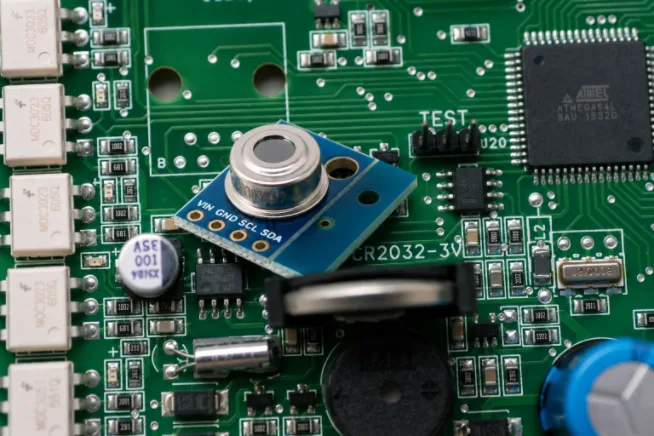
Figure 2. water temperature sensor PCB details
Signal Conditioning and Control
The analog front end
How you condition the signal depends on the sensor. An NTC thermistor typically forms a voltage divider read by an ADC, with the nonlinearity corrected in software. An RTD needs a stable current source or ratiometric reference and a low-noise amplifier, and three- or four-wire connection to cancel lead resistance, which is the same Kelvin-sensing principle used for precision low-resistance measurement. Digital sensors such as the DS18B20 or an I²C device move the conversion into the sensor and hand you a number directly, trading some flexibility for simplicity and noise immunity.
From sensing to control
If the board controls temperature, it compares the reading to a setpoint and drives an output. Common choices are a relay or solid-state relay for a heater, or PWM for a pump or fan. When switching mains-powered heaters, the design crosses into power and safety territory, with creepage and clearance, isolation, and thermal management to consider, the domain of power electronics manufacturing. Keep the high-voltage switching section physically and electrically separated from the low-voltage sensing section so that switching noise and heat do not corrupt the measurement.
Accuracy, Calibration, and Drift
A sensor’s datasheet accuracy is a starting point, not a guarantee for your finished product. Real accuracy depends on the whole signal chain and on calibration.
Where error creeps in
- Reference and ADC error, which a ratiometric design can largely cancel.
- Lead resistance in RTD wiring, addressed by 3- or 4-wire connection.
- Self-heating, where the measurement current warms the sensor slightly; keep it low.
- Thermal lag between the probe tip and the water, set by probe design and placement.
Calibrating and managing drift
For accurate products, calibrate each unit, for example against a known reference at one or two points, and store the correction. Over time sensors drift, so periodic recalibration may be needed in instruments that must stay accurate for years. Decide up front how accurate the product must be and for how long, because that decision shapes the sensor grade, the front end, and the calibration process.
Manufacturing for Wet and Humid Service
A water-temperature board is only as reliable as the way it is built. Several manufacturing choices directly affect survival in a wet environment.
Finish, coating, and sealing as build steps
The corrosion-resistant finish, the conformal coating or potting, and the sealing of cable entries are all production operations, not design notes, and they need to be specified and verified on the line. An assembler experienced in coated and sealed boards will mask connectors correctly, control coating thickness, and cure properly, details that determine whether the protection actually works.
Testing and scaling up
Plan how each unit is verified: a functional test that powers the board and checks the reading against a reference confirms both the electronics and the calibration. As volume grows, consistent process control keeps every board behaving like the first, which is where a partner offering high-volume PCB assembly with stable, monitored processes earns its place. Building the bare board and assembling it under one roof, through integrated PCB manufacturing and assembly, also keeps accountability for the finish and coating in a single place.
From a single prototype to a production run, the same priorities hold: pick the right sensor, isolate the electronics from the water, protect against humidity, and build the board with a finish and process suited to wet service. For boards that must also handle heat from a heater stage, a manufacturer with metal-core assembly experience can help manage the thermal side, and you can read more about Highleap Electronics and our manufacturing capabilities.
Frequently Asked Questions
Which sensor is best for measuring water temperature?
For most projects, an NTC thermistor (cheap and accurate enough) or a DS18B20 sealed digital probe (very easy to use) is the practical choice. Choose an RTD such as a PT100 or PT1000 when you need the highest accuracy and long-term stability, accepting a more demanding analog front end.
Can I put the whole PCB in the water?
It is far more reliable to put only a sealed probe in the water and keep the board dry in an enclosure. Fully immersing electronics requires robust potting or sealing and is harder to do well, so probe-plus-cable is the recommended architecture for immersed sensing.
What surface finish should a water-temperature board use?
ENIG (electroless nickel immersion gold) is a sensible default for humid or wet service because it resists corrosion and tarnish much better than bare copper. Combine it with conformal coating or potting and a sealed enclosure for long-term reliability.
Do I need to calibrate every board?
For accurate products, yes. A one- or two-point calibration against a known reference, stored per unit, corrects sensor and front-end error. How tightly and how long the product must stay accurate determines whether periodic recalibration is also needed.
Why does my probe read low when the water heats up quickly?
That is thermal lag. The probe measures its own tip, and a thick or poorly coupled housing responds slowly. Use a thin, thermally conductive probe with good contact and mount it where the water actually moves to reduce the lag.
How do I safely switch a mains heater from the board?
Use an appropriately rated relay or solid-state relay, keep the high-voltage section physically separated from the low-voltage sensing section, and observe creepage, clearance, and isolation requirements. This is power and safety design and benefits from manufacturing experience with power electronics.
What IP rating does a water temperature sensor need?
It depends on use: IP65 resists water jets, IP67 withstands temporary immersion, and IP68 handles continuous immersion at depth. Typically the probe is sealed or immersion-rated while the main board sits behind an IP67 or IP68 barrier with a sealed cable gland, and achieving that sealing consistently at scale is part of dependable high-volume PCB assembly.

Recommended Posts
Taconic RF 35 vs RO4350B PCB
Table of contentsRF-35 vs RO4350B Procurement and...
TMM4 Filter PCB Manufacturing
TMM4 filter PCB manufacturing is controlled by the...
TMM3 PCB Manufacturing for RF Modules
TMM3 PCB manufacturing is most useful where the RF module...
TMM6 PCB Fabrication
TMM6 fabrication is the process-control page for a mid-Dk...
How to get a quote for PCBs
Let‘s run DFM/DFA analysis for you and get back to you with a report. You can upload your files securely through our website. We require the following information in order to give you a quote:
-
- Gerber, ODB++, or .pcb, spec.
- BOM list if you require assembly
- Quantity
- Turn time
For PCBA services, please provide your BOM (Bill of Materials) and any specific assembly instructions. We also offer DFM/DFA analysis to optimize your designs for manufacturability and assembly, ensuring a smooth production process.