
The True Blind Buried Via PCB Cost Breakdown

Table of Contents
- Blind Buried Via PCB Cost: What the Per-Board Price Actually Covers
- Material Grade Impact on Blind Buried Via PCB Cost
- Manufacturing Process Cost: Lamination, Drilling, and Plating
- Testing and Quality Assurance Costs
- NRE and Tooling: One-Time Costs That Recur If Not Managed
- Via Architecture and Design Decisions That Directly Control Cost
- Cost-Optimized Blind Buried Via PCB Fabrication from Highleap
Blind buried via PCB cost ranges from $28–$85 per board for Type I HDI at prototype quantities to $350+ for complex Type III designs — but these quoted prices cover only 60–70% of what procurement teams actually spend. The remaining 30–40% is NRE paid multiple times when tooling isn’t retained, yield losses that trigger re-orders, incoming inspection failures at the assembly shop, and design respins that result from skipped DFM review. (see non-recurring engineering costs) This guide breaks down every cost component in the blind buried via PCB supply chain, with specific numbers at each decision point, so that the first quote you receive is the last surprise you encounter.
Get Your Blind Via PCB Cost Analysis
1) Blind Buried Via PCB Cost: What the Per-Board Price Actually Covers
1.1 The Five Cost Components
When a factory quotes $65/board for a Type II HDI, that number covers fabrication labor, material consumption, and factory overhead. It does not cover:
- NRE and tooling — CAM setup, drill programs, impedance coupons, first-article inspection. Typically $600–$1,800 per design, charged once but recurring on each design revision.
- Yield loss allocation — The factory quotes for delivered quantity, but internally absorbs 3–8% scrap. You pay for this indirectly through pricing tiers. If your supplier’s yield drops below their assumption, they either re-run at cost or deliver short — both cost you schedule.
- Incoming inspection failure costs — Boards that fail your incoming inspection or generate rejects at the assembler require replacement orders. At $65/board with a 3-week lead time, each reject event costs $65 plus schedule impact worth multiples more.
- Design respin costs — A DFM issue discovered during fabrication costs a full re-order, new NRE, and lost schedule. At HDI complexity levels, respins average $3,500–$9,000 in direct and schedule cost.
- Expedite premiums — When schedule planning underestimates lead time and urgent delivery is needed, expedite fees add 25–120% to the base price.
For a typical 500-board production order on a Type II HDI design:
- Quoted unit cost: $72
- NRE amortized over 500 boards: $2.40/board
- Yield loss and replacement probability: $3.60/board
- Incoming inspection risk allocation: $1.80/board
- DFM respin risk (probability-weighted): $4.20/board
- True cost per delivered, working board: ~$84 — 17% above quoted price
1.2 Cost Scales Non-Linearly with HDI Type
The cost multiple relative to an equivalent standard through-hole board:
| HDI Type | Structure | Lamination Cycles | Cost Multiple vs. Standard | Typical Price Range (100×100mm, 50 pcs) |
|---|---|---|---|---|
| Standard multilayer | Through-hole vias only | 1 | 1.0× | $8–$22/board |
| Type I HDI | 1+N+1, blind vias outer layers | 2 | 2.3–3.2× | $28–$65/board |
| Type II HDI | 2+N+2, two buildup layers/side | 3 | 3.8–5.5× | $55–$120/board |
| Type III HDI | Buried vias + blind vias | 4–6 | 5.8–9.5× | $120–$350+/board |
The exponential cost increase is not due to material quantity — it is due to process time, registration complexity, and yield risk compounding with each lamination cycle.
1.3 Prototype vs. Production Cost Structure
At prototype quantities (5–25 boards), NRE dominates total spend. A $75/board Type I HDI prototype with $900 NRE has a true per-unit cost of $111/board at 25 pieces. At 500 boards, NRE adds only $1.80/board and manufacturing optimization reduces unit cost to $52. This cost-versus-volume curve is steeper for HDI than for standard PCBs because setup and program costs are higher.
2) Material Grade Impact on Blind Buried Via PCB Cost
2.1 Material Cost by Grade
Laminate selection is the most controllable cost lever before fabrication begins:
| Material | Tg / Loss | Cost vs. FR-4 Baseline | Best Use Case |
|---|---|---|---|
| Standard FR-4 (Tg 135°C) | Baseline | 1.0× | Consumer electronics, low-speed industrial |
| High-Tg FR-4 (Tg 150–170°C) | Better thermal stability | 1.15–1.25× | Automotive, industrial (85°C+ operating temp) |
| Halogen-free FR-4 | RoHS / REACH compliance | 1.10–1.20× | Consumer products, EU regulatory requirements |
| Panasonic Megtron 6 | Df 0.002–0.004 at 10 GHz | 1.80–2.30× | High-speed digital > 10 Gbps, 5G mmWave |
| Isola I-Tera MT40 | Df 0.0031 at 10 GHz | 1.60–2.00× | Server backplanes, high-speed interconnects |
| a specialty low-loss laminate | Df 0.0037 at 10 GHz | 2.00–3.00× | RF/microwave, antenna boards |
2.2 Hybrid Stackup: The Practical Cost Optimization
For most HDI designs operating below 15 GHz, routing the critical RF or high-speed signal layers on Megtron 6 while using standard high-Tg FR-4 on inner cores reduces material cost by 40–55% with 5–10% signal performance degradation — a trade-off that most applications accept without functional impact.
A 6-layer Type I HDI example:
- Full Megtron 6 stackup: $94/board at 100 pieces
- Hybrid (Megtron 6 outer buildup layers + high-Tg FR-4 inner core): $67/board
- Full high-Tg FR-4: $52/board
For designs with tight trace width/spacing on outer layers (where Megtron 6 matters) but relaxed inner-layer requirements, hybrid is the cost-optimal choice. For purely functional FR-4 designs, the hybrid conversation is irrelevant — start with high-Tg FR-4.
2.3 Prepreg Lot Variation and Cost Predictability
Prepreg Dk varies ±0.02–0.05 between lots for standard FR-4. For controlled-impedance designs, this forces test coupon TDR verification on every production lot — adding $80–$180 per order in testing cost. Specifying a material with tighter Dk tolerance (Megtron 6: ±0.02 guaranteed) actually reduces this testing burden for high-volume production. The material cost premium may be partially offset by testing cost savings at production volumes above 200 boards/order.
3) Manufacturing Process Cost: Lamination, Drilling, and Plating
3.1 Lamination Cost Scaling
Each lamination cycle adds direct cost in press time, material (prepreg, copper foil), labor, and yield risk:
- Press time cost: $15–$35 per panel per cycle (8–12 hours of press time including cure and cool-down)
- Material per cycle: $8–$25/panel for prepreg and copper foil depending on stackup thickness and board size
- Registration and X-ray verification: $2–$8/panel per cycle for X-ray drill registration
- Yield risk per cycle: Each additional lamination cycle introduces 1–3% additional yield loss risk. At $75/board, 2% additional scrap costs $1.50/board in expected value.
Net: each additional lamination cycle beyond the first adds approximately $18–$45/board at prototype quantities, tapering to $9–$22/board at production volumes.
3.2 Laser Drilling Cost
Laser drilling for blind microvias is charged per panel, not per via:
- Setup cost: $45–$120/panel for optical calibration and program verification
- Processing cost: $0.008–$0.025 per via for CO₂ laser; $0.015–$0.040 per via for UV laser (required for PTFE laminates and tighter via geometries)
- Stacked via surcharge: Vias requiring fill between lamination stages add $0.05–$0.15/via for resin fill and $1.50–$5.00/panel for planarization
On a board with 600 blind vias (stacked configuration):
- Laser drilling: 600 × $0.018 = $10.80/board
- Via fill: 600 × $0.09 = $54.00/board
- Planarization: $3.50/board amortized
- Total via cost: ~$68/board
Converting those 600 stacked vias to staggered eliminates fill cost entirely: $10.80/board total. (see staggered vs stacked via comparison) The design constraint is 5–8% additional routing area for via offset pads — a trade-off that is almost always worthwhile except on the densest BGA fanout regions.
3.3 Plating Costs
Copper plating for blind via barrels adds $3–$8/panel per lamination cycle. For Class 3 designs requiring minimum 25µm barrel copper (vs. 20µm for Class 2), plating time increases 20–30%, adding $1–$3/panel. Via-in-pad designs require additional cap-plating after fill to restore pad flatness for BGA assembly, adding $4–$9/panel.

4) Testing and Quality Assurance Costs
4.1 Bare Board Electrical Test
All blind buried via PCBs require 100% electrical test. The two methods and their cost implications:
- Flying probe: No fixture cost. Test time: 4–12 minutes per board for HDI complexity. Cost: $3–$8/board depending on net count. Suitable for prototypes and low-volume production under 200 boards/order.
- Fixture-based (bed of nails): Fixture cost: $350–$1,200 one-time. Test time: 15–45 seconds per board. Cost: $0.50–$1.50/board after fixture amortization. Cost-effective above 300–500 boards/order.
4.2 X-Ray Inspection for Blind Via Verification
Standard optical AOI cannot verify blind via integrity — X-ray is required. (see X-ray PCB inspection) Cost:
- Sampling (5–10% of boards): $3–$12/panel. Catches systemic defects; misses individual board failures.
- 100% inspection: $8–$18/panel. The appropriate specification for Class 3 and any board where BGA assembly yield loss is expensive.
For a 100-board order with 100% X-ray at $12/panel and 4 boards/panel: $300 total, or $3/board. For a 1,000-board order at the same specification: same $3/board — X-ray cost scales linearly because the per-panel cost is fixed.
4.3 Controlled Impedance Test
Every controlled impedance board should ship with TDR coupon data. Cost: $45–$120 per production lot for coupon fabrication and TDR measurement (not per board — it’s a lot-level cost). At 100 boards/lot: $0.45–$1.20/board. At 500 boards/lot: $0.09–$0.24/board. Requesting a pass/fail certificate instead of raw TDR data saves nothing in manufacturing — the test is the same — but eliminates your ability to verify the impedance target was actually met.
5) NRE and Tooling: One-Time Costs That Recur If Not Managed
5.1 NRE Itemization for HDI Fabrication
| NRE Item | Type I HDI | Type II HDI | Type III HDI |
|---|---|---|---|
| CAM engineering and DFM review | $120–$200 | $180–$280 | $250–$400 |
| Drill program setup (per lamination cycle) | $80–$150 | $150–$280 | $250–$480 |
| Impedance coupon design and verification | $90–$160 | $90–$160 | $90–$160 |
| X-ray registration fixture programming | $60–$120 | $80–$160 | $100–$200 |
| First-article inspection and documentation | $100–$180 | $140–$240 | $180–$320 |
| Total NRE range | $450–$810 | $640–$1,120 | $870–$1,560 |
5.2 The Tooling Retention Question
Most factories retain tooling for 12–24 months at no charge. After that, tooling is either purged or maintained for a storage fee of $30–$80/month. If tooling is purged and you place a re-order, all NRE is charged again. For designs with 12+ month re-order cycles, paying the storage fee ($360–$960/year) is almost always cheaper than repeating NRE. Always clarify tooling retention policy before placing the first order, not after the second.
5.3 DFM Review as NRE Insurance
A factory that performs thorough DFM review before fabrication starts prevents the most expensive NRE scenario: a full respin. (see DFM review process) DFM review at reputable HDI factories costs nothing — it is included in the NRE. What varies is the quality and completeness of the review. Ask specifically: does DFM check include via-in-pad eligibility, stacked-to-staggered conversion opportunities, and impedance stackup verification? These three items catch 80% of respin-worthy HDI DFM issues.
6) Via Architecture and Design Decisions That Directly Control Cost
6.1 The Stacked vs. Staggered Decision
This single design choice has the largest per-board cost impact of any HDI decision outside of HDI type selection:
- Stacked microvias: Via in L1–L2 stacked directly on via in L2–L3. Enables highest routing density. Requires via fill and planarization between lamination cycles. Cost adder: $0.05–$0.15/via for fill + $1.50–$5.00/panel for planarization.
- Staggered microvias: Via in L1–L2 offset by minimum 0.25mm from via in L2–L3. Requires 5–8% more routing area. Zero fill or planarization cost. For a 500-via design, saving is $25–$75/board.
The routing area penalty for staggering is real but manageable on boards that are not at absolute density limits. The financial case for staggering is overwhelming except on the densest HDI designs.
6.2 Via-in-Pad: When It’s Necessary and What It Costs
Via-in-pad (VIP) is required for BGA pitches of 0.30–0.35mm and often for 0.40mm with high I/O count. Cost implications:
- Copper fill: $0.30–$0.70/via
- Cap plating for pad flatness: included in fill process
- Additional X-ray verification: $3–$8/panel
- Assembly yield loss allocation (VIP increases BGA void risk by 2–4%): $0.50–$2.00/board
Where pitch allows dog-bone via routing (via offset 0.20–0.30mm outside the BGA pad), use it. Dog-bone eliminates fill requirements, saves $0.25–$0.60/via, and reduces assembly risk. On a 200-via BGA: $50–$120/board saved with no electrical performance trade-off.
6.3 Layer Count Optimization: When HDI Reduces Total Cost
HDI is not always the more expensive option when total system cost is considered. A 10-layer standard through-hole board may be replaceable by a 6-layer Type II HDI:
- 10-layer standard: $38/board (100 pieces)
- 6-layer Type II HDI: $62/board — apparently more expensive
But if the 6-layer HDI enables 25% board size reduction: effective area-normalized cost = $62 × 0.75 = $46.50/board, plus enclosure and product savings from the smaller footprint. At production volumes where the product size reduction has market value, HDI frequently reduces total product cost despite higher per-board price. Evaluating blind buried via PCB cost without accounting for downstream value is an incomplete analysis.
7) Cost-Effective Blind Buried Via PCB Fabrication from Highleap
7.1 Transparent Cost Breakdown on Every Quote
Every Highleap HDI quote itemizes: base fabrication (broken down by process step), NRE (itemized by type with retention policy stated), testing method and cost, controlled impedance coupon status, and X-ray inspection specification. You see exactly what you are paying for and what is included versus what is an optional add-on.
7.2 DFM Review That Prevents Respins
Our HDI DFM review covers the five items most frequently responsible for blind buried via PCB cost overruns: stacked-to-staggered conversion opportunities (with routing area impact quantified), via-in-pad necessity assessment (dog-bone alternatives identified where pitch allows), HDI type reduction analysis (can Type II be achieved with Type I process?), impedance stackup verification against your target before fabrication begins, and panel utilization assessment (board dimension changes that improve utilization by 10%+ are flagged with cost savings quantified). This review is included at no charge on every new design.
7.3 Volume Pricing with Lifecycle Tooling Retention
Highleap retains tooling for 24 months standard (48 months for volume accounts) at no storage charge. Re-orders within the retention period carry zero NRE. For designs with 6–18 month production cycles, this retention policy alone saves $600–$1,800 per re-order cycle.
7.4 Cost Reduction Through Yield Discipline
Our Type I HDI yield consistently runs 96–98%. Type III HDI runs 90–94% — higher than the industry average of 85–92% — due to inter-cycle AOI gates that catch lamination and registration issues before the next cycle begins rather than at final test. Higher yield means fewer hidden replacement costs embedded in your pricing and fewer schedule disruptions from short-delivery events.

Recommended Posts
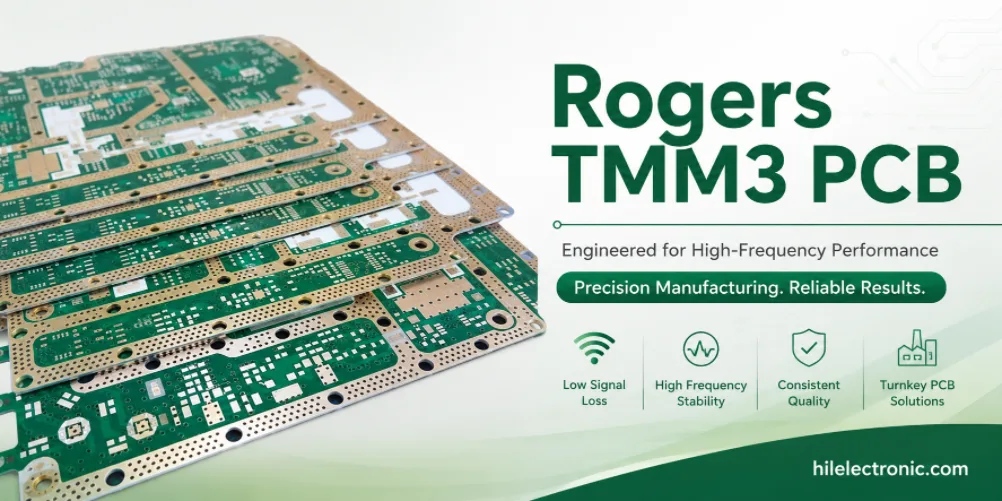
TMM3 PCB Manufacturing for RF Modules
TMM3 PCB manufacturing is most useful where the RF module...
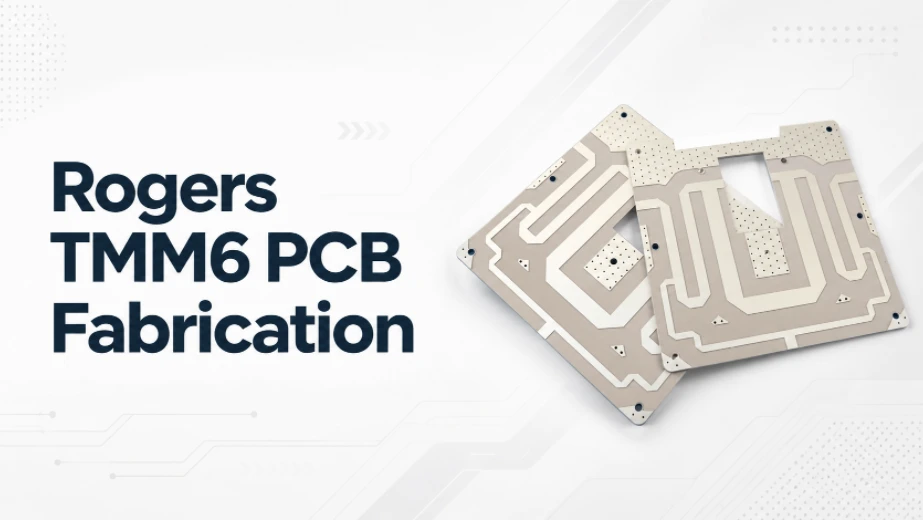
TMM6 PCB Fabrication
TMM6 fabrication is the process-control page for a mid-Dk...
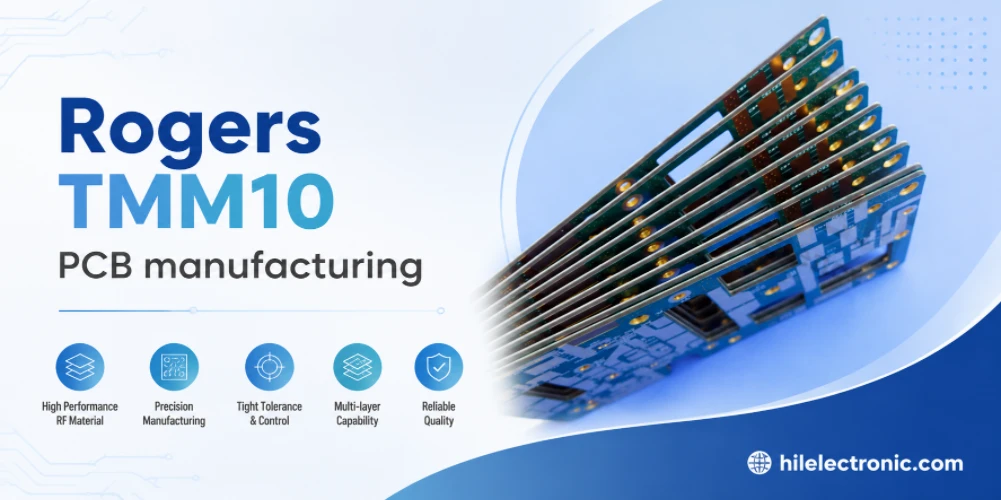
TMM10 PCB Manufacturing for Compact RF Designs
Table of contentsHow TMM10 Shrinks RF StructuresTMM10 vs...

TMM10i PCB Fabrication and DFM
TMM10i PCB fabrication has a stronger DFM emphasis because...
How to get a quote for PCBs
Let us run DFM/DFA analysis for you and get back to you with a report.
You can upload your files securely through our website.
We require the following information in order to give you a quote:
-
- Gerber, ODB++, or .pcb, spec.
- BOM list if you require assembly
- Quantity
- Turn time