
PCB Time-to-Market: How to Shorten Build Cycles
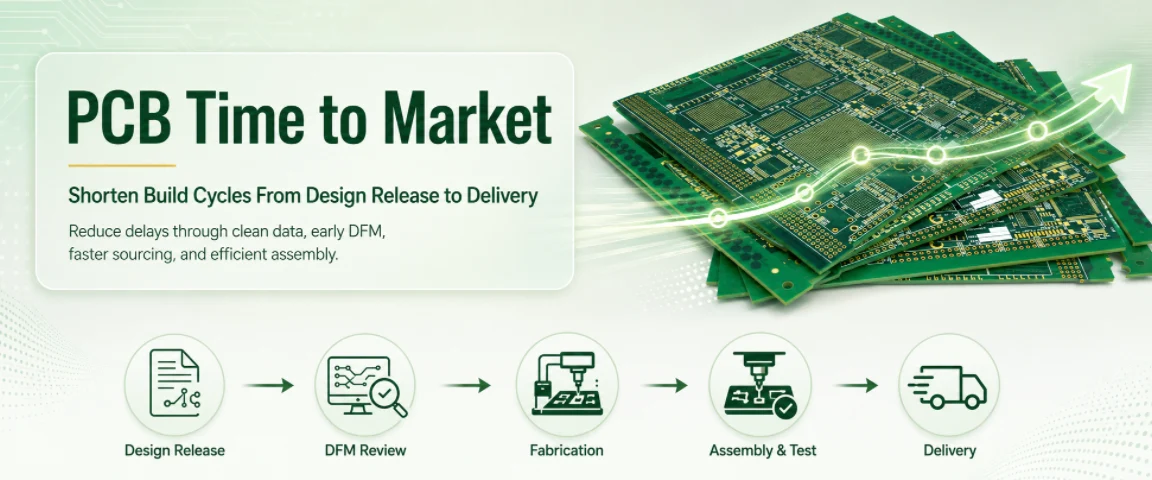
Figure 1. PCB time-to-market depends on design readiness, material availability, fabrication steps, assembly planning, and test preparation.
PCB time-to-market (TTM) is the total elapsed time from finishing your design to having tested, ready-to-ship boards in hand. It is one of the metrics hardware teams work hardest to shorten, because every week saved in getting to market is a competitive advantage. Reducing it is about removing delay from each stage of fabrication and assembly without sacrificing quality.
- TTM (time-to-market) is the full cycle from released design to shippable, tested boards.
- Most lost time comes from data problems, sourcing delays, and avoidable design revisions, not the factory line itself.
- A clean data package and an early design review are the cheapest ways to save weeks.
- Prototype and production runs have very different time budgets and should be planned separately.
Table of Contents
- What PCB Time-to-Market Means for a Board Project
- The PCB Timeline: Where Time Actually Goes
- Prototype vs Production Time Budgets
- How DFM Reduces Time-to-Market
- Choosing a Manufacturer to Minimize TTM
- Practical Steps to Accelerate a PCB Project
- Common Causes of PCB Delays and How to Avoid Them
- Frequently Asked Questions
What PCB Time-to-Market Means for a Board Project
Time-to-market is a business metric as much as an engineering one. A faster TTM means your product reaches customers sooner, your development costs are tied up for less time, and you respond to market changes more quickly. For a PCB, TTM spans every step after the design is frozen: data preparation, fabrication, component sourcing, assembly, testing, and shipping.
Key elements that make up TTM
- Data readiness: the time to assemble and verify a complete, manufacturable file set.
- Fabrication lead time: how long the bare board itself takes to build.
- Component procurement: the wait for parts, often the single longest variable.
- Assembly and test: placement, soldering, inspection, and functional verification.
- Logistics: packing, documentation, and freight to your location.
Treating TTM as a single number hides where the time actually goes. Breaking it into stages is the first step to compressing it, which is also how teams using our full manufacturing services plan realistic schedules.
The PCB Timeline: Where Time Actually Goes
It is easy to assume the factory line is the bottleneck, but in most projects the line is the fast part. Delays cluster around data, parts, and rework. Mapping each phase shows where attention pays off.
Key phases of a PCB timeline
- Design release: finalizing schematic, layout, and the full output package.
- Engineering review: the manufacturer checks manufacturability before tooling.
- Fabrication: producing the bare board, including any special stackup.
- Sourcing: ordering and receiving every component on the BOM.
- Assembly and test: building, inspecting, and verifying the populated board.
| Phase | Typical Driver | Where Delay Hides |
|---|---|---|
| Design release | Data completeness | Missing drill, BOM, or stackup notes |
| Engineering review | DFM feedback | Back-and-forth on unclear files |
| Fabrication | Layer count, finish | Special materials or tight tolerances |
| Sourcing | Part availability | Long-lead or single-source parts |
| Assembly + test | Complexity, inspection | Rework from late-found issues |
When you can see the phases, you can attack the slow ones first. Sourcing and rework are usually the biggest opportunities.
Prototype vs Production Time Budgets
A prototype and a production run are optimized for different things, so their time budgets differ. Confusing the two leads to unrealistic schedules.
Key differences in time planning
- Prototype goal: speed and learning; small quantity, fast turn, accept higher unit cost.
- Production goal: repeatability and yield; stable sourcing, fixtures, and full testing.
- Sourcing approach: prototypes may use in-stock alternates; production needs locked, qualified parts.
- Testing depth: prototypes verify function; production adds inspection and traceability steps.
- Tooling: production may invest in fixtures and panels that pay back over volume.
| Factor | Prototype | Production |
|---|---|---|
| Priority | Speed, learning | Yield, repeatability |
| Quantity | Few units | Hundreds to thousands |
| Sourcing | Flexible alternates | Locked, qualified parts |
| Testing | Functional check | Full inspection + traceability |
For early iterations, a fast turn through a quick-turn low-volume build keeps learning cycles short, while volume orders justify more upfront preparation.
How DFM Reduces Time-to-Market
Design for manufacturing (DFM) is the highest-leverage step for TTM. Catching a problem before tooling costs hours; catching it after assembly costs a full re-spin and weeks of delay.
Key ways DFM saves time
- Catches data gaps early: missing layers, drills, or notes are found before fabrication starts.
- Flags risky footprints: tight pads and unclear polarity are fixed before parts are placed.
- Confirms capability: trace, space, and drill rules are checked against the line’s limits.
- Reduces re-spins: a single review can eliminate the most common cause of multi-week slips.
- Aligns expectations: both sides agree on scope before money and time are committed.
Start a Free DFM Review to Save Weeks
A single avoided re-spin often saves more time than any other optimization in the entire project. That is why a review is worth doing even when the schedule feels tight.
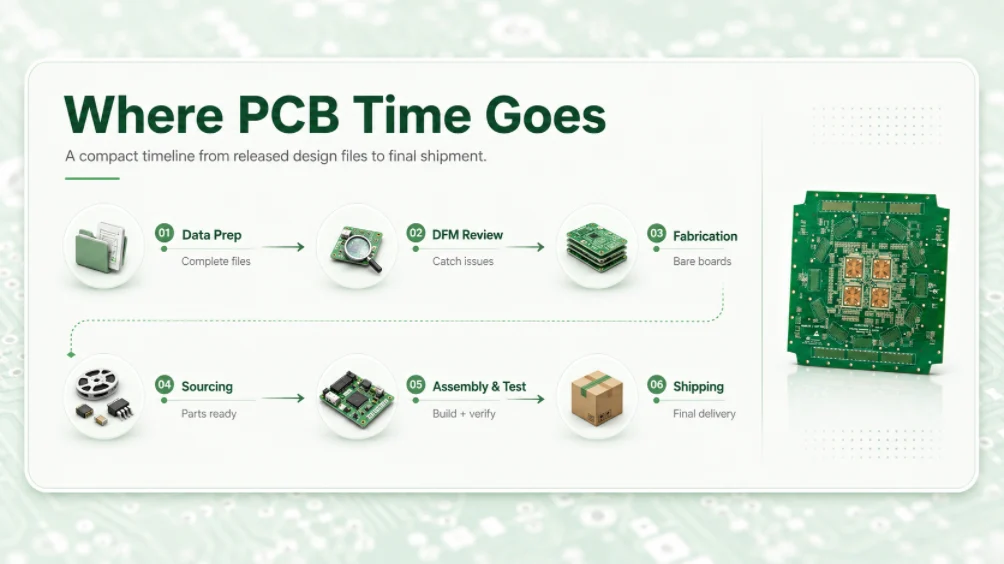
Figure 2. Most PCB schedule loss comes from incomplete files, unclear stackups, material changes, engineering questions, and late test decisions.
Choosing a Manufacturer to Minimize TTM
Not every supplier affects your timeline the same way. The right partner shortens TTM through communication and integration, not just raw production speed.
Key qualities that shorten TTM
- Fast, clear DFM feedback: quick technical responses keep the project moving.
- Integrated fab and assembly: one partner avoids the gaps between separate vendors.
- Component sourcing support: help finding alternates prevents long-lead-part stalls.
- Revision control: disciplined version tracking stops costly mix-ups.
- Export experience: smooth documentation and logistics for your destination market.
An integrated partner such as our Shenzhen-region factory combines board assembly with fabrication so projects do not stall in the gaps between separate suppliers. For complex builds such as high-layer-count rigid boards or HDI designs, that integration matters even more.
The manufacturer you choose has a direct effect on time-to-market. A shop that handles both fabrication and assembly under one roof removes the hand-off delays that occur when bare boards ship from one vendor to an assembler at another. Quick-turn capability, fast and specific DFM feedback, and well-managed component sourcing compress the schedule further. Treating the supplier as an engineering partner early, rather than a last-step vendor, is one of the most effective ways to ship sooner.
Practical Steps to Accelerate a PCB Project
Beyond choosing the right partner, several concrete actions on your side can compress the schedule meaningfully.
Key actions to take
- Send a complete data package: Gerbers, drill, BOM, centroid, stackup, and assembly notes together.
- Identify long-lead parts early: order or pre-clear scarce components before the rest.
- Approve a design review promptly: act on DFM feedback quickly to avoid idle time.
- Specify alternates: list approved substitutes so sourcing never blocks the build.
- Plan logistics in advance: confirm Incoterms and freight mode before boards are ready.
- Keep revisions controlled: freeze the design and avoid mid-build changes.
These habits routinely save weeks across a project. They cost almost nothing and apply equally to specialized work such as robotics board production or power electronics builds, where component lead times can otherwise dominate the schedule.
Common Causes of PCB Delays and How to Avoid Them
Most schedule slips in a PCB project come from a short list of recurring problems. Knowing them in advance is the simplest way to protect your time-to-market, because nearly all of them can be prevented before the order is placed.
Key causes of delay
- Incomplete data: missing files force the factory to stop and ask questions.
- Long-lead parts: a single hard-to-source component can hold the whole build.
- Late DFM findings: issues caught after release trigger a redesign loop.
- Repeated respins: each new revision restarts fabrication and assembly.
- Shipping and customs: freight mode and paperwork add real calendar time.
- Unclear specs: vague requirements lead to rework after the first build.
| Delay Cause | Impact | Prevention |
|---|---|---|
| Incomplete files | Quote and build holds | Send a full data package |
| Long-lead parts | Idle assembly line | Check stock and approve alternates |
| Late DFM issues | Redesign loop | Review DFM before release |
| Customs delays | Shipment held | Confirm Incoterms and documents |
A manufacturer that flags these risks up front saves weeks over the life of a project, which is part of how Highleap Electronics helps customers keep launches on schedule.
Frequently Asked Questions
What does TTM stand for in PCB manufacturing?
TTM stands for time-to-market: the time from a finished, released design to the first shippable boards. It is one of the most important schedule metrics in hardware, because a product that reaches the market late can miss the window it was designed for.
What usually causes the longest delays in a PCB project?
Component sourcing and design re-spins. A single long-lead part or one round of rework after assembly often adds more time than the entire fabrication step, which is why both are worth planning around early.
How much time can a DFM review really save?
It varies, but avoiding even one re-spin typically saves the days or weeks needed to refabricate, reorder parts, and rebuild. Since a review is fast and inexpensive, the return is large.
Is a faster turn always more expensive?
Expedited fabrication and air freight do cost more, but much of TTM improvement comes from preparation and good communication, which cost nothing. Speed and cost are not always a strict trade-off.
Should I use the same supplier for prototype and production?
It helps. A partner who already knows your design carries that knowledge from prototype into production, reducing the ramp time and the chance of new issues when you scale.
How do I keep sourcing from blocking my schedule?
Identify long-lead and single-source parts at the start, approve alternates in the BOM, and let your manufacturer help locate stock. Pre-clearing critical parts keeps the rest of the build on track.
What does “complete data package” include?
Gerber or ODB++ files, NC drill, board outline, stackup, BOM with part numbers, centroid (pick-and-place) data, and assembly drawings. Sending all of it at once removes the most common source of back-and-forth.

Recommended Posts

Isola Astra MT77 PCB Manufacturing
Figure 1. Isola Astra MT77 PCB ManufacturingIsola Astra...

Nelco N4000-13 PCB Material and Manufacturing Guide | Highleap Electronics
Figure 1. Nelco N4000-13 PCBNelco N4000-13 PCB is a...

Copper Clad Laminate: Complete Material Selection Guide for PCB Engineers
Every electrical property that matters in a printed...

Inside a China Ceramic PCB Factory: Process Control Across Power/LED/RF/Medical
Table of Contents Inside a China Ceramic PCB Factory: How...
How to get a quote for PCBs
Let‘s run DFM/DFA analysis for you and get back to you with a report. You can upload your files securely through our website. We require the following information in order to give you a quote:
-
- Gerber, ODB++, or .pcb, spec.
- BOM list if you require assembly
- Quantity
- Turn time
For PCBA services, please provide your BOM (Bill of Materials) and any specific assembly instructions. We also offer DFM/DFA analysis to optimize your designs for manufacturability and assembly, ensuring a smooth production process.