
ENIG Thickness and Black Pad: PCB Finish Design Guide
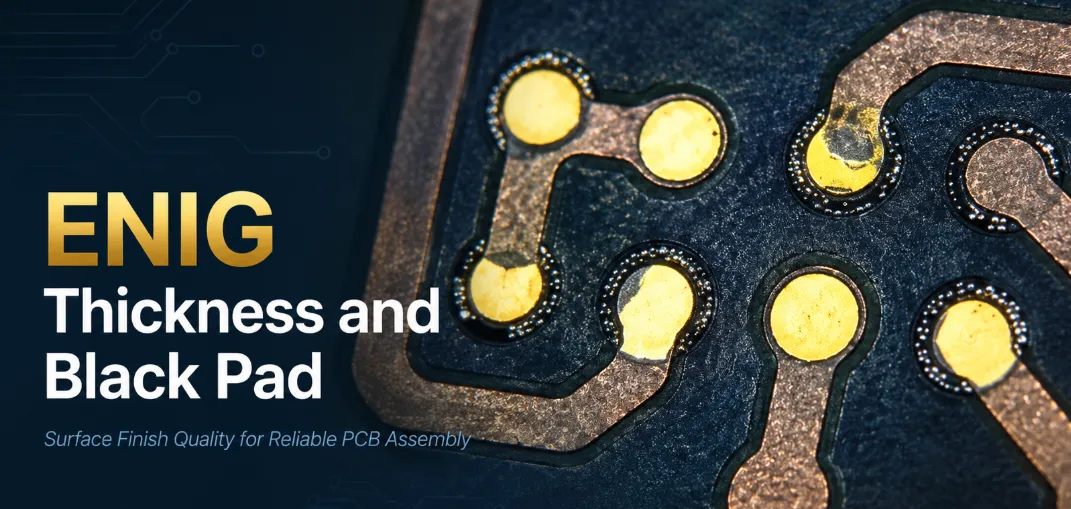
Figure 1. ENIG thickness and black pad control depend on the nickel and immersion gold process window, bath condition, and inspection records.
ENIG (Electroless Nickel Immersion Gold) is a PCB surface finish known for flat pads and fine-pitch solderability, but its success depends on two details buyers often miss: nickel and gold thickness control, and black pad prevention. Understanding those limits helps engineering teams decide when ENIG is the right finish and what a fabricator should verify before production.
- ENIG is a two-layer finish: electroless nickel for protection, immersion gold for solderability.
- It is flat, lead-free friendly, and ideal for fine-pitch, BGA, and wire-bond-adjacent designs.
- IPC-4552 sets the standard thicknesses: roughly 3–6 µm nickel and 0.05–0.1 µm gold.
- “Black pad,” a nickel corrosion defect, is the classic ENIG risk and is controlled by process discipline.
Table of Contents
- What Is ENIG Surface Finish?
- How ENIG Plating Works
- ENIG vs HASL vs OSP vs Immersion Silver
- ENIG vs ENEPIG: Key Differences
- Gold and Nickel Thickness Specifications (IPC-4552)
- Black Pad: The Classic ENIG Failure Mode
- When to Choose ENIG for Your Board
- ENIG on Flex and Rigid-Flex Boards
- ENIG Cost Compared to Other Surface Finishes
- Frequently Asked Questions
What Is ENIG Surface Finish?
ENIG protects the copper pads of a finished board and gives them a reliable, solderable surface. Bare copper oxidizes quickly, which ruins solderability, so every board needs a finish. ENIG solves this with two layers: a nickel barrier that protects the copper, and a thin gold cap that keeps the nickel solderable until assembly. The result is a flat, durable surface that suits dense, modern designs.
Key characteristics of ENIG
- Two-layer structure: electroless nickel under immersion gold.
- Flat surface: excellent coplanarity for fine-pitch and BGA placement.
- Lead-free friendly: well suited to modern RoHS soldering.
- Long shelf life: resists oxidation for extended storage.
- Multi-purpose pads: supports soldering, contact surfaces, and aluminum wire bonding.
That combination of flatness and durability is why ENIG is a default choice on complex boards, including the dense designs we build for fine-pitch board assembly. Its flat pads are a real advantage over uneven finishes when placing tiny parts.
How ENIG Plating Works
ENIG is built up chemically, without electroplating current, which is part of why it deposits so evenly. Understanding the steps shows where quality is won or lost.
Key process steps
- Cleaning and microetch: the copper is cleaned and lightly roughened for adhesion.
- Activation: a palladium catalyst seeds the surface so nickel can deposit.
- Electroless nickel: a nickel-phosphorus layer plates evenly over all copper.
- Immersion gold: gold displaces a thin nickel surface, capping and protecting it.
- Rinse and dry: careful cleaning prevents residue and corrosion.
The gold does not stay in the final solder joint; it dissolves during soldering, and the solder actually bonds to the nickel. That is why nickel quality matters most for joint strength.
ENIG vs HASL vs OSP vs Immersion Silver
ENIG is one of several common finishes. Choosing among them is a balance of flatness, cost, shelf life, and the parts being assembled.
Key finish comparisons
- HASL: low cost and robust, but uneven; poor for fine-pitch and BGA.
- OSP: very cheap and flat, but short shelf life and single-reflow sensitivity.
- Immersion silver: flat and solderable, but prone to tarnish and handling sensitivity.
- ENIG: flat, durable, fine-pitch friendly, at a higher cost.
- Selection driver: pitch, shelf life, budget, and reliability target.
| Finish | Flatness | Cost | Best Use |
|---|---|---|---|
| HASL | Uneven | Low | Through-hole, larger parts |
| OSP | Flat | Very low | Cost-sensitive, short storage |
| Immersion silver | Flat | Moderate | Fine-pitch, RF |
| ENIG | Flat | Higher | BGA, fine-pitch, long shelf life |
For high-frequency designs on materials such as a specialty low-loss laminate laminate, a flat finish like ENIG or immersion silver helps maintain consistent signal launch into fine features.
ENIG vs ENEPIG: Key Differences
ENEPIG (Electroless Nickel Electroless Palladium Immersion Gold) adds a palladium layer between the nickel and gold. It is worth knowing when the extra layer earns its cost.
Key differences
- Extra layer: ENEPIG inserts palladium between nickel and gold.
- Black pad resistance: the palladium barrier reduces the nickel-corrosion risk.
- Wire bonding: ENEPIG supports both gold and aluminum wire bonding well.
- Cost: ENEPIG is more expensive due to the added palladium step.
- Typical use: ENEPIG suits high-reliability and mixed-bonding applications.
For most mainstream boards, ENIG is sufficient and more economical. ENEPIG is reserved for demanding reliability or wire-bonding needs, such as some boards in our HDI product line.
Gold and Nickel Thickness Specifications (IPC-4552)
ENIG quality is defined largely by layer thickness, and IPC-4552 is the governing specification. Building to it is what makes joints reliable and repeatable.
Key thickness targets
- Nickel layer: typically about 3–6 µm (120–240 µin) of electroless nickel.
- Gold layer: a thin cap, roughly 0.05–0.1 µm (2–4 µin).
- Phosphorus content: controlled in the nickel to balance corrosion resistance and solderability.
- Uniformity: even coverage across all pads, large and small.
- Standard: IPC-4552 defines and measures these values.
| Layer | Typical Range (µm) | In µin |
|---|---|---|
| Electroless nickel | 3–6 | 120–240 |
| Immersion gold | 0.05–0.1 | 2–4 |
Too little nickel risks corrosion; too much gold risks brittle joints and added cost. Holding the IPC-4552 window is the practical goal, and it is checked during a thorough manufacturing review.

Figure 2. ENIG and hard gold finishes serve different pad, connector, and reliability requirements, so the finish callout must match the board function.
Black Pad: The Classic ENIG Failure Mode
“Black pad” is the defect most associated with ENIG. It is corrosion of the nickel layer that weakens solder joints, and it is entirely a process-control issue.
Key facts about black pad
- What it is: excessive oxidation/corrosion of the nickel during gold deposition.
- How it looks: a dark, grainy nickel surface revealed when a joint fails.
- Effect: brittle or open joints that can pass initial test but fail later.
- Cause: overaggressive immersion gold attacking the nickel grain boundaries.
- Prevention: tight bath chemistry, timing, and phosphorus control.
Black pad is preventable with disciplined process control, which is why the maturity of a manufacturer’s plating line matters so much for ENIG reliability.
When to Choose ENIG for Your Board
ENIG is not automatically the right finish for every board. It earns its higher cost in specific situations.
Key reasons to select ENIG
- Fine-pitch and BGA: flatness is critical for tiny, dense pads.
- Long storage: boards stocked before assembly benefit from its shelf life.
- Press-fit and contacts: the hard, flat surface suits connectors and switch pads.
- Aluminum wire bonding: ENIG supports it where needed.
- Mixed assembly: a single finish that serves many pad functions.
If a board is simple, through-hole heavy, and cost-sensitive, HASL or OSP may be the better economic choice. The decision should follow the design, the parts, and the reliability target, which is something our engineers weigh in on through our broader manufacturing services.
ENIG on Flex and Rigid-Flex Boards
ENIG is also a strong choice for flexible and rigid-flex circuits, where its flatness and durability complement the demands of bending assemblies.
Key points for flex applications
- Thin, flat coverage: suits the fine features common on flex circuits.
- Connector reliability: ENIG pads hold up at ZIF and board-to-board contacts.
- Corrosion resistance: useful where flex circuits face harsher environments.
- Compatibility: works with the polyimide constructions used in flex builds.
- Fine-pitch flex: pairs well with dense HDI-flex designs.
For these products, we apply ENIG across our flexible circuit boards and combine it with our flex assembly process, including dense HDI-flex constructions. For rigid-board questions, the team at our factory can advise on finish selection up front.
ENIG Cost Compared to Other Surface Finishes
ENIG sits in the upper-middle of the finish price range. It costs more than the basic options but less than hard gold, and for many dense designs the reliability it adds is worth the difference.
Key cost trade-offs
- ENIG: mid-to-high cost with flat, durable pads.
- HASL: the cheapest finish, but uneven for fine pitch.
- OSP: low cost with a short shelf life.
- Immersion silver: mid cost with good flatness.
- Hard gold: the most expensive, used for edge connectors.
| Finish | Relative Cost | Main Trade-off |
|---|---|---|
| HASL | Lowest | Uneven surface |
| OSP | Low | Short shelf life |
| ENIG | Mid-to-high | Cost vs flatness |
| Hard gold | Highest | Reserved for contacts |
The right finish depends on the board, and for complex multilayer work it is chosen alongside the stackup during our rigid multilayer board planning.
Frequently Asked Questions
What does ENIG stand for?
ENIG stands for Electroless Nickel Immersion Gold. It describes the two-layer finish: an electroless nickel barrier over the copper, capped by a thin immersion gold layer that keeps the nickel solderable.
Does the solder bond to the gold or the nickel in ENIG?
To the nickel. The thin gold cap dissolves into the molten solder during assembly, and the actual joint forms on the nickel layer. That is why nickel quality drives joint reliability.
What are the standard ENIG thicknesses?
Per IPC-4552, the nickel is typically about 3–6 µm (120–240 µin) and the gold roughly 0.05–0.1 µm (2–4 µin). Holding these ranges balances corrosion resistance, solderability, and cost.
What causes black pad in ENIG?
Black pad is corrosion of the nickel layer caused by an overaggressive immersion gold step attacking the nickel grain boundaries. It is controlled through careful bath chemistry, timing, and phosphorus management.
When should I choose ENIG over HASL?
Choose ENIG when you have fine-pitch or BGA components, need a flat coplanar surface, require long shelf life, or want a multi-purpose pad finish. HASL is fine for simpler, through-hole-heavy, cost-sensitive boards.
Is ENEPIG better than ENIG?
ENEPIG adds a palladium layer that improves black-pad resistance and supports more wire-bonding options, but it costs more. For most boards ENIG is sufficient; ENEPIG is reserved for high-reliability or mixed-bonding needs.
Can ENIG be used on flexible PCBs?
Yes. ENIG works well on flexible and rigid-flex circuits, where its flatness, durability, and corrosion resistance suit fine features and connector contacts on bending assemblies.

Recommended Posts
TMM4 Filter PCB Manufacturing
TMM4 filter PCB manufacturing is controlled by the...
TMM3 PCB Manufacturing for RF Modules
TMM3 PCB manufacturing is most useful where the RF module...
TMM6 PCB Fabrication
TMM6 fabrication is the process-control page for a mid-Dk...
TMM10 PCB Manufacturing for Compact RF Designs
Table of contentsHow TMM10 Shrinks RF StructuresTMM10 vs...
How to get a quote for PCBs
Let‘s run DFM/DFA analysis for you and get back to you with a report. You can upload your files securely through our website. We require the following information in order to give you a quote:
-
- Gerber, ODB++, or .pcb, spec.
- BOM list if you require assembly
- Quantity
- Turn time
For PCBA services, please provide your BOM (Bill of Materials) and any specific assembly instructions. We also offer DFM/DFA analysis to optimize your designs for manufacturability and assembly, ensuring a smooth production process.