
BT Resin PCB: Properties, Uses, and Fabrication Controls
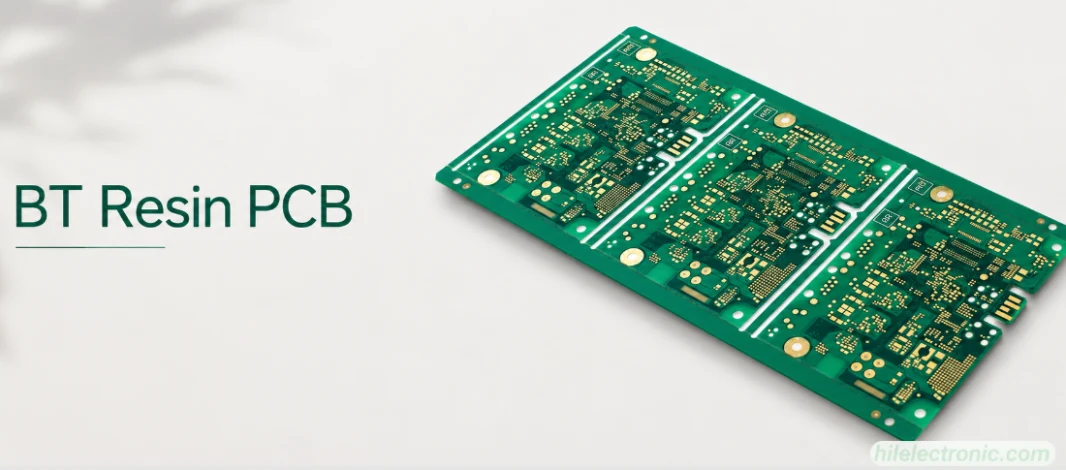
Figure 1. BT resin PCB image for PCB manufacturing review.
Bismaleimide Triazine (BT) resin is a high-performance laminate prized where ordinary FR-4 runs out of thermal and electrical headroom — most famously as the substrate inside BGA and chip-scale IC packages. It offers a high glass-transition temperature, low dielectric loss, and excellent dimensional stability. This guide explains what BT resin is, how it compares to FR-4 and other high-performance laminates, where it is used, and how Highleap Electronics fabricates BT-based boards and substrates to spec.
1. What is BT resin and why is it used in PCBs?
BT resin is a thermosetting laminate material made from Bismaleimide Triazine, used in PCBs where high heat resistance, low signal loss, and tight dimensional stability are required beyond what standard FR-4 provides. Its defining trait is a high glass-transition temperature, which lets the board hold its mechanical and electrical properties at elevated temperatures rather than softening the way ordinary epoxy laminates do.
The material earned its place first as an IC-package substrate — the tiny, dense board inside a BGA or chip-scale package that fans out the die’s connections to the board below. There, BT’s stability under the heat of die-attach and reflow, and its low loss at high frequency, make it well suited to demanding packaging. It sits in the same high-performance family as other advanced laminates covered in this overview of PCB board materials, and choosing it is fundamentally a circuit-board material decision driven by thermal and electrical demands.
2. BT resin properties: Tg, Dk, and CTE that matter
The three BT resin properties that drive its selection are a high glass-transition temperature (Tg), a low, stable dielectric constant and loss, and a low coefficient of thermal expansion (CTE). Together these give a board that stays rigid and dimensionally accurate while running hot and carrying fast signals. What each one means in practice:
| Property | What it describes | Why it matters |
|---|---|---|
| High Tg (glass transition) | Temperature where the resin softens | Survives reflow and high operating heat without deforming |
| Low Dk / loss | How the dielectric handles signals | Less distortion and loss at high frequency |
| Low CTE | How much it expands with heat | Reduces stress on fine joints and plated holes |
| Dimensional stability | How well it holds its shape | Keeps fine features registered in dense layouts |
The low-CTE point is especially important in packaging: when the substrate expands at nearly the same rate as the silicon and the solder joints, it limits the thermal-cycling stress that cracks fine connections. The electrical side ties directly to dielectric constant and loss tangent — the parameters that decide whether fast signals arrive clean. Always design to the exact values in the specific BT laminate’s current datasheet.
3. BT resin vs FR-4 vs polyimide: which laminate to choose
Choose BT resin for high-Tg, low-loss substrate-grade performance, FR-4 for general-purpose cost-effective boards, and polyimide for the most extreme continuous high-temperature and flex applications. Each laminate is a balance of thermal capability, electrical performance, and cost, so the right one depends on what the board must endure:
- FR-4 is the standard, economical choice for most boards, with moderate Tg and acceptable loss — fine until thermal or high-frequency demands exceed it.
- BT resin raises Tg, lowers loss, and adds dimensional stability, making it suited to IC substrates, high-frequency, and high-reliability boards where FR-4 falls short.
- Polyimide tolerates the highest sustained temperatures and is the basis of many flexible circuits, used where extreme heat or flexing rules out rigid epoxy laminates.
Many designs that consider BT also weigh advanced FR-4 grades and specialized RF materials, so the decision belongs in a broader material trade-off rather than in isolation. Where the priority is signal performance, the comparison extends to materials like those in this FR-4 versus specialty low-loss laminate discussion; where it is packaging density, BT competes with the substrates below.
4. Where BT resin PCBs are used (BGA substrates and beyond)
BT resin is used most in IC-package substrates — the substrates inside BGA, chip-scale, and similar packages — and also in high-frequency modules, high-reliability boards, and applications with significant thermal stress. The common thread is that all of these punish a weaker laminate, either thermally or electrically, so BT’s stability pays off:
- IC-package substrates. The dense substrate inside a BGA or chip-scale package, where BT’s dimensional stability and heat resistance support fine, reliable fan-out — closely related to BGA substrates and IC-substrate PCBs.
- High-frequency modules. RF and high-speed designs benefit from BT’s low loss, where signal integrity is paramount.
- High-reliability boards. Products facing thermal cycling and demanding lifetimes use BT’s stability to resist fatigue.
Because so many BT applications are packaging-related, the material is naturally part of advanced, fine-feature builds rather than simple boards — which is why it pairs with high-density fabrication and careful assembly.
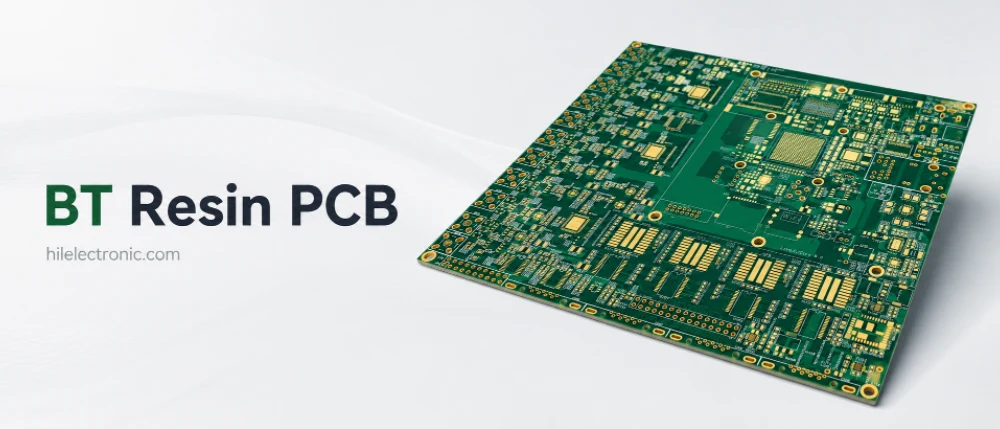
Figure 2. Manufacturing details for BT resin PCB should be checked before quotation and production.
5. Fabricating BT resin boards: what to control
Fabricating BT resin boards requires controlling the lamination and drilling processes for the material’s hardness and high Tg, managing fine features for substrate-grade density, and matching plating and surface finish to the design. BT behaves differently from FR-4 under processing, so a fabricator experienced with it is essential to a reliable result. The key controls:
- Lamination. BT’s high Tg means a different press cycle than FR-4, and getting it right is what delivers the dimensional stability the material is chosen for.
- Drilling. The harder resin and fine features call for appropriate drilling parameters to achieve clean, reliable holes.
- Fine-feature capability. Substrate-grade work demands tight line widths and spacing, which is high-density-interconnect territory.
- Plating and finish. Reliable plated-through holes and a finish suited to the application protect both performance and assembly yield.
These are the same disciplines that govern any advanced laminate, and they are exactly what a pre-build manufacturability review confirms before committing material — verifying that the stackup, features, and holes are achievable in BT.
6. How Highleap manufactures BT-based boards
Highleap fabricates BT resin boards and high-performance laminates with the lamination, drilling, and fine-feature control these materials demand, then supports them through assembly. Material selection is treated as an engineering decision: where a design needs BT’s high Tg, low loss, and stability, the build is set up for it; where FR-4 or another laminate fits better, that is recommended instead, drawing on the full range of PCB laminate materials.
Because BT is so often used in dense, fine-feature and packaging-grade designs, Highleap pairs the fabrication with turnkey assembly including fine-pitch and BGA placement and X-ray inspection, so the substrate and the components on it are both verified. When you request a quote, specify the exact BT laminate (or your Tg, Dk, and loss targets), the layer count and finest features, and whether the board is a substrate-grade or standard build, so the process is matched correctly.
7. BT resin PCB FAQ
What does BT stand for in BT resin?
BT stands for Bismaleimide Triazine, the two chemistries blended to form the thermosetting resin. The name reflects its composition, and the material is often combined with epoxy in commercial BT laminates.
Is BT resin more expensive than FR-4?
Yes — BT laminate costs more than standard FR-4 because of its higher performance and more demanding processing. It is chosen where its thermal and electrical advantages are needed, not as a default substitute for general boards.
Can BT resin be used with normal FR-4 in a hybrid stackup?
In many cases yes — hybrid stackups combine a high-performance laminate where it is needed with FR-4 elsewhere to balance cost and performance. Whether it is suitable depends on the design and should be confirmed with your fabricator.
What is the typical Tg of BT resin?
BT laminates offer a notably higher glass-transition temperature than standard FR-4, which is the main reason they are used. The exact figure varies by product grade, so design to the specific laminate datasheet rather than a generic value.
Is BT resin halogen-free or RoHS compliant?
Many BT laminate grades are available in halogen-free and RoHS-compliant versions, but it depends on the specific product. If compliance matters for your market, confirm the exact grade’s declarations before specifying it.
Why is BT resin used for BGA package substrates?
Its low CTE and dimensional stability keep fine substrate features registered and reduce thermal-cycling stress on the package’s joints, while its low loss supports high-speed signals — all critical inside a dense BGA package.

Recommended Posts

Nelco N4000-13 PCB Material and Manufacturing Guide | Highleap Electronics
Figure 1. Nelco N4000-13 PCBNelco N4000-13 PCB is a...

Copper Clad Laminate: Complete Material Selection Guide for PCB Engineers
Every electrical property that matters in a printed...

Inside a China Ceramic PCB Factory: Process Control Across Power/LED/RF/Medical
Table of Contents Inside a China Ceramic PCB Factory: How...

Ceramic PCB Manufacturer in China
Table of Contents Ceramic PCB Manufacturing in China:...
How to get a quote for PCBs
Let’s run DFM/DFA analysis for you and get back to you with a report. You can upload your files securely through our website. We require the following information in order to give you a quote:
-
- Gerber, ODB++, or .pcb, spec.
- BOM list if you require assembly
- Quantity
- Turn time
For PCBA services, please provide your BOM (Bill of Materials) and any specific assembly instructions. We also offer DFM/DFA analysis to optimize your designs for manufacturability and assembly, ensuring a smooth production process.