
Aluminum LED PCB Manufacturer Selection Guide

Choosing the wrong aluminum LED PCB manufacturer rarely shows up in the first delivery. It shows up six months later as field returns, delamination under thermal cycling, or LED arrays running 15°C hotter than the design simulation predicted. By then the product is already shipping. This guide gives procurement engineers and product teams the exact technical criteria to evaluate a manufacturer — before committing to volume.
Why Aluminum LED PCB Manufacturing Is a Specialized Discipline
Article Navigation
- Why Aluminum LED PCB Manufacturing Is a Specialized Discipline
- Certifications That Define Actual Process Capability
- Equipment Benchmarks: What the Production Floor Should Have
- Thermal Conductivity Claims vs. Lot-Specific Test Data
- Dielectric Layer Consistency: The Invisible Yield Variable
- Copper Weight Capability for High-Current LED Applications
- The Prototype Qualification Gate
- Eliminating Candidates Based on Early-Stage Responses
- FAQ
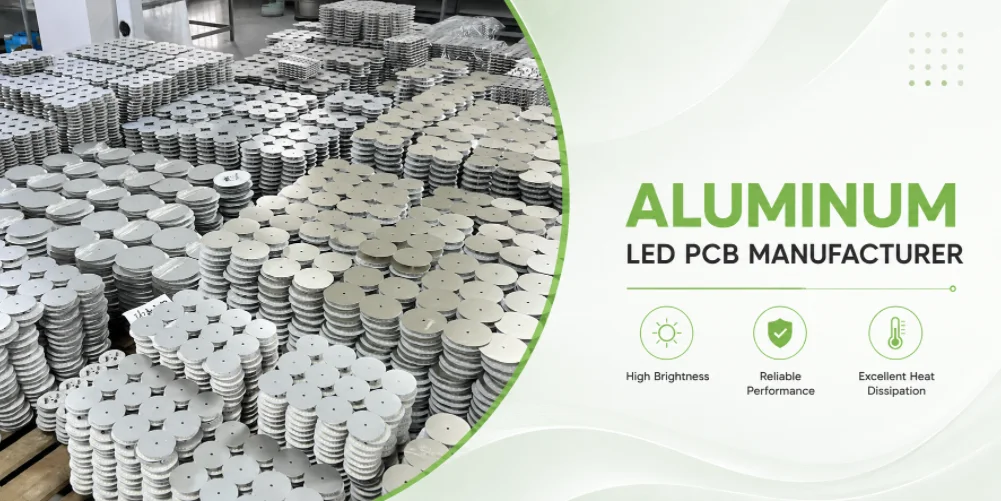
Aluminum LED PCBs are not FR-4 boards with a different base material. The dielectric layer that bonds copper to the aluminum substrate behaves differently from standard prepreg under press, reacts differently to drill tooling, and requires a distinct solder mask chemistry. A factory that runs FR-4 as its primary product will consistently produce marginal results on aluminum — not because of intent, but because the process parameters are tuned for the wrong material.
A qualified manufacturer maintains a dedicated production line for metal core PCBs, with aluminum-specific press programs, tooling, and incoming inspection protocols for the dielectric layer.
Certifications That Define Actual Process Capability
ISO 9001 is the floor, not the ceiling. For aluminum LED PCBs going into demanding applications:
- IATF 16949 — required for any LED assembly entering an automotive bill of materials
- ISO 13485 — required for surgical lighting, endoscope illumination, or diagnostic equipment
- UL 94V-0 — fire-resistance rating for the dielectric material; verify it covers the specific grade in use
- IPC-6012 Class 2 / Class 3 — defines finished board acceptability criteria for rigid boards including metal core
Ask for current certificates with audit dates and scope statements. A certificate that expired 14 months ago or lists a different facility address is not valid. Highleap Electronics holds current ISO and IPC-relevant certifications — view our certification scope.
Equipment Benchmarks: What the Production Floor Should Have
| Process Step | Standard PCB Shop | Aluminum LED PCB Facility |
|---|---|---|
| Drilling | Standard carbide drill bits | PCD or carbide bits rated for aluminum alloy |
| Lamination | Standard hydraulic press | Temperature-profiled press for dielectric cure |
| Etching | Standard Cu etch line | Selective masking to protect aluminum base |
| V-scoring | Standard blade | Blade geometry matched to aluminum gauge |
| Electrical test | Continuity/isolation | Continuity/isolation + hi-pot (≥1500 V) |
| Final inspection | Visual + AOI | Visual + AOI + cross-section capability on request |
Ask for equipment lists and process qualification data. A line that has never processed 3.0 W/m·K dielectric cannot claim capability for it regardless of whether the material is on a purchase order.
Thermal Conductivity Claims vs. Lot-Specific Test Data
The thermal conductivity figure on a material datasheet describes the dielectric in isolation under ideal lab conditions. What matters for your LED product is the assembled board thermal resistance (θ_board): measured from copper pad to aluminum base with a calibrated heat source.
Request from any manufacturer candidate:
- Which dielectric brands and grades are stocked? (Bergquist GP series, Ventec VT-4B2, Shengyi ST115G, or unbranded generic?)
- Lot-specific thermal test data for the dielectric batch allocated to your order
- Incoming inspection method for dielectric rolls — visual only, or impedance/thermal spot-check?
Generic 2.0 W/m·K dielectric can test anywhere from 1.6 to 2.4 W/m·K across production batches. That variation shifts LED junction temperature by 8–12°C in a typical high-bay fixture, directly accelerating lumen depreciation. Understanding how MCPCB heat dissipation works at the stack level helps you ask the right questions at the quoting stage.
Dielectric Layer Consistency: The Invisible Yield Variable
Dielectric thickness controls three independent failure modes in aluminum LED PCBs:
- Thermal resistance: thinner dielectric = lower θ, but reduced breakdown voltage margin
- Hi-pot integrity: IPC and UL both require tested isolation voltage; typical spec is 1500–3000 V
- Solder joint coplanarity: dielectric that varies in thickness across a panel introduces warpage during reflow, driving LED pad opens
A qualified manufacturer controls dielectric thickness to within ±10% through calibrated press programs and cross-section verification. Boards outside this window fail either thermally or electrically — sometimes both. Before finalizing your aluminum LED PCB stack-up, confirm the manufacturer’s process capability (Cpk) for dielectric thickness on your board dimensions.
Copper Weight Capability for High-Current LED Applications
Standard aluminum LED PCBs run 1 oz copper (35 µm). LED strings in horticulture, industrial high-bay, or UV curing routinely require 2 oz or 3 oz to handle 3–10 A per trace without resistive heating that competes with the LED thermal budget.
A factory without in-house heavy copper plating will either decline these orders or outsource the plating step — breaking the chain of quality control. Verify copper weight range, maximum panel size at each weight, and whether the manufacturer has tested trace resistance at their target copper thickness.
The Prototype Qualification Gate
No paper qualification substitutes for a prototype run. Before volume commitment:
- Submit Gerber files for a DFM review — this surfaces trace width, annular ring, and dielectric clearance issues before they become production defects
- Order a 5–10 piece prototype with electrical test report, cross-section photo, and hi-pot data included
- Compare prototype cross-section against your thermal simulation inputs to verify the actual dielectric thickness matches specification
A manufacturer who provides first article inspection data unprompted is running at a professional level. One who needs to be asked whether testing was performed is not. Read about the full aluminum LED PCB assembly process to understand what data points should accompany a prototype delivery.
Eliminating Candidates Based on Early-Stage Responses
Specific disqualifiers when evaluating candidates:
- Cannot produce a current IPC-6012 conformance statement
- Dielectric sourced from vendors not listed on any recognized material database
- No hi-pot test capability in-house — boards ship without isolation voltage verification
- Lead times shorter than physically achievable for the specified surface finish and copper weight
- No cross-section capability to verify dielectric thickness after pressing
FAQ
What certifications must an aluminum LED PCB manufacturer hold? ISO 9001 covers quality management basics. IATF 16949 is required for automotive LED applications. ISO 13485 applies to medical lighting. IPC-6012 Class 2 or 3 defines board acceptability. UL 94V-0 applies to the dielectric material.
How do I verify a supplier’s thermal conductivity claim? Request a lot-specific test report for the exact dielectric batch in your order. Variation greater than ±15% from the stated value should be flagged and negotiated into the purchase agreement as a rejection criterion.
What should a prototype package include for an aluminum LED PCB? Electrical test report (continuity, isolation, hi-pot), cross-section photograph showing dielectric and copper layer dimensions, surface finish inspection, and any AOI output data. First-article inspection to IPC-6012 is the reference standard.
Can a standard FR-4 factory produce quality aluminum LED PCBs? Occasionally, but inconsistently. Aluminum-specific tooling, press programs, and solder mask chemistry differ materially from FR-4 processes. Factories without dedicated metal core capability produce acceptable results on simple, tolerant designs and poor results on thermally demanding or fine-pitch LED layouts.

Recommended Posts
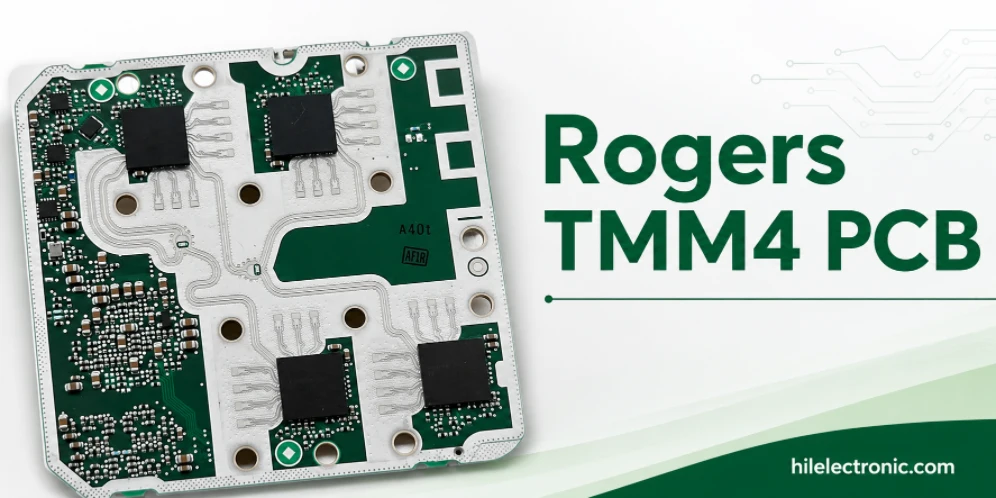
TMM4 Filter PCB Manufacturing
TMM4 filter PCB manufacturing is controlled by the...
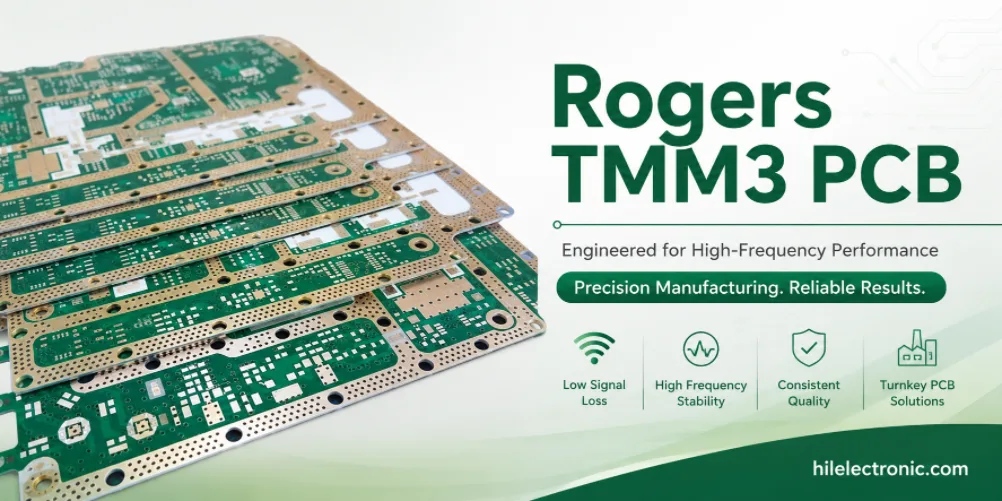
TMM3 PCB Manufacturing for RF Modules
TMM3 PCB manufacturing is most useful where the RF module...
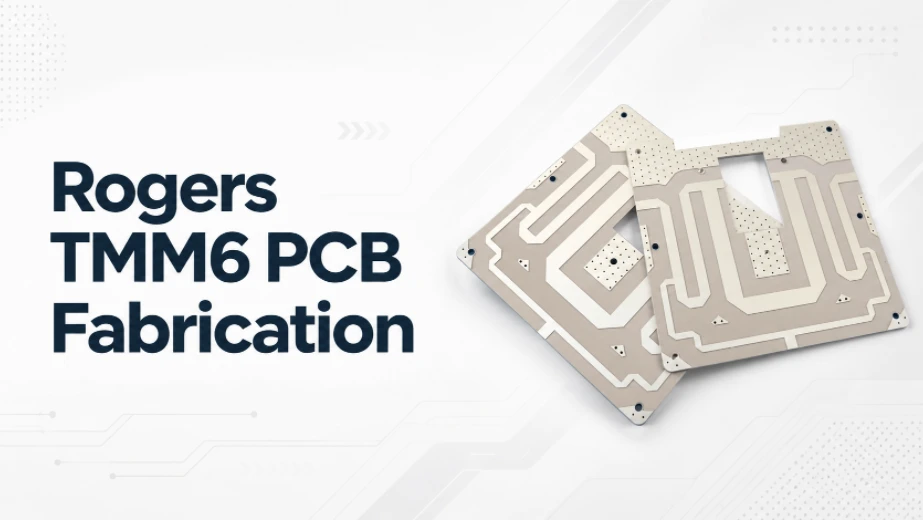
TMM6 PCB Fabrication
TMM6 fabrication is the process-control page for a mid-Dk...

TMM10 PCB Manufacturing for Compact RF Designs
Table of contentsHow TMM10 Shrinks RF StructuresTMM10 vs...
How to get a quote for PCBs
Let‘s run DFM/DFA analysis for you and get back to you with a report. You can upload your files securely through our website. We require the following information in order to give you a quote:
-
- Gerber, ODB++, or .pcb, spec.
- BOM list if you require assembly
- Quantity
- Turn time
For PCBA services, please provide your BOM (Bill of Materials) and any specific assembly instructions. We also offer DFM/DFA analysis to optimize your designs for manufacturability and assembly, ensuring a smooth production process.