
ENIG vs Hard Gold on PCBs: Which Finish Belongs Where?

Figure 1. ENIG vs hard gold PCB finish comparison for solderable and wear surfaces.
The difference between ENIG and hard gold comes down to thickness, hardness, process, and purpose. Immersion gold (ENIG) is a thin layer of gold over electroless nickel, a flat, solderable finish ideal for fine-pitch boards. Electroplated or “hard” gold is a thicker, harder gold layer built up by electrolysis, made for wear surfaces like edge-connector fingers and contacts. They are not competing versions of the same thing; they solve different problems, and many boards use both. This guide explains each finish, how they are made, and when to choose which.
Key takeaways
- Immersion gold (ENIG) is thin gold over electroless nickel, a flat, solderable finish for fine-pitch and BGA boards.
- Gold plating (hard/electroplated gold) is a thicker, harder gold for wear, used on edge fingers and contacts.
- ENIG is an electroless (chemical) process; hard gold is electrolytic and needs an electrical plating path.
- Use ENIG as a board-wide solderable finish; use hard gold selectively where parts endure mating or sliding wear.
- Many boards combine ENIG over the surface with hard gold on the edge-connector fingers.
Table of Contents
- Immersion Gold vs Gold Plating: Key Differences
- What Is Immersion Gold (ENIG)?
- What Is Gold Plating (Hard Gold)?
- Electroless vs Electrolytic Gold Processes
- ENIG vs Hard Gold: Side-by-Side Comparison
- When to Use ENIG vs Hard Gold
- ENIG and Hard Gold vs Other PCB Finishes
- Using ENIG and Hard Gold on the Same Board
- Frequently Asked Questions
Immersion Gold vs Gold Plating: Key Differences
Both finishes put gold over a nickel layer on copper, but for opposite reasons.
- Immersion gold (ENIG) uses a very thin gold layer mainly to protect the nickel and keep it solderable. The gold is sacrificial; solder actually bonds to the nickel.
- Gold plating (hard gold) builds a thicker, harder gold layer that survives repeated contact and sliding wear. Here the gold itself is the working surface.
So the question “which is better” has no general answer; it depends on the job. A board that is mostly soldered pads wants ENIG, while a card-edge connector wants hard gold. Both are surface-finish decisions made during PCB manufacturing.
What Is Immersion Gold (ENIG)?
ENIG stands for Electroless Nickel Immersion Gold. It is a two-layer finish built on the copper.
The layer structure
A layer of electroless nickel is deposited on the copper as a barrier and the actual solderable surface, then a thin immersion gold layer is deposited over it. The gold is thin because its job is to protect the nickel from oxidation and provide a long shelf life and good solderability; during soldering the gold dissolves and the solder joins to the nickel.
Why ENIG is popular
- Flat, coplanar surface, excellent for fine-pitch parts, BGAs, and press-fit.
- Good solderability and shelf life, with a lead-free-compatible, RoHS-friendly finish.
- Suitable for dense boards, the kind common in high-speed and HDI designs.
The main risk to be aware of is “black pad”, a nickel-corrosion problem that can occur if the chemistry is not well controlled, producing brittle joints. A controlled process avoids it. Where gold wire bonding is required, a related finish (ENEPIG, which adds a palladium layer) is often used, because ENIG’s thin gold is not ideal for that.
What Is Gold Plating (Hard Gold)?
Gold plating, in the sense people mean when they contrast it with ENIG, is electroplated hard gold, a thicker, durable gold layer.
The layer structure
Electrolytic nickel is plated on the copper, then a layer of gold is electroplated over it. For wear applications the gold is “hard gold”, alloyed with a small amount of cobalt or nickel to make it harder and more wear-resistant, and it is much thicker than ENIG’s gold.
Where hard gold is used
- Edge-connector fingers (“gold fingers”) that plug into a socket many times.
- Contacts and switches that experience sliding or repeated mating.
- Wear surfaces generally, where the gold must physically last.
Because it is thick and applied where durability matters, hard gold is more expensive and is usually applied selectively, only on the contact areas, rather than over the whole board. A softer, purer electroplated gold is used for wire bonding and some contacts where hardness is not the goal.
Electroless vs Electrolytic Gold Processes
A key practical difference is how each gold layer is deposited, which affects what features can be plated.
- ENIG is electroless. The deposition is a self-catalyzing chemical reaction with no external current, so it plates uniformly, including on isolated features, without needing any electrical connection.
- Hard gold is electrolytic. It uses an electric current, so the plated features must be electrically connected, traditionally through a plating bus or tie bars, which may be removed afterward.
This is why ENIG is so convenient as a board-wide finish, it coats everything evenly, while hard gold’s need for an electrical path is part of why it is typically reserved for specific areas like edge fingers. The process, not just the gold, shapes where each finish makes sense.
ENIG vs Hard Gold: Side-by-Side Comparison
The two finishes line up cleanly across the attributes that matter.
| Attribute | Immersion gold (ENIG) | Hard gold (plated) |
|---|---|---|
| Gold thickness | Very thin | Much thicker |
| Hardness | Soft, protective | Hard, wear-resistant |
| Process | Electroless (no current) | Electrolytic (needs a plating path) |
| Primary purpose | Solderable, flat surface | Durable contact surface |
| Typical use | Whole-board finish, fine pitch, BGA | Edge fingers, contacts, switches |
| Relative cost | Moderate | Higher, especially when thick |
The pattern is consistent: ENIG optimizes for a flat, solderable surface across the board, while hard gold optimizes for physical durability on contacts. They share a nickel underlayer but differ in nearly everything above it.
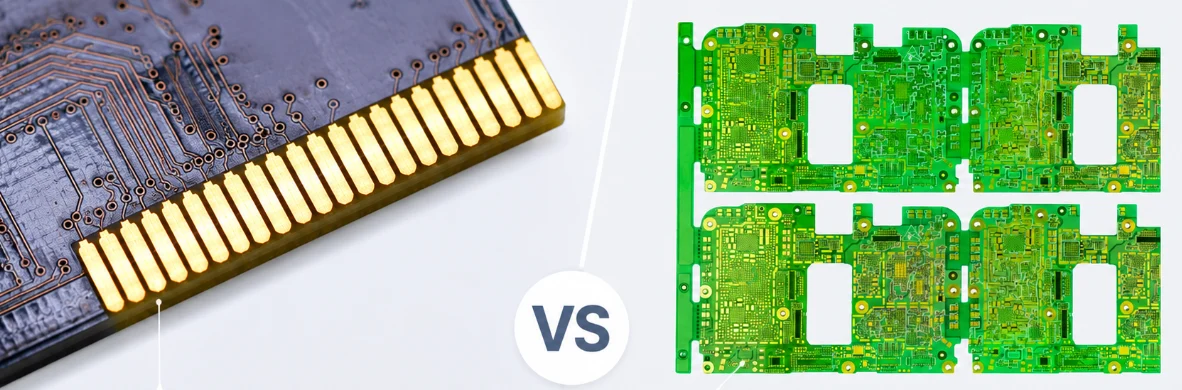
Figure 2. ENIG and hard gold PCB finish example for surface finish selection.
When to Use ENIG vs Hard Gold
Choosing is straightforward once the application is clear.
| If you need… | Choose |
|---|---|
| A solderable finish for fine-pitch or BGA | Immersion gold (ENIG) |
| A flat, coplanar surface for assembly | Immersion gold (ENIG) |
| Durable edge-connector fingers | Hard gold |
| Contacts with many mating cycles | Hard gold |
For the great majority of boards, whose surfaces are soldered pads, ENIG is the right general finish, and it pairs well with assembly because of its flatness. Hard gold enters the picture only where something must physically endure wear. The finish should follow the function of each surface, which is exactly the kind of detail confirmed in a design review.
ENIG and Hard Gold vs Other PCB Finishes
ENIG and hard gold are two of several finishes, and it helps to see where they sit among the alternatives.
| Finish | Type | Best for |
|---|---|---|
| HASL | Tin-lead or lead-free solder coat | Low-cost, larger-pitch boards |
| OSP | Organic coating on copper | Cost-sensitive, flat, limited shelf life |
| Immersion silver | Thin silver | Flat, solderable, RF-friendly |
| Immersion tin | Thin tin | Flat, fine-pitch, limited shelf life |
| ENIG | Electroless nickel, immersion gold | Fine pitch, BGA, flat solderable |
| Hard gold | Electrolytic nickel, hard gold | Edge fingers, contacts, wear |
HASL is the low-cost default for less demanding boards but is not flat enough for the finest pitch; OSP, immersion silver, and immersion tin are flatter, lower-cost options with their own shelf-life and handling trade-offs. ENIG remains the go-to flat, solderable finish for fine-pitch and BGA work, and hard gold stands apart as the wear finish for contacts. Choosing among them should match the board’s assembly and service needs, confirmed during assembly planning and realized in fabrication.
Using ENIG and Hard Gold on the Same Board
Crucially, the two are not mutually exclusive, and a single board often uses both.
A common arrangement is ENIG across the board for all the soldered areas, with hard gold applied selectively to the edge-connector fingers that need wear resistance. This gives the best of each: a flat, solderable surface where components are placed, and a durable contact surface where the board plugs in.
Specifying this clearly, ENIG as the base finish plus selective hard gold on the named edge fingers, lets the fabricator plan the process correctly. It is a routine combination in production, and getting it onto the drawing avoids confusion later. As designs scale, the same finish specification carries through into high-volume assembly, and boards with heavy thermal loads, such as metal-core assemblies, still follow the same finish logic.
Immersion gold (ENIG) and hard gold plating solve different problems: ENIG is a thin, flat, solderable finish for the board, while hard gold is a thick, durable layer for contacts and edge fingers. Match the finish to each surface’s function, combine them where it helps, and state it clearly on your drawing. You can read more about Highleap Electronics and our fabrication and assembly services.
Frequently Asked Questions
What is the difference between immersion gold and gold plating?
Immersion gold (ENIG) is a thin gold layer over electroless nickel, a flat, solderable finish whose gold mainly protects the nickel. Gold plating (hard gold) is a thicker, harder gold built up by electrolysis for wear resistance on contacts. They differ in thickness, hardness, process, and purpose, and are not interchangeable.
Does solder actually bond to the gold in ENIG?
No. In ENIG the thin gold dissolves into the solder during reflow, and the joint actually forms to the nickel beneath. The gold’s role is to protect the nickel from oxidation and provide shelf life and solderability. This is why ENIG’s gold can be thin, it is sacrificial rather than structural.
Why is ENIG preferred for fine-pitch and BGA boards?
Because it produces a very flat, coplanar surface, which is important for placing fine-pitch components and BGAs reliably. It also solders well and has good shelf life. Its electroless process coats all features evenly without needing an electrical connection, making it convenient as a board-wide finish.
What is “black pad” and should I worry about it?
Black pad is a nickel-corrosion defect that can occur in the ENIG process if the chemistry is not well controlled, leading to brittle, unreliable solder joints. It is a process-control issue, so a fabricator with a controlled ENIG line avoids it. It is worth being aware of but not a reason to avoid ENIG.
When do I need hard gold instead of ENIG?
When a surface must physically endure wear, such as edge-connector fingers that plug in many times, or contacts and switches that mate repeatedly. Hard gold is thicker and alloyed for durability. ENIG’s thin gold would wear through quickly in those roles, so hard gold is applied selectively to the contact areas.
Can one PCB use both ENIG and hard gold?
Yes, and it is common. A typical board uses ENIG across its soldered areas and selective hard gold on the edge-connector fingers that need wear resistance. Specify ENIG as the base finish plus selective hard gold on the named fingers so the fabricator can plan the process correctly.
Why is hard gold more expensive?
It uses a much thicker layer of gold and an electrolytic process that requires an electrical plating path, and it is applied where durability matters. The extra gold and process steps raise cost, which is why hard gold is usually applied selectively to contact areas rather than over the whole board.
How does ENIG compare to HASL?
HASL (a tin-lead or lead-free solder coating) is cheaper but leaves an uneven surface, which is a problem for fine-pitch parts and BGAs. ENIG provides a flat, coplanar finish ideal for those, at a higher cost. For simple, larger-pitch boards HASL is often fine; for dense, fine-pitch designs ENIG is usually the better choice.
Is ENIG or hard gold better for high-frequency RF boards?
For soldered RF boards, a flat finish such as ENIG (or immersion silver) is generally suitable, since flatness and solderability matter most. Hard gold is about contact wear, not RF performance, so it is used only where the board has wear surfaces like edge fingers. The laminate and trace design matter far more to RF than the choice between these finishes.

Recommended Posts
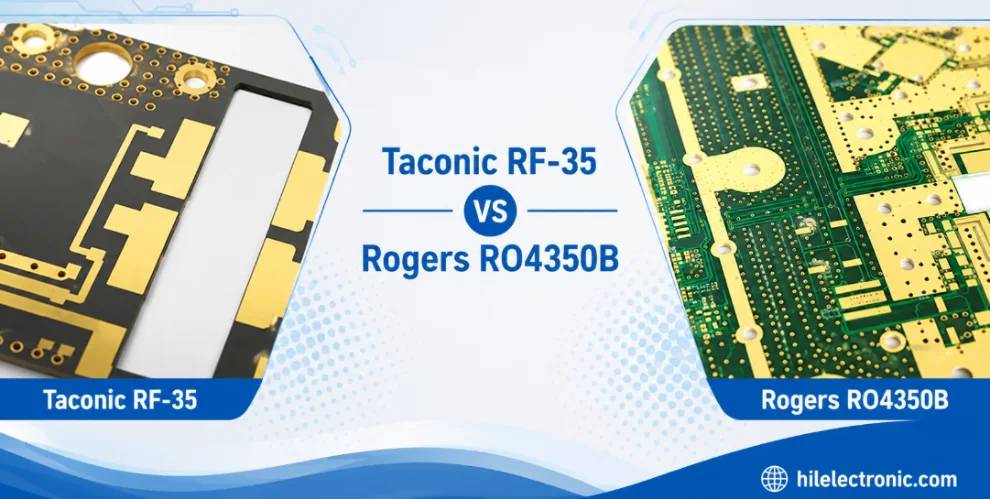
Taconic RF 35 vs RO4350B PCB
Table of contentsRF-35 vs RO4350B Procurement and...
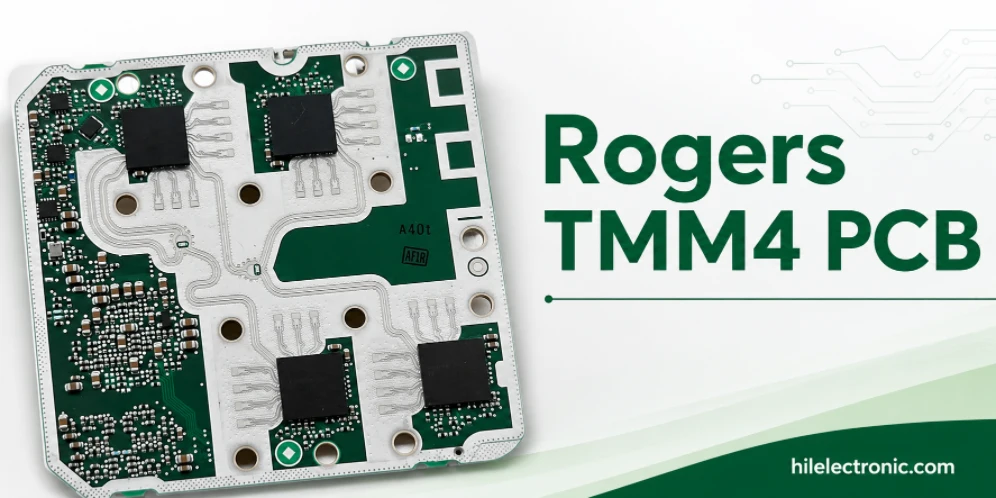
TMM4 Filter PCB Manufacturing
TMM4 filter PCB manufacturing is controlled by the...
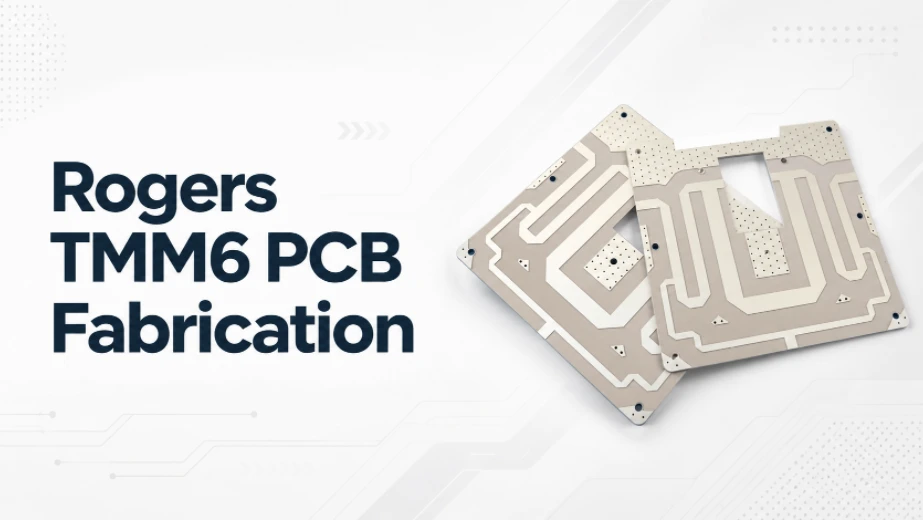
TMM6 PCB Fabrication
TMM6 fabrication is the process-control page for a mid-Dk...
TMM3 PCB Manufacturing for RF Modules
TMM3 PCB manufacturing is most useful where the RF module...
How to get a quote for PCBs
Let‘s run DFM/DFA analysis for you and get back to you with a report. You can upload your files securely through our website. We require the following information in order to give you a quote:
-
- Gerber, ODB++, or .pcb, spec.
- BOM list if you require assembly
- Quantity
- Turn time
For PCBA services, please provide your BOM (Bill of Materials) and any specific assembly instructions. We also offer DFM/DFA analysis to optimize your designs for manufacturability and assembly, ensuring a smooth production process.