
IPC-TM-650 PCB Test Methods Explained

Figure 1. IPC-TM-650 PCB test methods
IPC-TM-650 is IPC’s Test Methods Manual, a large, continuously updated collection of standardized procedures for testing printed boards, laminates, assemblies, and connectors. Its job is to tell people how to test something, the exact procedure, conditions, and measurement, so that a result from one lab means the same thing at another. Importantly, it usually does not say whether a result passes; that comes from a product specification or your own requirements. This guide explains what the manual is, how it is organized, the methods you will actually see referenced, and how to use them in a specification.
Key takeaways
- IPC-TM-650 defines how to perform tests, not whether the outcome is acceptable.
- Pass/fail limits come from product standards such as IPC-6012, or from customer specifications.
- Methods are numbered by category, chemical, mechanical, electrical, environmental, and more.
- Each method has its own number and date; the manual is a living document, not a single revision.
- Citing a specific method number plus a condition and a limit makes a quality requirement unambiguous.
Table of Contents
- What Is IPC-TM-650?
- Test Methods vs Acceptance Criteria
- How the IPC-TM-650 Manual Is Organized
- Commonly Referenced IPC-TM-650 Test Methods
- Cleanliness and Reliability Test Methods (SIR and CAF)
- Material and Solderability Test Methods
- How IPC-TM-650 Fits Into PCB Quality Control
- How to Reference IPC-TM-650 in a Specification
- Frequently Asked Questions
What Is IPC-TM-650?
The manual is best understood as a shared library of test recipes. When a drawing says a property must be verified “per IPC-TM-650, Method X.X.X”, everyone involved knows precisely how that test will be run.
- It standardizes the procedure: setup, sample, conditions, and how the result is read.
- It covers boards, base materials, assemblies, and connectors.
- It lets suppliers and buyers compare results fairly, without “method drift” between labs.
Without a common method, one supplier might measure cleanliness one way and another a different way, leaving a customer unable to compare them. IPC-TM-650 removes that ambiguity, which is why it underpins so much of the quality language used in PCB manufacturing.
Test Methods vs Acceptance Criteria
This distinction is the most common source of confusion, so it is worth stating plainly.
| Question | Answered by |
|---|---|
| How do I test this property? | IPC-TM-650 (the test method) |
| What result is acceptable? | A product standard (e.g. IPC-6012) or customer spec |
| What does an acceptable condition look like? | IPC-A-600 (bare board) or IPC-A-610 (assembly) |
So a complete requirement names two things: the method (from IPC-TM-650) and the limit (from a product standard or your own document). A method number alone does not tell the factory what counts as good, and a limit without a method does not tell it how to measure. Pairing them is what makes a requirement enforceable, and it is exactly the kind of detail a design and documentation review helps get right before production.
How the IPC-TM-650 Manual Is Organized
Methods are grouped into numbered categories, which makes finding the right one straightforward once you know the scheme.
| Series | Category | Example concerns |
|---|---|---|
| 2.1.x | Visual / microsection | Cross-sectioning, optical evaluation |
| 2.2.x | Dimensional | Sizes, registration, geometry |
| 2.3.x | Chemical | Cleanliness, ionic residue, plating chemistry |
| 2.4.x | Mechanical | Peel strength, adhesion, thermal stress |
| 2.5.x | Electrical | Dielectric constant, dissipation factor, resistance |
| 2.6.x | Environmental | Moisture, insulation resistance, CAF |
Each individual method carries its own number and revision date, so the manual as a whole is never at a single “version”, new and updated methods are issued over time. When you cite a method, cite the full number; that is enough to identify the exact procedure.
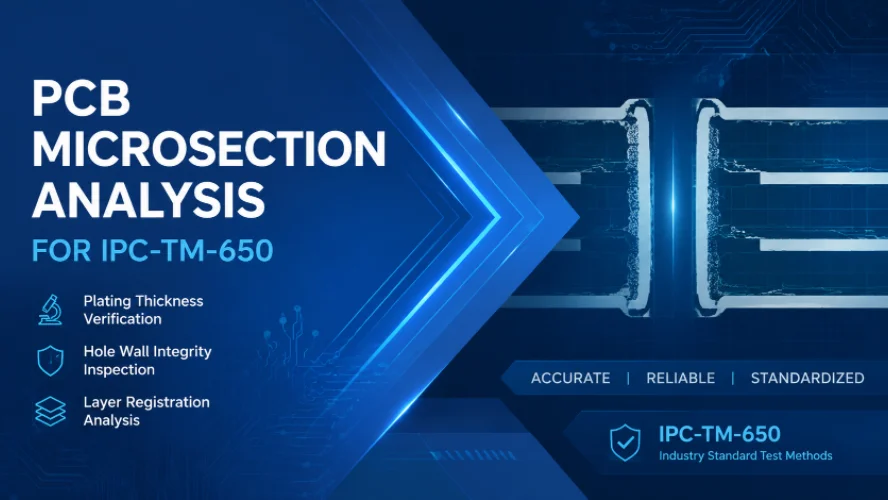
Figure 2. PCB microsection analysis for IPC-TM-650
Commonly Referenced IPC-TM-650 Test Methods
Only a handful of methods turn up on most PCB and PCBA drawings. Recognizing them demystifies a lot of quality paperwork.
| Method (type) | What it evaluates |
|---|---|
| Microsection | Plating thickness, hole-wall integrity, layer registration |
| Thermal stress | Whether plated holes survive assembly-like heat |
| Solder mask adhesion (tape test) | Whether the mask stays bonded to the board |
| Ionic cleanliness | Residual ionic contamination after processing |
| Dielectric constant / dissipation factor | Material electrical behavior for impedance and RF |
Two clusters dominate in practice: tests that prove a board’s structural reliability (microsection, thermal stress) and tests that prove its surface and material quality (cleanliness, mask adhesion, dielectric properties). The next two sections look at each cluster.
Cleanliness and Reliability Test Methods (SIR and CAF)
Several of the most consequential methods deal with contamination and long-term reliability, because invisible residue can cause failures that only appear in the field.
Ionic cleanliness and surface insulation resistance
Ionic cleanliness methods quantify how much ionic residue remains after fabrication or assembly, while surface insulation resistance (SIR) checks whether the surface still insulates well under heat and humidity. Both matter because residual ions can cause leakage currents and corrosion, which is the core reason boards are cleaned at all.
Conductive anodic filament (CAF)
CAF testing evaluates resistance to a failure mode in which conductive filaments grow between conductors through the laminate under voltage and humidity. It is a reliability concern for dense boards and high-reliability applications, the same world where IPC-6012 Class 3 lives. Heavy-current or thermally demanding designs, such as those built on metal-core substrates, may pair these methods with thermal evaluation.
Material and Solderability Test Methods
The other major cluster verifies the materials themselves and whether surfaces can be soldered.
Dielectric constant and dissipation factor
The electrical methods measure a laminate’s dielectric constant (Dk) and dissipation factor (Df), the properties that determine controlled impedance and high-frequency loss. These are exactly the numbers that matter for high-speed designs, for low-loss boards, and for selecting high-frequency materials, so a material’s datasheet values are typically backed by these test methods.
Peel strength and solderability
Mechanical methods such as copper peel strength confirm how well the foil bonds to the laminate, which matters for heavy-copper boards and for resisting pad lifting during soldering. Solderability methods confirm that pads and finishes actually accept solder. Both connect directly to assembly quality, since a board that solders cleanly is far easier to populate during PCB assembly.
How IPC-TM-650 Fits Into PCB Quality Control
The methods are most useful when mapped to the stages of a project rather than treated as a flat checklist.
| Stage | Typical methods | Goal |
|---|---|---|
| Material selection | Dielectric constant/dissipation factor, peel strength | Confirm the laminate suits the design |
| Fabrication | Microsection, plating, solder mask adhesion | Verify the bare board is built correctly |
| Cleanliness / assembly | Ionic cleanliness, surface insulation resistance | Confirm residues are within limits |
| Reliability screening | Thermal stress, CAF | Predict long-term field behavior |
Choosing methods by stage keeps a quality plan proportionate: a simple consumer board needs far less verification than a high-reliability one. The right plan starts from the application and its risks, not from copying a long list of method numbers into a drawing. Used this way, each test earns its place by answering a real question about the build.
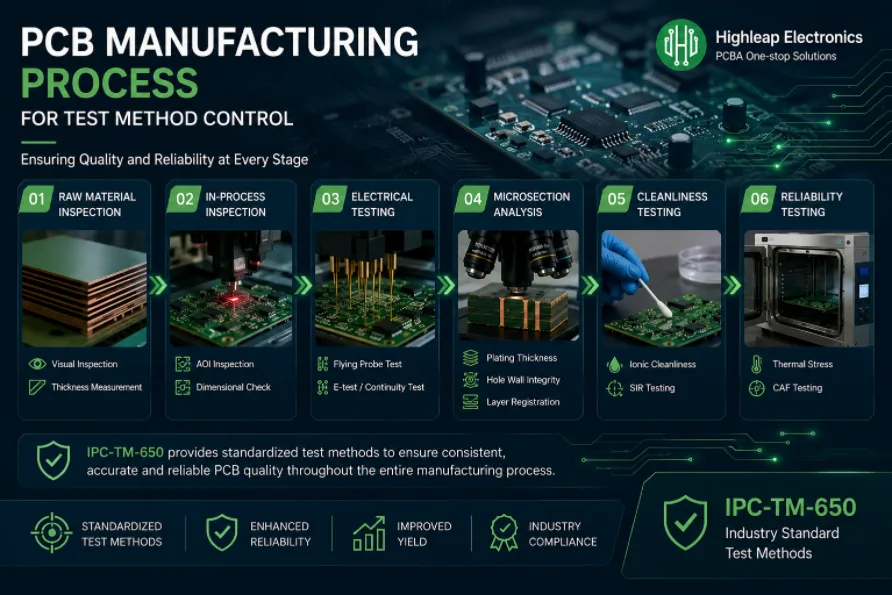
Figure 3. IPC-TM-650 testing throughout PCB manufacturing
How to Reference IPC-TM-650 in a Specification
The manual is only useful if you reference it correctly. A method becomes a real requirement when you surround it with the right detail.
- Name the full method number. Identify the exact procedure rather than a vague description.
- State the condition. Many methods have variants or test conditions, specify which.
- Pair it with a limit. Give the acceptance criterion from a product standard or your own spec.
- Define the evidence. Decide whether you need raw data, photos, microsections, or a signed report.
- Match testing to risk. Use deeper testing for high-reliability products and lighter testing for simple ones.
A test that never feeds back into process control is just expensive documentation; the value comes when results drive decisions about materials, cleaning, or plating. As production scales, consistent method-based evidence is what keeps quality stable from the first lot into high-volume assembly.
Discuss Your Test Requirements
IPC-TM-650 gives the industry a precise, shared way to run PCB-related tests, while product standards and your own specification decide what passes. Cite the method, the condition, and the limit together and your quality requirements become unambiguous. You can read more about Highleap Electronics and how we apply test methods and process control in fabrication and assembly.
Frequently Asked Questions
What is IPC-TM-650 in simple terms?
It is IPC’s Test Methods Manual, a collection of standardized procedures for testing printed boards, materials, assemblies, and connectors. It defines exactly how a test is performed so results are comparable between labs. It generally does not state whether a result is acceptable.
Does IPC-TM-650 tell me if my board passes?
No. It specifies how to run a test, not the pass/fail limit. Acceptance criteria come from a product standard such as IPC-6012, or from your own customer specification. A complete requirement pairs the method with a limit.
What is the current version of IPC-TM-650?
There is no single version. Each method within the manual has its own number and revision date, and methods are added or updated over time. When you reference one, cite the full method number, which identifies the exact procedure.
How are the methods organized?
By numbered category: visual and microsection, dimensional, chemical, mechanical, electrical, and environmental. This lets you locate a method by the kind of property you need to verify, for example a chemical method for cleanliness or an electrical method for dielectric constant.
Which methods relate to cleanliness and reliability?
Ionic cleanliness measures residual ionic contamination, surface insulation resistance checks whether the surface still insulates under heat and humidity, and CAF testing evaluates resistance to conductive filament growth. These address failure modes that often only appear in the field.
Why do material datasheets reference IPC-TM-650?
Because the electrical methods define how a laminate’s dielectric constant and dissipation factor are measured, the values that drive controlled impedance and high-frequency loss. Citing the method gives those datasheet numbers a consistent, verifiable basis.
How should I reference a test method on my drawing?
Name the full method number, state the test condition or variant, pair it with an acceptance limit from a product standard or your own spec, and define what evidence you need (data, photos, microsections, or a report). Match the depth of testing to the product’s risk.
When are tests like CAF or SIR actually necessary?
They are most relevant for dense boards and high-reliability products, medical, automotive, aerospace, where field failures are costly. A simple consumer board usually does not need them. Match the depth of reliability testing to the consequences of failure and the operating environment.
Can a fabricator help me decide which methods to specify?
Yes. A fabricator experienced with these methods can recommend a test plan proportionate to your design and class during a design or documentation review, so you verify what matters without paying for testing the product does not need.

Recommended Posts
Taconic RF 35 vs RO4350B PCB
Table of contentsRF-35 vs RO4350B Procurement and...
TMM4 Filter PCB Manufacturing
TMM4 filter PCB manufacturing is controlled by the...
TMM3 PCB Manufacturing for RF Modules
TMM3 PCB manufacturing is most useful where the RF module...
TMM6 PCB Fabrication
TMM6 fabrication is the process-control page for a mid-Dk...
How to get a quote for PCBs
Let‘s run DFM/DFA analysis for you and get back to you with a report. You can upload your files securely through our website. We require the following information in order to give you a quote:
-
- Gerber, ODB++, or .pcb, spec.
- BOM list if you require assembly
- Quantity
- Turn time
For PCBA services, please provide your BOM (Bill of Materials) and any specific assembly instructions. We also offer DFM/DFA analysis to optimize your designs for manufacturability and assembly, ensuring a smooth production process.