
High Volume Object Storage Server PCB Fabrication

Figure 1. Object Storage Server PCB Fabrication
Table of Contents
- Why Object Storage Server PCB Fabrication Is Its Own Category
- Object Storage Server PCB Fabrication Capability Matrix
- Board Types Built by Our Object Storage Server PCB Fabrication Line
- Cost Engineering for High-Volume Object Storage Server PCB Fabrication
- Quality Flow & AVL for Object Storage Server PCB Fabrication
- Engaging Highleap for Your Object Storage Server PCB Fabrication Program
1. Why Object Storage Server PCB Fabrication Is Its Own Category
Object storage hardware sits in a different economic position than enterprise NAS, SAN, or general storage server hardware. The software stack — Ceph, MinIO, OpenStack Swift, AWS-compatible S3 implementations, hyperscaler proprietary stacks — handles replication, erasure coding, and recovery at the cluster level. The implication for hardware is that individual node reliability is less critical than per-bay cost and per-rack drive density. Object storage server PCB fabrication choices follow that logic.
Workload economics that shape object storage server PCB fabrication
- Cluster-level resilience: a failed object storage node doesn’t take down the service; software rebalances onto surviving nodes. Per-node reliability targets are relaxed versus dual-controller SAN arrays — but never compromised.
- Per-bay cost dominance: in a 90-bay chassis, PCB cost per bay is the procurement metric. Object storage server PCB fabrication choices that shave $0.50 per bay scale into meaningful TCO improvement at hyperscaler volume.
- Cold vs warm tier differences: cold-tier object storage (long-term archive) uses HDD with maximum density and minimum compute; warm-tier (more frequent read access) uses moderate compute and may include SSD cache or EDSFF NVMe.
- Software-defined nature: object storage hardware ships without value-added software; the customer’s stack provides all data services. Object storage server PCB fabrication must support diverse software stacks rather than lock into one architecture.
Volume profile shaping the economics
- Hyperscaler programs: hundreds of thousands of nodes per platform per year; aggressive cost-down expectations on every line of the BOM, including object storage server PCB fabrication.
- Enterprise SDS programs: tens of thousands of nodes per year across Red Hat Ceph Storage, SUSE Enterprise Storage, Cloudian, OpenIO, and similar vendors.
- Managed service operators: backup-as-a-service, archive-as-a-service, content distribution providers running purpose-built object storage hardware.
- Custom hyperscaler builds: the largest cloud providers run custom object storage hardware that never appears in commercial product lines; this work runs through hyperscaler ODM partners under tight confidentiality.
Procurement engagement on object storage server PCB fabrication
- Multi-year forecast horizons (12–24 month rolling) enabling capacity reservation
- Scheduled monthly or weekly deliveries at steady volume against forecast
- Annual cost-down review cycles; PCB-level cost engineering contribution expected, not optional
- Quality reporting cadence: monthly PPM scorecards, quarterly business reviews
- AVL qualification flows shared across our broader server PCB manufacturing portfolio.
2. Object Storage Server PCB Fabrication Capability Matrix
| Parameter | Object Storage Server PCB Fabrication Spec |
|---|---|
| Layer count | 4 to 18 layers — covers expander carriers through 90-bay backplanes |
| Maximum board size | 600 × 500 mm — covers 90-bay 5U backplane footprint |
| Copper weight on backplanes | 2 oz to 4 oz on power planes — verified by microsection |
| Controlled impedance | ±10% on SAS-12; ±5% on Gen5 NVMe — see impedance control PCB |
| Connector positional tolerance | ±0.10 mm — critical for hot-swap drive bay reliability |
| Surface finishes | ENIG, immersion silver, OSP, lead-free HASL — see PCB surface finish |
| Electrical test | 100% flying probe or fixture; TDR coupon impedance per panel |
| Quality certifications | ISO 9001:2015, IATF 16949, UL recognition |
| IPC acceptance class | IPC-A-600 Class 2 standard; Class 3 on request |
| Prototype turnaround | 5–8 working days for backplanes; 7–10 days for mainboards |
3. Board Types Built by Our Object Storage Server PCB Fabrication Line
Object storage server PCB fabrication for a complete program means handling multiple distinct board types under coordinated change control.
x86 storage node mainboards
- CPU options: Intel Xeon-D (compact), Xeon Scalable mid-range, AMD EPYC mid-range — object storage nodes rarely need top-tier CPUs.
- Memory: 128–512 GB DDR5 typical; object workloads don’t require terabyte-class memory.
- Layer count: 12–16 layers, cost-optimized stackup taking precedence over signal-integrity headroom.
- Material: Isola 370HR or equivalent high-Tg FR4 baseline; FR408HR on selected high-speed routing — see FR4 PCB manufacturing.
ARM-based storage node mainboards
- CPU options: Ampere Altra / AmpereOne (96–192 core), NVIDIA Grace (72-core ARM Neoverse V2).
- Power efficiency advantage: ARM cores deliver more I/O-per-watt for object workloads.
- Layer count: 12–16 layers on Altra-based mainboards; 18 on Grace mainboards due to LPDDR5X routing.
- Adoption pattern: growing rapidly in hyperscaler internal designs; custom hyperscaler ARM mainboard designs are a high-volume part of our object storage server PCB fabrication portfolio.
High-density disk backplanes
- 60-bay backplane (4U chassis): approximately 450 × 350 mm; 10–14 layer construction with SAS expander integration and heavy-copper power distribution.
- 78-bay backplane (4U high-density): dense packing; 12–16 layer typical; 2–3 SAS expander chips distributed for balanced routing.
- 90-bay backplane (5U ultra-high-density): often manufactured as two boards mating to a common power bus; 14–18 layers; heavy busbar copper rated for 600+ amperes.
- Drive connector spec: SFF-8639 hot-swap connectors at ±0.10 mm positional tolerance — critical for reliable blind-mate operation across thousands of insertion cycles.
SAS expander carrier boards
- Common chips: Broadcom SAS35x40 (40-port), SAS35x36 (36-port); Microchip Adaptec products.
- Form factor: daughter card mating to backplane, or expander chips soldered directly to backplane (cost-optimized).
- Layer count: 8–12 layers depending on port count and routing density.
- Material selection: 370HR or FR408HR for SAS-12; I-Tera MT40 for emerging SAS-22.5 expander designs — drawn from the material qualification on our multilayer PCB manufacturing line.
Network interface carriers
- 10/25GbE NIC carriers: Intel E810, NVIDIA ConnectX-4 Lx, Broadcom NetXtreme; 8–12 layers.
- 100GbE NIC carriers: ConnectX-6/7, Intel E810 in 100G mode; 12–14 layers; I-Tera MT40 typical material.
- 200/400GbE NIC carriers (hyperscaler-driven): ConnectX-7/8, BlueField-3 DPU; 14–18 layers.
- DPU carrier boards for object storage acceleration: offload erasure coding, compression, encryption from host CPU.
Power, management, infrastructure boards
- Power shelf and PSU control boards with heavy-copper busbar distribution
- BMC management boards (ASPEED AST2600 typical)
- Front-panel LED and serial-console boards
- Fan controller and thermistor aggregation boards
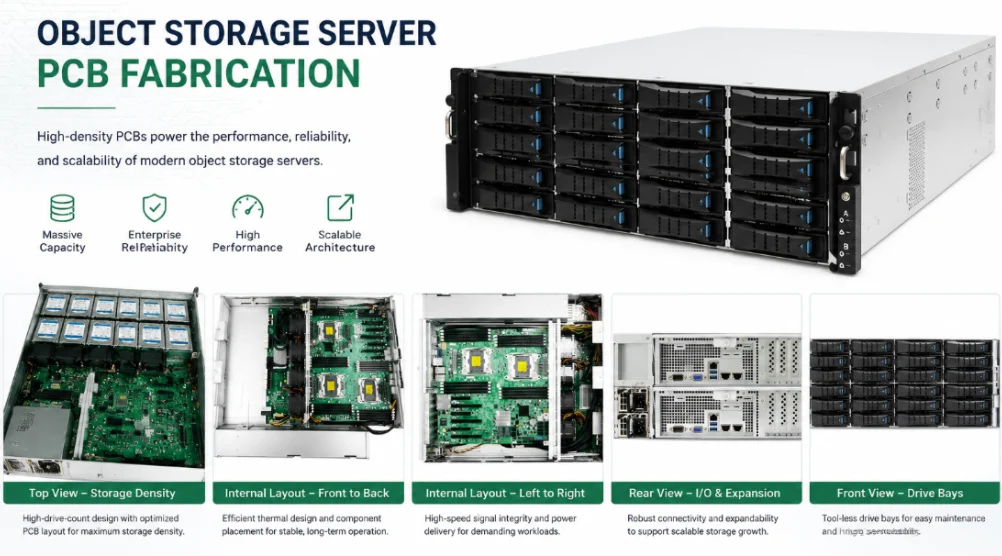
Figure 2. Object Storage Server Device
4. Cost Engineering for High-Volume Object Storage Server PCB Fabrication
Object storage program economics favor disciplined cost engineering at every level of the BOM. Object storage server PCB fabrication is among the more elastic cost categories — meaningful cost-down is achievable through stackup, material, copper weight, and panelization decisions without compromising the reliability targets the software stack requires.
Layer count optimization
- Routing review: consolidating inner-layer routing eliminates layer pairs; each pair removed saves 7–12% of unit cost.
- Stackup symmetry: symmetric stackups reduce warp and improve yield.
- Power plane consolidation: if power-integrity simulation supports it, combining voltage planes saves layer pairs.
Material substitution opportunities
- FR408HR → 370HR for short channels: where signal-integrity simulation confirms acceptable loss budget, IS410-class material saves 15–20% over FR408HR.
- I-Tera MT40 → FR408HR for moderate-speed traces: where 25G SerDes runs are short, mid-grade material may suffice.
- Mixed-material stackup: premium laminate only on critical signal layers; lower-cost material elsewhere — qualified across multiple object storage server PCB fabrication programs.
Surface finish optimization
- OSP over ENIG where assembly process allows: 10–15% surface finish cost reduction.
- Selective ENIG: ENIG only on press-fit and edge-connector areas; OSP elsewhere.
- Immersion silver: intermediate cost point with good solderability.
Panelization improvement
- Tighter array spacing: reduced rail width improves array yield per panel.
- Multi-PCB panels: mainboard + backplane + management board panels combined to reduce per-piece setup cost.
- Rotation analysis: board orientation within the panel affects copper balance and warp.
Volume scheduling discipline
- Larger lot sizes (quarterly rather than weekly cadence) reduce setup overhead
- Material lot reservation reduces raw-material variance
- Firm capacity allocation reduces overhead per piece
5. Quality Flow & AVL for Object Storage Server PCB Fabrication
Inline quality control
- 100% inner-layer AOI on every panel
- X-ray registration verification on high-layer-count backplane builds
- Microsection sampling for plating thickness, via barrel integrity, layer-to-layer alignment
- TDR coupon impedance verification per panel on controlled-impedance designs
- 100% electrical test — flying probe for low-medium volume, fixture for high-volume
- CMM verification on backplane connector positions to confirm SFF spec compliance
- Visual inspection per IPC-A-600 Class 2 standard, Class 3 on request
Documentation per object storage server PCB fabrication delivery
- Certificate of Conformance with full lot traceability
- Material certifications (laminate, prepreg, copper foil)
- Electrical test report
- TDR impedance report on controlled-impedance designs
- Microsection report (first article + sampling)
- AOI inspection logs
- Visual inspection per IPC-A-600 acceptance class
- RoHS, REACH, conflict-minerals declarations
- Process traceability log
AVL qualification flow
- Pre-qualification audit: customer site visit covering equipment, process, environmental, lab
- Sample build qualification: 50–200 pieces of representative mainboard or backplane with full documentation
- Process validation: SPC data, control plans, FMEA, MSA
- Customer validation: environmental testing, hot-swap insertion cycle testing on backplanes, system-level testing
- Formal AVL approval: cross-functional signoff
- Ongoing AVL maintenance: PPM, on-time delivery, response time metrics; periodic re-audits
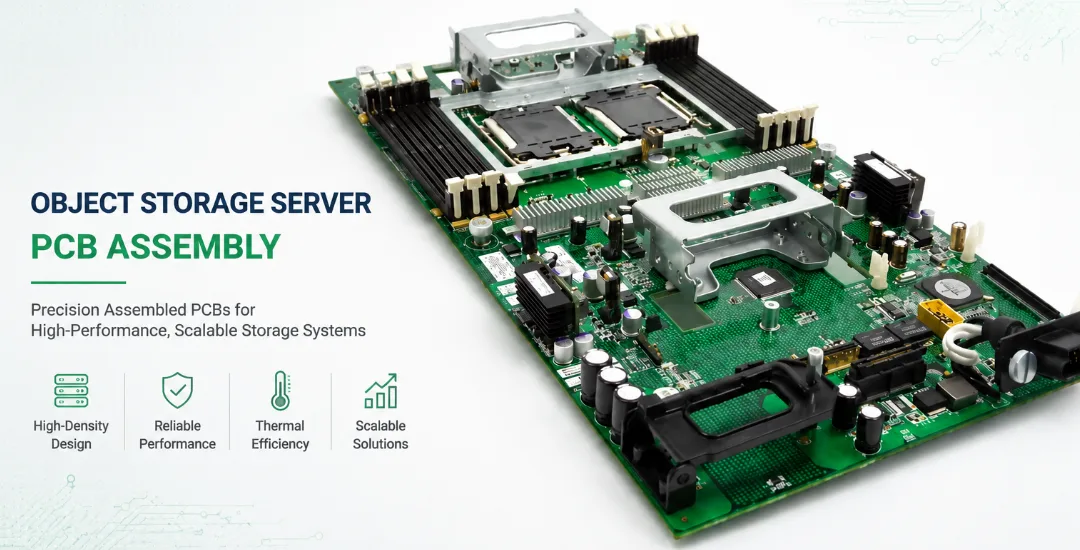
Figure 3. Object Storage Server PCB Assembly
6. Engaging Highleap for Your Object Storage Server PCB Fabrication Program
Initial engagement
- NDA execution to enable detailed cost engineering and reference-design discussion
- Capability statement documenting fabrication capability, AVL references, capacity commitments
- Sample build: 50–200 piece sample of representative mainboard or backplane with full documentation
Cost engineering workshop
- BOM-level review covering material, copper weight, layer count, surface finish, panelization
- Documented cost-down proposals per piece with quality-impact analysis
- Customer-side validation through engineering before implementation
Pilot production and volume ramp
- Pilot run: 2,000–10,000 unit first production run under formal AVL qualification
- Quality data collection: yield, defect rates, customer returns tracked from pilot through ramp
- Scheduled delivery: monthly or weekly against rolling forecast
- Capacity flex: reserved capacity plus surge capacity for unexpected demand spikes
- Change control: formal ECN management with cost and lead-time impact analysis
- Quality scorecard: monthly PPM, on-time delivery, response time; quarterly business review
Highleap Electronics is a full-service PCB manufacturing and assembly factory; the object storage server PCB fabrication capability described here is one of several specialized programs we run. We are ISO 9001 and IATF 16949 certified. Object storage server PCB fabrication at our facility runs from 4 layers (simple expander carriers) to 18 layers (90-bay backplanes), with cost discipline appropriate to hyperscaler ODM volume programs, controlled impedance for SAS-12 and SAS-22.5 routing, heavy copper to 3–4 oz for power-dense backplanes, and panel utilization optimization. Surface finish — ENIG, immersion silver, OSP, lead-free HASL — is matched to the cost-quality balance of each program; our rigid PCB capability page documents the full range of finishes and tolerances.
Submit Gerber files, drill data, stackup specification, target quantities, and program timeline through our online quote portal for a 24-hour response covering DFM feedback, cost engineering opportunities, and pricing for pilot through volume production. For complex object storage server PCB fabrication programs — multi-chassis-family supply, hyperscaler-specific cost engineering, multi-year forecast-based scheduling — our team can engage directly.

Recommended Posts
TMM4 Filter PCB Manufacturing
TMM4 filter PCB manufacturing is controlled by the...
TMM6 PCB Fabrication
TMM6 fabrication is the process-control page for a mid-Dk...
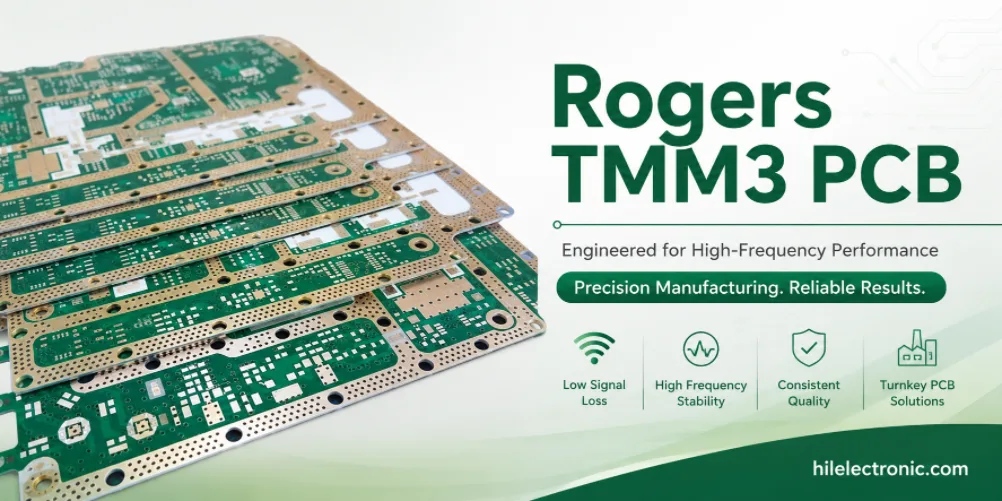
TMM3 PCB Manufacturing for RF Modules
TMM3 PCB manufacturing is most useful where the RF module...
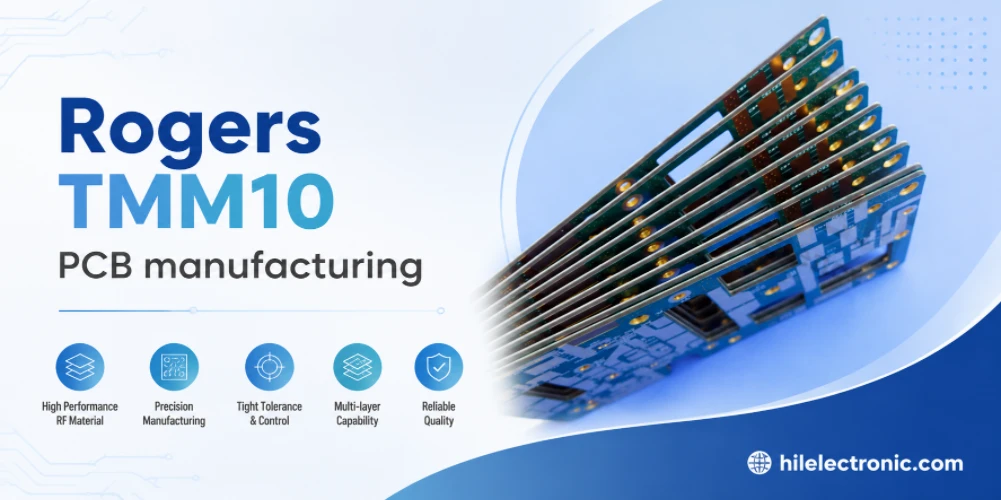
TMM10 PCB Manufacturing for Compact RF Designs
Table of contentsHow TMM10 Shrinks RF StructuresTMM10 vs...
How to get a quote for PCBs
Let‘s run DFM/DFA analysis for you and get back to you with a report. You can upload your files securely through our website. We require the following information in order to give you a quote:
-
- Gerber, ODB++, or .pcb, spec.
- BOM list if you require assembly
- Quantity
- Turn time
For PCBA services, please provide your BOM (Bill of Materials) and any specific assembly instructions. We also offer DFM/DFA analysis to optimize your designs for manufacturability and assembly, ensuring a smooth production process.