
Underwater & Pool LED Light PCBs: IP68 Potted Boards, Low-Voltage Drivers & Safety
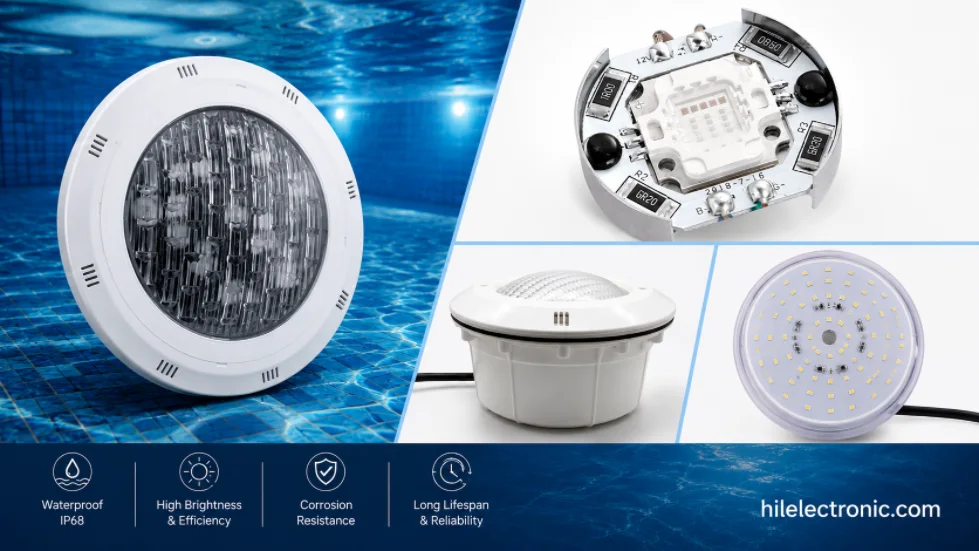
Figure 1. LED pool light PCB manufacturing reference.
Table of Contents
- Why underwater lighting is the hardest sealing job in lighting
- Waterproofing and potting for permanent submersion
- Low-voltage electrical safety for water
- The boards inside a pool or underwater fixture
- RGB, RGBW, and color-changing pool boards
- Corrosion, materials, and thermal-in-water
- Capabilities at a glance
- Why one factory for sealed underwater electronics
- How to Order — Files, MOQ & Lead Time
- Pool & Underwater LED PCB — Frequently Asked Questions
Underwater lighting is the most unforgiving sealing problem in the whole lighting industry. A pool, fountain, or pond light is permanently submerged, sometimes under pressure, often in chemically treated or salty water, and it carries electricity into an environment full of swimmers. Two failures are unacceptable: water reaching the electronics, and electricity reaching the water. Both are decided by how the boards are built and protected.
Highleap Electronics is a full-capability multilayer PCB fabrication and board assembly factory, and fully sealed, low-voltage submersible electronics are exactly the kind of demanding build our potting and waterproofing lines exist for. We build the light engine, the low-voltage driver, and any color-control board, and seal them to survive permanent immersion. This guide covers the waterproofing and the safety engineering that underwater lighting demands, and how to order. The wider category is on our LED lighting circuit boards page.
Quick answer: An underwater or pool light must keep water out of the electronics and electricity out of the water — which means a fully potted IP68 light engine and a low-voltage SELV (typically 12 V) supply. Highleap Electronics fabricates and assembles fully encapsulated submersible boards with corrosion-resistant construction, low-voltage drivers, and RGBW color control, all sealed and tested for permanent immersion, at MOQ 1 with a 24-hour quote.
Why underwater lighting is the hardest sealing job in lighting
Most outdoor lighting has to resist rain. Underwater lighting has to resist permanent submersion, which is a different category of problem. Water is relentless: given any path — a pinhole in a coating, a gap at a wire entry, a micro-crack in a seal — it will find its way to the electronics over months or years. Pool water adds chlorine or salt that attacks metals, and deeper fixtures add hydrostatic pressure that pushes water through any weakness.
On top of the sealing problem sits a safety problem that ordinary lighting never faces: people are in the water. That makes the electrical design a life-safety matter and forces low-voltage operation and proper isolation. An underwater light is therefore defined by two engineering disciplines — total sealing and electrical safety — and both are decided at the board and protection level, which is why this is specialist work rather than a waterproof version of a normal fixture.
Waterproofing and potting for permanent submersion
Sealing a board for permanent immersion is fundamentally different from making it rain-resistant, and it is worth understanding the approach in detail because it is where underwater fixtures succeed or fail.
IP68, not just IP65. Ingress protection ratings describe how well an enclosure keeps water out. IP65 means protected against water jets — fine for an outdoor wall light. Underwater fixtures need IP68: protected against continuous immersion beyond one metre, to a depth and duration the manufacturer specifies (pool standards expect the sealed assembly to hold a surface insulation resistance on the order of 100 MΩ·cm after prolonged submersion). That rating is earned by construction, and the board is the core of it:
- Full potting / encapsulation — rather than relying only on a sealed housing, the board itself is encapsulated in a potting compound so that even if the housing is breached, the electronics remain sealed in solid material. This is the heart of our waterproof PCB construction for submersible fixtures.
- Potting compound selection — epoxy, polyurethane, and silicone compounds each trade off hardness, thermal conductivity, flexibility, and adhesion. The choice depends on the fixture’s thermal load, the water chemistry, and whether the potting must flex with temperature; we select it to the application rather than defaulting to one material.
- Wire and connector entry — the most common leak path is where the power cable enters. Potting and sealed glands are designed so the cable entry is as watertight as the body, because a perfect housing with a leaking cable entry still floods.
- Void-free encapsulation — air voids in potting trap moisture and create weak points; we control the potting process to eliminate them.
Pressure and thermal-in-water. Two further factors shape the design. Deeper fixtures — fountains, ponds, architectural features — face hydrostatic pressure that rises with depth, so the encapsulation must resist that pressure without delaminating. At the same time, being underwater is thermally favorable if the design exploits it: water is an excellent heat sink, far better than air, so a coated and potted engine that conducts heat through the potting to the housing and into the water can run cooler than the same fixture in air — provided the potting is chosen to conduct rather than insulate. Getting that heat path right through a solid potting compound is a real design exercise, and it is one of the reasons underwater engines are built differently from dry ones.
Because sealing is a whole-fixture property — board, potting, housing, and cable entry all have to be watertight together — building the board and doing the potting in one facility is the only way to guarantee they were designed as one sealed system rather than assembled and hoped for.
Low-voltage electrical safety for water
The second discipline is electrical safety, and because swimmers share the water, it is non-negotiable. The whole electrical design is built around keeping dangerous voltage away from people.
SELV low-voltage operation. Underwater and pool lighting runs at Safety Extra-Low Voltage — typically 12 V, sometimes 24 V — rather than mains voltage. Codes define a low-voltage contact limit (under the US NEC, 15 V AC RMS or 30 V DC in wet contact; NEC Article 680.23 governs underwater luminaires, and IEC 60364-7-702 covers pools internationally), and staying below it means that even with a fault and water contact, the voltage cannot deliver a dangerous shock. This shapes the board design:
- Low-voltage light engine — the LED array is configured to run from the SELV supply, which changes the string and current design compared with a mains-side fixture.
- Isolated low-voltage conversion — a safety isolating transformer or isolated DC-DC converter separates the low-voltage fixture from the mains supply, so there is no electrical path from the grid to the water. This isolation is the safety barrier, and it is a board-level design responsibility.
- The driver lives dry, the engine lives wet — in most systems the driver and the mains-to-SELV conversion sit in a dry remote enclosure, and only the sealed low-voltage engine is submerged. We build both boards and design the split between them.
Protective devices and standards. Beyond low voltage, pool and fountain installations are governed by electrical codes covering ground-fault protection (GFCI in North America, RCD under IEC) and the zones around water — and because electric-shock drowning is a real hazard at surprisingly low AC levels, the isolation and low leakage are taken seriously even though a listed SELV luminaire supplied through an isolation transformer is often exempt from GFCI on its low-voltage secondary. While the protective device is part of the installation, the fixture’s board design has to suit it — low leakage, proper isolation, and a fault behavior that trips protection cleanly rather than energizing the water. We design the low-voltage and isolation architecture so the fixture is safe by construction and compatible with the protection the installation requires.
This is why underwater lighting cannot be treated as ordinary lighting with extra sealant. The low-voltage configuration, the isolation barrier, and the fault behavior are engineered into the boards from the start — and building the engine and the conversion/driver together is what guarantees the safety barrier is whole, rather than split across suppliers who each assume the other handled it.
The boards inside a pool or underwater fixture
A complete underwater lighting system is a multi-board set split between wet and dry locations, and we build all of it:
- Submerged light engine — a fully potted, low-voltage metal-core board carrying the LEDs, sealed to IP68.
- Remote driver and SELV conversion — a dry-located driver with isolated low-voltage conversion that powers the submerged engine safely.
- Color-control board — for RGB/RGBW fixtures, a controller (often dry-located) that drives color and effects; a high-density LED design where many channels are involved.
- Wireless or wired control — for pool systems controlled from an app or a panel, a control interface coordinating multiple fixtures.
The split between submerged and dry boards, and the safe low-voltage link between them, is the defining design decision — and one we make as a single coordinated system.
RGB, RGBW, and color-changing pool boards
Color-changing light is much of the appeal of modern pool and fountain lighting, and it adds channels to the board:
- RGB and RGBW engines — multi-channel color mixing sealed in the submerged fixture.
- Addressable effects — individually controlled LEDs for chase, fade, and synchronized multi-fixture shows.
- Even color mixing — channel layout designed so the blended color is uniform through the water and the lens.
- Coordinated control — the color board and the driver are built together so effects run smoothly across all fixtures.
The color electronics are sealed to the same IP68 standard as the white engine, with no compromise for the extra channels.
Corrosion, materials, and thermal-in-water
Water chemistry attacks the wrong materials, so submersible boards are built to resist it. Chlorinated pool water and salt water both drive corrosion, so we use corrosion-resistant finishes, design to avoid galvanic couples, and pair the board with PCB conformal coating under the potting for a second barrier. The thermal design exploits the water as a heat sink — conducting heat through the potting into the housing and the surrounding water — so a well-built submerged engine runs cool. Materials, corrosion resistance, and the in-water heat path are all matched to the water type during the DFM review.
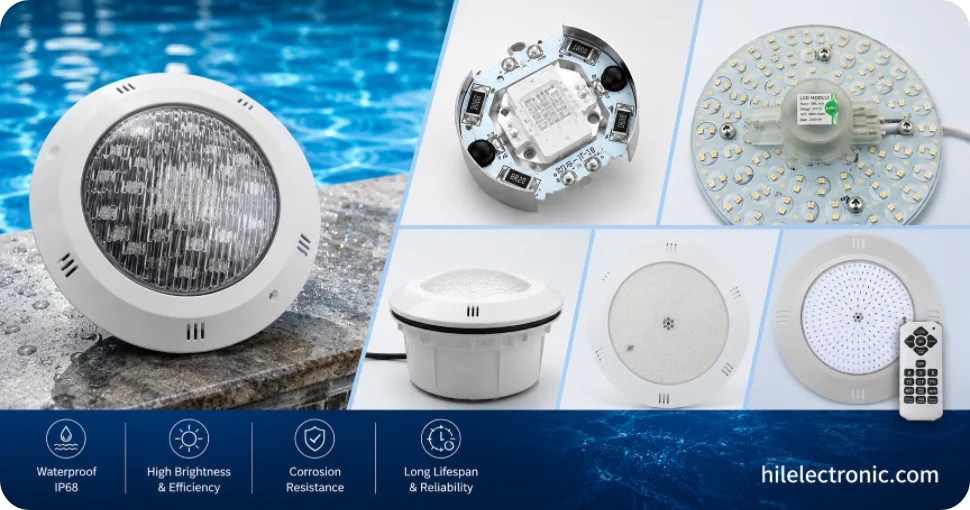
Figure 2. LED pool light PCB assembly production and assembly detail.
Underwater & pool PCB capabilities at a glance
The table summarizes what we bring to submersible lighting boards:
| Capability | Standard | Advanced |
|---|---|---|
| Sealing | IP67 coated | IP68 fully potted for permanent immersion |
| Potting | Epoxy | Silicone / PU, void-free, thermally conductive |
| Voltage | SELV 12 V | SELV 12/24 V with isolated conversion |
| Engine substrate | Aluminum MCPCB | Corrosion-hardened finishes |
| Color | Fixed white | RGB, RGBW, addressable |
| Driver location | Remote dry | Remote dry + multi-fixture control |
| Testing | AOI + functional | Burn-in, immersion / leak verification |
| MOQ | 1 unit | Volume breaks from 10+ |
The sealing, voltage, and color configuration is matched to the fixture’s depth, water type, and effect requirements during the free DFM review.
Why one factory for sealed underwater electronics
Underwater lighting fails at the seams — between the board and the potting, between the housing and the cable entry, between the engine and the isolation barrier that keeps the water safe. Every one of those seams is an integration point, and integration points are exactly where separately sourced boards and outsourced potting let water or voltage through.
Highleap Electronics builds the submerged engine and the dry driver, does the IP68 potting in-house, designs the SELV isolation as one safety system, and leak-tests the result, at MOQ 1 so you can prove a fixture before volume. Send your fixture depth, water type, and color requirements to our PCB assembly team for a 24-hour quote. The thermal-in-water design and the sealing are handled as one job. For adjacent wet-location landscape fixtures, see our landscape light PCB page.
How to Order — Files, MOQ & Lead Time
Ordering underwater and pool boards from Highleap Electronics starts with your fixture depth, water type (chlorinated, salt, fresh), and color requirements. Every quote includes a free Design for Manufacturability (DFM) review, and our minimum order is a single unit with no prototype surcharge.
What files to send
- PCB fabrication only — Gerber RS-274X files (all copper, solder-mask, and silkscreen layers), Excellon drill file, board outline on the mechanical layer, and fabrication notes covering substrate, dielectric, copper weight, surface finish, and solder-mask color.
- PCB assembly (PCBA) — the above plus a Bill of Materials with manufacturer part numbers and quantities, and a Pick-and-Place (Centroid) file for the SMT components.
- Turnkey electronics — the above plus mechanical files (STEP/DXF) for the heat sink or housing, optic or lens details, driver or control specification, firmware if applicable, and any branding or packaging artwork. If files are missing, send what you have and our engineering team identifies the gaps during the DFM review.
MOQ and pricing
- Minimum order quantity is 1 unit for both fabrication and assembly, with no prototype penalty fee.
- Volume price breaks at 10, 50, 100, 500, and 1,000+ units.
- We retain your files so repeat orders skip re-quoting the engineering cost.
Lead times
- PCB fabrication — 5 to 7 business days standard; 24 to 48 hours express, subject to capacity confirmation.
- PCB assembly (PCBA) — 7 to 12 business days including component sourcing; 5 days express for an in-stock BOM.
- Turnkey modules — typically 12 to 18 business days depending on substrate, protection, and volume.
- All lead times are confirmed in your quote and begin from order confirmation and file approval.
Certifications and standards: ISO 9001 quality management, IPC Class 2 and Class 3 workmanship, AOI and functional testing on every board, with X-ray, ICT, and burn-in screening available. We ship to more than 40 countries with full tracking and provide compliance documentation on request. For pool or underwater LED light PCBs, submit the Gerber files, BOM, potting notes, waterproofing requirements, and target quantities through the website quote form so Highleap Electronics can review sealing, thermal, and assembly risks together.
Pool & Underwater LED PCB — Frequently Asked Questions
What IP rating do you build pool and underwater lights to?
IP68 — protected against continuous immersion beyond one metre, to a depth and duration we confirm for the fixture. We achieve it by fully potting the board so the electronics stay sealed in solid compound even if the housing is breached, with sealed cable entry (the most common leak path) and void-free encapsulation. IP65 or IP67 is only adequate for splash or shallow use; permanent submersion needs IP68 construction.
How do you keep underwater lights electrically safe for swimmers?
By running the submerged fixture at Safety Extra-Low Voltage (typically 12 V, sometimes 24 V) and isolating it from the mains with a safety transformer or isolated DC-DC converter. Even with a fault and water contact, SELV cannot deliver a dangerous shock. The mains-to-SELV conversion and driver usually sit in a dry remote enclosure, and only the sealed low-voltage engine is submerged. We design the isolation barrier and fault behavior so the fixture is safe by construction and compatible with the GFCI/RCD protection the installation requires.
Can the boards survive chlorinated and salt water?
Yes. We use corrosion-resistant finishes, design to avoid galvanic couples that water accelerates, and add conformal coating under the potting as a second barrier. The potting compound is selected for the water chemistry. We match materials and corrosion resistance to whether the fixture sees chlorinated pool water, salt water, or fresh water during the DFM review.
Do you build RGBW and color-changing pool fixtures?
Yes. We build RGB, RGBW, and addressable color engines sealed to the same IP68 standard as white fixtures, with channel layout designed for even color mixing through the water and lens, and a coordinated color-control board so effects run smoothly across multiple fixtures. The extra color channels are sealed with no compromise to the waterproofing.
Does being underwater help with cooling?
Yes, if the design exploits it. Water is a far better heat sink than air, so a submerged engine whose potting conducts heat to the housing and into the water can run cooler than the same fixture in air — but only if the potting compound is chosen to conduct rather than insulate, and the heat path through the solid potting is designed deliberately. We engineer that in-water heat path as part of the build rather than leaving it to chance.

Recommended Posts
Taconic RF 35 vs RO4350B PCB
Table of contentsRF-35 vs RO4350B Procurement and...
TMM4 Filter PCB Manufacturing
TMM4 filter PCB manufacturing is controlled by the...
TMM6 PCB Fabrication
TMM6 fabrication is the process-control page for a mid-Dk...
TMM3 PCB Manufacturing for RF Modules
TMM3 PCB manufacturing is most useful where the RF module...
How to get a quote for PCBs
Let’s run DFM/DFA analysis for you and get back to you with a report. You can upload your files securely through our website. We require the following information in order to give you a quote:
-
- Gerber, ODB++, or .pcb, spec.
- BOM list if you require assembly
- Quantity
- Turn time
For PCBA services, please provide your BOM (Bill of Materials) and any specific assembly instructions. We also offer DFM/DFA analysis to optimize your designs for manufacturability and assembly, ensuring a smooth production process.