
Low Dk Low Df PCB Material for High Speed Signals
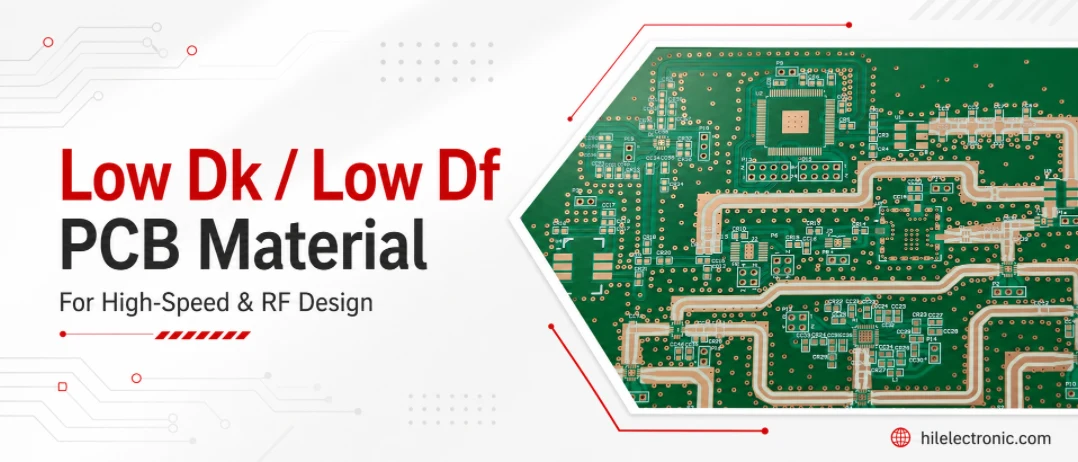
Figure 1. Low loss PCB material selection for high speed boards.
Two numbers on a laminate datasheet do more to determine high-speed performance than any others: the dielectric constant (Dk) and the dissipation factor (Df). Together they decide how fast a signal travels, what trace geometry yields a target impedance, and how much of the signal survives the journey. Low-Dk, low-Df materials are the laminates engineered to optimize both — and they are the materials at the center of both the high-speed design conversation and the 2026 material shortage. This guide explains what these parameters mean, what a low-Dk/low-Df material buys you, how it compares to FR-4, and what to expect in manufacturing, cost, and lead time.
What Low Dk and Low Df Mean
The dielectric constant (Dk), also called relative permittivity, measures how much the dielectric slows and stores the electric field. A lower Dk lets signals propagate faster and makes impedance control easier, because for a given impedance target a lower-Dk material allows more forgiving trace geometry. Dk also needs to be stable — constant across frequency and across the glass-weave pattern — because variation produces impedance discontinuities and skew between differential pairs.
The dissipation factor (Df), also called loss tangent, measures how much signal energy the dielectric absorbs and turns into heat. A lower Df means less dielectric loss, which is the dominant loss mechanism for long high-rate channels. “Low Dk, low Df” material therefore combines easy, stable impedance control with low signal loss — exactly what a high-rate channel needs. The full definitions and their interaction are in dielectric constant and loss tangent and PCB dielectric constant.
Signal Loss Reduction Benefits
The central benefit of low-Dk/low-Df material is keeping insertion loss within budget over the channel. Insertion loss on a PCB channel comes mainly from two sources: dielectric loss (governed by Df) and conductor loss (governed by copper roughness and the skin effect). Lowering Df attacks the dielectric component directly; pairing it with a smooth low-profile copper foil attacks the conductor component. The combined result is a channel that preserves enough signal amplitude and edge fidelity for the receiver to recover the data — an open eye instead of a closed one.
This matters more as data rates climb, because loss scales with frequency and length. At low rates, FR-4’s higher Df is invisible; at 112G and 224G SerDes rates, the difference between a low-Df laminate and FR-4 is the difference between a working link and a failed one. The benefit is therefore strongly application-dependent: real and decisive for high-rate channels, negligible and not worth paying for at low rates. The design context is in high speed PCB material selection and low loss PCB fabrication.
Comparing Low Dk Materials to FR4
Standard FR-4 and low-Dk/low-Df materials differ chiefly in resin chemistry and, often, in glass cloth and copper foil. FR-4 uses standard epoxy resin and has a relatively high Df that is fine at low speed; low-Dk/low-Df grades use specialized resin systems — frequently PPO/PPE-based for mid-loss and low-loss laminates, or PTFE and ceramic-filled systems for RF — to achieve a much lower Df and, in many cases, a lower and more stable Dk.
The trade-offs are cost, manufacturability, and availability. Low-Dk/low-Df grades cost multiples of FR-4 — moving up the CCL grade ladder, each step (M6, M7, M8, M9) multiplies material cost rather than adding to it — and they are harder to fabricate and currently far more constrained in supply. The right comparison is therefore not “which is better” but “which does this channel actually need.” For the majority of boards, FR-4 is the correct, cheaper choice; for high-rate channels, the low-Dk/low-Df grade is mandatory. A useful middle path is the hybrid stack-up, using the low-Df grade only on the layers that need it. The comparison detail is in PTFE vs FR4 PCB and the high-speed materials overview.
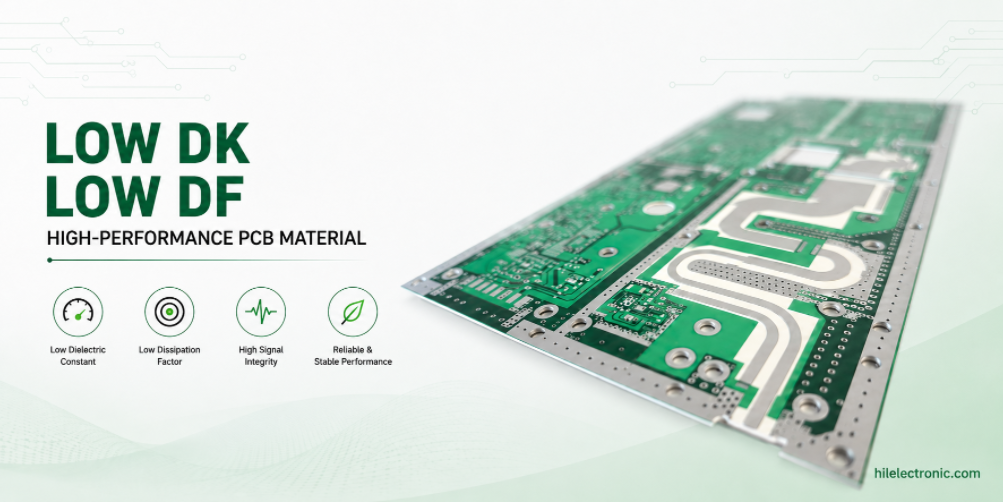
Figure 2. Low Dk low Df PCB
Manufacturing Considerations
Low-Dk/low-Df materials are more demanding to fabricate than FR-4. The specialized resin systems often need modified lamination profiles to bond reliably. The smooth low-profile copper foils that reduce conductor loss also adhere less aggressively, requiring careful surface preparation. As grades climb toward M9, the glass cloth becomes high-purity quartz, which is harder and accelerates drill-bit wear, demanding advanced drill coatings and tighter tool-life management. And because these materials are chosen specifically to control impedance and loss, the controlled-impedance tolerances are tighter, so the stack-up impedance must be confirmed with the actual laminate Dk rather than a datasheet nominal.
For PTFE-based RF materials specifically, fabrication involves additional steps — plasma treatment for adhesion and special handling of the soft substrate — that differ from standard FR-4 processing. The RF-specific manufacturing background is in RF PCB impedance control and the impedance fundamentals in impedance control in high-speed PCBs.
Cost and Lead Time Factors
Low-Dk/low-Df materials are both expensive and supply-constrained, and the two factors are linked. On cost, the CCL grade ladder is steep: industry figures place M6 at roughly 3–5× standard FR-4, M7 at 6–9×, M8 at 10–15×, and M9 Q-glass at 15–20×. Because each grade step changes resin, foil, and glass at once, the cost jump is multiplicative, not incremental. This makes over-specification — choosing a lower-Df grade than the channel needs — a costly mistake.
On lead time, low-Dk/low-Df grades are among the most constrained materials in the supply chain. M6/M7 grades run roughly 14–18 weeks, M8/M9 are frequently allocation-only at 20+ weeks, and the specialty inputs behind them (HVLP copper foil, quartz glass cloth) face projected multi-thousand-tonne shortfalls. The practical implications: specify the minimum Df grade the channel actually requires, qualify a second equivalent grade, and plan material commitments well ahead of the production need. The supply detail is in the PCB laminate lead time guide and the PCB material shortage Hub.
Get a Quote for a Low-Df PCB Design
Highleap Electronics fabricates low-Dk/low-Df and RF boards through our high frequency PCB and high-speed PCB manufacturing programs, with confirmed stack-up calculations and a material-availability review for every controlled-impedance design.
Low Dk Low Df Material FAQs
What do Dk and Df mean->
Dk (dielectric constant) measures how much the dielectric slows and stores the electric field; a lower, stable Dk allows faster propagation and easier impedance control. Df (dissipation factor, loss tangent) measures how much signal energy the dielectric absorbs; a lower Df means less dielectric loss, which dominates loss on long high-rate channels.
What does low-Dk/low-Df material actually improve->
It keeps insertion loss within budget over the channel, preserving signal amplitude and edge fidelity so the receiver can recover the data. The benefit grows with data rate and trace length — decisive at 112G/224G, negligible at low rates.
How does low-Dk/low-Df material compare to FR-4->
It uses specialized resin (often PPO/PPE or PTFE) for much lower Df and often lower, more stable Dk, but costs multiples of FR-4, is harder to fabricate, and is far more supply-constrained. FR-4 remains the right choice for most boards; low-Df grades are mandatory only for high-rate channels.
What are the manufacturing challenges->
Modified lamination profiles for the resin system, careful surface prep for smooth low-profile foils that adhere less aggressively, advanced drilling for hard quartz glass on the highest grades, and tighter controlled-impedance tolerances requiring impedance confirmation with the real laminate Dk.
How expensive and how constrained are these materials in 2026->
Cost multipliers versus FR-4 run roughly 3-5x (M6), 6-9x (M7), 10-15x (M8), and 15-20x (M9). Lead times run 14-18 weeks for M6/M7 and 20+ weeks (allocation-only) for M8/M9, with HVLP foil and quartz glass cloth among the most constrained inputs. Specify the minimum grade needed and qualify an equivalent.

Recommended Posts
TMM6 Filter PCB Manufacturing
Table of contentsWhy Microwave Filter Designers Use...
TMM4 Filter PCB Manufacturing
TMM4 filter PCB manufacturing is controlled by the...
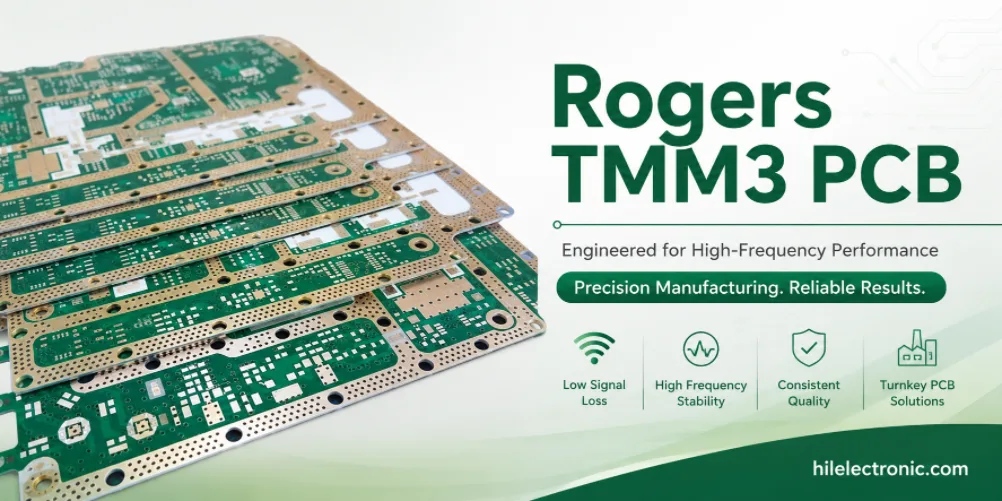
TMM3 PCB Manufacturing for RF Modules
TMM3 PCB manufacturing is most useful where the RF module...
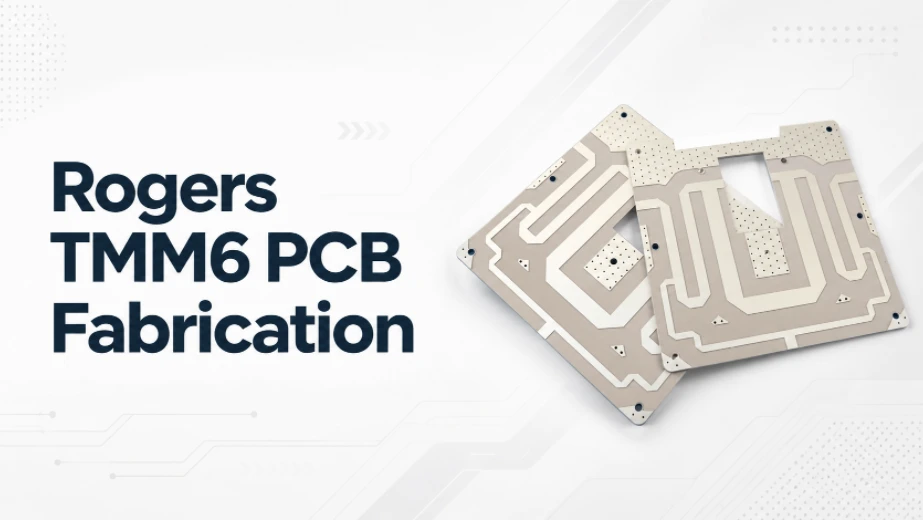
TMM6 PCB Fabrication
TMM6 fabrication is the process-control page for a mid-Dk...
How to get a quote for PCBs
Let’s run DFM/DFA analysis for you and get back to you with a report. You can upload your files securely through our website. We require the following information in order to give you a quote:
-
- Gerber, ODB++, or .pcb, spec.
- BOM list if you require assembly
- Quantity
- Turn time
For PCBA services, please provide your BOM (Bill of Materials) and any specific assembly instructions. We also offer DFM/DFA analysis to optimize your designs for manufacturability and assembly, ensuring a smooth production process.