
AC-DC Power Supply PCB Quote Guide

Figure 1. AC-DC Power Supply PCB Quote
An accurate AC-DC power supply PCB quote depends almost entirely on the quality of the data package you send — Gerbers, stackup, copper weight, bill of materials, input/output specification, safety class and production volume — because a power board priced from incomplete information is a price that changes after the first article. A serious quote separates one-time engineering and tooling from per-board fabrication, assembly labor, component cost and testing, and it states lead time alongside price. Highleap returns quotes built on a real DFM review of your power board, so the number you receive is one you can plan around rather than a placeholder.
Want a quote you can actually rely on? Send a complete data package and get a DFM-backed price and lead time. Request your quote.
What to Send for an Accurate Power-Supply Quote
The single biggest determinant of quote accuracy is what you put in the request. A power supply has variables that a generic PCB does not — heavy copper, isolation requirements, large through-hole parts, high-voltage testing — and each one materially changes the price. A request that omits them forces the manufacturer either to guess high (and lose your business on price) or guess low (and revise the quote after kickoff). The fix is simple: send a complete package the first time, and the quote comes back both accurate and fast.
The package below is what a power-PCB maker needs to quote without guessing. The two items buyers most often forget — the safety class and the copper weight — are precisely the two that move the price most on a power board, so they are worth stating explicitly even if you think they are obvious from the files.
The Quote Data Package
| Item | Why the Quote Needs It | If Omitted |
|---|---|---|
| Gerbers / design files | Defines the board to be fabricated | No real fabrication price possible. |
| Stackup + copper weight | Drives material and processing cost | Heavy-copper cost guessed, quote unstable. |
| Bill of materials | Sets component cost and lead time | Assembly and long-lead risk unknown. |
| Input / output spec | Confirms power level and test needs | Test scope and copper sizing unclear. |
| Safety class / standard | Sets spacing and isolation testing | Hipot and spacing assumptions may be wrong. |
| Volume + schedule | Determines per-unit price and lead time | Pricing tier and capacity cannot be set. |
Send all six and you will get back a quote that holds. Send three and you will get a range that turns into a different number once the missing pieces surface. The few minutes it takes to assemble the full package is the cheapest accuracy you will ever buy on a power project.
How a Power PCB Quote Is Actually Built Up
A power-supply quote is not one number — it is a stack of distinct costs, and understanding the stack lets you read a quote intelligently and compare it fairly. At the top sit the one-time costs: engineering review, tooling, stencils and any test-fixture development, spread across the order. Below them are the recurring per-board costs: bare-board fabrication, components, assembly labor and testing. A quote that lumps everything into a single per-unit figure hides where the cost actually lives — and hides whether a lower headline price is real or simply leaves something out.
For power boards specifically, two line items carry more weight than buyers expect. Component cost is often the largest single element, dominated by the magnetics, the bulk capacitors and the controller. And testing is a real, separate cost because Hipot and functional testing on every unit takes time and equipment. A quote that appears cheap because it quietly assumes sample testing instead of 100% testing is not actually cheaper — it is a different, riskier product.
Quote Cost Components
| Cost Element | Type | What Drives It |
|---|---|---|
| Engineering / DFM | One-time | Design complexity, review depth. |
| Tooling / stencils | One-time | Layer count, panel setup, fixtures. |
| Fabrication | Per board | Copper weight, material, layers, finish. |
| Components | Per board | Magnetics, caps, controller, semiconductors. |
| Assembly | Per board | THT + SMT mix, part count, complexity. |
| Testing | Per board | Hipot and functional test coverage. |
Reading a quote as a stack rather than a single number is the key skill. It lets you see where your money goes, spot what a suspiciously low price has left out, and have a productive conversation about which costs can be reduced without compromising the board.
Comparing Quotes on the Same Basis
The most common quoting mistake buyers make is comparing two prices that are not actually for the same thing. One manufacturer quotes 1oz copper, the other 2oz; one assumes basic isolation, the other reinforced; one prices sample testing, the other 100% Hipot; one includes components, the other is fabrication-only. The headline numbers look comparable but describe different products, and the cheaper one frequently turns out to cost more once it is brought up to the same specification. Apples-to-apples comparison is the only comparison worth making.
The way to force a fair comparison is to send every manufacturer the identical, complete data package and ask each to itemize the quote against the same cost stack. When every quote specifies the same copper weight, the same isolation class, the same test coverage and the same component scope, the real price differences become visible — and they are usually smaller and more rational than the raw headline numbers suggested. A quote that comes back with DFM questions is often the more trustworthy one, because it means someone actually engaged with your board.
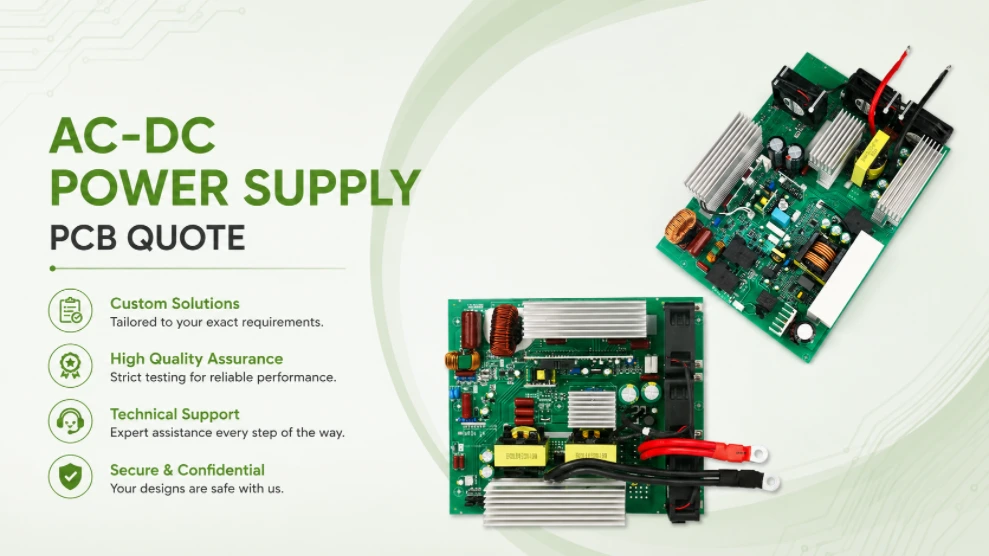
Figure 2. AC-DC Power Supply PCB Quote package
The Mistakes That Wreck a Quote
Most quoting pain is self-inflicted, and it comes from a handful of avoidable mistakes on the buyer’s side. The classic is sending Gerbers with no spec — no safety class, no copper weight, no volume — and then being surprised when the quote shifts after the manufacturer fills in the blanks. Another is chasing the lowest headline number without checking what it includes, then discovering the testing or the components were excluded. A third is leaving the BOM incomplete or full of unsourced parts, which makes the assembly and component cost a guess.
These mistakes share a root cause: treating a power board like a commodity PCB. A power supply has irreducible variables that the quote must account for, and skipping them does not make them go away — it just defers the cost to a later, more expensive moment. The buyers who get clean, stable quotes are the ones who send complete information and read the response as a cost stack rather than a single number.
- Gerbers with no specification: forces guesses on copper, isolation and volume that destabilize the price.
- Chasing the headline number: a low price that excludes testing or parts is not actually cheaper.
- Incomplete or unsourced BOM: makes component and assembly cost unknowable.
- No safety class stated: spacing and Hipot scope get assumed, often wrongly.
- Comparing different products: quotes for different copper or test scope are not comparable.
- Ignoring lead time: a cheap quote with an impossible schedule is not a usable quote.
Avoiding these is almost entirely within your control. A complete data package and a cost-stack mindset turn quoting from a frustrating round of revisions into a single accurate exchange — which is what you want when a power project is on a schedule.
Why Lead Time Belongs in the Quote
A price without a lead time is only half a quote, and on power boards the lead time is often driven by something the price barely reflects: the long-lead components. A transformer or controller with a multi-week or multi-month procurement window can set the entire schedule regardless of how fast the board itself fabricates and assembles. A quote that states a tidy price but is silent on when the magnetics actually arrive is hiding the variable most likely to slip your project.
This is why a good power-supply quote treats lead time as a first-class line item and flags the critical-path parts explicitly. It tells you not just what the board costs but when you can have it, and what would have to happen — buffer stock, alternate parts, expedited procurement — to move that date. When you ask for a quote, ask for the lead time and the long-lead parts in the same breath; the answer reveals how well the manufacturer actually understands your BOM.
Getting a Quote From Highleap
Highleap Electronics quotes AC-DC power supply PCBs against a real DFM review rather than a surface read of the files, which is what makes our numbers stable. When you send the data package — Gerbers, stackup and copper weight, BOM, input/output spec, safety class and volume — we check manufacturability, flag spacing and thermal risk, identify long-lead parts, and return an itemized price that separates one-time engineering and tooling from per-board fabrication, components, assembly and testing, with lead time stated alongside. You get a quote you can plan around and compare fairly, not a headline number that moves later.
If your package is incomplete, we will tell you what is missing rather than guessing and revising — because a quote built on guesses helps no one. The fastest path to a reliable number is to send everything in the list above; the more complete your request, the faster and firmer our response. And because we fabricate, assemble and test in one place, the quote covers the whole job from bare board to tested unit, with no handoffs hiding extra cost.
Send your complete data package for a firm, itemized quote. We will return price, lead time and DFM feedback together. Get your quote now.
To make the quote comparable, prepare PCB assembly files, use the PCB DFM checklist, compare PCB assembly cost, confirm assembly lead time, define electrical testing, and include any turnkey PCB assembly scope.

Recommended Posts

Taconic RF-35 PCB Manufacturing Service — Prototype Through Volume Production
Figure 1. Taconic RF-35 PCBTaconic RF-35 is the workhorse...

Isola Astra MT77 PCB Manufacturing
Figure 1. Isola Astra MT77 PCB ManufacturingIsola Astra...

Custom Rogers RO4835 PCB Fabrication & Assembly Services
Figure 1. Rogers RO4835 PCBRogers RO4835 PCB is a...

Nelco N4000-13 PCB Material and Manufacturing Guide | Highleap Electronics
Figure 1. Nelco N4000-13 PCBNelco N4000-13 PCB is a...
How to get a quote for PCBs
Let‘s run DFM/DFA analysis for you and get back to you with a report. You can upload your files securely through our website. We require the following information in order to give you a quote:
-
- Gerber, ODB++, or .pcb, spec.
- BOM list if you require assembly
- Quantity
- Turn time
For PCBA services, please provide your BOM (Bill of Materials) and any specific assembly instructions. We also offer DFM/DFA analysis to optimize your designs for manufacturability and assembly, ensuring a smooth production process.